Best of Joe Dassin
豆瓣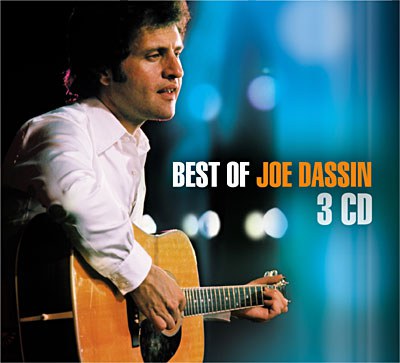
简介
American expatriate Joe Dassin was one of France's most popular singers during the late '60s and '70s, initially building his name with stylized adaptations of folk and country material from his birthplace. As his career blossomed, Dassin turned increasingly to traditional-style chansons penned by some of the genre's best writers, scoring an all-time classic with his 1975 smash "L'Eté Indien." Notorious for his perfectionism, Dassin could play the introverted romantic, but his persona also played off of American archetypes and imagery. His premature death of a heart attack in 1980 robbed French pop of one of its greatest modern-day practitioners.
Joseph Ira Dassin was born November 7, 1938, in New York City. His father was future film director Jules Dassin, and his mother was Hungarian violinist Beatrice Launer. In 1940, the family moved to Los Angeles to further Jules' highly promising directing career; however, it was interrupted when he fell victim to the McCarthy-era blacklist. Moving to Europe in search of work, the family lived a migratory existence for a time, and finally settled in Paris in 1950. Joe's parents divorced in 1956; stung, he returned to the United States and enrolled at the University of Michigan, where he studied medicine and anthropology. In his free time, he worked as a radio DJ, and began singing folk songs and Georges Brassens compositions around the area with another French-speaking student. After returning to France, Dassin worked some low-level jobs in the film industry, including a few small parts in his father's movies; he also worked in radio and wrote freelance articles for Playboy and The New Yorker.
In late 1964, at the urging of his future wife Maryse, Dassin made a demo recording for CBS France that turned some heads; soon, the label made him its first French signer. His debut single was "Je Change un Peu de Vent," an adaptation of the American folk song "Freight Train" with additional lyrics by Jean-Marie Rivat (who would become a frequent Dassin collaborator). It flopped, as did two EPs released in 1965. However, 1966's "Bip Bip" -- an adaptation of John D. Loudermilk's "Road Hog" -- was a hit, and CBS subsequently teamed Dassin with one of France's top producers, Jacques Plait. Minor hits in "Ça M'avance à Quoi?" and "Excuse Me, Lady" followed, but Dassin's career really took off when he was tapped to host the inaugural MIDEM music festival at Cannes in 1967; well covered by the French media, it gave him crucial exposure. Not long after, Dassin collaborated with Jean-Michel Rivat and Frank Thomas on an original work, the gunfighting-cowboy ballad "Les Dalton." Dassin had intended to give the song to another singer, but recorded it himself at Plait's vehement insistence; the result was a breakthrough smash hit, one that made Dassin a genuine star. His deep, charismatic voice and good looks made him highly popular with female audiences, but his American roots also lent him a certain novelty, a link to the free open spaces and flower-child optimism of his native country.
Dassin had further success in the late '60s with hits like "Marie-Jeanne" (a version of Bobbie Gentry's "Ode to Billie Joe"), "Siffler sur la Colline" ("To Whistle on the Hill"), "La Bande à Bonnot," and "Le Petit Pain au Chocolat." He suffered a minor heart attack in 1969, but recovered to make a triumphant appearance at the Olympia in Paris later that year, and scored his biggest hit yet with "Les Champs-Elysées," an international smash that broke him across Europe. Further hits followed in 1970 with "L'Amerique" and "Cécilia" (the Simon & Garfunkel song), both adapted by legendary French songwriter Pierre Delanoé; he and Claude Lemesle gradually replaced Rivat and Frank Thomas as Dassin's primary suppliers of material. "La Fleur aux Dents" and "L'Équipe de Jojo" were successes in 1971, and the following year, amid heavy international touring, Dassin bought a second home in Tahiti.
1973 started well for Dassin, as "Le Moustique" and "Salut les Amoureux" became enormous hits. Sadly, though, his wife gave birth to a premature son who died not long after; always moody and private anyway, Dassin sank into a deep depression that effectively stalled his career for over a year. He recovered his momentum in late 1974 with the singles "Si Tu T'appelles Melancolie" and "Vade Retro," and in 1975 he scored the biggest hit of his career, the French pop classic "L'Été Indien" ("Indian Summer"), which was adapted by Delanoé and Lemesle from an Italian song ("Africa," by Albatros). "L'Été Indien" kicked off probably the most successful period of Dassin's career; over the next two years, he landed smash after smash, including "Et Si Tu N'existais Pas," "Salut," "Ça Va Pas Changer le Monde," "Le Jardin du Luxembourg," and "À Toi."
Dassin divorced his wife in 1977 and married his new girlfriend early the next year. His first child was born later in 1978; by that time, disco had begun to take over the French music scene, and a new generation of pop singers were also making their presence felt. Dassin kept pace with "Si Tu Penses à Moi," a disco-reggae adaptation of Bob Marley's "No Woman No Cry," but although his international tours continued to sell out, the momentum of his recording career began to falter somewhat. He performed at the Olympia for what proved to be a final time in 1979; by the end of the year, his second marriage was on the rocks, and he suffered a heart attack. Early in 1980, not long after the birth of his second child, Dassin's marriage officially broke up. With his personal life in turmoil, and feeling the pressure for a comeback hit, Dassin suffered a heart attack that summer; while in the hospital, he also underwent surgery for a stomach ulcer. Nonetheless, Dassin attempted to make his way to his second home in Tahiti for a break from the pressure. During a layover in Los Angeles, Dassin suffered yet another heart attack; still, he pressed on with the journey. On August 20, 1980, while dining in a restaurant in Papeete, Tahiti, Dassin suffered a final, fatal heart attack; he was not quite 42 years old. ~ Steve Huey, All Music Guide
tracks
CD1
01 Et si tu n'existais pas
02 Cécilia
03 La fleur aux dents
04 Salut les amoureux
05 Depuis l'année dernière
06 Le petit pain au chocolat
07 Siffler sur la colline
08 Le chemin de papa
09 Dans les yeux d'emilie
10 Ma bonne étoile
11 Je change un peu de ven
12 Ca m'avance à quoi oe
13 Le marché aux puces
14 Le grand parking
15 Le temps des oeufs au plat
16 Salut
17 Guantanamera
18 Mé qué mé qué
19 L'amérique (yellow river)
20 Les champs-élysées
CD2
01 L'équipe à jojo
02 Les dalton
03 La complaine de l'heure de pointe (à vélo dans paris)
04 La bande a bonnot
05 Il faut naître a monaco
06 Excuse me lady
07 Le moustique
08 Viens voir le loup
09 Tout bébé a besoin d'une maman (album version)
10 Comme la lune
11 Pauvre doudou
12 Bip bip
13 Vade retro
14 La luzerne
15 Taka takata (la femme du toréro)
16 Un cadeau de papa (meines vaters sohn)
17 Un garçon nommé suzy
18 Côté banjo, côté violon
19 Billy le bordelais (album version)
20 Fais-moi de l'electricité
CD3
01 L'été indien
02 A toi
03 Mon village du bu monde (album version)
04 Marie-jeanne
05 Le café des trois colombes
06 Ca va pas changer le monde
07 Les plus belles années de ma vie
08 Si tu t'appelles mélancolie
09 Happy birthday (balletto)
10 Ton côté du lit
11 La première femme de ma vie
12 Le château de sable
13 Il était une fois nous deux
14 Un lord anglais
15 La demoiselle de déshonneur
16 Dans la brume du matin
17 Ma musique (sailling)
18 Le jardin du Luxembourg (avec Dominique Poulain)