Verdi: Aida / Caballé, Domingo, Muti
豆瓣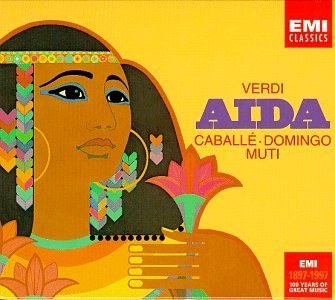
简介
Giuseppe Fortunino Francesco Verdi (pronounced [verdi] in Italian; October 9 or 10, 1813 – January 27, 1901) was an Italian Romantic composer, mainly of opera. He was one of the most influential composers of Italian opera in the 19th century. His works are frequently performed in opera houses throughout the world and, transcending the boundaries of the genre, some of his themes have long since taken root in popular culture - such as "La donna è mobile" from Rigoletto, "Va, pensiero" (The Chorus of the Hebrew Slaves) from Nabucco, and "Libiamo ne' lieti calici" (The Drinking Song) from La traviata. Although his work was sometimes criticized for using a generally diatonic rather than a chromatic musical idiom and having a tendency toward melodrama, Verdi’s masterworks dominate the standard repertoire a century and a half after their composition.
Verdi was born the son of Carlo Giuseppe Verdi and Luigia Uttini in Le Roncole, a village near Busseto, then in the Département Taro which was a part of the French Empire after the annexation of the Duchy of Parma and Piacenza. The baptismal register, on October 11, lists him as being "born yesterday", but since days were often considered to begin at sunset, this could have meant either 9 or 10 October. The next day he was baptized in the Roman Catholic church in Latin as Joseph Fortuninus Franciscus. The day after that (Tuesday), Verdi's father took his newborn the three miles to Busseto where the baby was recorded as Joseph Fortunin Francois; the clerk wrote in French. "So it happened that for the civil and temporal world Verdi was born a Frenchman."[2]
When he was still a child, Verdi's parents moved from Piacenza to Busseto, where the future composer's education was greatly facilitated by visits to the large library belonging to the local Jesuit school. Also in Busseto, Verdi was given his first lessons in composition.
Giuseppe Verdi in Vanity Fair (1879)
Verdi went to Milan when he was twenty to continue his studies and he took private lessons in counterpoint while attending operatic performances, as well as concerts of, specifically, German music. Milan's beaumonde association convinced him that he should pursue a career as a theatre composer.
Returning to Busseto, he became town music master and, with the support of Antonio Barezzi, a local merchant and music lover who had long supported Verdi's musical ambitions in Milan, Verdi gave his first public performance at Barezzi’s home in 1830. Because he loved Verdi’s music, Barezzi invited Verdi to be his daughter Margherita's music teacher and the two soon fell deeply in love. They were married on March 4, 1836 and Margherita gave birth two children, both of whom died in infancy while Verdi was working on his first opera: Virginia Maria Luigia (b. March 26, 1837 - d. August 12, 1838) and Icilio Romano (b. July 11, 1838 - d. October 22, 1839), before her own death on June 18, 1840. Verdi adored his wife and children, and he was devastated when they all died in the prime of youth.
tracks
Aida: Act One - Scene One - Preludio - Giuseppe Verdi
Aida: Act One - Scene One - Introduzione e scena : 'Si, corre voce che l'Etiope ardisca' (Radames) - Giuseppe Verdi
Aida: Act One - Scene One - Romanza : 'Se quel guerrier io fossi!'...'Celeste Aida' (Radames) - Giuseppe Verdi
Aida: Act One - Scene One - Duetto : 'Quale insolita gioia nel tuo sguardo!' (Radames) - Giuseppe Verdi
Aida: Act One - Scene One - Terzetto : 'Vieni, o diletta appressati' (Aida - Radames) - Giuseppe Verdi
Aida: Act One - Scene One - Scena e pezzo d'assieme : 'Alta cagion v'aduna' (Aida - Radames) - Giuseppe Verdi
Aida: Act One - Scene One - 'Su! del Nilo al sacro lido' (Aida - Radames) - Giuseppe Verdi
Aida: Act One - Scene One - Scena : 'Ritorna vincitor!' (Aida) - Giuseppe Verdi
Aida: Act One - Scene Two - Gran scena della consacrazione : 'Possente, possente Ftha'...'Tu che dal nulla hai tratto' - Giuseppe Verdi
Aida: Act One - Scene Two - Danza sacra delle Sacerdotesse : 'Nume, custode e vindice' (Radames) - Giuseppe Verdi
Aida: Act One - Scene Two - Finale I : 'Nume, custode e vindice' (Radames) - Giuseppe Verdi
Aida: Act Two - Scene One - Introduzione-Scena e coro di donne: 'Chi mai fra gl'inni e i plausi'
Aida: Act Two - Scene One - Danza di schiavi mori
Aida: Act Two - Scene One - 'Vieni, sui crin ti piovano'
Aida: Act Two - Scene One - Scena e duetto: 'Fu la sorte dell'armi a'tuio funesta' (Aida)
Aida: Act Two - Scene One - 'Pietà ti prenda del mio dolor'...'Su! del Nilo al sacro lido'...'Numi, pieta' (Aida)
Aida: Act Two - Scene Two - Gran finale ll: 'Gloria all'Egitto, ad Iside'
Aida: Act Two - Scene Two - Marcia trionfale
Aida: Act Two - Scene Two - Ballabile
Aida: Act Two - Scene Two - 'Vieni, o guerriero vindice'
Aida: Act Two - Scene Two - 'Salvator della patria' (Radames)
Aida: Act Two - Scene Two - 'Che veggo! Egli? Mio padre!'...' Anch'io pugnai'...'Ma tu, Re, tu signore possente' (Aida)
Aida: Act Two - Scene Two - 'Il dolor che in quel volto favella'...'Ma tu, o Re' (Radames)
Aida: Act Two - Scene Two - 'O Re, pei sacri Numi'...'Gloria all'Egitto' (Radames - Aida)
Aida: Act Three - Introduzione - Preghiera: 'O tu sei d'Osiride'...'Vieni d'Iside al Tempio'
Aida: Act Three - Romanza; 'Qui Radamès verrà!'
Aida: Act Three - 'O patria mia' (Aida)
Aida: Act Three - Duetto: 'Cie! mio padre!'...'Rivedrai le foreste imbalsamate' (Aida)
Aida: Act Three - Duetto: 'Pur ti riveggo, mia dolce Aida'...'Nel fiero anelito' (Radames - Aida)
Aida: Act Three - 'Fuggiam gli ardori inospiti'...'Là, tra foreste vergini' (Aida - Radames)
Aida: Act Three - Finale lll: 'Ma dimmi; per qual via' (Aida - Radames)
Aida: Act Four - Scene One - Scena: 'L'abborrita rivale a me sfuggia'
Aida: Act Four - Scene One - Duetto: 'Già i sacerdoti adunansi' (Radames)
Aida: Act Four - Scene One - Scena del giudizio: 'Ohhimè! morir mi sento!'...'Spirto del Nume'
Aida: Act Four - Scene One - 'A lui vivo, la tomba!'...'Secerdoti: compiste un delitto!'
Aida: Act Four - Scene Two - Scena e duetto: 'La fatal pietra sovra me si chiuse' (Radames - Aida) - Finale ultimo: 'Immenso Fthà' (Aida - Radames)
Aida: Act Four - Scene Two - 'O terra addio' (Aida - Radames)