Schoenberg
豆瓣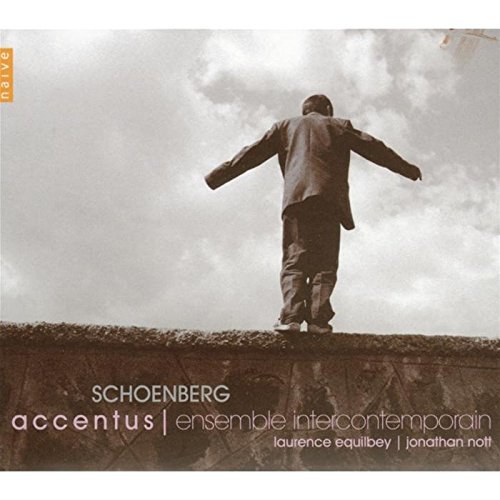
简介
This compelling collection of Arnold Schoenberg's choral music works well as a sampler of the composer's varied interests and changing methods, and provides clear examples from the early chromatic and atonal periods to the dodecaphony of the mature masterworks. The two versions of Friede auf Erden (the 1907 a cappella original and the 1911 version for choir and orchestra), the "Drei Volksliedsätze," and "Verbundenheit" from the Six Pieces for Male Chorus represent Schoenberg at his most accessible, while the works from the late Op. 50, Dreimal tausend Jahre and De Profundis, give a taste of Schoenberg's more challenging twelve-tone applications and arresting declamatory style. Certainly the strangest track, though, is Franck Krawczyk's transcription for double choir of "Farben" from Schoenberg's Five Pieces for Orchestra, an idea that seems workable in principle, but rather weak in execution; the monochromatic choral parts cannot hope to imitate the shifting wind and string timbres in the orchestral piece, and the forced inhalations and exhalations sound like melodramatic gasping. The chamber choir Accentus and the Ensemble InterContemporain, directed respectively by Laurence Equilbey and Jonathon Nott, deliver these works with marvelous control and technical polish, and Naïve provides fine reproduction, except for the boxy and sometimes noisy recording of the Kammersymphonie No. 1.
tracks
Friede Auf Erden
Farben
Schein uns, du liebe sonne
Es Gingen Zwei Gespielen Gut
Herzlieblich lieb, durch schieden
Friede Auf Erden
Kammersymphonie fuer 15 solo-instrumente
Verbundenheit
Dreimal tausend jahre
De Profundis