Knowing Manchuria
Douban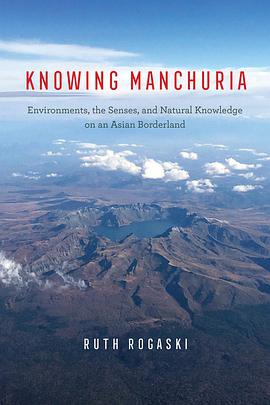
Environments, the Senses, and Natural Knowledge on an Asian Borderland
Ruth Rogaski
overview
According to Chinese government reports, hundreds of plague-infected rodents fell from the skies over Gannan county on an April night in 1952. Chinese scientists determined that these flying voles were not native to the region, but were vectors of germ warfare, dispatched over the border by agents of imperialism. Mastery of biology had become a way to claim political mastery over a remote frontier. Beginning with this bizarre incident from the Korean War, Knowing Manchuria places the creation of knowledge about nature at the center of our understanding of a little-known but historically important Asian landscape.
At the intersection of China, Russia, Korea, and Mongolia, Manchuria is known as a site of war and environmental extremes, where projects of political control intersected with projects designed to make sense of Manchuria’s multiple environments. Covering over 500,000 square miles, Manchuria’s landscapes included temperate rainforests, deserts, prairies, cultivated plains, wetlands, and Siberian taiga. With analysis spanning the seventeenth century to the present day, Ruth Rogaski reveals how an array of historical actors—Chinese poets, Manchu shamans, Russian botanists, Korean mathematicians, Japanese bacteriologists, American paleontologists, and indigenous hunters—made sense of the Manchurian frontier. She uncovers how natural knowledge, and thus the nature of Manchuria itself, changed over time, from a sacred “land where the dragon arose” to a global epicenter of contagious disease; from a tragic “wasteland” to an abundant granary that nurtured the hope of a nation.
contents
1 Landscapes of Exile: Nostalgia and Natural History on the Journey to Ningguta
2 Where the Dragon Arose: Discovering the Dragon through Number and Blood
3 Si(gh)ting the White Mountain: Locating Mount Paektu/Changbai in a Sacred Landscape
4 Flowers along the Amur: Making Sense of Plant Diversity on the Amazon of Asia
5 Fossils of Empire: The Jehol Biota and the Age of Coal
6 Plagueland: Pursuing Yersinia pestis on the Manchurian-Mongolian Grassland
7 Scientific Redemption: The Flying Voles of Gannan Revisited
8 Reclaimed: Technology and Embodied Knowledge on the Sanjiang Plain
Conclusion: A View from the Mountain
Acknowledgments
Glossary
Notes
Bibliography
Index