The Social Construction of Intellectual Disability
豆瓣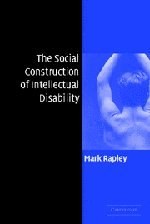
Rapley, Mark
简介
Intellectual disability is usually thought of as a form of internal, individual affliction, little different from diabetes, paralysis or chronic illness. This study, the first book-length application of discursive psychology to intellectual disability, shows that what we usually understand as being an individual problem is actually an interactional, or social, product. Through a range of case studies, which draw upon ethnomethodological and conversation analytic scholarship, the book shows how persons categorized as 'intellectually disabled' are produced, as such, in and through their moment-by-moment interaction with care staff and other professionals. Mark Rapley extends and reformulates current work in disability studies and offers a reconceptualisation of intellectual disability as both a professionally ascribed diagnostic category and an accomplished - and contested - social identity. Importantly, the book is grounded in data drawn from naturally-occurring, rather than professionally orchestrated, social interaction.
目录
Acknowledgements
A note on the cover
A note on transcription notation
Introduction
1. A discursive psychological approach
2. Intellectual disability as diagnostic and social category
3. The interactional production of 'dispositional' characteristics: or why saying 'yes' to one's interrogators may be a smart strategy
4. Matters of identity
5. Talk to dogs, infants and...
6. A deviant case (co-written with Alec McHoul)
7. Some tentative conclusions
Appendices