Languages of Ancient Southern Mongolia and North China
Douban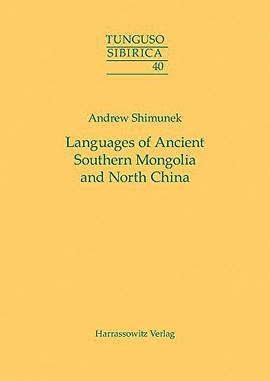
A Historical-Comparative Study of the Serbi or Xianbei Branch of the Serbi-Mongolic Language ... and Old Tibetan Phonology
Andrew Shimunek
overview
This is the first book on the Serbi-Mongolic language family - a major language family of Asia - and the first modern linguistic study of the Serbi (Xianbei) peoples, whose conquest of North China took place at approximately the same time as the Germanic and Hunnic Volkerwanderung into the former Western Roman Empire. The findings presented in this book - the first rigorous and systematic unified theory on the origins of the Mongolic and Serbi languages - add substantially to our understanding of the linguistic geography of Eastern Eurasia, and to the ethnolinguistic history of the Mongolic peoples and their neighbors, including speakers of Chinese, Japanese-Koguryoic, Tibeto-Burman, Tungusic, possibly Indo-European, and later, Turkic. This book also enhances our understanding of attested Middle Chinese, Early Old Mandarin, and Old Tibetan phonology. Moreover, it is the first study to present linguistic sketches of Taghbach (Tuoba), Tuyuhun ('Azha), and Kitan (Qidan), and to systematically compare Kitan and Mongol morphological and syntactic paradigms, resulting in the first reconstruction of Common Serbi-Mongolic phonology, morphology, lexicon, and syntax. Readers interested in Mongolia, the Mongols, North China, Central Eurasia, the Tibetan Empire, languages of Asia, historical linguistics, and history will find this book to be a useful resource.
contents
Front Matter...................................................................................................xiii
Figures ...........................................................................................................xiii
Tables ............................................................................................................xiii
Acknowledgements ....................................................................................... xix
Fonts Used in this Book ................................................................................ xxi
General Abbreviations and Symbols ...........................................................xxiii
General Sigla ............................................................................................... xxix
Sigla for Chinese Primary Sources ............................................................. xxxi
Sigla for Old Tibetan Texts .......................................................................xxxiii
Kitan Assembled Script Sigla .................................................................... xxxv
Sigla for Mongol Texts ............................................................................ xxxvii
Apparatus Criticus .......................................................................................... xli
Transcription and Transliteration Conventions ........................................... xliii
1. Previous Theories on the Origins of the Mongolic Languages .................... 1
2. A Brief Ethnolinguistic History of the Serbi-Mongolic Peoples ............... 37
2.1. The early Serbi-Mongolic peoples .................................................... 37
2.2. Rise of the Serbi peoples and conquest of North China .................... 46
2.3. The Awar during the Serbi expansion ............................................... 55
2.4. The Kitan (or ‘Kitanic’) Peoples ....................................................... 57
2.4.1. Qay ................................................................................................. 61
2.4.1.1. Early Qay..................................................................................... 61
2.4.1.2. Late Qay ...................................................................................... 63
2.4.2. Shirwi ............................................................................................. 64
2.4.3. The Kitan after the Kitan Empire ................................................... 66
2.5. The early Mongolic peoples and their languages .............................. 68
3. Early Northern Frontier Varieties of Chinese ............................................ 79
3.1. Introduction ....................................................................................... 79
3.2. Brief notes on Northeastern Late Old Chinese phonology ............... 79
3.3.1. Syllable-initial segments (syllable onsets and #V) ........................ 81
3.3.2. Syllable nuclei ................................................................................ 84
3.3.3. Syllable codas ................................................................................. 85
3.3.4. Revisions of tradition-based reconstructions ................................. 91
3.4. The Phonology of Late Middle Chinese ........................................... 93
3.5. The Phonology of Early Old Mandarin ............................................. 99
3.5.1. Syllable Onsets ............................................................................. 100
3.5.2. Syllable Nuclei ............................................................................. 104
3.5.3. Syllable Codas .............................................................................. 105
4. Notes on the Phonology of Old Tibetan ................................................... 109
4.1. Introduction ..................................................................................... 109
4.2. Syllable Onsets ................................................................................ 110
4.3. Syllable Nuclei ................................................................................ 114
4.4. Syllable Codas ................................................................................. 117
5. Taghbach and other Middle Serbi Dialects of the Northern Wei ............. 121
5.1. Introduction ..................................................................................... 121
5.2. The Taghbach onomasticon in the Wei Shu .................................... 125
5.2.1. Glossed transcriptions .................................................................. 125
5.2.2. Problematic transcriptions ............................................................ 143
5.2.3. Unglossed (abbreviated) transcriptions ........................................ 147
5.2.4. Transcriptions elsewhere in the Wei Shu...................................... 147
5.3. Taghbach Titles and Names in the Nan Ch’i Shu ........................... 148
5.3.1. Resolved transcriptions ................................................................ 149
5.3.2. Problematic transcriptions (unresolved)....................................... 158
5.4. Transcriptions in the Serbi Cave Inscription ................................... 162
5.5. Taghbach Phonology ....................................................................... 163
5.6. Taghbach lexicon ............................................................................ 165
5.6.1. Taghbach functional morphemes ................................................. 165
5.6.2. Taghbach words ........................................................................... 165
6. The T’u-yü-hun (‘Azha) Language .......................................................... 169
6.1. Historical background ..................................................................... 169
6.2. Sources on the T’u-yü-hun language .............................................. 172
6.2.1. Old Tibetan sources on the T’u-yü-hun language ........................ 173
6.2.1.1. T’u-yü-hun toponyms in Old Tibetan transcription .................. 175
6.2.1.2. T’u-yü-hun onomastica in Old Tibetan transcription ................ 182
6.2.2. Chinese sources on the T’u-yü-hun language .............................. 184
6.2.2.1. Glossed Chinese transcriptions of T’u-yü-hun.......................... 185
6.2.2.2. Unglossed Chinese transcriptions of T’u-yü-hun...................... 189
6.2.3. Possible T’u-yü-hun elements in Amdo Tibetan.......................... 191
6.3. Notes on T’u-yü-hun phonology ..................................................... 192
6.3.1. Phoneme inventory ....................................................................... 192
6.3.2. Salient consonant clusters ............................................................ 193
6.3.3. Glide + vowel sequences .............................................................. 193
6.3.4. Other phonological points of interest ........................................... 193
6.4. Concluding remarks ........................................................................ 194
6.5. The T’u-yü-hun lexicon .................................................................. 194
6.5.1. T’u-yü-hun functional morphemes............................................... 195
6.5.2. T’u-yü-hun words ......................................................................... 195
6.5.2.1. Glossed or semantically known T’u-yü-hun words .................. 195
6.5.2.2. Unglossed T’u-yü-hun words .................................................... 195
7. The Kitan Language ................................................................................. 197
7.1. Introduction ..................................................................................... 197
7.2. Old Kitan ......................................................................................... 198
7.2.1. Glossed (and semantically discernable) Old Kitan words ........... 199
7.2.2. Unglossed Old Kitan names in Early MChi transcription............ 204
7.2.3. Unglossed Old Kitan names in Late MChi transcription ............. 206
7.3. Middle Kitan ................................................................................... 209
7.3.1. Notes on Middle Kitan Phonology ............................................... 212
7.3.2. Middle Kitan Morphology ........................................................... 221
7.3.2.1. Word Classes ............................................................................. 222
7.3.2.1.1. Nouns ..................................................................................... 222
7.3.2.1.2. Demonstratives ....................................................................... 222
7.3.2.1.3. Adjectives ............................................................................... 226
7.3.2.1.4. Adverbs .................................................................................. 227
7.3.2.1.5. Numerals ................................................................................ 228
7.3.2.1.5.1. Ordinal Numerals ................................................................ 228
7.3.2.1.5.2. Cardinal Numerals .............................................................. 232
7.3.2.1.6. Verbs ...................................................................................... 241
7.3.2.2. Case ........................................................................................... 247
7.3.2.3. Number ...................................................................................... 264
7.3.3. Middle Kitan syntax ..................................................................... 266
7.3.3.1. Clausal Order............................................................................. 266
7.3.3.2. Phrasal Order ............................................................................. 268
7.3.3.3. Pro-Drop .................................................................................... 270
7.3.3.4. Relative Clauses ........................................................................ 270
7.3.3.5. Subordination and Conjunctions ............................................... 272
7.3.3.6. Negation .................................................................................... 272
7.3.4. A Middle Kitan text: The Lang-chün Inscription......................... 274
7.4. Late Kitan ........................................................................................ 278
7.5. The Kitan Lexicon ........................................................................... 281
8. Toward a Reconstruction of Common Serbi-Mongolic ........................... 283
8.1. Shared Functional Morphophonology ............................................. 283
8.2. Common Serbi-Mongolic Phonology ............................................. 288
8.2.1. Serbi-Mongolic Sound Correspondences ..................................... 288
8.2.2. Common Serbi-Mongolic Phoneme Inventory ............................ 292
8.3. Common Serbi-Mongolic Morphosyntax ....................................... 295
8.3.1. Verbal suffixal morphosyntax ...................................................... 295
8.3.2. Case suffixal morphosyntax ......................................................... 296
8.3.3. Number in Common Serbi-Mongolic .......................................... 298
8.4. Common Serbi-Mongolic Syntax ................................................... 301
8.4.1 Common Serbi-Mongolic word order ........................................... 302
8.4.1.1. Common Serbi-Mongolic clausal order .................................... 302
8.4.1.2. Common Serbi-Mongolic phrasal order .................................... 306
8.4.3. Null subjects (‘Pro-Drop’) in Common Serbi-Mongolic ............. 312
8.5. The Common Serbi-Mongolic Lexicon .......................................... 313
8.5.1. Common Serbi suffixes and grammatical morphemes ................ 315
8.5.2. Common Serbi words ................................................................... 315
8.5.3. Common Serbi-Mongolic grammatical morphemes .................... 317
8.5.4. Common Serbi-Mongolic words .................................................. 326
8.6. Reconstructed Sentences in Common Serbi-Mongolic ................... 380
9. The Proto-Serbi-Mongolic Homeland ...................................................... 383
9.1. Introduction ..................................................................................... 383
9.2. Vocabulary ...................................................................................... 384
9.2.1. Cultural Vocabulary ..................................................................... 385
9.2.2. Primary Vocabulary ..................................................................... 397
9.3. A Possible Homeland ...................................................................... 412
10. Conclusion .............................................................................................. 415
Appendix A: Revised Analylsis of the Kitan Assembled Script .................. 419
Appendix B: Kitan Assembled Script Common Typographical Errors ....... 445
Appendix C: Gloss Formulae ....................................................................... 447
Appendix D: Pre-Proto-Mongolic Morphological Innovations ................... 449
Bibliography ................................................................................................. 461
Language Index ............................................................................................ 491
General Index ............................................................................................... 495