Opera, Society, and Politics in Modern China
Douban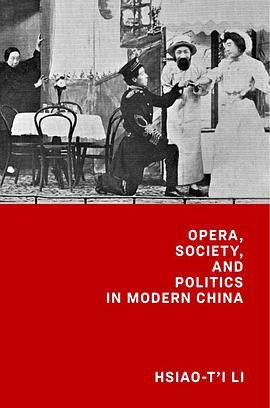
Hsiao-t'i Li
overview
Popular operas in late imperial China were a major part of daily entertainment, and were also important for transmitting knowledge of Chinese culture and values. In the twentieth century, however, Chinese operas went through significant changes. During the first four decades of the 1900s, led by Xin Wutai (New Stage) of Shanghai and Yisushe of Xi’an, theaters all over China experimented with both stage and scripts to present bold new plays centering on social reform. Operas became closely intertwined with social and political issues. This trend toward “politicization” was to become the most dominant theme of Chinese opera from the 1930s to the 1970s, when ideology-laden political plays reflected a radical revolutionary agenda.
Drawing upon a rich array of primary sources, this book focuses on the reformed operas staged in Shanghai and Xi’an. By presenting extensive information on both traditional/imperial China and revolutionary/Communist China, it reveals the implications of these “modern” operatic experiences and the changing features of Chinese operas throughout the past five centuries. Although the different genres of opera were watched by audiences from all walks of life, the foundations for opera’s omnipresence completely changed over time.
contents
List of Illustrations and Table*
Acknowledgments
Overture
1. Looking Back at Opera in Late Imperial China
2. Changing Discourses on China’s Popular Drama
3. The Reformation of Beijing Opera in Shanghai
4. Reformed Opera on the Shanghai Stage
5. Reformed Opera in Xi’an
6. Politicization and Radicalization
Finale
Notes
Glossary
Bibliography
Index
* Illustrations and Table
Figures
1.1. A huge theater was erected opposite the British yacht
2.1. Yu Shangyuan
2.2. Xiong Foxi
2.3. Slaughterhouse
2.4. Peasants/actors performing Crossing Ferry
3.1. “New Machinery for the Stage”
3.2. “Opening Celebration for the New Stage”
4.1. A Wronged Soul in a World of Opium Addicts
4.2. “Being Humiliated,” a scene from A Wronged Soul in a World of Opium Addicts
4.3. Feng Zihe performing in Box with Hundreds of Treasures
4.4. Advertisement for performances of The Blood of Ezhou
4.5. Shenbao theater advertisements including plot description of The Dream of Restoration
4.6. Enlargement of the advertisement for The Dream of Restoration
5.1. Li Tongxuan
5.2. Sun Renyu
5.3. The Yisushe as it stands today in Xi’an
5.4. The Yisushe of 1930
5.5. The Snatching Brocade Tower
5.6. Advertisements for the Yisushe’s debut performance in Beijing
5.7. The jacket for the VCD version of Three Drops of Blood
Maps
3.1. Distribution of Shanghai theaters, 1860–79
3.2. Distribution of Shanghai theaters, 1880–99
3.3. Distribution of Shanghai theaters, 1900–1920
3.4. The Sixteenth District
5.1. The Manchu city and some other important sites of Xi’an
5.2. The distribution of commercial huiguan in Xi’an of the late Qing period
Table
1. Features of opera performance