The Variation Theory of Comparative Literature
豆瓣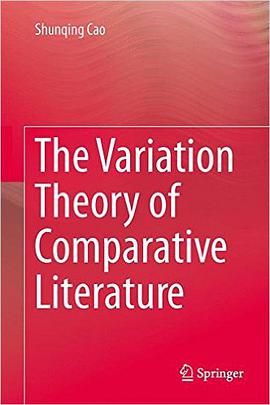
Shunqing Cao
简介
Seeing the restrictions of former studies in Comparative Literature and aiming to amend these deficiencies, the author of this book mainly discusses the major theoretical significance and academic value of the Variation Theory in the whole process of the development of Comparative Literature in the world. In China the seminal comparative study of literature among different cultures can be dated back to ancient China, while the founding of comparative literature as a distinct academic discipline has to be largely owing to the influence of the West. The modern Chinese study of comparative literature formed its uniqueness under Western influence. The direct influence of the translation of western theories into China is remarkable. However, in the course of translation and reception of Western theories, Chinese comparatists and intellectuals have been encountering various problems, and solving them with an alternative method accordingly different from the traditional methods proposed by the French School and the American School. Therefore, in this book, modern Chinese study of comparative literature is put in a historical context with regard to the theoretical issue of the discipline in China through the entire 20th century. At present, many scholars in China and in other countries agree that, with the influence study proposed by the French School and the study of analogy advocated by the American School, the entire theoretical system of Comparative Literature is well built. However, when the comparative study of literature between East and West is concerned, the theory of Comparative Literature is far from perfect. It is not only because many problems still exist, but there are significant defects in their theoretical bases respectively. Many researches have proven that even with the influence study and the study of analogy, we still can not solve many problems in the practice of studies in comparative literature. This does not mean that we have no respect for the contributions of the French School and the American School; we just want to attach importance to literary variations, which is a phenomenon that has long been neglected. The purpose of putting forward the Variation Theory in Comparative Literature is to provide new perspectives, new methods and new theory to the study of comparative literature, which may be a major breakthrough in the international arena of Comparative Literature. The neglect of literary variation is mainly because all the previous theories about comparative literature start off in search of similarities but not differences. Accordingly, in 1990s heterogeneity as a premise of comparability was put forward. And later, the variation theory was further advanced. It is not only the important phenomenon in literary communication, but also the most valuable research object in Comparative Literature. Still, it will be an important path to cultural innovation. The Variation Theory may make up the major flaws of theories by both French school and the American School since it focus on heterogeneity and variability in cross-cultural literary events, especially the ones of inter-civilization which will be a new course for comparative literature. Throughout the history of literature and the history of literary communication, collisions between different civilizations have always been producing new literary events which make the heterogeneity of different civilizations and variability traceable. The higher stage of literary communication may mean dialogue and blend between different cultures. The overarching concerns of this book include different levels of variation in literary communication and the studies of different objects. The introduction begins with a literature review of major achievements made by the French School and the American School with pointing out what they have neglected. The body of the book is divided into three parts. In the first part, Chapter 1 deals with the major contributions of influence study and its weaknesses. The origination of comparative literature in most of European countries is reviewed first, and then the major contributions of the French School are listed to point out its merits and weaknesses. The author discusses the relation between Influence Study and the Variation Theory and the importance of the French school in theoretical development of comparative literature is stressed too. Chapter 2 offers a critical introduction and reflection on the study of analogy . Both its major contributions and weaknesses are made clear to further illustrate the relationship between interpretation and the Variation Theory. And the discursive variation is discussed. Part II is a transitional part with only one chapter that gives a clear account of phenomenon of variation from international perspective. Part III consists of four chapters. Chapter 4 offers a detailed description of The Variation Theory in cross-languages context. Chapter 5 deals with cross-cultural variation in homogeneous circle of civilization. Chapter 6 discusses the variation among heterogeneous civilization. For a long period of time the theoretical study of comparative literature in China has largely been confined to the Chinese academic arena, thus has long been neglected. On one hand western comparatists have gradually realized the importance of a non-western perspective in the study of the discipline; on the other hand, few books are available to introduce the recent development of comparative literature study in China. Compared with the enthusiastic reception of the theories of the French School and the American School, the theories of Chinese comparatists receives relatively little attention in western countries. In this sense, the proposed book attempts to challenge the myth of monolithic theories of comparative literature, trying to construct an alternative theory of the discipline.
目录
Foreword by Douwe Fokkema
Acknowledgments
A Brief Introducti on of Shunqing Cao
1 Major Contributions of Influence Study and Its Weaknesses .............. 1
1.1 The Origins of Comparative Literature
in Europe and Its Dead Ends .............................................................. 1
1.1.1 The Beginning of Comparative Literature in Europe ............ 1
1.1.2 Comparative Literature in Britain .......................................... 3
1.1.3 Comparative Literature in Germany ...................................... 4
1.1.4 Comparative Literature in Italy .............................................. 5
1.1.5 Comparative Literature in Russia .......................................... 6
1.1.6 Comparative Literature in France .......................................... 7
1.2 The Major Contribution of the French School: Founding
of the First Phase of the Disciplinary Theory
of Comparative Literature .................................................................. 8
1.2.1 The Shaping of the French School ......................................... 9
1.2.2 The Birth of Comparative Literature as an Independent
Discipline and the Formation of Theories
of Comparative Literature ...................................................... 10
1.2.3 Three Cornerstones of Theories
of Comparative Literature ...................................................... 11
1.3 “History of Literary Relations”: The Merits
of Positivism and Its Weakness .......................................................... 23
1.3.1 The Characteristics of Theories of the French
School: Positivism of International Literary Relations .......... 23
1.3.2 Criticism from the American School:
Ambivalence of Positivism Versus Aesthetics ....................... 25
1.3.3 Internal Puzzles of the French School:
Ambivalence of Positivism Versus Imagology ...................... 27
1.3.4 Challenges in Cross-Cultural Contexts:
Variation Everywhere ............................................................. 30
Contents xiv
1.4 Essence of Infl uence Studies: Coexistence
of Positivism and Variation ................................................................ 32
1.4.1 Essence of Infl uence Studies: The Method
of Positivism and the Phenomenon of Variation .................... 32
1.4.2 Case Study on Coexistence of Positivism and Variation:
Exploration of Variation in Literary Communication
Between China and Japan ...................................................... 35
1.4.3 Chinese Orphan: The European Variation
of “Orphan of the Zhao Family” ............................................ 39
1.5 Important Breakthrough in Comparative Literature:
The Shaping of Variation Theory ....................................................... 43
1.5.1 The Shaping of Variation Theory ........................................... 43
1.5.2 The Scope of Infl uence Studies of Variation.......................... 47
1.6 Two Sustainable Points of International Literary
Relations: That of Positivism and That of Variation .......................... 52
1.6.1 “International Literary Relations”
from the Positivistic Perspective ............................................ 52
1.6.2 Limitations of Positivistic Study of “International
Literary Relations” and Its Challenges .................................. 53
1.6.3 The Other Pillar of “International Literary
Relations”: Relations of Variation ......................................... 55
References ................................................................................................... 59
2 Major Contributions of Analogy Study and Its Deficiencies ................ 63
2.1 Major Contribution of Analogy Study ............................................... 63
2.1.1 Contribution of Analogy Study and Its Characteristics ......... 64
2.1.2 Problems of Analogy Study in Practice ................................. 66
2.1.3 Contents of Analogy Study .................................................... 68
2.1.4 Analogy Study in the Perspective of Variation Theory .......... 69
2.2 Defi ciencies of Analogy Study .......................................................... 73
2.2.1 Western-Centrism and Orientalism ........................................ 73
2.2.2 Universal Truth and Heterogeneous Civilization ................... 75
2.2.3 Defi ciencies of Analogical Comparison:
Ignorance of Heterogeneity.................................................... 77
2.3 Elucidation and Variation in Analogy Study ..................................... 81
2.3.1 Interpretation and Variation ................................................... 81
2.3.2 Variation in Analogy Study .................................................... 85
2.3.3 Evaluation of Variation in Analogy Study ............................. 88
2.4 Discourse Variation in Analogy Study ............................................... 91
2.4.1 Spatial Variation: Origin of Discourse
Variation in Analogy Study .................................................... 91
2.4.2 Illustrative Approach and Spatial Variation ........................... 93
2.4.3 Aphasia and Variation Theory ............................................... 94
References ................................................................................................... 97
Contentsxv
3 The Variation Theory in Cross-Language Context ................................ 101
3.1 Literary Translation: From Faithfulness, Expressiveness,
and Elegance to Creative Treason ...................................................... 101
3.1.1 Original Intention: The Seeking of Equivalence
in Patterns of Faithfulness, Expressiveness,
and Elegance .......................................................................... 101
3.1.2 Bewildering: Phenomena of “Intention
Beyond Language” and Utopia of Equivalence ..................... 104
3.1.3 The Way Out: Harmony Without Being
Identical and Emphasis of Heterogeneity .............................. 106
3.2 Non-translatability and the Inevitability
of Variations in Literary Translation .................................................. 109
3.2.1 Literature Review: Debate and Research
on Non-translatability ............................................................ 110
3.2.2 Non-translatability in Two Philosophical Paradigms ............. 111
3.2.3 Non-translatability and the Inevitability
of Variations in Literary Translation ...................................... 117
3.3 The Cross-Language Variation Between Western
Languages and Chinese...................................................................... 119
3.3.1 Heterogeneity Between Western Languages
and Chinese and Their Equal Status ...................................... 119
3.3.2 Shift Between Western Languages
and Chinese in Translation ..................................................... 125
3.4 The Variation Theory in Translation: Medio-translatology ............... 130
3.4.1 Translation Study and Variation
in Cross-Language Context .................................................... 130
3.4.2 Birth of Medio-translatology ................................................. 132
3.4.3 Difference Between Medio-translatological
Study and the Traditional Study of Translation ..................... 133
3.4.4 The Core of Medio-translatological Study:
Creative Treason .................................................................... 134
3.4.5 Transmission of Cultural Images and Mistranslation ............ 136
3.4.6 Medio-translatology and Literary Variation Theory .............. 137
3.5 Case Study on Cross-Language Variation
Among European Languages ............................................................. 138
3.5.1 “Translation Is Interpretation” ............................................... 140
3.5.2 Signifi cance of Cross-Language Variation............................. 143
3.6 Case Study on Cross-Language Variation
Between European Languages and Chinese ...................................... 145
3.6.1 Domestication ........................................................................ 145
3.6.2 The Variation of the Second Time ......................................... 149
3.6.3 Variation in Images ................................................................ 151
3.6.4 Variation in Translation of Idioms ......................................... 153
References ................................................................................................... 155
Contentsxvi
4 Cross-Cultural Variation Theory ............................................................. 159
4.1 Cultural Filtering and Literary Variation ........................................... 160
4.1.1 Social Context ........................................................................ 162
4.1.2 Linguistic Translation ............................................................ 164
4.1.3 Traditional Culture ................................................................. 167
4.1.4 Recipient’s Individual Acceptance Screen ............................. 170
4.2 Literary Misreading and Literary Variation ....................................... 173
4.2.1 Conceptual Generation and Research Diversion
of Literary Misreading and Literary Variation ....................... 173
4.2.2 The Reason for Literary Misreading
and Literary Variation ............................................................ 176
4.2.3 The Value and Dynamic Formation of Studies
on Literary Misreading and Literary Variation ...................... 177
4.3 The First Establishment of Cross-Cultural Variation
Theory: The Theory of Imagology of Comparative Literature .......... 179
4.3.1 Defi nition and Characteristics ................................................ 180
4.3.2 Past and Present ..................................................................... 183
4.3.3 Theories and Methods ............................................................ 188
4.3.4 Issues and Refl ections ............................................................ 192
References ................................................................................................... 193
5 Cross-Civilization Variation Theory ........................................................ 195
5.1 The Emergence of the Clash of Civilizations
and Cross- Civilization Variation ........................................................ 195
5.1.1 Samuel Huntington: The Clash of Civilization
and Cross-Civilization Studies ............................................... 197
5.1.2 Edward Said: The West and East in the Field
of Postcolonial Literary Theory ............................................. 199
5.1.3 Tu Weiming: The Discourse Between
Neo-Confucianism and Civilizations ..................................... 201
5.2 Cross-Civilization: From Blind Spot to Focal Point .......................... 206
5.2.1 The Neglect and Contempt of the Early
Western Civilization to the Oriental Civilization ................... 206
5.2.2 Ulrich Weisstein’s Hesitation of Exceeding
the Limits of Civilization ....................................................... 209
5.2.3 From Bias to Dialogue Between Civilizations ....................... 213
5.3 The Rise of Cross-Civilization Studies
in Comparative Literature .................................................................. 214
5.3.1 The Product of the Clash of Civilizations:
Early Comparative Literature of China .................................. 214
5.3.2 The Variation and Distortion
of the Clash of Civilizations................................................... 216
5.3.3 From “Illustrative Study” to “X + Y”: The Diffi cult
Development of Chinese Comparative Literature .................. 220
5.3.4 The Emergence of “Aphasia” and the Rise
of Cross- Civilization Studies ................................................. 223
Contentsxvii
5.4 The Heterogeneity of Civilization and the Variability
of Comparative Literature .................................................................. 225
5.4.1 The Universality and the Uniqueness of Civilization
(Commensurability and Incommensurability) ....................... 225
5.4.2 The Theoretical Transformation of Comparative
Literature: The Transformation from the Sameness
(of Homogeneity, of the Same Kind) to Variability
(the Heterogeneity and Complementarity
of Civilization) ....................................................................... 229
5.4.3 Mutual Elucidations and Variations
Among the Literatures of Heterogeneous Civilizations ......... 233
5.5 The Heterogeneity of Cross-Civilization Literary
Theories and the Studies of Variation ................................................ 238
5.5.1 The Principles of Foreignization of Literary Theories .......... 239
5.5.2 The Study of Chinization of Western Literary Theories ........ 242
5.5.3 The Dialogue and Activation
Among Heterogeneous Literary Theories .............................. 246
References ................................................................................................... 250