Absolutism and Society in Seventeenth-Century France
豆瓣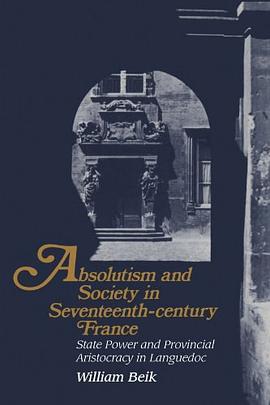
State Power and Provincial Aristocracy in Languedoc
William Beik
简介
Why was Louis XIV successful in pacifying the same aristocrats who had caused so much trouble for Richelieu and Mazarin? What role did absolutism play in reinforming or changing the traditional social system in seventeenth-century France? In this analysis of the provincial reality of absolutism, Professor Beik argues that the answers to these questions lie in the relationship between the regional aristocracy and the crown. Starting with a critical examination of current approaches to state and society by institutional, social , 'Annales', and Marxist historians, he calls for a new class analysis based on the findings of all these schools. This is the first appearance as a paperback of Professor Beik's book, which won the 1986 Herbert Baxter Adams Prize awarded by the American historical Association for the year's outstanding work in European history.
目录
List of tables
List of figures
Preface
List of abbreviations
Map
Part I. Introduction:
1. Absolutism and class
2. Languedoc and its rulers
Part II. The Distribution of Authority:
3. Urban setting and local authorities
4. The sovereign courts: a provincial perspective
5. The royal agents: a national linkage
6. The Estates: central bargaining place
Part III. The province on its own:
7. Contradictory aspirations and practical problems
8. The inadequacy of authority
9. The prospects for provincial solidarity
Part IV. The province and the crown:
10. Channels of personal influence
11. Tax flows and society
12. Collaborating with the king: positive results and fulfiled ambitions
13. Basking in the sun: the triumph of authority and hierarchy
Conclusion
Appendix
Select bibliography
Index.