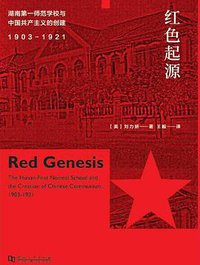
Red Genesis
豆瓣
The Hunan First Normal School and the Creation of Chinese Communism, 1903-1921
Liyan Liu
简介
Looks at the role of the Hunan First Normal School in fostering a generation of founders and key figures in the Chinese Communist Party.
How did an obscure provincial teachers college produce graduates who would go on to become founders and ideologues of the Chinese Communist Party? Mao Zedong, Cai Hesen, Xiao Zisheng, and others attended the Hunan First Normal School. Focusing on their alma mater, this work explores the critical but overlooked role modern schools played in sowing the seeds of revolution in the minds of students seeking modern education in the 1910s. The Hunan First Normal School was one of many reformed schools established in China in the early twentieth century in response to the urgent need to modernize the nation. Its history is a tapestry woven of traditional Chinese and modern Western threads. Chinese tradition figured significantly in the character of the school, yet Western ideas and contemporary social, political, and intellectual circumstances strongly shaped its policies and practices. Examining the background, curriculum, and the reforms of the school, as well as its teachers and radical students, Liyan Liu argues that China’s modern schools provided a venue that nurtured and spread new ideas, including Communist revolution.
目录
Table of Contents
List of Illustrations
Acknowledgments
Introduction: The Exceptional Normal and the Paradox of Hunan
1. Reform in Hunan, 1895-1900
2. From Confucian Academy to Modern School
3. The Milieu of First Normal, 1912-1919
4. Teaching the New Culture: First Normal’s Faculty
5. Sage in Residence: Yang Changji
6. Provincial Scholars and Young Radicals
7. Education of a Provincial Radical: Cai Hesen
Conclusion
Notes
Glossary
Bibliography