The Travels of a T-Shirt in the Global Economy
豆瓣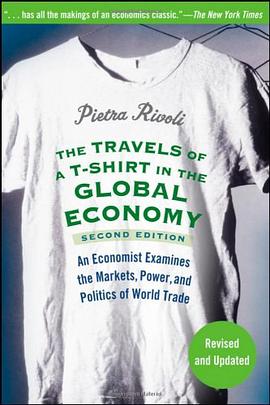
An Economist Examines the Markets, Power, and Politics of World Trade
Pietra Rivoli
简介
The Travels of a T-Shirt in the Global Economy has been lauded by the New York Times, Financial Times, and reviewers worldwide. Translated in fourteen languages, Travels has received numerous awards for its frank and nuanced discussion of global economic realities. Now updated and revised--including a discussions of environmental issue--this fascinating book illustrates crucial lessons in the debate on globalization. The major themes and conclusions from the first edition are intact, but in response to questions from readers and students around the world, the second edition now includes: Updates on the people, businesses, and politics involved in the production of the T-shirt. Discussions of environmental issues related to both international trade and the T-shirt's life story. A look at the maturing of the anti-globalization movement, and the recent shift in public opinion against internationalism.
点击链接进入中文版:
一件T恤的全球经济之旅
目录
TABLE OF CONTENTS
PREFACE
PROLOGUE
PART I KING COTTON
1 How America Has Dominated the Global Cotton Industry for 200 Years
2 The History of American Cotton
3 Back at the Reinsch Farm
4 All God’s Dangers Ain’t the Subsidies
PART II MADE IN CHINA
5 Cotton Comes to China
6 The Long Race to the Bottom
7 Sisters in Time
8 The Unwitting Conspiracy
PART III TROUBLE AT THE BORDER
9 Returning to America
10 Dogs Snarling Together
11 Perverse Effects and Unintended Consequences of T-Shirt Trade Policy
12 45 Years of ‘‘Temporary’’ Protectionism End in 2009-----Now What?
PART IV MY T-SHIRT FINALLY ENCOUNTERS A FREE MARKET
13 Where T-Shirts Go after the Salvation Army Bin
14 How Small Entrepreneurs Clothe East Africa with Old American T-Shirts
15 Mitumba: Friend or Foe to Africa?
CONCLUSION
EPILOGUE: DEVELOPMENTS 2009---2014
I: American Cotton Is Still King
II: The Race to the Bottom Speeds Up
III: The Alphabet Armies March On
IV: Competition Heats Up in the Used Clothing Business
ACKNOWLEDGMENTS
NOTES
BIBLIOGRAPHY
INDEX