Circulating the Code
豆瓣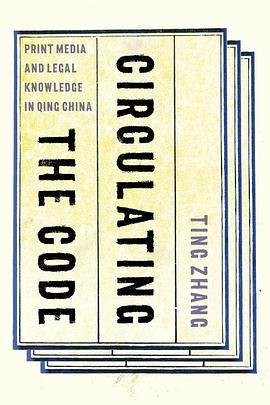
Print Media and Legal Knowledge in Qing China
简介
Contrary to longtime assumptions about the insular nature of imperial China’s legal system, Circulating the Code demonstrates that in the Qing dynasty (1644–1911) most legal books were commercially published and available to anyone who could afford to buy them. Publishers not only extended circulation of the dynastic code and other legal texts but also enhanced the judicial authority of case precedents and unofficial legal commentaries by making them more broadly available in convenient formats. As a result, the laws no longer represented privileged knowledge monopolized by the imperial state and elites. Trade in commercial legal imprints contributed to the formation of a new legal culture that included the free flow of accurate information, the rise of nonofficial legal experts, a large law-savvy population, and a high litigation rate.
Comparing different official and commercial editions of the Qing Code, popular handbooks for amateur legal practitioners, and manuals for community legal lectures, Ting Zhang demonstrates how the dissemination of legal information transformed Chinese law, judicial authority, and popular legal consciousness
目录
导言
1 清代立法与殿版律例
2 商业出版的律例
3 律例的阅读
4 讼师秘本中的法律信息
5 法律的通俗教育
结论:印刷革命对法律文化的冲击
作者译
