Visual Style and Constructing Identity in the Hellenistic World
豆瓣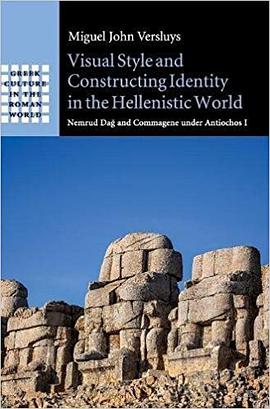
Nemrud Dağ and Commagene under Antiochos I
Miguel John Versluys
简介
Located in the small kingdom of Commagene at the upper Euphrates, the late Hellenistic monument of Nemrud Dağ (c.50 BC) has been undeservedly neglected by scholars. Qualified as a Greco-Persian hybrid instigated by a lunatic king, this fascinating project of bricolage has been written out of history. This volume redresses that imbalance, interpreting Nemrud Dağ as an attempt at canon building by Antiochos I in order to construct a dynastic ideology and social order, and proving the monument's importance for our understanding of a crucial transitional phase from Hellenistic to Roman. Hellenistic Commagene therefore holds a profound significance for a number of discussions, such as the functioning of the Hellenistic koine and the genesis of Roman 'art', Hellenism and Persianism in antiquity, dynastic propaganda and the power of images, Romanisation in the East, the contextualising of the Augustan cultural revolution, and the role of Greek culture in the Roman world.
目录
List of Illustrations
Preface
1Approaching Nemrud Dağ
1.1Between Alexandria, Rome and Antioch
1.2Understanding Late Hellenistic Commagene
1.2.1A Global Hellenistic World
1.2.2An Archaeology of Intra-Cultural Connectivity
1.2.3Beyond Representation
1.3The Structure of the Book
2Commagene: A Historical Geography
2.1Earlier Research
2.2The Historical Background
2.3The Region and Its Archaeology
2.3.1Dynastic Monuments
2.3.2Cities
2.3.3Villages
2.3.4The Great Cult Inscription
2.4Evaluating the (Archaeological) Sources
3Identity
3.1An Analysis of the Bildprogramm: What Did Antiochos I Demonstrate?
3.1.1A Hilltop Sanctuary
3.1.2A Temple Tomb (Hierothesion) in the Form of a Tumulus
3.1.3Colossal Statues
3.1.4A Canonical Text: The Great Cult Inscription and the Nomos
3.1.5Dexiosis Reliefs and Other Sculptural Decorations
3.1.6Ancestor Galleries
3.2Monumentality, Visibility, Ideology and Eclecticism
3.3In Search for the Social Context
3.4Inventing Traditions in the Hellenistic World
3.4.1Ethnic Manoeuvring in Hellenistic Egypt
3.4.2Inventing Hasmonean Kingship
3.4.3“Client Kings”: Herod the Great and Juba II
3.5Structuring Identity
3.5.1Looking back: From Mausollos to the Seleucid Kings
3.5.2Looking Forward: A Friend of the Romans?
3.6Ideology, Social Order and Canon Building
3.7Questions
3.7.1The Elusive Ancestors
3.7.2Bricolage as Historical Evidence
3.7.3Beyond the Dynastic Mise en Scène
4Style
4.1“The Achievements of Hellenised Barbarians”: How to Describe the Antiochan Style
4.1.1Humann, Puchstein and the Four Topoi
4.1.2Twentieth-Century Explorers and Summarisers
4.1.3Archaeological Interpretation and the Antiochan Style
4.1.4Bricolage and the Juxtaposition of Discrete Elements
4.2What Is It That We Call Greek and Persian?
4.2.1Hellenisation, Hellenism and Diversities of Doing Greek
4.2.2Persianism in the Ancient World
4.3Three Case Studies on Bricolage in the First Century BC
4.3.1Mixtum Compositum: Material Culture in Late Republican and Augustan Rome
4.3.2Parthian Royal Ideology
4.3.3Religious Monumental Building in the Eastern Mediterranean
4.4Cultural Scenarios
5Postscript: Between East and West?
Appendix: Antiochos’ Nomos: Translation
References
Bibliography
Index