State and Family in China
豆瓣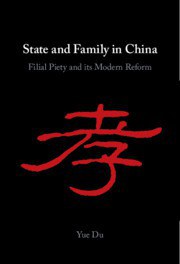
Filial Piety and Its Modern Reform
Yue Du
简介
In Imperial China, the idea of filial piety not only shaped family relations but was also the official ideology by which Qing China was governed. In State and Family in China, Yue Du examines the relationship between politics and intergenerational family relations in China from the Qing period to 1949, focusing on changes in family law, parent-child relationships, and the changing nature of the Chinese state during this period. This book highlights how Qing China treated state-sponsored parent-child hierarchy as the axis around which Chinese family and political power relations were constructed and maintained in Imperial China. It shows how following the fall of the Qing in 1911, reform of filial piety law in the Republic of China became the basis of state-directed family reform, playing a central role in China's transition from empire to nation-state.
目录
Table of Contents
Introduction: filial piety beyond confucianism
Part I. Ruling the Empire through the Principle of Filialit:
1. 'Parents can never be wrong:' punishing rebellious children as a didactic show
2. Policies and counterstrategies: negotiating state-sponsored filiality in the everyday
3. 'Parenting all under heaven on behalf of heaven:' state-sponsored filiality and imperial rulership
Part II. Building the Nation through Restructuring the Family:
4. Reorienting parent-child relations: from parents' authority to children's rights
5. Reconceptualizing parent-child relations: from life-long parental privilege to transitory guardianship
6. A constitutional agenda: remaking the family to make a new state
Conclusion: filial piety toward the state.