Streaming Change Data Capture
豆瓣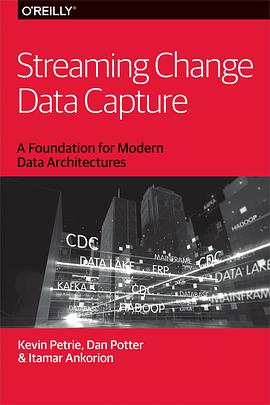
Itamar Ankorion / Dan Potter …
简介
There are many benefits to becoming a data-driven organization, including the ability to accelerate and improve business decision accuracy through the real-time processing of transactions, social media streams, and IoT data. But those benefits require significant changes to your infrastructure. You need flexible architectures that can copy data to analytics platforms at near-zero latency while maintaining 100% production uptime. Fortunately, a solution already exists.
This ebook demonstrates how change data capture (CDC) can meet the scalability, efficiency, real-time, and zero-impact requirements of modern data architectures. Kevin Petrie, Itamar Ankorion, and Dan Potter—technology marketing leaders at Attunity—explain how CDC enables faster and more accurate decisions based on current data and reduces or eliminates full reloads that disrupt production and efficiency.
The book examines:
How CDC evolved from a niche feature of database replication software to a critical data architecture building block
Architectures where data workflow and analysis take place, and their integration points with CDC
How CDC identifies and captures source data updates to assist high-speed replication to one or more targets
Case studies on cloud-based streaming and streaming to a data lake and related architectures
Guiding principles for effectively implementing CDC in cloud, data lake, and streaming environments
The Attunity Replicate platform for efficiently loading data across all major database, data warehouse, cloud, streaming, and Hadoop platforms
目录
Acknowledgments
Prologue
Introduction: The Rise of Modern Data Architectures
Enter Change Data Capture
1. Why Use Change Data Capture?
Advantages of CDC
Faster and More Accurate Decisions
Minimizing Disruptions to Production
Reducing WAN Transfer Cost
2. How Change Data Capture Works
Source, Target, and Data Types
Not All CDC Approaches Are Created Equal
The Role of CDC in Data Preparation
The Role of Change Data Capture in Data Pipelines
3. How Change Data Capture Fits into Modern Architectures
Replication to Databases
ETL and the Data Warehouse
Data Lake Ingestion
Publication to Streaming Platforms
Hybrid Cloud Data Transfer
Microservices
4. Case Studies
Case Study 1: Streaming to a Cloud-Based Lambda Architecture
Case Study 2: Streaming to the Data Lake
Case Study 3: Streaming, Data Lake, and Cloud Architecture
Case Study 4: Supporting Microservices on the AWS Cloud Architecture
Case Study 5: Real-Time Operational Data Store/Data Warehouse
5. Architectural Planning and Implementation
Level 1: Basic
Level 2: Opportunistic
Level 3: Systematic
Level 4: Transformational
6. The Attunity Platform
7. Conclusion
A. Gartner Maturity Model for Data and Analytics