The Medicean Succession
Douban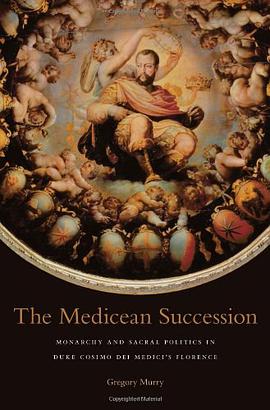
Monarchy and Sacral Politics in Duke Cosimo dei Medici's Florence
Gregory Murry
overview
In 1537, Florentine Duke Alessandro dei Medici was murdered by his cousin and would-be successor, Lorenzino dei Medici. Lorenzino’s treachery forced him into exile, however, and the Florentine senate accepted a compromise candidate, seventeen-year-old Cosimo dei Medici. The senate hoped Cosimo would act as figurehead, leaving the senate to manage political affairs. But Cosimo never acted as a puppet. Instead, by the time of his death in 1574, he had stabilized ducal finances, secured his borders while doubling his territory, attracted an array of scholars and artists to his court, academy, and universities, and, most importantly, dissipated the perennially fractious politics of Florentine life.
Gregory Murry argues that these triumphs were far from a foregone conclusion. Drawing on a wide variety of archival and published sources, he examines how Cosimo and his propagandists successfully crafted an image of Cosimo as a legitimate sacral monarch. Murry posits that both the propaganda and practice of sacral monarchy in Cosimo’s Florence channeled preexisting local religious assumptions as a way to establish continuities with the city’s republican and renaissance past. In The Medicean Succession, Murry elucidates the models of sacral monarchy that Cosimo chose to utilize as he deftly balanced his ambition with the political sensitivities arising from existing religious and secular traditions.
contents
List of Figures*
Prologue: The Scene
Introduction
1. The Familiarity of Terrestrial Divinity
2. Divine Right Rule and the Providential Worldview
3. Rescuing Virtue from Machiavelli
4. Prince or Patrone? Cosimo as Ecclesiastical Patron
5. Cosimo and Savonarolan Reform
6. Defense of the Sacred
Conclusion
Appendix: Glossary of Names
Sources and Abbreviations
Notes
Acknowledgments
Index
* Figures
1.1 Giorgio Vasari, The Apotheosis of Cosimo
6.1 Provenance of priests elected to benefices by communities, 1546–1550
6.2 Provenance of priests elected to benefices by the ordinary, 1546–1550
6.3 Provenance of priests elected to benefices by Rome, 1546–1550
6.4 Percentage of testators demonstrating belief in Purgatory
6.5 Percentage of testators using Catholic identifiers
6.6 Comparison of nobles and nonnobles requesting masses