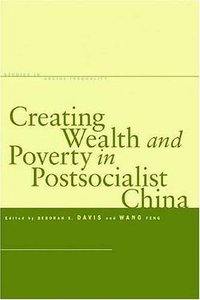
Creating Wealth and Poverty in Postsocialist China
Douban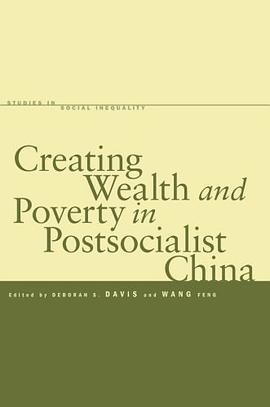
Deborah S. Davis / Wang Feng
overview
The Chinese economy's return to commodification and privatization has greatly diversified China's institutional landscape. With the migration of more than 140 million villagers to cities and rapid urbanization of rural settlements, it is no longer possible to presume that the nation can be divided into strictly urban or rural classifications.
Creating Wealth and Poverty in Postsocialist China draws on a wide variety of recent national surveys and detailed case studies to capture the diversity of postsocialist China and identify the contradictory dynamics forging contemporary social stratification. Focusing on economic inequality, social stratification, power relations, and everyday life chances, the volume provides an overview of postsocialist class order and contributes to current debates over the forces driving global inequalities. This book will be a must read for those interested in social inequality, stratification, class formation, postsocialist transformations, and China and Asian studies.
contents
Part I Poverty, Wealth, and Stratification:The Interconnections
Chapter One Poverty and Wealth in Postsocialist China: An Overview
Chapter Two Market versus Social Benefits: Explaining China’s Changing Income Inequality
Chapter Three Market and Gender Pay Equity: Have Chinese Reforms Narrowed the Gap?
Chapter Four The Labor of Luxury: Gender and Generational Inequality in a Beijing Hotel
Chapter Five The Changing Structure of Employment in Contemporary China
Hide Level Part II Postsocialist Power and Property Relations
Chapter Six Institutional Basis of Social Stratification in Transitional China
Chapter Seven Rethinking Corporatist Bases of Stratification in Rural China
Chapter Eight Creating Wealth: Land Seizure, Local Government, and Farmers
Chapter Nine Resolution Mechanisms for Land Rights Disputes
Hide Level Part III Postsocialist Life Chances
Chapter Ten Regional Inequality in China: Mortality and Health
Chapter Eleven Beyond Cost: Rural Perspectives on Barriers to Education
Chapter Twelve Urban Occupational Mobility and Employment Institutions:Hierarchy, Market, and Networks in a Mixed System
Hide Level Part IV Interpreting Postsocialist Wealth and Poverty
Chapter Thirteen The Social Contours of Distributive Injustice Feelings in Contemporary China
Chapter Fourteen From Inequality to Inequity: Popular Conceptions of Social (In)justicei n Beijing
Chapter Fifteen Social Stratification: The Legacy of the Late Imperial Past
Hide Level Reference Matter
Notes
References
Index