Borderland Memories
豆瓣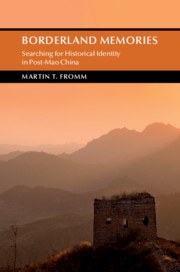
Searching for Historical Identity in Post-Mao China
Martin T. Fromm
简介
In the 1980s, as China transitioned to the post-Mao era, a state-sponsored oral history project led to the publication of local, regional, and national histories. They took the form of written and transcribed personal testimonies of events that preceded the turmoil of both the Cultural Revolution and, in many cases, the Communist victory in 1949. Known as wenshi ziliao, these publications represent an intense process of historical memory production that has received little scholarly attention. Hitherto unexamined archival materials and oral histories reveal unresolved tensions in post-Cultural Revolution reconciliation and mobilization, informing negotiations between local elites and the state, and between Party and non-Party organizations. Taking the northeast Russia–Manchuria borderlands as a case study, Martin T. Fromm examines the creation of post-Mao identities, political mobilization, and knowledge production in China.
目录
Contents pp ix-ix
Acknowledgments pp x-xiv
Introduction pp 1-19
1 - Reconfiguring Cultural Production in the Post-Mao Transition pp 20-44
2 - Borderland Ambiguities in Narratives of Modernization and Liberation pp 45-74
3 - Relocating the Nation outside the Nation: Forging A Borderland Centered Nationalist Discourse pp 75-109
4 - The “Historical Science” of Wenshi Ziliao pp 110-153
5 - Affective Community and Historical Rehabilitation pp 154-199Widely Making Friends To Resecure Political Loyalty
6 - Mobilizing a “Patriotic United Front” pp 200-222
7 - Local, Regional, and National Dynamics of Wenshi Ziliao Production pp 223-254
Conclusion pp 255-260
References pp 261-279
Index pp 280-290