Meditation for Beginners
豆瓣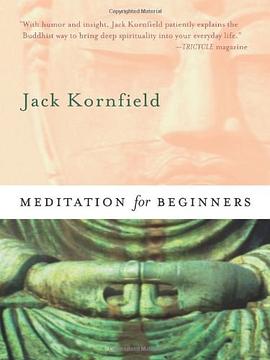
简介
Chapter One
The Ancient Art of Meditation
MEDITATION FOR BEGINNERS offers the central training and teachings found in the best Buddhist monasteries translated for Western society. In Meditation for Beginners, you will find some of the simplest and most universal of these practices of meditation — in particular, the practices of mindfulness and lovingkindness. An integral part of this instruction will be the six fundamental meditation practices included on the enclosed CD. These guided meditations were recorded at actual meditation retreats and are designed to give you a direct experience of the material presented in this book.
The point of these teachings has nothing to do with becoming a Buddhist, or learning any Eastern ceremonies or rituals or bowing. What is important is that you learn how to work with meditation in order to find benefits from it in your life. When we take time to quiet ourselves, we can all sense that our lives could be lived with greater compassion and greater wakefulness. To meditate is to support this inner potential and allow it to come forth into our lives.
There are many good forms of meditation practice. A good meditation practice is any one that develops awareness or mindfulness of our body and our senses, of our mind and heart. It does not really matter which kind you choose. What is more important is that after you choose a form of meditation you stay with it, and practice it regularly. Meditation takes discipline, just like learning how to play the piano. If you want to learn how to play the piano, it takes more than just a few minutes a day, once in a while, here and there. If you really want to learn any important skill—whether it is playing the piano or meditation — it grows with perseverance, patience, and systematic training.
So pick a type of meditation that appeals to you and practice it. Work with it every day, and work with a teacher if you can, or find circumstances where you can sit together with other people. In the process of practicing regularly, you will begin to develop your capacity to open to the present moment. You will begin to develop your capacity to open to the present moment. You will begin to develop patience and compassion when you sit regularly, and you will open to everything that is here.
Meditation for Beginners will present the most important basic exercises for mindfulness meditation, also called vipassana practice, the heart of Buddhist meditation. Vipassana (a Pali word meaning “ to see things as they really are”) is the most widely practiced form of meditation in Southeast Asia and is central to all Buddhist traditions. This practice emphasizes mindful attention, developing an immediate awareness of one’s experience in all spheres of activity.
The meditations in Meditation for Beginners are designed to help you shine the light of mindfulness on every aspect of your daily experience — and to show you how to extend the healing the healing power of lovingkindness to yourself and others. Mindfulness practice is also called “insight meditation.” It does not seek to focus attention on a meditative image of Buddha, or a deity, or a light, or a candle, or sacred words. Instead, through mindfulness we discover a way to develop stillness in the midst of activity. Then, even the most mundane, repetitive experience — such as eating, walking, or answering the phone — can be drawn into the field of meditative awareness, included in the practice of mindfulness. In this way, our meditation is not an exercise that we do every once in a while, but rather away of being that we can carry with us every moment of our days.
Mindfulness helps train us to be more present and alive for whatever we meet to develop what Alan Watts describes as “the art of living”: “The art of living… is neither careless drifting on the one hand nor fearful clinging to the past… on the other. It consists in being completely sensitive to each moment, in regarding it as utterly new and unique, in having the mind open and wholly receptive.”
To begin to meditate is to look into our lives with interest and kindness and discover how to be wakeful and free. We have so many ideas and beliefs about ourselves. We tell ourselves stories about what we want and who we are, smart or kind. Often these are the unexamined and limited ideas of others that we have internalized and then gone on to live out. To meditate is to discover new possibilities, to awaken the capacity that each of us has to live more wisely, more lovingly, more compassionately, and more fully.
目录
CONTENTS
Chapter One: The Ancient Art of Meditation
Chapter Two: Why Meditate
Chapter Three: The Benefits of Meditation Practice
Chapter Four: Meditation 1: Connecting with the Breath
Chapter Five: Meditation 2: Working with Sensations in the Body
Chapter Six: Meditation 3: Working with Feeling and Emotions
Chapter Seven: Meditation 4: Witnessing Your Thoughts
Chapter Eight: Meditation 5: Forgiveness Meditation
Chapter Nine: Meditation 6: Lovingkindness Meditation
Chapter Ten: Meditation 7: An Eating Meditation
Chapter Eleven: Meditation 8: A Walking Meditation
Chapter Twelve: Meditation and Social Responsibility
Chapter Thirteen: How to Cultivate a Daily Meditation Practice
Additional Resources