The Last Ottoman Generation and the Making of the Modern Middle East
豆瓣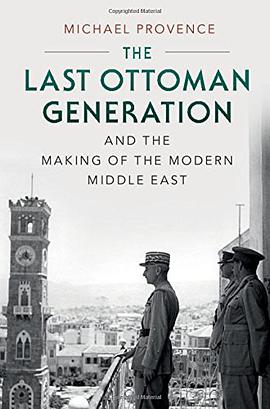
Michael Provence
简介
The modern Middle East emerged out of the collapse of the Ottoman Empire, when Britain and France partitioned the Ottoman Arab lands into several new colonial states. The following period was a charged and transformative time of unrest. Insurgent leaders, trained in Ottoman military tactics and with everything to lose from the fall of the Empire, challenged the mandatory powers in a number of armed revolts. This is a study of this crucial period in Middle Eastern history, tracing the period through popular political movements and the experience of colonial rule. In doing so, Provence emphasises the continuity between the late Ottoman and Colonial era, explaining how national identities emerged, and how the seeds were sown for many of the conflicts which have defined the Middle East in the late twentieth and early twenty-first centuries. This is a valuable read for students of Middle Eastern history and politics.
目录
List of Figures
List of Maps
List of Tables Acknowledgements Notes on Transliteration List of Abbreviations Maps
Political and Military Figures of the Last Ottoman Generation
Introduction
Saladin’s Pilgrims and the War to End Wars Modernity, Militarism, and Colonialism in the Making of the Middle East
Legacies
1 Ottoman Modernity in the Long Nineteenth Century: Training State Servants and Making Citizens
Modern Education and a Late Ottoman Childhood Modernizing the State
Conscription
State Military Education and Elite Civil Education Military Culture and Late Ottoman Society
The Military Academy and Staff College
Modern Infrastructure
Ottoman Sons Become Saviors of the Nation Civilian Politicians and Civil-School Graduates
2 The Theory and Practice of Colonialism in the Post-Ottoman Middle East
Wartime Arrangements and Proclamations
The Paris Peace Conference and Post-War Negotiations
The San Remo Conference and the Treaty of Sèvres
The League of Nations and Anglo-French Colonialism in the Middle East
Mandate Governance in Practice
The Mandate in Palestine
The Mandate in Syria and Lebanon
The Mandate in Iraq and Transjordan
Conclusions
3 Losing the War and Fighting the Settlement: The Post-Ottoman Middle East Takes Shape, 1918 1922
The Battle of Nablus and the End of the Ottoman Empire
Allenby and Faysal in Damascus
Popular Struggle after the Armistice
The Anatolian Model and Hope for Salvation, 1920
San Remo and the Nabi Musa Demonstrations in Jerusalem
Iraq in Revolt 117 Anatolia and Cilicia
Syria and Maysalun
Churchill Salvages the Settlement
Palestine May Day Riots 1921
Ibrahim Hananu Puts the Settlement on Trial
Events in Anatolia
Yasin Pas ̧a Returns to Iraq
The Last Sultan
Conclusions
4 League of Nations Hopes and Disappointments: the Return
of Armed Struggle in the Post-Ottoman Era, 1923 1927
The Lausanne Conference
The League of Nations Picks up the Pieces
The End of the Caliphate
Military Confrontation Eclipsed
Civilian Politicians in Damascus and Jerusalem
Shakib Arslan in Exile
The Rise of Yasin al-Hashimi and the Anglo-Iraqi Treaty
Armed Insurgency in the French Mandates
France Salvages its Mandate
William Rappard, the League of Nations, and France
The End of the Syrian Revolt
Damage Control at Geneva, 1926
Aftermath of the Syrian Revolt 181 Conclusions: Colonial Anxieties and Imperial Rivalries
5 Colonial Constitutions and Treaties: Post-Ottoman
Militarism, 1927 1936
Constitutions and Colonial Treaties: Iraq
Syria and Lebanon 193 Transjordan
Palestine: 1928 and 1929
Nuri al-Sacid Delivers: The Anglo-Iraqi Treaty of 1930
Syrian Elections and Martial Law
Independent Iraq 206 Iraqi Independence and its Discontents
Ibrahim Hananu and a False Start for the Franco-Syrian
Treaty
Desperation in Palestine and the Death of Musa Kazim al-Husayni
Yasin al-Hashimi Retires and then Returns
Fawzi al-Qawuqji in Baghdad
Ibrahim Hananu Exits the Scene
Conclusions
6 The Final Days of the Last Ottoman Generation,1936 1938
General Strikes in Syria and Palestine
The Palestine Revolt
The Franco-Syrian Treaty and Syrian “Independence”
The Fall of Yasin Pas ̧a al-Hashimi
Yasin Pas ̧a in Exile among the Syrians
The Death and Funeral of Yasin al-Hashimi
Conclusions
7 Epilogue and Conclusions
Saladin’s Companions and the Beginning of the End for Anglo-French Colonialism in the Middle East
The Alexandretta Crisis
The Peel Commission and the End of the Palestine Mandate
General Amnesty in Syria
The End of the League of Nations Mandates
The Mandate Inheritance in the Arab East
Select Bibliography
Index