The Nationalist Dilemma
豆瓣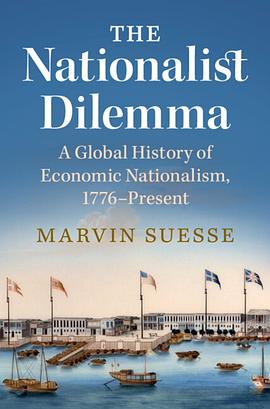
A Global History of Economic Nation
Marvin Suesse
简介
Nationalists think about the economy, Marvin Suesse argues, and this thinking matters once nationalists hold political power. Many nationalists seek to limit global exchange, but others prioritise economic development. The potential conflict between these two goals shapes nationalist policy making. Drawing on historical case studies from thirty countries – from the American Revolution to the rise of China – this book paints a broad panorama of economic nationalism over the past 250 years. It explains why such thinking has become influential, despite the internal contradictions and chequered record of many nationalist policy makers. At the root of economic nationalism's appeal is its ability to capitalise upon economic inequality, both domestic and international. These inequalities are reinforced by political factors such as empire building, ethnic conflicts, and financial crises. This has given rise to powerful nationalist movements that have decisively shaped the global exchange of goods, people, and capital.
目录
1 Introduction: Nationalists Think About the Economy 1
1.1 The Nationalist Dilemma 2
1.2 The Passions and the Interests 7
1.3 Understanding Economic Nationalism 8
2 The American Community of the Common Man, 1776–1860 12
2.1 Introduction 12
2.2 Independence and Integration 14
2.3 The Hamiltonian Proposal 19
2.4 Nationalism Democratised 25
2.5 The American System 31
2.6 Henry Carey and the Harmony of Interests 37
3 The Birth of the National Economy in Europe, 1789–1860 44
3.1 Introduction 44
3.2 Economic Equality and the French Nation 45
3.3 Money and Language: The Romantic Reaction 52
3.4 List’s Unified Theory of Growth 60
3.5 Nations and Empires 69
4 The Globalisation of the Nation, 1861–1913 76
4.1 Introduction 76
4.2 Max Weber and the Struggle of Nations 78
4.3 Conflict and Cooperation in East-Central Europe 88
4.4 Land, Looms and Liberty in India and Ireland 95
4.5 Japan, Russia and the Ottoman Empire: List’s Bitter Triumph 105
5 The Nationalist as Saviour, 1914–1945 121
5.1 Introduction 121
5.2 ‘Men, Money and Markets’ in the British World 123
5.3 Nazi Economics: The Revolution Devours Its Parents 132
5.4 Economic Nation-Building in Palestine 143
5.5 Fighting for Industry: China’s Nationalists at War 151
5.6 From Italy to Romania to Brazil: Mihail Manoilescu’s Dictators 163
vii
Published online by Cambridge University Press
6 Policy in a World of Nation-States, 1946–1978 180
6.1 Introduction 180
6.2 Argentina, Egypt and a Populist Backlash 182
6.3 Nationalism and Socialism: Ghana and Tanzania 194
6.4 The Nationalist Exporting State in East Asia 206
7 The Incomplete Building of a Global Economy, 1979–2001 223
7.1 Introduction 223
7.2 Separatism and the Breakup of the Soviet Economy 225
7.3 The Advent of ‘Wealth and Power’ in China 238
7.4 Diaspora and Development in Malaysia 253
8 Populist Discontents, 2002–2021 268
8.1 Introduction 268
8.2 ‘Gas for Bolivians’: Resource Nationalism and the Environment 270
8.3 The Fragmenting European Union 281
8.4 Chinese Techno-Nationalism and Digital Swadeshi 296
8.5 America First 307
9 Conclusion and Outlook: Explaining Economic
Nationalism 323
Notes 329
Index 410