Honor and Shame in Early China
豆瓣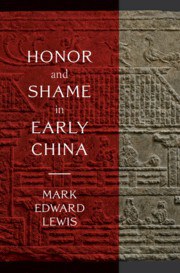
Mark Edward Lewis
简介
In this major new study, Mark Edward Lewis traces how the changing language of honor and shame helped to articulate and justify transformations in Chinese society between the Warring States and the end of the Han dynasty. Through careful examination of a wide variety of texts, he demonstrates how honor-shame discourse justified the actions of diverse and potentially rival groups. Over centuries, the formally recognized political order came to be intertwined with groups articulating alternative models of honor. These groups both participated in the existing order and, through their own visions of what was truly honourable, paved the way for subsequent political structures. Filling a major lacuna in the study of early China, Lewis presents ways in which the early Chinese empires can be fruitfully considered in comparative context and develops a more systematic understanding of the fundamental role of honor/shame in shaping states and societies.
目录
Honor and Shame in Early Chinapp i-ii
Get access
Export citation
Honor and Shame in Early China - Title pagepp iii-iii
Get access
Export citation
Copyright pagepp iv-iv
Get access
Export citation
Contentspp v-v
Get access
Export citation
Acknowledgmentspp vi-vi
Get access
Export citation
Introductionpp 1-16
Get access
Export citation
1 - Honor and Shame of the King and the Warriorpp 17-46
Get access
Export citation
2 - Acquired Honor in the Warring Statespp 47-85
Get access
Export citation
3 - State-Based Honor in the Warring Statespp 86-123
Get access
Export citation
4 - Honor of the Imperial Officialspp 124-156
Get access
Export citation
5 - Honor in Local Society in the Early Empirespp 157-185
Get access
Export citation
6 - Honor and Shame of Writers and Partisanspp 186-218
Get access
Export citation
Conclusionpp 219-221
Get access
Export citation
Works Citedpp 222-242
Get access
Export citation
Indexpp 243-258