Designing Boundaries in Early China
豆瓣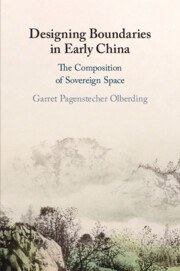
The Composition of Sovereign Space
简介
Ancient Chinese walls, such as the Great Wall of China, were not sovereign border lines. Instead, sovereign space was zonally exerted with monarchical powers expressed gradually over an area, based on possibilities for administrative action. The dynamically shifting, ritualized articulation of early Chinese sovereignty affects the interpretation of the spatial application of state force, including its cartographic representations. In Designing Boundaries in Early China, Garret Pagenstecher Olberding draws on a wide array of source materials concerning the territorialization of space to make a compelling case for how sovereign spaces were defined and regulated in this part of the ancient world. By considering the ways sovereignty extended itself across vast expanses in early China, Olberding informs our understanding of the ancient world and the nature of modern nation-states.
目录
Preamble
1. The basis of ancient borders
2. The visual modeling of space in text and map
3. Movement and geography
4. The perception of the 'state': the internal definition of sovereign space
5. The perception of the 'enemy': the external definition of sovereign space
6. Transgressions: rupturing the boundaries between sovereignties
Conclusion.