Lineage and Community in China, 1100–1500
豆瓣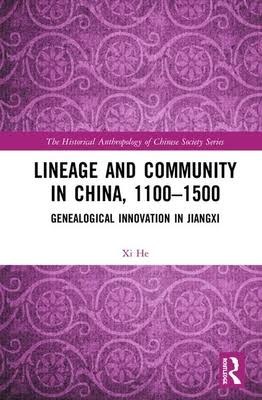
Genealogical Innovation in Jiangxi
He Xi
简介
Tracing descent from common ancestors was extremely important in imperial China. Members of such lineage communities sacrificed to ancestors in periodic ceremonies, maintained written genealogies to demonstrate their descent, and held some properties in common. This book, based on extensive original research, provides evidence that the practice originated much earlier than previously understood. It shows that in the eleventh century, in southern China under the Song dynasty, the method of compiling a genealogy in the form a table, that is, to say a family tree, replaced its statement as a textual paragraph and that this allowed the tracking of multi-line descent in ways that had previously been impossible. The book also reveals that the practice of recording and presenting genealogical information was not originally unique to communities of common surnames, but that the Southern Song government, keen to encourage loyalty to the state and cohesion within communities, favoured the building of common surname lineages, a practice which then had far-reaching consequences for the nature of Chinese society over a very long period.
目录
1. Introduction
Part 1. Jiangxi
2. Turning local, turning literary
3. Economic boom and its limitations
Part 2. Tracing lineages
4. Naming versus co-residence
5. Writing down the genealogy
6. The lineage made real
Part 3. Imagining communities
7. Impetus from religion
8. Loyalty in the Song-Yuan Transition
9. Taxation and land ownership from the Song to the Ming
10. The lineage as ideology in the Ming
11. Conclusion: The elite and the rest