Imperial Identity in Mughal Empire
Douban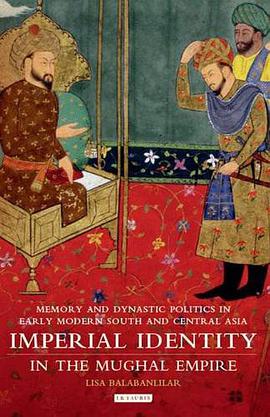
Memory and Dynastic Politics in Early Modern Central Asia
Lisa Balabanlilar
overview
Having monopolized Central Asian politics and culture for over a century, the Timurid ruling elite was forced from its ancestral homeland in Transoxiana at the turn of the sixteenth century by an invading Uzbek tribal confederation. The Timurids travelled south: establishing themselves as the new rulers of a region roughly comprising modern Afghanistan, Pakistan and northern India, and founding what would become the Mughal Empire (1526-1857). The last survivors of the House of Timur, the Mughals drew invaluable political capital from their lineage, which was recognized for its charismatic genealogy and court culture - the features of which are examined here. By identifying Mughal loyalty to Turco-Mongol institutions and traditions, Lisa Balabanlilar here positions the Mughal dynasty at the centre of the early modern Islamic world as the direct successors of a powerful political and religious tradition.
contents
Genealogy of the Timurid-Mughal Dynasty of India. vii
Acknowledgements. xv
A Note on Transliteration. xvii
Maps. xviii
Introduction. 1
Prologue: Timurid Political Charisma and the Ideology of Rule. 7
1. Babur and the Timurid Exile. 18
2. Dynastic Memory and the Genealogical Cult. 37
3. The Peripatetic Court and the Timurid-Mughal Landscape. 71
4. Legitimacy, Restless Princes and the Imperial Succession. 100
5. Conclusion: Imagining Kingship. 140
Notes. 156
Bibliography. 192
Index. 210