In Search of the Folk Daoists of North China
Douban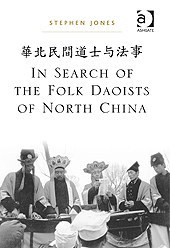
overview
The living practice of Daoist ritual is still only a small part of Daoist studies. Most of this work focuses on the southeast, with the vast area of north China often assumed to be a tabula rasa for local lay liturgical traditions. This book, based on fieldwork, challenges this assumption.
With case studies on parts of Hebei, Shanxi, Shaanxi, and Gansu provinces, Stephen Jones describes ritual sequences within funerals and temple fairs, offering details on occupational hereditary lay Daoists, temple-dwelling priests, and even amateur ritual groups. Stressing performance, Jones observes the changing ritual scene in this poor countryside, both since the 1980s and through all the tribulations of twentieth-century warfare and political campaigns. The whole vocabulary of north Chinese Daoists differs significantly from that of the southeast, which has so far dominated our image.
Largely unstudied by scholars of religion, folk Daoist ritual in north China has been a constant theme of music scholars within China. Stephen Jones places lay Daoists within the wider context of folk religious practices - including those of lay Buddhists, sectarians, and spirit mediums. This book opens up a new field for scholars of religion, ritual, music, and modern Chinese society.
#
Contents: Preface; A well-kept secret; Part 1 Singing from a Different Hymn-Sheet: North and Central Shanxi: North Shanxi; North-central Shanxi. Part 2 Temple-Lay Connections: South Shanxi and South Hebei, Shaanxi and Gansu: South Shanxi and South Hebei; Shaanxi; Gansu. Part 3 Just Can't Get the Staff: the Central Hebei Plain: Introduction: ritual associations on the Hebei plain; Daxing: the Liangshanpo transmission; Bazhou and Jinghai; The western area: Houshan and the Houtu cult. Conclusion: It's Daoism, but not as we know it; Appendices; Bibliography; Glossary; Index.
#
About the Author: Stephen Jones read classical Chinese at Cambridge, and has been documenting living traditions of folk music in rural China since 1986. Since 1993 he has held research fellowships at SOAS, London University. He is author of the influential Folk music of China: living instrumental traditions, Plucking the winds, and his two volumes Ritual and music of north China (Ashgate, 2007, 2009), on north Shanxi and Shaanbei respectively, both include DVD documentaries. He is also a violinist in leading early music ensembles in London.
#
Reviews: 'In this groundbreaking study, Stephen Jones brings to light the service of Daoist rites among common people in northern China and compares them with what until now have been far better researched Daoist ritual performances in southern China. From his extensive fieldwork, he provides convincing evidence that distinctive Daoist ritual traditions are deeply embedded in rural northern China.'
Stephan Feuchtwang, London School of Economics, UK
Stephen Jones' twenty years of fieldwork with Daoists and musicians in north China come to full blossom with this superb book. Its comparative project is admirably ambitious, looking at key rituals done very differently across an area as wide as Europe; yet the writing always remains lively, witty and focused on actual people and performance rather than theories.
Vincent Goossaert, CNRS, author of The Taoists of Peking
contents
Contents
List of Illustrations vii
List of Maps and Tables ix
Preface xi
Acknowledgements xiii
Terms used in the text xv
1 A well-kept secret 1
1.1 Religious practice; 1.2 Daoists of north China;
1.3 Rituals, jiao, and Quanzhen/Zhengyi; 1.4 Fieldwork on
‘religious music’; 1.5 Other sources; 1.6 Sects; 1.7 Time-frame
Part One: Singing from a different hymn-sheet: north and
central Shanxi
2 North Shanxi 35
2.1 Yanggao; 2.2 Elsewhere in north Shanxi; 2.3 Yangyuan
3 North–central Shanxi 65
3.1 Hunyuan; 3.2 Xinzhou; 3.3 The Wutai area;
3.4 Occasional rituals
Part Two: Temple–lay connections: south Shanxi and south Hebei,
Shaanxi and Gansu
4 South Shanxi and south Hebei 85
4.1 South Shanxi; 4.2 South Hebei
5 Shaanxi 95
5.1 Shaanbei; 5.2 Changwu
6 Gansu 107
6.1 Zhangye; 6.2 Jingtai
Part Three: Just can’t get the staff: the central Hebei plain
Introduction: Ritual associations on the Hebei plain 117
7 Daxing: the Liangshanpo transmission 131
7.1 The Liangshanpo Daoists; 7.2 Village transmissions;
7.3 Buddhist-transmitted groups; 7.4 A Buddhist and
Daoist funeral; 7.5 Langfang
8 Bazhou and Jinghai 145
8.1 Sheng tuners; 8.2 The Chenghuangmiao in Gu'an;
8.3 Other temples practising folk ritual; 8.4 Zhangzhuang;
vi In Search of the Folk Daoists of North China
8.5 Gaoqiao; 8.6 Other nearby groups; 8.7 Jinghai and the
eastern area
9 The western area: Houshan and the Houtu cult 165
9.1 Houtu; 9.2 The Houshan Daoists; 9.3 The local ritual network;
9.4 Houshan before and after Liberation; 9.5 Recent observances
on Houshan; 9.6 Other Houtu temples; 9.7 Other ritual groups;
9.8 Funeral practice; 9.9 Some major rituals becoming rare;
9.10 Conclusion
Conclusion
10 It’s Daoism, but not as we know it 205
10.1 Joining Up the Dots, Chasing the Red Herring;
10.2 Daoist ritual in ‘north’ and ‘south’ China
Appendices
1 Ritual practice in Beijing and Tianjin cities 219
2 Some ritual songs in central Hebei 233
3 Precious scrolls of central Hebei 237
4 Some sites for living folk ritual activity in Shanxi 263
Bibliography 265
Glossary–Index 277