Government, Imperialism and Nationalism in China
豆瓣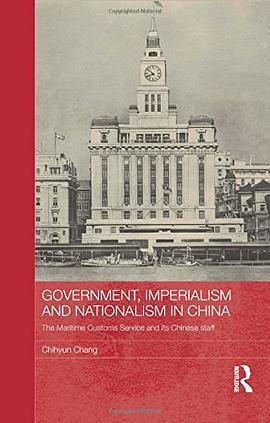
The Maritime Customs Service and its Chinese Staff
Chihyun Chang
简介
The Chinese Maritime Customs Service, which was led by British staff, is often seen as one of the key agents of Western imperialism in China, the customs revenue being one of the major sources of Chinese government income but a source much of which was pledged to Western banks as the collateral for, and interests payments on, massive loans. This book, however, based on extensive original research, considers the lower level staff of the Chinese Maritime Customs Service, and shows how the Chinese government, struggling to master Western expertise in many areas, pursued a deliberate policy of encouraging lower level staff to learn from their Western superiors with a view to eventually supplanting them, a policy which was successfully carried out. The book thereby demonstrates that Chinese engagement with Western imperialists was in fact an essential part of Chinese national state-building, and that what looked like a key branch of Chinese government delegated to foreigners was in fact very much under Chinese government control.
目录
Introduction
Part 1: The Decline of China and the Rise of the Chinese Maritime Customs Service (CMCS), 1895-1927
1. Late Qing's Reforms
2. China's Supreme Minister of Finance, 1912-1929
3. Chinese Staff and Customs College 1908-1929
Part 2: Mutual Benefits
4. Coup d’état, 1927-1929
5. Cooperation with the Nationalists, 1929-1937
6. The Sole Recruiting Ground, 1929-1937
Part 3: Wars, Retreats and Continuity
7. The Inspectorate in Isolated Shanghai, 1937-1945
8. The Reestablishments of the CMCS, 1941-1949
9. Transformation to a Training Institute, 1937-1949
Part 4: Decline in the Two Chinese States
10. The Reorganisation in Continuous Revolution
11. The Remaking of the CMCS in Taiwan