Melville
豆瓣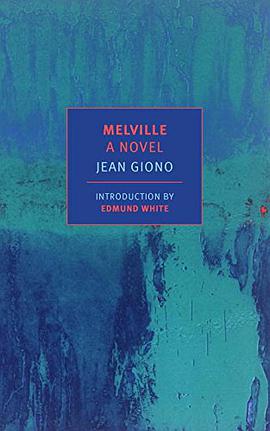
A Novel
Jean Giono Paul Eprile
简介
In the fall of 1849, Herman Melville traveled to London to deliver his novel White-Jacket to his publisher. On his return to America, Melville would write Moby-Dick. Melville: A Novel imagines what happened in between: the adventurous writer fleeing London for the country, wrestling with an angel, falling in love with an Irish nationalist, and, finally, meeting the angel’s challenge—to express man’s fate by writing the novel that would become his masterpiece.
Eighty years after it appeared in English, Moby-Dick was translated into French for the first time by the Provençal novelist Jean Giono and his friend Lucien Jacques. The publisher persuaded Giono to write a preface, granting him unusual latitude. The result was this literary essai,
Melville: A Novel—part biography, part philosophical rumination, part romance, part unfettered fantasy. Paul Eprile’s expressive translation of this intimate homage brings the exchange full circle.
目录
"For Giono, literature and reality overlap the way that waves sweep over the shore, one ceaselessly refreshing the other and, in certain wondrous moments, giving it a glassy clearness.” —Ryu Spaeth, New Republic
"This lyrical novel reimagines Herman Melville’s life and adds a hauntingly atmospheric spin….This isn’t your typical fictionalized life of a writer—instead, it’s an unexpected meditation on the convergence of two literary lives.” —Kirkus Reviews
"Giono illustrates how an author’s artistic output enriches and illuminates his life, in ways that historical facts cannot provide...Giono expands Melville’s context, painting him as a transatlantic heir to Milton and Shakespeare. At the same time, he also expands Melville’s own influence, cementing his impact on French culture, which has been considerable.” —Adam Fales, Los Angeles Review of Books
“Giono’s writing possesses a vigor, a surprising texture, a contagious joy, a sureness of touch and design, an arresting originality, and that sort of unfeigned strangeness that always goes along with sincerity when it escapes from the ruts of convention.” –André Gide, unpublished letter, 1929
“Melville is a powerful testament to the magic of words.” —Edmund White, The New York Review of Books
“After reading Pour saluer Melville, which is a poet’s interpretation of a poet—‘a pure invention,’ as Giono said in a letter—I was literally beside myself. How often is it the foreigner who teaches us to appreciate our own authors!” —Henry Miller