Reshaping the Frontier Landscape
豆瓣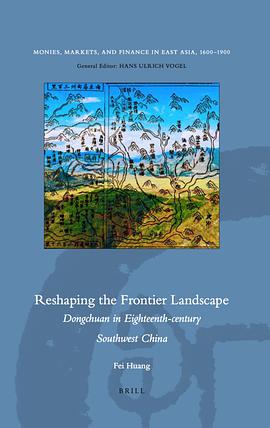
Dongchuan in Eighteenth-century Southwest China
Fei Huang
简介
In Reshaping the Frontier Landscape: Dongchuan in Eighteenth-century Southwest China, Fei HUANG examines the process of reshaping the landscape of Dongchuan, a remote frontier city in Southwest China in the eighteenth century. Rich copper deposits transformed Dongchuan into one of the key outposts of the Qing dynasty, a nexus of encounters between various groups competing for power and space. The frontier landscape bears silent witness to the changes in its people’s daily lives and in their memories and imaginations. The literati, officials, itinerant merchants, commoners and the indigenous people who lived there shaped and reshaped the local landscape by their physical efforts and cultural representations. This book demonstrates how multiple landscape experiences developed among various people in dependencies, conflicts and negotiations in the imperial frontier.
目录
Table of Contents
Acknowledgements
Figures, Maps and Tables:
Introduction: Landscape and the Imperial Frontier
Dongchuan and northeastern Yunnan
A Landscape Studies Approach
Landscape in the Empire’s Frontier
The Sources
Procedure
Conclusion
Chapter 1 Paving the Way
Mountain and Road
Inside and Outside of the River
The Jinsha River and the Copper Transports
Conclusion
Chapter 2 Valley and Mountain
Moving from the Mountains into the Bazi
1700-1730s War: Completing the Bazi
Spatial Network of the Copper Business
Newcomers, Indigenous People and Landscape Transformation
Conclusion
Chapter 3 The Walled City
The Indigenous Strongholds on the Huize Bazi
Building the Stone-Walled City
Top-Down or Bottom-Up?
The Planning of an Ideal Civilized Walled City
Conclusion
Chapter 4 Ten Views
The Scenic View Tradition
Sightseeing, the New Gazetteer and the Ten Views
The Ten Views and the Conventional Format
The Ten Views, Local Geography and the Copper Transportation
Conclusion
Chapter 5 Zhenwu Shine and Dragon Pool
The Mountain, the Temple and the Shrine
Replacing the Dragon Cult
Praying, Entertaining and Remembering
Conclusion
Chapter 6 Two Wenchang Temples
Relocating to Auspicious Sites?
“Huayizhai” or “Wanizhai”?
Preventing Water Disasters
Contesting Space between the Han and the Indigenous People
Conclusion
Chapter 7 Ancestors, Chieftains and Indigenous Women
The Meng Yan Shrine: An Indigenous General Who Surrendered
Shesai and the Origin of the Lu Surname
“Fake” Han Chinese People or “Fake” Indigenous People
Conclusion
Chapter 8 The New Mansions
Huiguan Associations in Frontier
Building the Huiguan
Conclusion
Conclusion
Abbreviations
Bibliography
Index