Creating Confucian Authority
豆瓣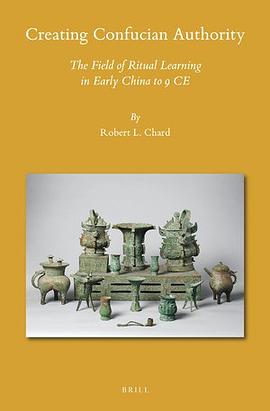
The Field of Ritual Learning in Early China to 9 CE
Robert L. Chard
简介
Ritual Learning was the engine that drove the cultural dominance of Confucianism. In early China, Confucian officials derive political influence from the sub-discipline of ritual. Imperial regimes establish legitimacy through their state religion, headed by cults to ancestors and to deities of Heaven and Earth. Ritual Learning allows Confucian-educated officials to assert control over these cults, and reshape dynastic legitimacy according to their own design, claimed to derive from the sage kings of antiquity. Confucianism is not just a philosophical and intellectual tradition. Through its ritual tradition, it has cultural and political power, like that of a religion, allowing it to perpetuate itself successfully over time, even in contemporary China.
目录
Contents
Preface
1 Introduction
1A Prologue – The Case of Shusun Tong 叔孫通
2Ritual and Ritual Learning
2 The Golden Age of Ritual: The World of the Zuo zhuan, and the Analects (Lun yu) on Confucius
1The Western Zhou
2The Spring and Autumn Period and the World of the Zuo zhuan
3Ritual Learning in the Lun yu (Analects)
3 The Ritual Culture of the Ru – Ritual Learning in the Warring States and Early Han
1The Ru (“Confucians”)
2Pre-Han Precursors of the Ritual Canon Li 禮
3Pre-Han Antecedents of the Li ji 禮記
4Non-textual Masters of li – Shusun Tong 叔孫通 and His Successors in the Early Han Court
4 The “Victory” of Ritual Learning – Western Han
1Early Western Han – Emperors Wen and Jing (180–141 BCE)
2Emperor Wu (141–87 BCE)
3Texts on Ritual Learning
4Old vs New – Ritual Learning in Late Western Han
5 Conclusion and Final Arguments
Bibliography
Index