朱莉·泰莫 — 导演 (8)
俄底浦斯王 (1993) [电影] IMDb 豆瓣
Oedipus Rex
9.8 (6 个评分) 导演: Julie Taymor 演员: Jessye Norman / Philip Langridge
其它标题: Oedipus Rex / 斯特拉文斯基 清唱剧《俄底浦斯王》
一个非常特别的版本。棚内拍摄,效果惊人,运用了大量道具、舞蹈、灯光和布景,以及日本能剧演员的旁白说书角色。
魔笛 2017年大都会歌剧团版 [演出] 豆瓣
所属 演出: 魔笛
语言: german 德语 剧团: Metropolitan Opera Orchestra 大都会歌剧团管弦乐团 ; Metropolitan Opera Chorus 大都会歌剧团合唱团 剧院: Metropolitan Opera House 大都会歌剧院 导演: Julie Taymor / David Kneuss
其它标题: 2017年大都会歌剧团版 编剧: Emanuel Schikaneder 作曲: Wolfgang Amadeus Mozart 演员: Charles Castronovo / Golda Schultz
The opera begins with the overture, which Mozart composed last.
Act 1
Scene 1: A rough, rocky landscape
Tamino, a handsome prince lost in a distant land, is pursued by a serpent and asks the gods to save him (aria: "Zu Hilfe! Zu Hilfe!" segued into trio: "Stirb, Ungeheuer, durch uns're Macht!"). He faints, and three ladies, attendants of the Queen of the Night, appear and kill the serpent. They find the unconscious prince extremely attractive, and each of them tries to convince the other two to leave. After arguing, they reluctantly decide to leave together.
Tamino wakes up, and is surprised to find himself still alive. Papageno enters dressed as a bird. He describes his life as a bird-catcher, complaining he has no wife or girlfriend (aria: "Der Vogelfänger bin ich ja"). Tamino introduces himself to Papageno, thinking Papageno killed the serpent. Papageno happily takes the credit – claiming he strangled it with his bare hands. The three ladies suddenly reappear and instead of giving Papageno wine, cake and figs, they give him water, a stone and place a padlock over his mouth as a warning not to lie. They give Tamino a portrait of the Queen of the Night's daughter Pamina, with whom Tamino falls instantly in love (aria: "Dies Bildnis ist bezaubernd schön" / This image is enchantingly beautiful).
The ladies return and tell Tamino that Pamina has been captured by Sarastro, whom they describe as a powerful, evil demon. Tamino vows to rescue Pamina. The Queen of the Night appears and promises Tamino that Pamina will be his if he rescues her from Sarastro (Recitative and aria: "O zittre nicht, mein lieber Sohn" / Oh, tremble not, my dear son!). The Queen leaves and the ladies remove the padlock from Papageno's mouth with a warning not to lie any more. They give Tamino a magic flute which has the power to change sorrow into joy. They tell Papageno to go with Tamino, and give him (Papageno) magic bells for protection. The ladies introduce three child-spirits, who will guide Tamino and Papageno to Sarastro's temple. Together Tamino and Papageno set forth (Quintet: "Hm! Hm! Hm! Hm!").
Scene 2: A room in Sarastro's palace
Pamina is dragged in by Sarastro's slaves, apparently having tried to escape. Monostatos, a blackamoor and chief of the slaves, orders the slaves to chain her and leave him alone with her. Papageno, sent ahead by Tamino to help find Pamina, enters (Trio: "Du feines Täubchen, nur herein!"). Monostatos and Papageno are each terrified by the other's strange appearance and both flee. Papageno returns and announces to Pamina that her mother has sent Tamino to save her. Pamina rejoices to hear that Tamino is in love with her. She offers sympathy and hope to Papageno, who longs for a wife. Together they reflect on the joys and sacred duties of marital love (duet: "Bei Männern welche Liebe fühlen").
Finale. Scene 3: A grove in front of a temple
The three child-spirits lead Tamino to Sarastro's temple, promising that if he remains patient, wise and steadfast, he will succeed in rescuing Pamina (Quartet: "Zum Ziele führt dich diese Bahn"). Tamino approaches the left-hand entrance and is denied access by voices from within. The same happens when he goes to the entrance on the right. But from the entrance in the middle, an old priest appears and lets Tamino in. (The old priest is referred to as "The Speaker" in the libretto, but his role is a singing role.) He tells Tamino that Sarastro is benevolent, not evil, and that he should not trust the Queen of the Night. He promises that Tamino's confusion will be lifted when Tamino approaches the temple in a spirit of friendship. Tamino plays his magic flute. Animals appear and dance, enraptured, to his music. Tamino hears Papageno's pipes sounding offstage, and hurries off to find him (aria: "Wie stark ist nicht dein Zauberton").
Papageno and Pamina enter, searching for Tamino (trio: "Schnelle Füße, rascher Mut"). They are recaptured by Monostatos and his slaves. Papageno plays his magic bells, and Monostatos and his slaves begin to dance, and exit the stage, still dancing, mesmerised by the beauty of the music (chorus: "Das klinget so herrlich"). Papageno and Pamina hear the sound of Sarastro's retinue approaching. Papageno is frightened and asks Pamina what they should say. She answers that they must tell the truth. Sarastro enters, with a crowd of followers. (chorus: "Es lebe Sarastro!")
Pamina falls at Sarastro's feet and confesses that she tried to escape because Monostatos had forced his attentions on her. Sarastro receives her kindly and assures her that he wishes only for her happiness. But he refuses to return her to her mother, whom he describes as a proud, headstrong woman, and a bad influence on those around her. Pamina, he says, must be guided by a man.
Monostatos brings in Tamino. The two lovers see one another for the first time and embrace, causing indignation among Sarastro's followers. Monostatos tells Sarastro that he caught Papageno and Pamina trying to escape, and demands a reward. Sarastro, however, punishes Monostatos for his lustful behaviour toward Pamina, and sends him away. He announces that Tamino must undergo trials of wisdom in order to become worthy as Pamina's husband. The priests declare that virtue and righteousness will sanctify life and make mortals like gods ("Wenn Tugend und Gerechtigkeit").
Act 2
Scene 1: A grove of palms
The council of priests of Isis and Osiris, headed by Sarastro, enters to the sound of a solemn march. Sarastro tells the priests that Tamino is ready to undergo the ordeals that will lead to enlightenment. He invokes the gods Isis and Osiris, asking them to protect Tamino and Pamina (Aria and chorus: "O Isis und Osiris").
Scene 2: The courtyard of the Temple of Ordeal
Tamino and Papageno are led in by two priests for the first trial. The two priests advise Tamino and Papageno of the dangers ahead of them, warn them of women's wiles and swear them to silence (Duet: "Bewahret euch von Weibertücken"). The three ladies appear and try to frighten Tamino and Papageno into speaking. (Quintet: "Wie, wie, wie") Papageno cannot resist answering the ladies, but Tamino remains aloof, angrily instructing Papageno not to listen to the ladies' threats and to keep quiet. Seeing that Tamino will not speak to them, the ladies withdraw in confusion.
Scene 3: A garden
Pamina is asleep. Monostatos approaches and gazes upon her with rapture. (Aria: "Alles fühlt der Liebe Freuden") He is about to kiss the sleeping Pamina, when the Queen of the Night appears. Monostatos hides. In response to the Queen's questioning, Pamina explains that Tamino is joining Sarastro's brotherhood and she is thinking of accompanying him too. The Queen is not pleased. She explains that her husband was the previous owner of the temple and on his deathbed, gave the ownership to Sarastro instead of her, rendering the Queen powerless (this is in the original libretto, but is usually omitted from modern productions, to shorten the scene with Pamina and her mother). She gives Pamina a dagger, ordering her to kill Sarastro with it and threatening to disown her if she does not. (Aria: "Der Hölle Rache kocht in meinem Herzen"). She leaves. Monostatos returns and tries to force Pamina's love by threatening to reveal the Queen's plot, but Sarastro enters and drives him off. Pamina begs Sarastro to forgive her mother and he reassures her that revenge and cruelty have no place in his domain (Aria: "In diesen heil'gen Hallen").
Scene 4: A hall in the Temple of Ordeal
Tamino and Papageno are led in by priests, who remind them that they must remain silent. Papageno complains of thirst. An old woman enters and offers Papageno a cup of water. He drinks and teasingly asks whether she has a boyfriend. She replies that she does and that his name is Papageno. She disappears as Papageno asks for her name, and the three child-spirits bring in food, the magic flute, and the bells, sent from Sarastro (Trio: "Seid uns zum zweiten Mal willkommen"). Tamino begins to play the flute, which summons Pamina. She tries to speak with him, but Tamino, bound by his vow of silence, cannot answer her, and Pamina begins to believe that he no longer loves her. (Aria: "Ach, ich fühl's, es ist verschwunden") She leaves in despair.
Scene 5: The pyramids
The priests celebrate Tamino's successes so far, and pray that he will succeed and become worthy of their order (Chorus: "O Isis und Osiris"). Pamina is brought in and Sarastro instructs Pamina and Tamino to bid each other farewell before the greater trials ahead, alarming them by describing it as their "final farewell". (Trio: Sarastro, Pamina, Tamino – "Soll ich dich, Teurer, nicht mehr sehn?" Note: In order to preserve the continuity of Pamina's suicidal feelings, this trio is sometimes performed earlier in act 2, preceding or immediately following Sarastro's aria "O Isis und Osiris".[f][30]) They exit and Papageno enters. The priests grant his request for a glass of wine and he expresses his desire for a wife. (Aria: "Ein Mädchen oder Weibchen"). The elderly woman reappears and warns him that unless he immediately promises to marry her, he will be imprisoned forever. When Papageno promises to love her faithfully (muttering that he will only do this until something better comes along), she is transformed into the young and pretty Papagena. Papageno rushes to embrace her, but the priests drive him back, telling him that he is not yet worthy of her.
Finale. Scene 6: A garden
The three child-spirits hail the dawn. They observe Pamina, who is contemplating suicide because she believes Tamino has abandoned her. The child-spirits restrain her and reassure her of Tamino's love. (Quartet: "Bald prangt, den Morgen zu verkünden").
Scene change without interrupting the music, to Scene 7: Outside the Temple of Ordeal
Two men in armor lead in Tamino. They recite one of the formal creeds of Isis and Osiris, promising enlightenment to those who successfully overcome the fear of death ("Der, welcher wandert diese Strasse voll Beschwerden"). This recitation takes the musical form of a Baroque chorale prelude, to a tune inspired by Martin Luther's hymn "Ach Gott, vom Himmel sieh darein" (Oh God, look down from heaven).[g][32] Tamino declares that he is ready to be tested. Pamina calls to him from offstage. The men in armour assure him that the trial by silence is over and he is free to speak with her. Pamina enters and declares her intention to undergo the remaining trials with him. She hands him the magic flute to help them through the trials ("Tamino mein, o welch ein Glück!"). Protected by the music of the magic flute, they pass unscathed through chambers of fire and water. Offstage, the priests hail their triumph and invite the couple to enter the temple.
Scene change without interrupting the music, to Scene 8: A garden with a tree
Papageno despairs at having lost Papagena and decides to hang himself (Aria/Quartet: "Papagena! Papagena! Papagena! Weibchen, Täubchen, meine Schöne") The three child-spirits appear and stop him. They advise him to play his magic bells to summon Papagena. She appears and, united, the happy couple stutter in astonishment and make bird-like courting sounds at each other. They plan their future and dream of the many children they will have together (Duet: "Pa... pa... pa...").
Scene change without interrupting the music, to Scene 9: A rocky landscape outside the temple; night
The traitorous Monostatos appears with the Queen of the Night and her three ladies. They plot to destroy the temple ("Nur stille, stille") and the Queen confirms that she has promised her daughter Pamina to Monostatos. But before the conspirators can enter the temple, they are magically cast out into eternal night.
Scene change without interrupting the music, to Scene 10: The Temple of the Sun
Sarastro announces the sun's triumph over the night, and hails the dawn of a new era of wisdom and brotherhood. Animals appear again and dance in the sun.
魔笛 2006年大都会歌剧团版 [演出] 豆瓣
所属 演出: 魔笛
语言: english 英语 剧团: Metropolitan Opera Orchestra 大都会歌剧团管弦乐团 ; Metropolitan Opera Chorus 大都会歌剧团合唱团 剧院: Metropolitan Opera House 大都会歌剧院 导演: Julie Taymor
其它标题: 2006年大都会歌剧团版 编剧: Emanuel Schikaneder / J. D. McClatchy 作曲: Wolfgang Amadeus Mozart 演员: Matthew Polenzani / 黄英
The opera begins with the overture, which Mozart composed last.
Act 1
Scene 1: A rough, rocky landscape
Tamino, a handsome prince lost in a distant land, is pursued by a serpent and asks the gods to save him (aria: "Zu Hilfe! Zu Hilfe!" segued into trio: "Stirb, Ungeheuer, durch uns're Macht!"). He faints, and three ladies, attendants of the Queen of the Night, appear and kill the serpent. They find the unconscious prince extremely attractive, and each of them tries to convince the other two to leave. After arguing, they reluctantly decide to leave together.
Tamino wakes up, and is surprised to find himself still alive. Papageno enters dressed as a bird. He describes his life as a bird-catcher, complaining he has no wife or girlfriend (aria: "Der Vogelfänger bin ich ja"). Tamino introduces himself to Papageno, thinking Papageno killed the serpent. Papageno happily takes the credit – claiming he strangled it with his bare hands. The three ladies suddenly reappear and instead of giving Papageno wine, cake and figs, they give him water, a stone and place a padlock over his mouth as a warning not to lie. They give Tamino a portrait of the Queen of the Night's daughter Pamina, with whom Tamino falls instantly in love (aria: "Dies Bildnis ist bezaubernd schön" / This image is enchantingly beautiful).
The ladies return and tell Tamino that Pamina has been captured by Sarastro, whom they describe as a powerful, evil demon. Tamino vows to rescue Pamina. The Queen of the Night appears and promises Tamino that Pamina will be his if he rescues her from Sarastro (Recitative and aria: "O zittre nicht, mein lieber Sohn" / Oh, tremble not, my dear son!). The Queen leaves and the ladies remove the padlock from Papageno's mouth with a warning not to lie any more. They give Tamino a magic flute which has the power to change sorrow into joy. They tell Papageno to go with Tamino, and give him (Papageno) magic bells for protection. The ladies introduce three child-spirits, who will guide Tamino and Papageno to Sarastro's temple. Together Tamino and Papageno set forth (Quintet: "Hm! Hm! Hm! Hm!").
Scene 2: A room in Sarastro's palace
Pamina is dragged in by Sarastro's slaves, apparently having tried to escape. Monostatos, a blackamoor and chief of the slaves, orders the slaves to chain her and leave him alone with her. Papageno, sent ahead by Tamino to help find Pamina, enters (Trio: "Du feines Täubchen, nur herein!"). Monostatos and Papageno are each terrified by the other's strange appearance and both flee. Papageno returns and announces to Pamina that her mother has sent Tamino to save her. Pamina rejoices to hear that Tamino is in love with her. She offers sympathy and hope to Papageno, who longs for a wife. Together they reflect on the joys and sacred duties of marital love (duet: "Bei Männern welche Liebe fühlen").
Finale. Scene 3: A grove in front of a temple
The three child-spirits lead Tamino to Sarastro's temple, promising that if he remains patient, wise and steadfast, he will succeed in rescuing Pamina (Quartet: "Zum Ziele führt dich diese Bahn"). Tamino approaches the left-hand entrance and is denied access by voices from within. The same happens when he goes to the entrance on the right. But from the entrance in the middle, an old priest appears and lets Tamino in. (The old priest is referred to as "The Speaker" in the libretto, but his role is a singing role.) He tells Tamino that Sarastro is benevolent, not evil, and that he should not trust the Queen of the Night. He promises that Tamino's confusion will be lifted when Tamino approaches the temple in a spirit of friendship. Tamino plays his magic flute. Animals appear and dance, enraptured, to his music. Tamino hears Papageno's pipes sounding offstage, and hurries off to find him (aria: "Wie stark ist nicht dein Zauberton").
Papageno and Pamina enter, searching for Tamino (trio: "Schnelle Füße, rascher Mut"). They are recaptured by Monostatos and his slaves. Papageno plays his magic bells, and Monostatos and his slaves begin to dance, and exit the stage, still dancing, mesmerised by the beauty of the music (chorus: "Das klinget so herrlich"). Papageno and Pamina hear the sound of Sarastro's retinue approaching. Papageno is frightened and asks Pamina what they should say. She answers that they must tell the truth. Sarastro enters, with a crowd of followers. (chorus: "Es lebe Sarastro!")
Pamina falls at Sarastro's feet and confesses that she tried to escape because Monostatos had forced his attentions on her. Sarastro receives her kindly and assures her that he wishes only for her happiness. But he refuses to return her to her mother, whom he describes as a proud, headstrong woman, and a bad influence on those around her. Pamina, he says, must be guided by a man.
Monostatos brings in Tamino. The two lovers see one another for the first time and embrace, causing indignation among Sarastro's followers. Monostatos tells Sarastro that he caught Papageno and Pamina trying to escape, and demands a reward. Sarastro, however, punishes Monostatos for his lustful behaviour toward Pamina, and sends him away. He announces that Tamino must undergo trials of wisdom in order to become worthy as Pamina's husband. The priests declare that virtue and righteousness will sanctify life and make mortals like gods ("Wenn Tugend und Gerechtigkeit").
Act 2
Scene 1: A grove of palms
The council of priests of Isis and Osiris, headed by Sarastro, enters to the sound of a solemn march. Sarastro tells the priests that Tamino is ready to undergo the ordeals that will lead to enlightenment. He invokes the gods Isis and Osiris, asking them to protect Tamino and Pamina (Aria and chorus: "O Isis und Osiris").
Scene 2: The courtyard of the Temple of Ordeal
Tamino and Papageno are led in by two priests for the first trial. The two priests advise Tamino and Papageno of the dangers ahead of them, warn them of women's wiles and swear them to silence (Duet: "Bewahret euch von Weibertücken"). The three ladies appear and try to frighten Tamino and Papageno into speaking. (Quintet: "Wie, wie, wie") Papageno cannot resist answering the ladies, but Tamino remains aloof, angrily instructing Papageno not to listen to the ladies' threats and to keep quiet. Seeing that Tamino will not speak to them, the ladies withdraw in confusion.
Scene 3: A garden
Pamina is asleep. Monostatos approaches and gazes upon her with rapture. (Aria: "Alles fühlt der Liebe Freuden") He is about to kiss the sleeping Pamina, when the Queen of the Night appears. Monostatos hides. In response to the Queen's questioning, Pamina explains that Tamino is joining Sarastro's brotherhood and she is thinking of accompanying him too. The Queen is not pleased. She explains that her husband was the previous owner of the temple and on his deathbed, gave the ownership to Sarastro instead of her, rendering the Queen powerless (this is in the original libretto, but is usually omitted from modern productions, to shorten the scene with Pamina and her mother). She gives Pamina a dagger, ordering her to kill Sarastro with it and threatening to disown her if she does not. (Aria: "Der Hölle Rache kocht in meinem Herzen"). She leaves. Monostatos returns and tries to force Pamina's love by threatening to reveal the Queen's plot, but Sarastro enters and drives him off. Pamina begs Sarastro to forgive her mother and he reassures her that revenge and cruelty have no place in his domain (Aria: "In diesen heil'gen Hallen").
Scene 4: A hall in the Temple of Ordeal
Tamino and Papageno are led in by priests, who remind them that they must remain silent. Papageno complains of thirst. An old woman enters and offers Papageno a cup of water. He drinks and teasingly asks whether she has a boyfriend. She replies that she does and that his name is Papageno. She disappears as Papageno asks for her name, and the three child-spirits bring in food, the magic flute, and the bells, sent from Sarastro (Trio: "Seid uns zum zweiten Mal willkommen"). Tamino begins to play the flute, which summons Pamina. She tries to speak with him, but Tamino, bound by his vow of silence, cannot answer her, and Pamina begins to believe that he no longer loves her. (Aria: "Ach, ich fühl's, es ist verschwunden") She leaves in despair.
Scene 5: The pyramids
The priests celebrate Tamino's successes so far, and pray that he will succeed and become worthy of their order (Chorus: "O Isis und Osiris"). Pamina is brought in and Sarastro instructs Pamina and Tamino to bid each other farewell before the greater trials ahead, alarming them by describing it as their "final farewell". (Trio: Sarastro, Pamina, Tamino – "Soll ich dich, Teurer, nicht mehr sehn?" Note: In order to preserve the continuity of Pamina's suicidal feelings, this trio is sometimes performed earlier in act 2, preceding or immediately following Sarastro's aria "O Isis und Osiris".[f][30]) They exit and Papageno enters. The priests grant his request for a glass of wine and he expresses his desire for a wife. (Aria: "Ein Mädchen oder Weibchen"). The elderly woman reappears and warns him that unless he immediately promises to marry her, he will be imprisoned forever. When Papageno promises to love her faithfully (muttering that he will only do this until something better comes along), she is transformed into the young and pretty Papagena. Papageno rushes to embrace her, but the priests drive him back, telling him that he is not yet worthy of her.
Finale. Scene 6: A garden
The three child-spirits hail the dawn. They observe Pamina, who is contemplating suicide because she believes Tamino has abandoned her. The child-spirits restrain her and reassure her of Tamino's love. (Quartet: "Bald prangt, den Morgen zu verkünden").
Scene change without interrupting the music, to Scene 7: Outside the Temple of Ordeal
Two men in armor lead in Tamino. They recite one of the formal creeds of Isis and Osiris, promising enlightenment to those who successfully overcome the fear of death ("Der, welcher wandert diese Strasse voll Beschwerden"). This recitation takes the musical form of a Baroque chorale prelude, to a tune inspired by Martin Luther's hymn "Ach Gott, vom Himmel sieh darein" (Oh God, look down from heaven).[g][32] Tamino declares that he is ready to be tested. Pamina calls to him from offstage. The men in armour assure him that the trial by silence is over and he is free to speak with her. Pamina enters and declares her intention to undergo the remaining trials with him. She hands him the magic flute to help them through the trials ("Tamino mein, o welch ein Glück!"). Protected by the music of the magic flute, they pass unscathed through chambers of fire and water. Offstage, the priests hail their triumph and invite the couple to enter the temple.
Scene change without interrupting the music, to Scene 8: A garden with a tree
Papageno despairs at having lost Papagena and decides to hang himself (Aria/Quartet: "Papagena! Papagena! Papagena! Weibchen, Täubchen, meine Schöne") The three child-spirits appear and stop him. They advise him to play his magic bells to summon Papagena. She appears and, united, the happy couple stutter in astonishment and make bird-like courting sounds at each other. They plan their future and dream of the many children they will have together (Duet: "Pa... pa... pa...").
Scene change without interrupting the music, to Scene 9: A rocky landscape outside the temple; night
The traitorous Monostatos appears with the Queen of the Night and her three ladies. They plot to destroy the temple ("Nur stille, stille") and the Queen confirms that she has promised her daughter Pamina to Monostatos. But before the conspirators can enter the temple, they are magically cast out into eternal night.
Scene change without interrupting the music, to Scene 10: The Temple of the Sun
Sarastro announces the sun's triumph over the night, and hails the dawn of a new era of wisdom and brotherhood. Animals appear again and dance in the sun.

狮子王 [演出] 豆瓣 Eggplant.place
The Lion King
9.0 (18 个评分) 类型: Musical 编剧: Roger Allers / Irene Mecchi
其它标题: The Lion King / ライオンキング 导演: Julie Taymor / Julie Taymor, John Stefaniuk 演员: Gina Breedlove / Kevin Cahoon / Max Casella / Tracy Nicole Chapman / Heather Headley
第一幕
Circle Of Life (生生不息)
太阳自地平线升起,照亮了荣耀石。拉飞奇将草原上的动物召唤在一起,高唱"生生不息"。睿智的拉飞奇向狮子王木法沙和他的王後沙拉碧致敬,随後她在荣耀石顶端高高举起了新生的王子辛巴,为众兽所膜拜。
Grassland Chant(咏赞大草原)
The Morning Report (晨间报告)
几年过去了,辛巴已经长成了一只喜好冒险的小狮子,他总是不停地探索身边的世界。木法沙向他解释自然界微妙的平衡:生生不息的意义。
沙祖飞来,向狮王报告今天早晨发生在荣耀国的事情。他说有土狼闯入了荣耀国。木法沙前去查看。
辛巴邪恶的叔叔刀疤走了过来。他告诉小辛巴在荣耀国国界之外,有一个大象墓园。于是辛巴邀请了他的小伙伴母狮娜娜一起去这个神秘的地方探险。
The Lioness Hunt(母狮巡猎)
I Just Can't Wait to Be King(等我长大来当王)
辛巴告诉娜娜和沙祖,某日他将会统治荣耀国。正兴奋,辛巴和娜娜突然滑倒,一头冲向大象墓园,离开了沙祖。他们两个只能亦步亦趋地探索这个危机四伏的坟墓。
Chow Down (大快朵颐)
沙祖最後终于找到了两只小狮子,要求他们快点离开这里,但是,三只土狼,班仔,桑琪,阿德,盯上了他们,决定饱餐一顿。这时,木法沙出现了,赶走了土狼。
They Live In You (活在你心中)
回到荣耀国,失望的木法沙训斥辛巴,他差点惹来杀身之祸。辛巴说他只是想让自己变得像父亲一样勇敢。木法沙教导他,莽撞不等于勇敢。
辛巴接下来问他的父亲,他们是不是可以永远在一起。木法沙望了下夜晚的天空,回答说,虽然他不能永远和自己的儿子在一起,但祖先的灵魂会永远保护辛巴。
Be Prepared (快准备)
与此同时,场景转回大象墓园,土狼们正舔拭他们的伤口,刀疤出现了。刀疤告诉他们,木法沙之死就要到来,而他则将登上王座。
The Stampede (惊逃狂奔)
刀疤叫辛巴去峡谷里找木法沙,那里会有一个惊喜。刀疤一走开,旋即给土狼发出信号,让他们触发牛羚狂奔。为了求生,辛巴竭力狂奔。
刀疤继续他的阴谋,刀疤找到了木法沙告诉他辛巴正陷于狂奔的牛羚群中间。木法沙冲入峡谷,把辛巴送到了安全处,但他自己却处于危险之中,只能用爪子攀在峡谷峭壁上。刀疤出现在峭壁上,将爪子刺入自己兄弟的臂膀,看着他坠落死去。
当狂奔的牛羚散去,辛巴看见了他父亲的尸体。刀疤欺骗他说,木法沙的死是他造成的,他最好离开荣耀国,永远不要回来。
Rafiki Mourns (拉飞奇的悲叹)
Hakuna Matata (哈库拉马塔塔)
狂奔逃离荣耀国之後,筋疲力尽的辛巴昏倒了。当秃鹰在他的头上盘旋时,猫鼬丁满,和野猪彭彭,赶走了秃鹰。两只友善的动物很快就和辛巴成为了朋友,并把他带到丛林。丁满和彭彭把他们简单的哲学"Hakuna Matata",也就是"无忧无虑"传授给辛巴。辛巴很快学会了如何在丛林生活,并长成一只青年狮子。
第二幕
One By One (非洲灵韵) 在刀疤的统治下,荣耀国变得荒瘠,动物纷纷离开。万物的循环已经被打破。
The Madness Of King Scar (刀疤王的疯狂)
即使木法沙死去,刀疤仍被他害死兄弟的记忆所困扰。为了延续他的血脉,他决定要一个自己的孩子,并盯上了漂亮的娜娜。他尝试强占娜娜,但娜娜奋力反抗,逃出了荣耀国。
丁满和彭彭跟着辛巴走在丛林里,辛巴要找一个歇息的地方。他们到了一条小河边,辛巴轻而易举就过去了,丁满跟了上去,却被水冲到了瀑布。朋友处于危机的场景触及了父亲之死的记忆。丁满冲到了瀑布边缘,但最终还是安全了。
Shadowland (阴暗大地)
The Lion Sleeps Tonight (安睡的狮王)
Endless Night (夜无止尽)
到了夜晚,辛巴,丁满,彭彭仰望星空,思考他们的存在。辛巴想起了他父亲的话语:祖先永远在守护他。
Can You Feel The Love Tonight (今夜感觉我的爱)
第二天早上,彭彭在丛林里狂奔,一只饥饿的母狮子正着追逐他。辛巴冲过去帮助他的好友,与母狮扭斗在一起。在打斗中,辛巴发现这只母狮正是他青梅竹马的娜娜。一段共处以後,他们坠入了爱河。
娜娜将荣耀国的悲惨现状告诉了辛巴,祈求他能重返故地,拿回原本属于他的王位。辛巴,始终内疚父亲的死,拒绝了娜娜的请求,跑开了。
He Lives In You [reprise] (活在你心中-旋律重现)
正当辛巴在丛林中徘徊,他遇见了拉飞奇。她告诉辛巴木法沙并不是真正死去,他的灵魂仍在。正当辛巴拒绝相信时,星星组成了木法沙的样子。辛巴听到了父亲的声音,告诫他一定要记住自己在万物循环中的使命。辛巴于是决定,重返荣耀国。
Simba confronts Scar (直面刀疤)
辛巴开始寻找刀疤复仇,而刀疤正喝令母狮们猎取更多的猎物。沙拉碧告诉刀疤食物和水都已经消耗殆尽。恼怒中,刀疤殴打了沙拉碧。灯光闪耀之中,辛巴出现了,直面刀疤。刀疤很快就从辛巴的突然出现造成的震惊中恢复过来。他逼迫辛巴在众兽面前承认,他要为木法沙的死负责。因为恐惧和迷惘,辛巴被一步步逼迫到荣耀之石的边缘,眼看落入悬崖,这时刀疤悄声袒露,是他杀了木法沙,而不是辛巴。
愤怒之下,辛巴扑向刀疤,要他说出真相。在荣耀之石的顶端,刀疤乞求饶命,辛巴心软了,命令他的叔叔永远离开荣耀国。为了保住自己的王位,刀疤再次袭击了辛巴,而辛巴将刀疤打入悬崖,刀疤发现围在他身边的正是一群饥饿的土狼。
King Of Pride Rock/Circle Of Life (荣耀石之颂 / 生生不息-旋律重现)
新的一天来临了,荣耀国迎来了真正的国王,辛巴。辛巴登上了荣耀石的顶峰,一声有力的咆哮将所有的动物唤回到了巨石之下。娜娜为辛巴的胜利而欣喜,和新国王走在一起,拉飞奇跟随其後。拉飞奇高举着新生的小狮子,开始了新一轮的"生生不息"。
狮子王 1997 Broadway Premiere版 [演出] 豆瓣
所属 演出: 狮子王
剧院: New Amsterdam Theatre , Minskoff Theatre 导演: Julie Taymor
其它标题: 1997 Broadway Premiere版 编剧: Roger Allers / Irene Mecchi 作曲: Elton John 演员: Gina Breedlove / Kevin Cahoon
第一幕
Circle Of Life (生生不息)
太阳自地平线升起,照亮了荣耀石。拉飞奇将草原上的动物召唤在一起,高唱"生生不息"。睿智的拉飞奇向狮子王木法沙和他的王後沙拉碧致敬,随後她在荣耀石顶端高高举起了新生的王子辛巴,为众兽所膜拜。
Grassland Chant(咏赞大草原)
The Morning Report (晨间报告)
几年过去了,辛巴已经长成了一只喜好冒险的小狮子,他总是不停地探索身边的世界。木法沙向他解释自然界微妙的平衡:生生不息的意义。
沙祖飞来,向狮王报告今天早晨发生在荣耀国的事情。他说有土狼闯入了荣耀国。木法沙前去查看。
辛巴邪恶的叔叔刀疤走了过来。他告诉小辛巴在荣耀国国界之外,有一个大象墓园。于是辛巴邀请了他的小伙伴母狮娜娜一起去这个神秘的地方探险。
The Lioness Hunt(母狮巡猎)
I Just Can't Wait to Be King(等我长大来当王)
辛巴告诉娜娜和沙祖,某日他将会统治荣耀国。正兴奋,辛巴和娜娜突然滑倒,一头冲向大象墓园,离开了沙祖。他们两个只能亦步亦趋地探索这个危机四伏的坟墓。
Chow Down (大快朵颐)
沙祖最後终于找到了两只小狮子,要求他们快点离开这里,但是,三只土狼,班仔,桑琪,阿德,盯上了他们,决定饱餐一顿。这时,木法沙出现了,赶走了土狼。
They Live In You (活在你心中)
回到荣耀国,失望的木法沙训斥辛巴,他差点惹来杀身之祸。辛巴说他只是想让自己变得像父亲一样勇敢。木法沙教导他,莽撞不等于勇敢。
辛巴接下来问他的父亲,他们是不是可以永远在一起。木法沙望了下夜晚的天空,回答说,虽然他不能永远和自己的儿子在一起,但祖先的灵魂会永远保护辛巴。
Be Prepared (快准备)
与此同时,场景转回大象墓园,土狼们正舔拭他们的伤口,刀疤出现了。刀疤告诉他们,木法沙之死就要到来,而他则将登上王座。
The Stampede (惊逃狂奔)
刀疤叫辛巴去峡谷里找木法沙,那里会有一个惊喜。刀疤一走开,旋即给土狼发出信号,让他们触发牛羚狂奔。为了求生,辛巴竭力狂奔。
刀疤继续他的阴谋,刀疤找到了木法沙告诉他辛巴正陷于狂奔的牛羚群中间。木法沙冲入峡谷,把辛巴送到了安全处,但他自己却处于危险之中,只能用爪子攀在峡谷峭壁上。刀疤出现在峭壁上,将爪子刺入自己兄弟的臂膀,看着他坠落死去。
当狂奔的牛羚散去,辛巴看见了他父亲的尸体。刀疤欺骗他说,木法沙的死是他造成的,他最好离开荣耀国,永远不要回来。
Rafiki Mourns (拉飞奇的悲叹)
Hakuna Matata (哈库拉马塔塔)
狂奔逃离荣耀国之後,筋疲力尽的辛巴昏倒了。当秃鹰在他的头上盘旋时,猫鼬丁满,和野猪彭彭,赶走了秃鹰。两只友善的动物很快就和辛巴成为了朋友,并把他带到丛林。丁满和彭彭把他们简单的哲学"Hakuna Matata",也就是"无忧无虑"传授给辛巴。辛巴很快学会了如何在丛林生活,并长成一只青年狮子。
第二幕
One By One (非洲灵韵) 在刀疤的统治下,荣耀国变得荒瘠,动物纷纷离开。万物的循环已经被打破。
The Madness Of King Scar (刀疤王的疯狂)
即使木法沙死去,刀疤仍被他害死兄弟的记忆所困扰。为了延续他的血脉,他决定要一个自己的孩子,并盯上了漂亮的娜娜。他尝试强占娜娜,但娜娜奋力反抗,逃出了荣耀国。
丁满和彭彭跟着辛巴走在丛林里,辛巴要找一个歇息的地方。他们到了一条小河边,辛巴轻而易举就过去了,丁满跟了上去,却被水冲到了瀑布。朋友处于危机的场景触及了父亲之死的记忆。丁满冲到了瀑布边缘,但最终还是安全了。
Shadowland (阴暗大地)
The Lion Sleeps Tonight (安睡的狮王)
Endless Night (夜无止尽)
到了夜晚,辛巴,丁满,彭彭仰望星空,思考他们的存在。辛巴想起了他父亲的话语:祖先永远在守护他。
Can You Feel The Love Tonight (今夜感觉我的爱)
第二天早上,彭彭在丛林里狂奔,一只饥饿的母狮子正着追逐他。辛巴冲过去帮助他的好友,与母狮扭斗在一起。在打斗中,辛巴发现这只母狮正是他青梅竹马的娜娜。一段共处以後,他们坠入了爱河。
娜娜将荣耀国的悲惨现状告诉了辛巴,祈求他能重返故地,拿回原本属于他的王位。辛巴,始终内疚父亲的死,拒绝了娜娜的请求,跑开了。
He Lives In You [reprise] (活在你心中-旋律重现)
正当辛巴在丛林中徘徊,他遇见了拉飞奇。她告诉辛巴木法沙并不是真正死去,他的灵魂仍在。正当辛巴拒绝相信时,星星组成了木法沙的样子。辛巴听到了父亲的声音,告诫他一定要记住自己在万物循环中的使命。辛巴于是决定,重返荣耀国。
Simba confronts Scar (直面刀疤)
辛巴开始寻找刀疤复仇,而刀疤正喝令母狮们猎取更多的猎物。沙拉碧告诉刀疤食物和水都已经消耗殆尽。恼怒中,刀疤殴打了沙拉碧。灯光闪耀之中,辛巴出现了,直面刀疤。刀疤很快就从辛巴的突然出现造成的震惊中恢复过来。他逼迫辛巴在众兽面前承认,他要为木法沙的死负责。因为恐惧和迷惘,辛巴被一步步逼迫到荣耀之石的边缘,眼看落入悬崖,这时刀疤悄声袒露,是他杀了木法沙,而不是辛巴。
愤怒之下,辛巴扑向刀疤,要他说出真相。在荣耀之石的顶端,刀疤乞求饶命,辛巴心软了,命令他的叔叔永远离开荣耀国。为了保住自己的王位,刀疤再次袭击了辛巴,而辛巴将刀疤打入悬崖,刀疤发现围在他身边的正是一群饥饿的土狼。
King Of Pride Rock/Circle Of Life (荣耀石之颂 / 生生不息-旋律重现)
新的一天来临了,荣耀国迎来了真正的国王,辛巴。辛巴登上了荣耀石的顶峰,一声有力的咆哮将所有的动物唤回到了巨石之下。娜娜为辛巴的胜利而欣喜,和新国王走在一起,拉飞奇跟随其後。拉飞奇高举着新生的小狮子,开始了新一轮的"生生不息"。
狮子王 中文版 [演出] 豆瓣
所属 演出: 狮子王
语言: 普通话 剧院: 华特迪士尼大剧院 导演: Julie Taymor
其它标题: 中文版 编剧: Roger Allers / Irene Mecchi 作曲: Elton John / Hans Zimmer 演员: Ntsepa Pitjeng / 赵磊
第一幕
Circle Of Life (生生不息)
太阳自地平线升起,照亮了荣耀石。拉飞奇将草原上的动物召唤在一起,高唱"生生不息"。睿智的拉飞奇向狮子王木法沙和他的王後沙拉碧致敬,随後她在荣耀石顶端高高举起了新生的王子辛巴,为众兽所膜拜。
Grassland Chant(咏赞大草原)
The Morning Report (晨间报告)
几年过去了,辛巴已经长成了一只喜好冒险的小狮子,他总是不停地探索身边的世界。木法沙向他解释自然界微妙的平衡:生生不息的意义。
沙祖飞来,向狮王报告今天早晨发生在荣耀国的事情。他说有土狼闯入了荣耀国。木法沙前去查看。
辛巴邪恶的叔叔刀疤走了过来。他告诉小辛巴在荣耀国国界之外,有一个大象墓园。于是辛巴邀请了他的小伙伴母狮娜娜一起去这个神秘的地方探险。
The Lioness Hunt(母狮巡猎)
I Just Can't Wait to Be King(等我长大来当王)
辛巴告诉娜娜和沙祖,某日他将会统治荣耀国。正兴奋,辛巴和娜娜突然滑倒,一头冲向大象墓园,离开了沙祖。他们两个只能亦步亦趋地探索这个危机四伏的坟墓。
Chow Down (大快朵颐)
沙祖最後终于找到了两只小狮子,要求他们快点离开这里,但是,三只土狼,班仔,桑琪,阿德,盯上了他们,决定饱餐一顿。这时,木法沙出现了,赶走了土狼。
They Live In You (活在你心中)
回到荣耀国,失望的木法沙训斥辛巴,他差点惹来杀身之祸。辛巴说他只是想让自己变得像父亲一样勇敢。木法沙教导他,莽撞不等于勇敢。
辛巴接下来问他的父亲,他们是不是可以永远在一起。木法沙望了下夜晚的天空,回答说,虽然他不能永远和自己的儿子在一起,但祖先的灵魂会永远保护辛巴。
Be Prepared (快准备)
与此同时,场景转回大象墓园,土狼们正舔拭他们的伤口,刀疤出现了。刀疤告诉他们,木法沙之死就要到来,而他则将登上王座。
The Stampede (惊逃狂奔)
刀疤叫辛巴去峡谷里找木法沙,那里会有一个惊喜。刀疤一走开,旋即给土狼发出信号,让他们触发牛羚狂奔。为了求生,辛巴竭力狂奔。
刀疤继续他的阴谋,刀疤找到了木法沙告诉他辛巴正陷于狂奔的牛羚群中间。木法沙冲入峡谷,把辛巴送到了安全处,但他自己却处于危险之中,只能用爪子攀在峡谷峭壁上。刀疤出现在峭壁上,将爪子刺入自己兄弟的臂膀,看着他坠落死去。
当狂奔的牛羚散去,辛巴看见了他父亲的尸体。刀疤欺骗他说,木法沙的死是他造成的,他最好离开荣耀国,永远不要回来。
Rafiki Mourns (拉飞奇的悲叹)
Hakuna Matata (哈库拉马塔塔)
狂奔逃离荣耀国之後,筋疲力尽的辛巴昏倒了。当秃鹰在他的头上盘旋时,猫鼬丁满,和野猪彭彭,赶走了秃鹰。两只友善的动物很快就和辛巴成为了朋友,并把他带到丛林。丁满和彭彭把他们简单的哲学"Hakuna Matata",也就是"无忧无虑"传授给辛巴。辛巴很快学会了如何在丛林生活,并长成一只青年狮子。
第二幕
One By One (非洲灵韵) 在刀疤的统治下,荣耀国变得荒瘠,动物纷纷离开。万物的循环已经被打破。
The Madness Of King Scar (刀疤王的疯狂)
即使木法沙死去,刀疤仍被他害死兄弟的记忆所困扰。为了延续他的血脉,他决定要一个自己的孩子,并盯上了漂亮的娜娜。他尝试强占娜娜,但娜娜奋力反抗,逃出了荣耀国。
丁满和彭彭跟着辛巴走在丛林里,辛巴要找一个歇息的地方。他们到了一条小河边,辛巴轻而易举就过去了,丁满跟了上去,却被水冲到了瀑布。朋友处于危机的场景触及了父亲之死的记忆。丁满冲到了瀑布边缘,但最终还是安全了。
Shadowland (阴暗大地)
The Lion Sleeps Tonight (安睡的狮王)
Endless Night (夜无止尽)
到了夜晚,辛巴,丁满,彭彭仰望星空,思考他们的存在。辛巴想起了他父亲的话语:祖先永远在守护他。
Can You Feel The Love Tonight (今夜感觉我的爱)
第二天早上,彭彭在丛林里狂奔,一只饥饿的母狮子正着追逐他。辛巴冲过去帮助他的好友,与母狮扭斗在一起。在打斗中,辛巴发现这只母狮正是他青梅竹马的娜娜。一段共处以後,他们坠入了爱河。
娜娜将荣耀国的悲惨现状告诉了辛巴,祈求他能重返故地,拿回原本属于他的王位。辛巴,始终内疚父亲的死,拒绝了娜娜的请求,跑开了。
He Lives In You [reprise] (活在你心中-旋律重现)
正当辛巴在丛林中徘徊,他遇见了拉飞奇。她告诉辛巴木法沙并不是真正死去,他的灵魂仍在。正当辛巴拒绝相信时,星星组成了木法沙的样子。辛巴听到了父亲的声音,告诫他一定要记住自己在万物循环中的使命。辛巴于是决定,重返荣耀国。
Simba confronts Scar (直面刀疤)
辛巴开始寻找刀疤复仇,而刀疤正喝令母狮们猎取更多的猎物。沙拉碧告诉刀疤食物和水都已经消耗殆尽。恼怒中,刀疤殴打了沙拉碧。灯光闪耀之中,辛巴出现了,直面刀疤。刀疤很快就从辛巴的突然出现造成的震惊中恢复过来。他逼迫辛巴在众兽面前承认,他要为木法沙的死负责。因为恐惧和迷惘,辛巴被一步步逼迫到荣耀之石的边缘,眼看落入悬崖,这时刀疤悄声袒露,是他杀了木法沙,而不是辛巴。
愤怒之下,辛巴扑向刀疤,要他说出真相。在荣耀之石的顶端,刀疤乞求饶命,辛巴心软了,命令他的叔叔永远离开荣耀国。为了保住自己的王位,刀疤再次袭击了辛巴,而辛巴将刀疤打入悬崖,刀疤发现围在他身边的正是一群饥饿的土狼。
King Of Pride Rock/Circle Of Life (荣耀石之颂 / 生生不息-旋律重现)
新的一天来临了,荣耀国迎来了真正的国王,辛巴。辛巴登上了荣耀石的顶峰,一声有力的咆哮将所有的动物唤回到了巨石之下。娜娜为辛巴的胜利而欣喜,和新国王走在一起,拉飞奇跟随其後。拉飞奇高举着新生的小狮子,开始了新一轮的"生生不息"。
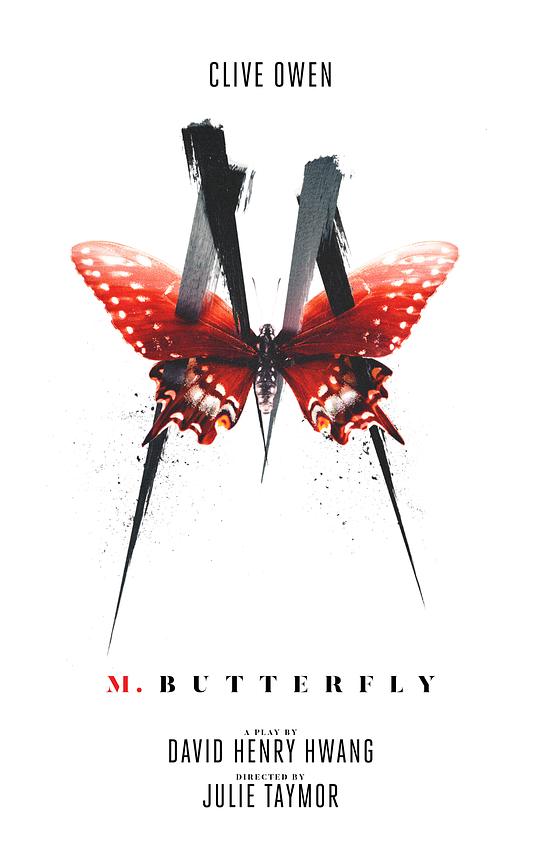
蝴蝶君 [演出] 豆瓣
M. Butterfly
类型: Theater 编剧: David Henry Hwang
其它标题: M. Butterfly 导演: John Dexter / Julie Taymor 演员: John Lithgow / BD Wong / Clive Owen / Jin Ha
The play was inspired by Giacomo Puccini 's opera Madama Butterfly . The first act introduces the main character, Rene Gallimard, who is a civil servant attached to the French embassy in China. He falls in love with a beautiful Chinese opera diva, Song Liling, who is actually a man masquerading as a woman. In traditional Beijing opera , females were banned from the stage; all female roles ( dan ) were played by males.

Act two begins with Song coming to France and resuming his affair with Gallimard. They stay together for 20 years until the truth is revealed, and Gallimard is convicted of treason and imprisoned. Unable to face the fact that his "perfect woman" is actually a man, that has been posing as a woman for 20 years to be able to spy, he retreats deep within himself and his memories. The action of the play is depicted as his disordered, distorted recollection of the events surrounding their affair.

The third act portrays Gallimard committing seppuku (also known as harakiri , ritual Japanese suicide through self-disembowelment) while Song watches and smokes a cigarette.
蝴蝶君 2017 百老汇复排版 [演出] 豆瓣
所属 演出: 蝴蝶君
剧院: Cort Theatre 导演: Julie Taymor
其它标题: 2017 百老汇复排版 编剧: David Henry Hwang 演员: Clive Owen / Jin Ha
The play was inspired by Giacomo Puccini 's opera Madama Butterfly . The first act introduces the main character, Rene Gallimard, who is a civil servant attached to the French embassy in China. He falls in love with a beautiful Chinese opera diva, Song Liling, who is actually a man masquerading as a woman. In traditional Beijing opera , females were banned from the stage; all female roles ( dan ) were played by males.

Act two begins with Song coming to France and resuming his affair with Gallimard. They stay together for 20 years until the truth is revealed, and Gallimard is convicted of treason and imprisoned. Unable to face the fact that his "perfect woman" is actually a man, that has been posing as a woman for 20 years to be able to spy, he retreats deep within himself and his memories. The action of the play is depicted as his disordered, distorted recollection of the events surrounding their affair.

The third act portrays Gallimard committing seppuku (also known as harakiri , ritual Japanese suicide through self-disembowelment) while Song watches and smokes a cigarette.