René Pape — 演员 (16)
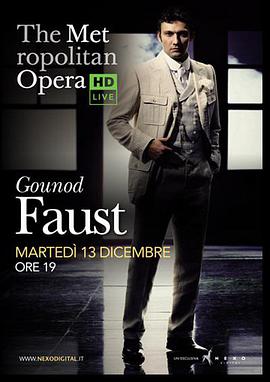
古诺《浮士德》 (2011) [电影] 豆瓣
"Metropolitan Opera: Live in HD" Gounod's Faust
导演: Barbara Willis Sweete 演员: Jonas Kaufmann / René Pape
其它标题: "Metropolitan Opera: Live in HD" Gounod's Faust / 大都会歌剧院高清转播系列
穆索尔斯基《鲍里斯·戈都诺夫》 (2010) [电影] 豆瓣
The Metropolitan Opera HD Live: Season 5, Episode 2 Mussorgsky's Boris Godunov
导演: 布莱恩·拉奇 演员: René Pape / Oleg Balashov
其它标题: The Metropolitan Opera HD Live: Season 5, Episode 2 Mussorgsky's Boris Godunov / 大都会歌剧院高清转播系列 第五季第二集
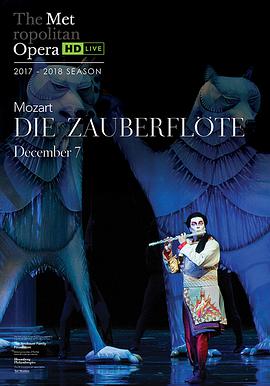
魔笛 2017年大都会歌剧团版 [演出] 豆瓣
所属 演出: 魔笛
语言: german 德语 剧团: Metropolitan Opera Orchestra 大都会歌剧团管弦乐团 ; Metropolitan Opera Chorus 大都会歌剧团合唱团 剧院: Metropolitan Opera House 大都会歌剧院 导演: Julie Taymor / David Kneuss
其它标题: 2017年大都会歌剧团版 编剧: Emanuel Schikaneder 作曲: Wolfgang Amadeus Mozart 演员: Charles Castronovo / Golda Schultz
The opera begins with the overture, which Mozart composed last.
Act 1
Scene 1: A rough, rocky landscape
Tamino, a handsome prince lost in a distant land, is pursued by a serpent and asks the gods to save him (aria: "Zu Hilfe! Zu Hilfe!" segued into trio: "Stirb, Ungeheuer, durch uns're Macht!"). He faints, and three ladies, attendants of the Queen of the Night, appear and kill the serpent. They find the unconscious prince extremely attractive, and each of them tries to convince the other two to leave. After arguing, they reluctantly decide to leave together.
Tamino wakes up, and is surprised to find himself still alive. Papageno enters dressed as a bird. He describes his life as a bird-catcher, complaining he has no wife or girlfriend (aria: "Der Vogelfänger bin ich ja"). Tamino introduces himself to Papageno, thinking Papageno killed the serpent. Papageno happily takes the credit – claiming he strangled it with his bare hands. The three ladies suddenly reappear and instead of giving Papageno wine, cake and figs, they give him water, a stone and place a padlock over his mouth as a warning not to lie. They give Tamino a portrait of the Queen of the Night's daughter Pamina, with whom Tamino falls instantly in love (aria: "Dies Bildnis ist bezaubernd schön" / This image is enchantingly beautiful).
The ladies return and tell Tamino that Pamina has been captured by Sarastro, whom they describe as a powerful, evil demon. Tamino vows to rescue Pamina. The Queen of the Night appears and promises Tamino that Pamina will be his if he rescues her from Sarastro (Recitative and aria: "O zittre nicht, mein lieber Sohn" / Oh, tremble not, my dear son!). The Queen leaves and the ladies remove the padlock from Papageno's mouth with a warning not to lie any more. They give Tamino a magic flute which has the power to change sorrow into joy. They tell Papageno to go with Tamino, and give him (Papageno) magic bells for protection. The ladies introduce three child-spirits, who will guide Tamino and Papageno to Sarastro's temple. Together Tamino and Papageno set forth (Quintet: "Hm! Hm! Hm! Hm!").
Scene 2: A room in Sarastro's palace
Pamina is dragged in by Sarastro's slaves, apparently having tried to escape. Monostatos, a blackamoor and chief of the slaves, orders the slaves to chain her and leave him alone with her. Papageno, sent ahead by Tamino to help find Pamina, enters (Trio: "Du feines Täubchen, nur herein!"). Monostatos and Papageno are each terrified by the other's strange appearance and both flee. Papageno returns and announces to Pamina that her mother has sent Tamino to save her. Pamina rejoices to hear that Tamino is in love with her. She offers sympathy and hope to Papageno, who longs for a wife. Together they reflect on the joys and sacred duties of marital love (duet: "Bei Männern welche Liebe fühlen").
Finale. Scene 3: A grove in front of a temple
The three child-spirits lead Tamino to Sarastro's temple, promising that if he remains patient, wise and steadfast, he will succeed in rescuing Pamina (Quartet: "Zum Ziele führt dich diese Bahn"). Tamino approaches the left-hand entrance and is denied access by voices from within. The same happens when he goes to the entrance on the right. But from the entrance in the middle, an old priest appears and lets Tamino in. (The old priest is referred to as "The Speaker" in the libretto, but his role is a singing role.) He tells Tamino that Sarastro is benevolent, not evil, and that he should not trust the Queen of the Night. He promises that Tamino's confusion will be lifted when Tamino approaches the temple in a spirit of friendship. Tamino plays his magic flute. Animals appear and dance, enraptured, to his music. Tamino hears Papageno's pipes sounding offstage, and hurries off to find him (aria: "Wie stark ist nicht dein Zauberton").
Papageno and Pamina enter, searching for Tamino (trio: "Schnelle Füße, rascher Mut"). They are recaptured by Monostatos and his slaves. Papageno plays his magic bells, and Monostatos and his slaves begin to dance, and exit the stage, still dancing, mesmerised by the beauty of the music (chorus: "Das klinget so herrlich"). Papageno and Pamina hear the sound of Sarastro's retinue approaching. Papageno is frightened and asks Pamina what they should say. She answers that they must tell the truth. Sarastro enters, with a crowd of followers. (chorus: "Es lebe Sarastro!")
Pamina falls at Sarastro's feet and confesses that she tried to escape because Monostatos had forced his attentions on her. Sarastro receives her kindly and assures her that he wishes only for her happiness. But he refuses to return her to her mother, whom he describes as a proud, headstrong woman, and a bad influence on those around her. Pamina, he says, must be guided by a man.
Monostatos brings in Tamino. The two lovers see one another for the first time and embrace, causing indignation among Sarastro's followers. Monostatos tells Sarastro that he caught Papageno and Pamina trying to escape, and demands a reward. Sarastro, however, punishes Monostatos for his lustful behaviour toward Pamina, and sends him away. He announces that Tamino must undergo trials of wisdom in order to become worthy as Pamina's husband. The priests declare that virtue and righteousness will sanctify life and make mortals like gods ("Wenn Tugend und Gerechtigkeit").
Act 2
Scene 1: A grove of palms
The council of priests of Isis and Osiris, headed by Sarastro, enters to the sound of a solemn march. Sarastro tells the priests that Tamino is ready to undergo the ordeals that will lead to enlightenment. He invokes the gods Isis and Osiris, asking them to protect Tamino and Pamina (Aria and chorus: "O Isis und Osiris").
Scene 2: The courtyard of the Temple of Ordeal
Tamino and Papageno are led in by two priests for the first trial. The two priests advise Tamino and Papageno of the dangers ahead of them, warn them of women's wiles and swear them to silence (Duet: "Bewahret euch von Weibertücken"). The three ladies appear and try to frighten Tamino and Papageno into speaking. (Quintet: "Wie, wie, wie") Papageno cannot resist answering the ladies, but Tamino remains aloof, angrily instructing Papageno not to listen to the ladies' threats and to keep quiet. Seeing that Tamino will not speak to them, the ladies withdraw in confusion.
Scene 3: A garden
Pamina is asleep. Monostatos approaches and gazes upon her with rapture. (Aria: "Alles fühlt der Liebe Freuden") He is about to kiss the sleeping Pamina, when the Queen of the Night appears. Monostatos hides. In response to the Queen's questioning, Pamina explains that Tamino is joining Sarastro's brotherhood and she is thinking of accompanying him too. The Queen is not pleased. She explains that her husband was the previous owner of the temple and on his deathbed, gave the ownership to Sarastro instead of her, rendering the Queen powerless (this is in the original libretto, but is usually omitted from modern productions, to shorten the scene with Pamina and her mother). She gives Pamina a dagger, ordering her to kill Sarastro with it and threatening to disown her if she does not. (Aria: "Der Hölle Rache kocht in meinem Herzen"). She leaves. Monostatos returns and tries to force Pamina's love by threatening to reveal the Queen's plot, but Sarastro enters and drives him off. Pamina begs Sarastro to forgive her mother and he reassures her that revenge and cruelty have no place in his domain (Aria: "In diesen heil'gen Hallen").
Scene 4: A hall in the Temple of Ordeal
Tamino and Papageno are led in by priests, who remind them that they must remain silent. Papageno complains of thirst. An old woman enters and offers Papageno a cup of water. He drinks and teasingly asks whether she has a boyfriend. She replies that she does and that his name is Papageno. She disappears as Papageno asks for her name, and the three child-spirits bring in food, the magic flute, and the bells, sent from Sarastro (Trio: "Seid uns zum zweiten Mal willkommen"). Tamino begins to play the flute, which summons Pamina. She tries to speak with him, but Tamino, bound by his vow of silence, cannot answer her, and Pamina begins to believe that he no longer loves her. (Aria: "Ach, ich fühl's, es ist verschwunden") She leaves in despair.
Scene 5: The pyramids
The priests celebrate Tamino's successes so far, and pray that he will succeed and become worthy of their order (Chorus: "O Isis und Osiris"). Pamina is brought in and Sarastro instructs Pamina and Tamino to bid each other farewell before the greater trials ahead, alarming them by describing it as their "final farewell". (Trio: Sarastro, Pamina, Tamino – "Soll ich dich, Teurer, nicht mehr sehn?" Note: In order to preserve the continuity of Pamina's suicidal feelings, this trio is sometimes performed earlier in act 2, preceding or immediately following Sarastro's aria "O Isis und Osiris".[f][30]) They exit and Papageno enters. The priests grant his request for a glass of wine and he expresses his desire for a wife. (Aria: "Ein Mädchen oder Weibchen"). The elderly woman reappears and warns him that unless he immediately promises to marry her, he will be imprisoned forever. When Papageno promises to love her faithfully (muttering that he will only do this until something better comes along), she is transformed into the young and pretty Papagena. Papageno rushes to embrace her, but the priests drive him back, telling him that he is not yet worthy of her.
Finale. Scene 6: A garden
The three child-spirits hail the dawn. They observe Pamina, who is contemplating suicide because she believes Tamino has abandoned her. The child-spirits restrain her and reassure her of Tamino's love. (Quartet: "Bald prangt, den Morgen zu verkünden").
Scene change without interrupting the music, to Scene 7: Outside the Temple of Ordeal
Two men in armor lead in Tamino. They recite one of the formal creeds of Isis and Osiris, promising enlightenment to those who successfully overcome the fear of death ("Der, welcher wandert diese Strasse voll Beschwerden"). This recitation takes the musical form of a Baroque chorale prelude, to a tune inspired by Martin Luther's hymn "Ach Gott, vom Himmel sieh darein" (Oh God, look down from heaven).[g][32] Tamino declares that he is ready to be tested. Pamina calls to him from offstage. The men in armour assure him that the trial by silence is over and he is free to speak with her. Pamina enters and declares her intention to undergo the remaining trials with him. She hands him the magic flute to help them through the trials ("Tamino mein, o welch ein Glück!"). Protected by the music of the magic flute, they pass unscathed through chambers of fire and water. Offstage, the priests hail their triumph and invite the couple to enter the temple.
Scene change without interrupting the music, to Scene 8: A garden with a tree
Papageno despairs at having lost Papagena and decides to hang himself (Aria/Quartet: "Papagena! Papagena! Papagena! Weibchen, Täubchen, meine Schöne") The three child-spirits appear and stop him. They advise him to play his magic bells to summon Papagena. She appears and, united, the happy couple stutter in astonishment and make bird-like courting sounds at each other. They plan their future and dream of the many children they will have together (Duet: "Pa... pa... pa...").
Scene change without interrupting the music, to Scene 9: A rocky landscape outside the temple; night
The traitorous Monostatos appears with the Queen of the Night and her three ladies. They plot to destroy the temple ("Nur stille, stille") and the Queen confirms that she has promised her daughter Pamina to Monostatos. But before the conspirators can enter the temple, they are magically cast out into eternal night.
Scene change without interrupting the music, to Scene 10: The Temple of the Sun
Sarastro announces the sun's triumph over the night, and hails the dawn of a new era of wisdom and brotherhood. Animals appear again and dance in the sun.
魔笛 2006年萨尔茨堡艺术节版 [演出] 豆瓣
所属 演出: 魔笛
语言: german 德语 剧团: Wiener Philharmoniker 维也纳爱乐乐团 ; Konzertvereinigung Wiener Staatsopernchor 维也纳国家歌剧院合唱团音乐会协会 剧院: Großes Festspielhaus 萨尔茨堡艺术节大剧院 导演: Pierre Audi
其它标题: 2006年萨尔茨堡艺术节版 编剧: Emanuel Schikaneder 作曲: Wolfgang Amadeus Mozart 演员: Paul Groves / Genia Kühmeier
The opera begins with the overture, which Mozart composed last.
Act 1
Scene 1: A rough, rocky landscape
Tamino, a handsome prince lost in a distant land, is pursued by a serpent and asks the gods to save him (aria: "Zu Hilfe! Zu Hilfe!" segued into trio: "Stirb, Ungeheuer, durch uns're Macht!"). He faints, and three ladies, attendants of the Queen of the Night, appear and kill the serpent. They find the unconscious prince extremely attractive, and each of them tries to convince the other two to leave. After arguing, they reluctantly decide to leave together.
Tamino wakes up, and is surprised to find himself still alive. Papageno enters dressed as a bird. He describes his life as a bird-catcher, complaining he has no wife or girlfriend (aria: "Der Vogelfänger bin ich ja"). Tamino introduces himself to Papageno, thinking Papageno killed the serpent. Papageno happily takes the credit – claiming he strangled it with his bare hands. The three ladies suddenly reappear and instead of giving Papageno wine, cake and figs, they give him water, a stone and place a padlock over his mouth as a warning not to lie. They give Tamino a portrait of the Queen of the Night's daughter Pamina, with whom Tamino falls instantly in love (aria: "Dies Bildnis ist bezaubernd schön" / This image is enchantingly beautiful).
The ladies return and tell Tamino that Pamina has been captured by Sarastro, whom they describe as a powerful, evil demon. Tamino vows to rescue Pamina. The Queen of the Night appears and promises Tamino that Pamina will be his if he rescues her from Sarastro (Recitative and aria: "O zittre nicht, mein lieber Sohn" / Oh, tremble not, my dear son!). The Queen leaves and the ladies remove the padlock from Papageno's mouth with a warning not to lie any more. They give Tamino a magic flute which has the power to change sorrow into joy. They tell Papageno to go with Tamino, and give him (Papageno) magic bells for protection. The ladies introduce three child-spirits, who will guide Tamino and Papageno to Sarastro's temple. Together Tamino and Papageno set forth (Quintet: "Hm! Hm! Hm! Hm!").
Scene 2: A room in Sarastro's palace
Pamina is dragged in by Sarastro's slaves, apparently having tried to escape. Monostatos, a blackamoor and chief of the slaves, orders the slaves to chain her and leave him alone with her. Papageno, sent ahead by Tamino to help find Pamina, enters (Trio: "Du feines Täubchen, nur herein!"). Monostatos and Papageno are each terrified by the other's strange appearance and both flee. Papageno returns and announces to Pamina that her mother has sent Tamino to save her. Pamina rejoices to hear that Tamino is in love with her. She offers sympathy and hope to Papageno, who longs for a wife. Together they reflect on the joys and sacred duties of marital love (duet: "Bei Männern welche Liebe fühlen").
Finale. Scene 3: A grove in front of a temple
The three child-spirits lead Tamino to Sarastro's temple, promising that if he remains patient, wise and steadfast, he will succeed in rescuing Pamina (Quartet: "Zum Ziele führt dich diese Bahn"). Tamino approaches the left-hand entrance and is denied access by voices from within. The same happens when he goes to the entrance on the right. But from the entrance in the middle, an old priest appears and lets Tamino in. (The old priest is referred to as "The Speaker" in the libretto, but his role is a singing role.) He tells Tamino that Sarastro is benevolent, not evil, and that he should not trust the Queen of the Night. He promises that Tamino's confusion will be lifted when Tamino approaches the temple in a spirit of friendship. Tamino plays his magic flute. Animals appear and dance, enraptured, to his music. Tamino hears Papageno's pipes sounding offstage, and hurries off to find him (aria: "Wie stark ist nicht dein Zauberton").
Papageno and Pamina enter, searching for Tamino (trio: "Schnelle Füße, rascher Mut"). They are recaptured by Monostatos and his slaves. Papageno plays his magic bells, and Monostatos and his slaves begin to dance, and exit the stage, still dancing, mesmerised by the beauty of the music (chorus: "Das klinget so herrlich"). Papageno and Pamina hear the sound of Sarastro's retinue approaching. Papageno is frightened and asks Pamina what they should say. She answers that they must tell the truth. Sarastro enters, with a crowd of followers. (chorus: "Es lebe Sarastro!")
Pamina falls at Sarastro's feet and confesses that she tried to escape because Monostatos had forced his attentions on her. Sarastro receives her kindly and assures her that he wishes only for her happiness. But he refuses to return her to her mother, whom he describes as a proud, headstrong woman, and a bad influence on those around her. Pamina, he says, must be guided by a man.
Monostatos brings in Tamino. The two lovers see one another for the first time and embrace, causing indignation among Sarastro's followers. Monostatos tells Sarastro that he caught Papageno and Pamina trying to escape, and demands a reward. Sarastro, however, punishes Monostatos for his lustful behaviour toward Pamina, and sends him away. He announces that Tamino must undergo trials of wisdom in order to become worthy as Pamina's husband. The priests declare that virtue and righteousness will sanctify life and make mortals like gods ("Wenn Tugend und Gerechtigkeit").
Act 2
Scene 1: A grove of palms
The council of priests of Isis and Osiris, headed by Sarastro, enters to the sound of a solemn march. Sarastro tells the priests that Tamino is ready to undergo the ordeals that will lead to enlightenment. He invokes the gods Isis and Osiris, asking them to protect Tamino and Pamina (Aria and chorus: "O Isis und Osiris").
Scene 2: The courtyard of the Temple of Ordeal
Tamino and Papageno are led in by two priests for the first trial. The two priests advise Tamino and Papageno of the dangers ahead of them, warn them of women's wiles and swear them to silence (Duet: "Bewahret euch von Weibertücken"). The three ladies appear and try to frighten Tamino and Papageno into speaking. (Quintet: "Wie, wie, wie") Papageno cannot resist answering the ladies, but Tamino remains aloof, angrily instructing Papageno not to listen to the ladies' threats and to keep quiet. Seeing that Tamino will not speak to them, the ladies withdraw in confusion.
Scene 3: A garden
Pamina is asleep. Monostatos approaches and gazes upon her with rapture. (Aria: "Alles fühlt der Liebe Freuden") He is about to kiss the sleeping Pamina, when the Queen of the Night appears. Monostatos hides. In response to the Queen's questioning, Pamina explains that Tamino is joining Sarastro's brotherhood and she is thinking of accompanying him too. The Queen is not pleased. She explains that her husband was the previous owner of the temple and on his deathbed, gave the ownership to Sarastro instead of her, rendering the Queen powerless (this is in the original libretto, but is usually omitted from modern productions, to shorten the scene with Pamina and her mother). She gives Pamina a dagger, ordering her to kill Sarastro with it and threatening to disown her if she does not. (Aria: "Der Hölle Rache kocht in meinem Herzen"). She leaves. Monostatos returns and tries to force Pamina's love by threatening to reveal the Queen's plot, but Sarastro enters and drives him off. Pamina begs Sarastro to forgive her mother and he reassures her that revenge and cruelty have no place in his domain (Aria: "In diesen heil'gen Hallen").
Scene 4: A hall in the Temple of Ordeal
Tamino and Papageno are led in by priests, who remind them that they must remain silent. Papageno complains of thirst. An old woman enters and offers Papageno a cup of water. He drinks and teasingly asks whether she has a boyfriend. She replies that she does and that his name is Papageno. She disappears as Papageno asks for her name, and the three child-spirits bring in food, the magic flute, and the bells, sent from Sarastro (Trio: "Seid uns zum zweiten Mal willkommen"). Tamino begins to play the flute, which summons Pamina. She tries to speak with him, but Tamino, bound by his vow of silence, cannot answer her, and Pamina begins to believe that he no longer loves her. (Aria: "Ach, ich fühl's, es ist verschwunden") She leaves in despair.
Scene 5: The pyramids
The priests celebrate Tamino's successes so far, and pray that he will succeed and become worthy of their order (Chorus: "O Isis und Osiris"). Pamina is brought in and Sarastro instructs Pamina and Tamino to bid each other farewell before the greater trials ahead, alarming them by describing it as their "final farewell". (Trio: Sarastro, Pamina, Tamino – "Soll ich dich, Teurer, nicht mehr sehn?" Note: In order to preserve the continuity of Pamina's suicidal feelings, this trio is sometimes performed earlier in act 2, preceding or immediately following Sarastro's aria "O Isis und Osiris".[f][30]) They exit and Papageno enters. The priests grant his request for a glass of wine and he expresses his desire for a wife. (Aria: "Ein Mädchen oder Weibchen"). The elderly woman reappears and warns him that unless he immediately promises to marry her, he will be imprisoned forever. When Papageno promises to love her faithfully (muttering that he will only do this until something better comes along), she is transformed into the young and pretty Papagena. Papageno rushes to embrace her, but the priests drive him back, telling him that he is not yet worthy of her.
Finale. Scene 6: A garden
The three child-spirits hail the dawn. They observe Pamina, who is contemplating suicide because she believes Tamino has abandoned her. The child-spirits restrain her and reassure her of Tamino's love. (Quartet: "Bald prangt, den Morgen zu verkünden").
Scene change without interrupting the music, to Scene 7: Outside the Temple of Ordeal
Two men in armor lead in Tamino. They recite one of the formal creeds of Isis and Osiris, promising enlightenment to those who successfully overcome the fear of death ("Der, welcher wandert diese Strasse voll Beschwerden"). This recitation takes the musical form of a Baroque chorale prelude, to a tune inspired by Martin Luther's hymn "Ach Gott, vom Himmel sieh darein" (Oh God, look down from heaven).[g][32] Tamino declares that he is ready to be tested. Pamina calls to him from offstage. The men in armour assure him that the trial by silence is over and he is free to speak with her. Pamina enters and declares her intention to undergo the remaining trials with him. She hands him the magic flute to help them through the trials ("Tamino mein, o welch ein Glück!"). Protected by the music of the magic flute, they pass unscathed through chambers of fire and water. Offstage, the priests hail their triumph and invite the couple to enter the temple.
Scene change without interrupting the music, to Scene 8: A garden with a tree
Papageno despairs at having lost Papagena and decides to hang himself (Aria/Quartet: "Papagena! Papagena! Papagena! Weibchen, Täubchen, meine Schöne") The three child-spirits appear and stop him. They advise him to play his magic bells to summon Papagena. She appears and, united, the happy couple stutter in astonishment and make bird-like courting sounds at each other. They plan their future and dream of the many children they will have together (Duet: "Pa... pa... pa...").
Scene change without interrupting the music, to Scene 9: A rocky landscape outside the temple; night
The traitorous Monostatos appears with the Queen of the Night and her three ladies. They plot to destroy the temple ("Nur stille, stille") and the Queen confirms that she has promised her daughter Pamina to Monostatos. But before the conspirators can enter the temple, they are magically cast out into eternal night.
Scene change without interrupting the music, to Scene 10: The Temple of the Sun
Sarastro announces the sun's triumph over the night, and hails the dawn of a new era of wisdom and brotherhood. Animals appear again and dance in the sun.
魔笛 2006年大都会歌剧团版 [演出] 豆瓣
所属 演出: 魔笛
语言: english 英语 剧团: Metropolitan Opera Orchestra 大都会歌剧团管弦乐团 ; Metropolitan Opera Chorus 大都会歌剧团合唱团 剧院: Metropolitan Opera House 大都会歌剧院 导演: Julie Taymor
其它标题: 2006年大都会歌剧团版 编剧: Emanuel Schikaneder / J. D. McClatchy 作曲: Wolfgang Amadeus Mozart 演员: Matthew Polenzani / 黄英
The opera begins with the overture, which Mozart composed last.
Act 1
Scene 1: A rough, rocky landscape
Tamino, a handsome prince lost in a distant land, is pursued by a serpent and asks the gods to save him (aria: "Zu Hilfe! Zu Hilfe!" segued into trio: "Stirb, Ungeheuer, durch uns're Macht!"). He faints, and three ladies, attendants of the Queen of the Night, appear and kill the serpent. They find the unconscious prince extremely attractive, and each of them tries to convince the other two to leave. After arguing, they reluctantly decide to leave together.
Tamino wakes up, and is surprised to find himself still alive. Papageno enters dressed as a bird. He describes his life as a bird-catcher, complaining he has no wife or girlfriend (aria: "Der Vogelfänger bin ich ja"). Tamino introduces himself to Papageno, thinking Papageno killed the serpent. Papageno happily takes the credit – claiming he strangled it with his bare hands. The three ladies suddenly reappear and instead of giving Papageno wine, cake and figs, they give him water, a stone and place a padlock over his mouth as a warning not to lie. They give Tamino a portrait of the Queen of the Night's daughter Pamina, with whom Tamino falls instantly in love (aria: "Dies Bildnis ist bezaubernd schön" / This image is enchantingly beautiful).
The ladies return and tell Tamino that Pamina has been captured by Sarastro, whom they describe as a powerful, evil demon. Tamino vows to rescue Pamina. The Queen of the Night appears and promises Tamino that Pamina will be his if he rescues her from Sarastro (Recitative and aria: "O zittre nicht, mein lieber Sohn" / Oh, tremble not, my dear son!). The Queen leaves and the ladies remove the padlock from Papageno's mouth with a warning not to lie any more. They give Tamino a magic flute which has the power to change sorrow into joy. They tell Papageno to go with Tamino, and give him (Papageno) magic bells for protection. The ladies introduce three child-spirits, who will guide Tamino and Papageno to Sarastro's temple. Together Tamino and Papageno set forth (Quintet: "Hm! Hm! Hm! Hm!").
Scene 2: A room in Sarastro's palace
Pamina is dragged in by Sarastro's slaves, apparently having tried to escape. Monostatos, a blackamoor and chief of the slaves, orders the slaves to chain her and leave him alone with her. Papageno, sent ahead by Tamino to help find Pamina, enters (Trio: "Du feines Täubchen, nur herein!"). Monostatos and Papageno are each terrified by the other's strange appearance and both flee. Papageno returns and announces to Pamina that her mother has sent Tamino to save her. Pamina rejoices to hear that Tamino is in love with her. She offers sympathy and hope to Papageno, who longs for a wife. Together they reflect on the joys and sacred duties of marital love (duet: "Bei Männern welche Liebe fühlen").
Finale. Scene 3: A grove in front of a temple
The three child-spirits lead Tamino to Sarastro's temple, promising that if he remains patient, wise and steadfast, he will succeed in rescuing Pamina (Quartet: "Zum Ziele führt dich diese Bahn"). Tamino approaches the left-hand entrance and is denied access by voices from within. The same happens when he goes to the entrance on the right. But from the entrance in the middle, an old priest appears and lets Tamino in. (The old priest is referred to as "The Speaker" in the libretto, but his role is a singing role.) He tells Tamino that Sarastro is benevolent, not evil, and that he should not trust the Queen of the Night. He promises that Tamino's confusion will be lifted when Tamino approaches the temple in a spirit of friendship. Tamino plays his magic flute. Animals appear and dance, enraptured, to his music. Tamino hears Papageno's pipes sounding offstage, and hurries off to find him (aria: "Wie stark ist nicht dein Zauberton").
Papageno and Pamina enter, searching for Tamino (trio: "Schnelle Füße, rascher Mut"). They are recaptured by Monostatos and his slaves. Papageno plays his magic bells, and Monostatos and his slaves begin to dance, and exit the stage, still dancing, mesmerised by the beauty of the music (chorus: "Das klinget so herrlich"). Papageno and Pamina hear the sound of Sarastro's retinue approaching. Papageno is frightened and asks Pamina what they should say. She answers that they must tell the truth. Sarastro enters, with a crowd of followers. (chorus: "Es lebe Sarastro!")
Pamina falls at Sarastro's feet and confesses that she tried to escape because Monostatos had forced his attentions on her. Sarastro receives her kindly and assures her that he wishes only for her happiness. But he refuses to return her to her mother, whom he describes as a proud, headstrong woman, and a bad influence on those around her. Pamina, he says, must be guided by a man.
Monostatos brings in Tamino. The two lovers see one another for the first time and embrace, causing indignation among Sarastro's followers. Monostatos tells Sarastro that he caught Papageno and Pamina trying to escape, and demands a reward. Sarastro, however, punishes Monostatos for his lustful behaviour toward Pamina, and sends him away. He announces that Tamino must undergo trials of wisdom in order to become worthy as Pamina's husband. The priests declare that virtue and righteousness will sanctify life and make mortals like gods ("Wenn Tugend und Gerechtigkeit").
Act 2
Scene 1: A grove of palms
The council of priests of Isis and Osiris, headed by Sarastro, enters to the sound of a solemn march. Sarastro tells the priests that Tamino is ready to undergo the ordeals that will lead to enlightenment. He invokes the gods Isis and Osiris, asking them to protect Tamino and Pamina (Aria and chorus: "O Isis und Osiris").
Scene 2: The courtyard of the Temple of Ordeal
Tamino and Papageno are led in by two priests for the first trial. The two priests advise Tamino and Papageno of the dangers ahead of them, warn them of women's wiles and swear them to silence (Duet: "Bewahret euch von Weibertücken"). The three ladies appear and try to frighten Tamino and Papageno into speaking. (Quintet: "Wie, wie, wie") Papageno cannot resist answering the ladies, but Tamino remains aloof, angrily instructing Papageno not to listen to the ladies' threats and to keep quiet. Seeing that Tamino will not speak to them, the ladies withdraw in confusion.
Scene 3: A garden
Pamina is asleep. Monostatos approaches and gazes upon her with rapture. (Aria: "Alles fühlt der Liebe Freuden") He is about to kiss the sleeping Pamina, when the Queen of the Night appears. Monostatos hides. In response to the Queen's questioning, Pamina explains that Tamino is joining Sarastro's brotherhood and she is thinking of accompanying him too. The Queen is not pleased. She explains that her husband was the previous owner of the temple and on his deathbed, gave the ownership to Sarastro instead of her, rendering the Queen powerless (this is in the original libretto, but is usually omitted from modern productions, to shorten the scene with Pamina and her mother). She gives Pamina a dagger, ordering her to kill Sarastro with it and threatening to disown her if she does not. (Aria: "Der Hölle Rache kocht in meinem Herzen"). She leaves. Monostatos returns and tries to force Pamina's love by threatening to reveal the Queen's plot, but Sarastro enters and drives him off. Pamina begs Sarastro to forgive her mother and he reassures her that revenge and cruelty have no place in his domain (Aria: "In diesen heil'gen Hallen").
Scene 4: A hall in the Temple of Ordeal
Tamino and Papageno are led in by priests, who remind them that they must remain silent. Papageno complains of thirst. An old woman enters and offers Papageno a cup of water. He drinks and teasingly asks whether she has a boyfriend. She replies that she does and that his name is Papageno. She disappears as Papageno asks for her name, and the three child-spirits bring in food, the magic flute, and the bells, sent from Sarastro (Trio: "Seid uns zum zweiten Mal willkommen"). Tamino begins to play the flute, which summons Pamina. She tries to speak with him, but Tamino, bound by his vow of silence, cannot answer her, and Pamina begins to believe that he no longer loves her. (Aria: "Ach, ich fühl's, es ist verschwunden") She leaves in despair.
Scene 5: The pyramids
The priests celebrate Tamino's successes so far, and pray that he will succeed and become worthy of their order (Chorus: "O Isis und Osiris"). Pamina is brought in and Sarastro instructs Pamina and Tamino to bid each other farewell before the greater trials ahead, alarming them by describing it as their "final farewell". (Trio: Sarastro, Pamina, Tamino – "Soll ich dich, Teurer, nicht mehr sehn?" Note: In order to preserve the continuity of Pamina's suicidal feelings, this trio is sometimes performed earlier in act 2, preceding or immediately following Sarastro's aria "O Isis und Osiris".[f][30]) They exit and Papageno enters. The priests grant his request for a glass of wine and he expresses his desire for a wife. (Aria: "Ein Mädchen oder Weibchen"). The elderly woman reappears and warns him that unless he immediately promises to marry her, he will be imprisoned forever. When Papageno promises to love her faithfully (muttering that he will only do this until something better comes along), she is transformed into the young and pretty Papagena. Papageno rushes to embrace her, but the priests drive him back, telling him that he is not yet worthy of her.
Finale. Scene 6: A garden
The three child-spirits hail the dawn. They observe Pamina, who is contemplating suicide because she believes Tamino has abandoned her. The child-spirits restrain her and reassure her of Tamino's love. (Quartet: "Bald prangt, den Morgen zu verkünden").
Scene change without interrupting the music, to Scene 7: Outside the Temple of Ordeal
Two men in armor lead in Tamino. They recite one of the formal creeds of Isis and Osiris, promising enlightenment to those who successfully overcome the fear of death ("Der, welcher wandert diese Strasse voll Beschwerden"). This recitation takes the musical form of a Baroque chorale prelude, to a tune inspired by Martin Luther's hymn "Ach Gott, vom Himmel sieh darein" (Oh God, look down from heaven).[g][32] Tamino declares that he is ready to be tested. Pamina calls to him from offstage. The men in armour assure him that the trial by silence is over and he is free to speak with her. Pamina enters and declares her intention to undergo the remaining trials with him. She hands him the magic flute to help them through the trials ("Tamino mein, o welch ein Glück!"). Protected by the music of the magic flute, they pass unscathed through chambers of fire and water. Offstage, the priests hail their triumph and invite the couple to enter the temple.
Scene change without interrupting the music, to Scene 8: A garden with a tree
Papageno despairs at having lost Papagena and decides to hang himself (Aria/Quartet: "Papagena! Papagena! Papagena! Weibchen, Täubchen, meine Schöne") The three child-spirits appear and stop him. They advise him to play his magic bells to summon Papagena. She appears and, united, the happy couple stutter in astonishment and make bird-like courting sounds at each other. They plan their future and dream of the many children they will have together (Duet: "Pa... pa... pa...").
Scene change without interrupting the music, to Scene 9: A rocky landscape outside the temple; night
The traitorous Monostatos appears with the Queen of the Night and her three ladies. They plot to destroy the temple ("Nur stille, stille") and the Queen confirms that she has promised her daughter Pamina to Monostatos. But before the conspirators can enter the temple, they are magically cast out into eternal night.
Scene change without interrupting the music, to Scene 10: The Temple of the Sun
Sarastro announces the sun's triumph over the night, and hails the dawn of a new era of wisdom and brotherhood. Animals appear again and dance in the sun.
特里斯坦与伊索尔德 1999年大都会歌剧团版 [演出] 豆瓣
所属 演出: 特里斯坦与伊索尔德
语言: german 德语 剧团: Metropolitan Opera Orchestra 大都会歌剧团管弦乐团 ; Metropolitan Opera Chorus 大都会歌剧团合唱团 剧院: Metropolitan Opera House 大都会歌剧院 导演: Dieter Dorn
其它标题: 1999年大都会歌剧团版 编剧: Richard Wagner 作曲: Richard Wagner 演员: Ben Heppner / Jane Eaglen
Act 1
Isolde, promised to King Marke in marriage, and her handmaid, Brangäne, are quartered aboard Tristan's ship being transported to the king's lands in Cornwall. The opera opens with the voice of a young sailor singing of a "wild Irish maid", ("Westwärts schweift der Blick") which Isolde construes to be a mocking reference to herself. In a furious outburst, she wishes the seas to rise up and sink the ship, killing herself and all on board ("Erwache mir wieder, kühne Gewalt"). Her scorn and rage are directed particularly at Tristan, the knight responsible for taking her to Marke, and Isolde sends Brangäne to command Tristan to appear before her ("Befehlen liess' dem Eigenholde"). Tristan, however, refuses Brangäne's request, claiming that his place is at the helm. His henchman, Kurwenal, answers more brusquely, saying that Isolde is in no position to command Tristan and reminds Brangäne that Isolde's previous fiancé, Morold, was killed by Tristan ("Herr Morold zog zu Meere her").
Brangäne returns to Isolde to relate these events, and Isolde, in what is termed the "narrative and curse", sadly tells her of how, following the death of Morold, she happened upon a stranger who called himself Tantris. Tantris was found mortally wounded in a barge ("von einem Kahn, der klein und arm") and Isolde used her healing powers to restore him to health. She discovered during Tantris' recovery, however, that he was actually Tristan, the murderer of her fiancé. Isolde attempted to kill the man with his own sword as he lay helpless before her. However, Tristan looked not at the sword that would kill him or the hand that wielded the sword, but into her eyes ("Er sah' mir in die Augen"). His action pierced her heart and she was unable to slay him. Tristan was allowed to leave with the promise never to come back, but he later returned with the intention of marrying Isolde to his uncle, King Marke. Isolde, furious at Tristan's betrayal, insists that he drink atonement to her, and from her medicine chest produces a vial to make the drink. Brangäne is shocked to see that it is a lethal poison.
Kurwenal appears in the women's quarters ("Auf auf! Ihr Frauen!") and announces that the voyage is coming to an end. Isolde warns Kurwenal that she will not appear before the King if Tristan does not come before her as she had previously ordered and drink atonement to her. When Tristan arrives, Isolde reproaches him about his conduct and tells him that he owes her his life and how his actions have undermined her honour, since she blessed Morold's weapons before battle and therefore she swore revenge. Tristan first offers his sword but Isolde refuses; they must drink atonement. Brangäne brings in the potion that will seal their pardon; Tristan knows that it may kill him, since he knows Isolde's magic powers ("Wohl kenn' ich Irland's Königin"). The journey almost at its end, Tristan drinks and Isolde takes half the potion for herself. The potion seems to work but it does not bring death but relentless love ("Tristan!" "Isolde!"). Kurwenal, who announces the imminent arrival on board of King Marke, interrupts their rapture. Isolde asks Brangäne which potion she prepared and Brangäne replies, as the sailors hail the arrival of King Marke, that it was not poison, but rather a love potion.
Act 2
King Marke leads a hunting party out into the night, leaving Isolde and Brangäne alone in the castle, who both stand beside a burning brazier. Isolde, listening to the hunting horns, believes several times that the hunting party is far enough away to warrant the extinguishing of the brazier – the prearranged signal for Tristan to join her ("Nicht Hörnerschall tönt so hold"). Brangäne warns Isolde that Melot, one of King Marke's knights, has seen the amorous looks exchanged between Tristan and Isolde and suspects their passion ("Ein Einz'ger war's, ich achtet' es wohl"). Isolde, however, believes Melot to be Tristan's most loyal friend, and, in a frenzy of desire, extinguishes the flames. Brangäne retires to the ramparts to keep watch as Tristan arrives.
The lovers, at last alone and freed from the constraints of courtly life, declare their passion for each other. Tristan decries the realm of daylight which is false, unreal, and keeps them apart. It is only in night, he claims, that they can truly be together and only in the long night of death can they be eternally united ("O sink' hernieder, Nacht der Liebe"). During their long tryst, Brangäne calls a warning several times that the night is ending ("Einsam wachend in der Nacht"), but her cries fall upon deaf ears. The day breaks in on the lovers as Melot leads King Marke and his men to find Tristan and Isolde in each other's arms. Marke is heartbroken, not only because of his nephew's betrayal but also because Melot chose to betray his friend Tristan to Marke and because of Isolde's betrayal as well ("Mir – dies? Dies, Tristan – mir?").
When questioned, Tristan says he cannot answer to the King the reason of his betrayal since he would not understand. He turns to Isolde, who agrees to follow him again into the realm of night. Tristan announces that Melot has fallen in love with Isolde too. Melot and Tristan fight, but, at the crucial moment, Tristan throws his sword aside and allows Melot to severely wound him.
Act 3
Kurwenal has brought Tristan home to his castle at Kareol in Brittany. A shepherd pipes a mournful tune and asks if Tristan is awake. Kurwenal replies that only Isolde's arrival can save Tristan, and the shepherd offers to keep watch and claims that he will pipe a joyful tune to mark the arrival of any ship. Tristan awakes ("Die alte Weise – was weckt sie mich?") and laments his fate – to be, once again, in the false realm of daylight, once more driven by unceasing unquenchable yearning ("Wo ich erwacht' weilt ich nicht"). Tristan's sorrow ends when Kurwenal tells him that Isolde is on her way. Tristan, overjoyed, asks if her ship is in sight, but only a sorrowful tune from the shepherd's pipe is heard.
Tristan relapses and recalls that the shepherd's mournful tune is the same as was played when he was told of the deaths of his father and mother ("Muss ich dich so versteh'n, du alte, ernst Weise"). He rails once again against his desires and against the fateful love potion ("verflucht sei, furchtbarer Trank!") until, exhausted, he collapses in delirium. After his collapse, the shepherd is heard piping the arrival of Isolde's ship, and, as Kurwenal rushes to meet her, Tristan tears the bandages from his wounds in his excitement ("Hahei! Mein Blut, lustig nun fliesse!"). As Isolde arrives at his side, Tristan dies with her name on his lips.
Isolde collapses beside her deceased lover just as the appearance of another ship is announced. Kurwenal spies Melot, Marke and Brangäne arriving ("Tod und Hölle! Alles zur Hand!"). He believes they have come to kill Tristan and, in an attempt to avenge him, furiously attacks Melot. Marke tries to stop the fight to no avail. Both Melot and Kurwenal are killed in the fight. Marke and Brangäne finally reach Tristan and Isolde. Marke, grieving over the body of his "truest friend" ("Tot denn alles!"), explains that Brangäne revealed the secret of the love potion and that he had come not to part the lovers, but to unite them ("Warum Isolde, warum mir das?"). Isolde appears to wake at this and in a final aria describing her vision of Tristan risen again (the "Liebestod", "love death"), dies ("Mild und leise wie er lächelt").
特里斯坦与伊索尔德 2018年巴黎国家歌剧团版 [演出] 豆瓣
所属 演出: 特里斯坦与伊索尔德
剧团: Orchestre de l’Opéra national de Paris 巴黎国家歌剧团管弦乐团 ; Chœurs de l’Opéra national de Paris 巴黎国家歌剧团合唱团 剧院: Opéra Bastille 巴士底歌剧院 导演: Peter Sellars
其它标题: 2018年巴黎国家歌剧团版 编剧: Richard Wagner 作曲: Richard Wagner 演员: Andreas Schager / Martina Serafin
Act 1
Isolde, promised to King Marke in marriage, and her handmaid, Brangäne, are quartered aboard Tristan's ship being transported to the king's lands in Cornwall. The opera opens with the voice of a young sailor singing of a "wild Irish maid", ("Westwärts schweift der Blick") which Isolde construes to be a mocking reference to herself. In a furious outburst, she wishes the seas to rise up and sink the ship, killing herself and all on board ("Erwache mir wieder, kühne Gewalt"). Her scorn and rage are directed particularly at Tristan, the knight responsible for taking her to Marke, and Isolde sends Brangäne to command Tristan to appear before her ("Befehlen liess' dem Eigenholde"). Tristan, however, refuses Brangäne's request, claiming that his place is at the helm. His henchman, Kurwenal, answers more brusquely, saying that Isolde is in no position to command Tristan and reminds Brangäne that Isolde's previous fiancé, Morold, was killed by Tristan ("Herr Morold zog zu Meere her").
Brangäne returns to Isolde to relate these events, and Isolde, in what is termed the "narrative and curse", sadly tells her of how, following the death of Morold, she happened upon a stranger who called himself Tantris. Tantris was found mortally wounded in a barge ("von einem Kahn, der klein und arm") and Isolde used her healing powers to restore him to health. She discovered during Tantris' recovery, however, that he was actually Tristan, the murderer of her fiancé. Isolde attempted to kill the man with his own sword as he lay helpless before her. However, Tristan looked not at the sword that would kill him or the hand that wielded the sword, but into her eyes ("Er sah' mir in die Augen"). His action pierced her heart and she was unable to slay him. Tristan was allowed to leave with the promise never to come back, but he later returned with the intention of marrying Isolde to his uncle, King Marke. Isolde, furious at Tristan's betrayal, insists that he drink atonement to her, and from her medicine chest produces a vial to make the drink. Brangäne is shocked to see that it is a lethal poison.
Kurwenal appears in the women's quarters ("Auf auf! Ihr Frauen!") and announces that the voyage is coming to an end. Isolde warns Kurwenal that she will not appear before the King if Tristan does not come before her as she had previously ordered and drink atonement to her. When Tristan arrives, Isolde reproaches him about his conduct and tells him that he owes her his life and how his actions have undermined her honour, since she blessed Morold's weapons before battle and therefore she swore revenge. Tristan first offers his sword but Isolde refuses; they must drink atonement. Brangäne brings in the potion that will seal their pardon; Tristan knows that it may kill him, since he knows Isolde's magic powers ("Wohl kenn' ich Irland's Königin"). The journey almost at its end, Tristan drinks and Isolde takes half the potion for herself. The potion seems to work but it does not bring death but relentless love ("Tristan!" "Isolde!"). Kurwenal, who announces the imminent arrival on board of King Marke, interrupts their rapture. Isolde asks Brangäne which potion she prepared and Brangäne replies, as the sailors hail the arrival of King Marke, that it was not poison, but rather a love potion.
Act 2
King Marke leads a hunting party out into the night, leaving Isolde and Brangäne alone in the castle, who both stand beside a burning brazier. Isolde, listening to the hunting horns, believes several times that the hunting party is far enough away to warrant the extinguishing of the brazier – the prearranged signal for Tristan to join her ("Nicht Hörnerschall tönt so hold"). Brangäne warns Isolde that Melot, one of King Marke's knights, has seen the amorous looks exchanged between Tristan and Isolde and suspects their passion ("Ein Einz'ger war's, ich achtet' es wohl"). Isolde, however, believes Melot to be Tristan's most loyal friend, and, in a frenzy of desire, extinguishes the flames. Brangäne retires to the ramparts to keep watch as Tristan arrives.
The lovers, at last alone and freed from the constraints of courtly life, declare their passion for each other. Tristan decries the realm of daylight which is false, unreal, and keeps them apart. It is only in night, he claims, that they can truly be together and only in the long night of death can they be eternally united ("O sink' hernieder, Nacht der Liebe"). During their long tryst, Brangäne calls a warning several times that the night is ending ("Einsam wachend in der Nacht"), but her cries fall upon deaf ears. The day breaks in on the lovers as Melot leads King Marke and his men to find Tristan and Isolde in each other's arms. Marke is heartbroken, not only because of his nephew's betrayal but also because Melot chose to betray his friend Tristan to Marke and because of Isolde's betrayal as well ("Mir – dies? Dies, Tristan – mir?").
When questioned, Tristan says he cannot answer to the King the reason of his betrayal since he would not understand. He turns to Isolde, who agrees to follow him again into the realm of night. Tristan announces that Melot has fallen in love with Isolde too. Melot and Tristan fight, but, at the crucial moment, Tristan throws his sword aside and allows Melot to severely wound him.
Act 3
Kurwenal has brought Tristan home to his castle at Kareol in Brittany. A shepherd pipes a mournful tune and asks if Tristan is awake. Kurwenal replies that only Isolde's arrival can save Tristan, and the shepherd offers to keep watch and claims that he will pipe a joyful tune to mark the arrival of any ship. Tristan awakes ("Die alte Weise – was weckt sie mich?") and laments his fate – to be, once again, in the false realm of daylight, once more driven by unceasing unquenchable yearning ("Wo ich erwacht' weilt ich nicht"). Tristan's sorrow ends when Kurwenal tells him that Isolde is on her way. Tristan, overjoyed, asks if her ship is in sight, but only a sorrowful tune from the shepherd's pipe is heard.
Tristan relapses and recalls that the shepherd's mournful tune is the same as was played when he was told of the deaths of his father and mother ("Muss ich dich so versteh'n, du alte, ernst Weise"). He rails once again against his desires and against the fateful love potion ("verflucht sei, furchtbarer Trank!") until, exhausted, he collapses in delirium. After his collapse, the shepherd is heard piping the arrival of Isolde's ship, and, as Kurwenal rushes to meet her, Tristan tears the bandages from his wounds in his excitement ("Hahei! Mein Blut, lustig nun fliesse!"). As Isolde arrives at his side, Tristan dies with her name on his lips.
Isolde collapses beside her deceased lover just as the appearance of another ship is announced. Kurwenal spies Melot, Marke and Brangäne arriving ("Tod und Hölle! Alles zur Hand!"). He believes they have come to kill Tristan and, in an attempt to avenge him, furiously attacks Melot. Marke tries to stop the fight to no avail. Both Melot and Kurwenal are killed in the fight. Marke and Brangäne finally reach Tristan and Isolde. Marke, grieving over the body of his "truest friend" ("Tot denn alles!"), explains that Brangäne revealed the secret of the love potion and that he had come not to part the lovers, but to unite them ("Warum Isolde, warum mir das?"). Isolde appears to wake at this and in a final aria describing her vision of Tristan risen again (the "Liebestod", "love death"), dies ("Mild und leise wie er lächelt").
麦克白 2014年大都会歌剧团版 [演出] 豆瓣
所属 演出: 麦克白
语言: italian 意大利语 剧团: Metropolitan Opera Orchestra 大都会歌剧团管弦乐团 ; Metropolitan Opera Chorus 大都会歌剧团合唱团 剧院: Metropolitan Opera House 大都会歌剧院 导演: Adrian Noble
其它标题: 2014年大都会歌剧团版 编剧: Francesco Maria Piave / Andrea Maffei 作曲: Giuseppe Verdi 演员: Željko Lučić / Anna Netrebko
Place: Scotland
Time: 11th century
Act 1
Scene 1: A heath
Groups of witches gather in a wood beside a battlefield, exchanging stories of the "evils" they have done. The victorious generals Macbeth and Banco enter. The witches hail Macbeth as Thane of Glamis (a title he already holds by inheritance), Thane of Cawdor, and king "hereafter." Banco is greeted as "lesser than Macbeth, but greater", never a king himself, but the progenitor of a line of future kings. The witches vanish, and messengers from the king appear naming Macbeth Thane of Cawdor. Macbeth protests that the holder of that title is still alive, but the messengers reply that the former Thane has been executed as a traitor. Banco, mistrusting the witches, is horrified to find that they have spoken the truth. In a duet, Macbeth and Banco muse that the first of the witches' prophecies has been fulfilled. Macbeth ponders how close he is to the throne, and whether fate will crown him without his taking action, yet dreams of blood and treachery: while Banco ponders on whether the minions of Hell will sometimes reveal an honest truth in order to lead one to future damnation.
Scene 2: Macbeth's castle
Lady Macbeth reads a letter from her husband telling of the encounter with the witches. She is determined to propel Macbeth to the throne - by fair means or foul.
[Revised version, 1865: Vieni! t'affretta!/ "Come! Hurry!"]
Lady Macbeth is advised that King Duncan will stay in the castle that night; she is determined to see him killed (Or tutti, sorgete / "Arise now, all you ministers of hell"). When Macbeth returns she urges him to take the opportunity to kill the King. The King and the nobles arrive and Macbeth is emboldened to carry out the murder (Mi si affaccia un pugnal? / "Is this a dagger which I see before me?"), but afterwards is filled with horror. Disgusted at his cowardice, Lady Macbeth completes the crime, incriminating the sleeping guards by smearing them with Duncan's blood and planting on them Macbeth's dagger. Macduff arrives for an appointment with the King, while Banco stands guard, only for Macduff instead to discover the murder. He rouses the castle while Banco also bears witness to the fact of Duncan's murder. The chorus calls on God to avenge the killing (Schiudi, inferno, . . / "Open wide thy gaping maw, O Hell").
Act 2
Scene 1: A room in the castle
Macbeth is now king: Duncan's son Malcolm has fled the country, suspicion having conveniently fallen on him for his father's murder: but Macbeth is still disturbed by the prophecy that Banco, not he, will found a great royal line. To prevent this he tells his wife that he will have both Banco and his son murdered as they come to a banquet.
[1865 revised version: In her aria, La luce langue / "The light fades", Lady Macbeth exults in the powers of darkness]
Scene 2: Outside the castle
A gang of murderers lie in wait. Banco, sensing danger shares his misgivings with his son. (Come dal ciel precipita / "O, how the darkness falls from heaven"). The murderers attack and stab him to death, but his son escapes.
Scene 3: A dining hall in the castle
Macbeth receives the guests and Lady Macbeth sings a brindisi (Si colmi il calice / "Fill up the cup"). The assassination is reported to Macbeth, but when he returns to the table the ghost of Banco is sitting in his place. Macbeth raves at the ghost and the horrified guests believe he has gone mad. Lady Macbeth manages to calm the situation once - and even mocks it by calling for a toast to the absent Banco (whose death is not yet public knowledge), only for the ghost to appear a second time and terrify Macbeth into insanity again. Macduff resolves to leave the country, saying it is ruled by a cursed hand and only the wicked may remain: the other guests are terrified by Macbeth's talk of ghosts, phantoms and witches. The banquet ends abruptly with their hurried, frightened departure.
Act 3
The witches' cave
The witches gather around a cauldron in a dark cave. Macbeth enters and they conjure up three apparitions for him. The first advises him to beware of Macduff. The second tells him that he cannot be harmed by a man 'born of woman'. The third that he cannot be conquered till Birnam Wood marches against him. (Macbeth: O lieto augurio / "O, happy augury! No wood has ever moved by magic power")
Macbeth is then shown the ghost of Banco and his descendants, eight future Kings of Scotland, verifying the original prophecy. (Macbeth: Fuggi regal fantasima / "Begone, royal phantom that reminds me of Banco"). He collapses, but regains consciousness in the castle.
[Original 1847 version: The act ends with Macbeth recovering and resolving to assert his authority: Vada in fiamme, e in polve cada / "Macduff's lofty stronghold shall / Be set fire....".]
A herald announces the arrival of the Queen (Duet: Vi trovo alfin! / "I've found you at last"). Macbeth tells his wife about his encounter with the witches and they resolve to track down and kill Banco's son, as well as Macduff and his family (whom they do not yet know has already fled the country). (Duet: Ora di morte e di vendetta / "Hour of death and of vengeance").
Act 4
Scene 1: Near the border between England and Scotland
Scottish refugees stand near the English border (Chorus: Patria oppressa / "Down-trodden country"):
[Original 1847 version: While each version uses the same libretto, the music of this chorus is different. It begins with a less ominous, much shorter orchestral introduction and is sung straight through by the entire chorus.]
[1865 revised version: the music is divided into sections for the male and female members, then it unites them towards the end. The revised version is 2 minutes longer than the original.]
In the distance lies Birnam Wood. Macduff is determined to avenge the deaths of his wife and children at the hands of the tyrant (Ah, la paterna mano / "Ah, the paternal hand"). He is joined by Malcolm, the son of King Duncan, and the English army. Malcolm orders each soldier to cut a branch from a tree in Birnam Wood and carry it as they attack Macbeth's army. They are determined to liberate Scotland from tyranny (Chorus: La patria tradita / "Our country betrayed").
Scene 2: Macbeth's castle
A doctor and a servant observe the Queen as she walks in her sleep, wringing her hands and attempting to clean them of blood (Una macchia è qui tuttora! / "Yet here's a spot"). She raves about the deaths of both Duncan and Banco, and even about the deaths of Macduff's family, and that all the perfumes of Arabia would not clean the blood off her hands: all are things that the horrified witnesses would never dare to repeat to any living man.
Scene 3: The battlefield
Macbeth has learned that an army of Scottish rebels backed by England is advancing against him, but is reassured by remembering the words of the apparitions, that no man born of woman can harm him. However, in an aria (Pietà, rispetto, amore / "Compassion, honour, love") he contemplates the fact that he is already hated and feared: there will be no compassion, honour and love for him in his old age even if he wins this battle, nor kind words on a royal tomb, only curses and hatred. He receives the news of the Queen's death with indifference. Rallying his troops he learns that Birnam Wood has indeed come to his castle. Battle is joined.
[Original 1847 version's ending: Macduff pursues and fights Macbeth who falls. He tells Macbeth that he was not "born of woman" but "ripped" from his mother's womb. Fighting continues. Mortally wounded, Macbeth, in a final aria - Mal per me che m'affidai / "Trusting in the prophecies of Hell" - proclaims that trusting in these prophecies has caused his downfall. He dies on stage, while Macduff's men proclaim Malcolm to be the new King.]
Macduff pursues and fights Macbeth who falls wounded. He tells Macbeth that he was not "born of woman" but "untimely ripped" from his mother's womb. Macbeth responds in anguish (Cielo! / "Heaven") and the two continue fighting, then disappear from view. Macduff returns indicating to his men that he has killed Macbeth. He then turns to Malcolm, hailing him as King. The scene ends with a hymn to victory sung by bards, soldiers, and Scottish women (Salve, o re!/ "Hail, oh King!). Malcolm as King, and Macduff as hero, together swear to restore the realm to greatness.
厄勒克特拉 2018年维也纳国家歌剧院版 [演出] 豆瓣
所属 演出: 厄勒克特拉
语言: german 德语 剧团: Orchester der Wiener Staatsoper 维也纳国家歌剧院管弦乐团 ; Chor der Wiener Staatsoper 维也纳国家歌剧院合唱团 剧院: Wiener Staatsoper 维也纳国家歌剧院 导演: Uwe Eric Laufenberg
其它标题: 2018年维也纳国家歌剧院版 编剧: Hugo von Hofmannsthal 作曲: Richard Strauss 演员: Lise Lindstrom / Anna Gabler
Before the opera begins, Agamemnon has sacrificed Iphigenia on the ruse that she is to be married, and subsequently goes off to war against Troy. Iphigenia's mother Klytaemnestra has thus come to hate her husband. After his return, with the help of her paramour Aegisthus, she murders her husband and now is afraid that her crime will be avenged by her other children, Elektra, Chrysothemis and their banished brother Orest. Elektra has managed to send her brother away while remaining behind to keep her father's memory alive, but all the while, suffering the scorn of her mother and the entire court.
The action
"Wo bleibt Elektra?" ("Where is Elektra?")
Five servants try to wash the courtyard of the palace in Mycenae. While they do their work, they ask where can Elektra be, and she emerges from the shadows with a wild look on her face. The servants continue commenting how she came to be in that state and talk about how they taunt her only to receive insults from her. Only one servant shows sympathy for her, but she is taken away by the overseer to be flogged.
"Allein! Weh, ganz allein." ("Alone! Alas, all alone.")
Elektra comes back for her daily ritual in memory of her father, who upon his return from Troy was killed while bathing by Klytaemnestra and Aegisth and dragged out into the courtyard. Elektra now starts imagining the day when her father will be avenged and then of the ensuing celebration in which she will lead the triumphal dance.
"Elektra!"
Chrysothemis leaves the palace but, unlike Elektra, she is meek and accommodating, and has remained on good terms with Klytaemnestra and Aegisth; she enjoys the privileges that come with being a princess. She warns her sister that their mother plans to lock Elektra in a tower, but she is rebuffed.
"Ich kann nicht sitzen und ins Dunkel starren." ("I can not sit and stare into the darkness.")
Chrysothemis does not wish to go on living a half-death in her own house: she wants to leave, marry and raise children.
"Es geht ein Lärm los." ("What tumult is this?")
As loud sounds are heard inside, Elektra mocks her sister that it is her wedding party.
"Was willst du? Seht doch, dort!" ("What do you want? Behold, there!")
In reality, Klytaemnestra has yet again been awakened by her own nightmares of being killed by Orest. Chrysothemis begs Elektra to leave, wishing only to speak to her mother. Followed by her retinue, Klytaemnestra comes to make another sacrifice to appease the gods, but she stops at the sight of Elektra and wishes that she were not there to disturb her. She asks the gods for the reason for her burdens, but Elektra appeases her by telling her mother that she is a goddess herself.
"Ich will nichts Hören!" ("I will not listen!")
Despite the protests of the Trainbearer and Confidante, Klytaemnestra climbs down to talk to Elektra.
"Ich habe keine guten Nächte." ("I have no good nights.")
Klytaemnestra confides to her daughter that she has been suffering nightmares every night and that she still has not found the way to appease the gods. But, she claims, once that happens, she will be able to sleep again.
"Wenn Das rechte Blutopfer unterm Beile fällt." ("When the right blood under the hatchet flows.")
Elektra teases her mother with little pieces of information about the right victim that must be slain, but she changes the conversation to her brother and why he is not allowed back. To Elektra's horror, Klytaemnestra says that he has become mad and keeps company with animals. She responds that this is not true and that all the gold that her mother has sent was not being used to support her son but to have him killed.
"Was bluten muß? Dein eigenes Genick." ("Who must bleed? Your own throat.")
Then Elektra reveals who is to be the actual victim: it is Klytaemnestra herself. She goes on to describe how the gods must be appeased once and for all. She must be awakened and chased around the house just like an animal that is being hunted. Only when she wishes that all was over and after envying prisoners in their cells, she will come to realize that her prison is her own body. At that time, the axe with which she killed her husband and which will be handed to Orest by Elektra, will fall on her. Only then the dreams will stop.
"Lichter! Mehr Lichter" ("Lights! More lights!")
The Trainbearer and Confidante enter and whisper to her. Klytaemnestra laughs hysterically and, mocking Elektra, leaves. Elektra wonders what has made her mother laugh.
"Orest! Orest ist tot!" ("Orest! Orest is dead!")
Chrysothemis comes to tell her: two messengers have arrived with the news that Orest is dead, trampled by his own horses.
"Platz da! Wer lungert so vor einer Tür?" ("Give way! Who spies thus upon the threshold?")
As a young servant comes out of the house to fetch the master, he trips over Elektra and Chrysothemis.
"Nun muß es hier von uns geschehn." ("It is for us to act now.")
Elektra does not relent and a terrified Chrysothemis listens as her sister demands that she help her to avenge their father.
"Wie stark du bist." ("How strong you are.")
Elektra goes on to praise her sister and her beauty, promising that Elektra shall be her slave at her bridal chamber in exchange for the assistance in her task. Chrysothemis fights off her sister and flees. Elektra curses her.
"Nun denn, allein!" ("Well, alone!")
Determined to do it alone, she digs for the axe that killed her father, but is interrupted by a mysterious man who comes into the courtyard.
"Was willst du, fremder Mensch?" ("What do you want, stranger?")
She hears that he is expecting to be called from within the palace because he has a message for the lady of the house. He claims to be a friend of Orest, and says that he was with him at the time of his death.
"Wer bist denn du?" ("Who are you?")
Elektra grieves. The man first guesses that she must be a blood relative of Orest and Agamemnon, then, upon asking her name, discovers she is Elektra.
"Orest!"
Then, taken aback, she recognizes him: it is Orest who has come back in disguise. Elektra is initially ecstatic, but also ashamed of what she has become and how she has sacrificed her own royal state for the cause.
"Du wirst es tun? Allein? Du armes Kind?" ("You'll do it? Alone? Poor child?")
Orest's Tutor comes and interrupts the siblings; their task is dangerous and anything can jeopardize it. The Trainbearer and Confidante come out of the palace and lead Orest in.
"Ich habe ihm das Beil nicht geben können!" ("I could not give him the axe!")
A shriek is heard from within the palace, then a grim moan. Elektra smiles brightly, knowing that Orest has killed their mother.
"He! Lichter!" ("Torches there!")
Aegisth arrives. He is ecstatic to have heard that Orest is dead and wishes to speak with the messengers. Elektra happily ushers him inside the palace.
"Helft! Mörder!" ("Help! Murder!")
As Aegisth screams and calls for help, Elektra replies: "Agamemnon can hear you."
"Elektra! Schwester!" ("Elektra! Sister!")
Chrysothemis comes out of the palace stating that Orest is inside and that he has killed Klytaemnestra and Aegisth. A massacre has begun with Orest's followers killing those who supported Aegisth and the Queen.
"Ob ich nicht höre?" ("If I do not hear?")
Elektra is ecstatic and wants to lead the crowd to dance but at first cannot.
"Hörst du denn nicht." ("You do not hear because.")
Chrysothemis and Elektra praise their brother's feat.
"Schweig, und tanze." ("Be silent and dance.")
At last Elektra begins to dance. As she reaches the climax of her dance, she falls to the ground: Elektra is dead. Chrysothemis goes into the palace to be with her brother. Banging on the palace door, she calls for her brother. There is no answer.
浮士德 2011年大都会歌剧团版 [演出] 豆瓣
所属 演出: 浮士德
语言: french 法语 剧团: Metropolitan Opera Orchestra 大都会歌剧团管弦乐团 ; Metropolitan Opera Chorus 大都会歌剧团合唱团 剧院: Metropolitan Opera House 大都会歌剧院 导演: Des McAnuff
其它标题: 2011年大都会歌剧团版 编剧: Jules Barbier / Michel Carré 作曲: Charles Gounod 演员: Jonas Kaufmann / Marina Poplavskaya
Place: Germany
Time: 16th century
Act 1
Faust's cabinet
Faust, an aging scholar, determines that his studies have come to nothing and have only caused him to miss out on life and love (Rien! En vain j'interroge). He attempts to kill himself (twice) with poison but stops each time when he hears a choir. He curses hope and faith, and asks for infernal guidance. Méphistophélès appears (duet: Me voici) and, with a tempting image of Marguerite at her spinning wheel, persuades Faust to buy Méphistophélès's services on earth in exchange for Faust's in Hell. Faust's goblet of poison is magically transformed into an elixir of youth, making the aged doctor a handsome young gentleman; the strange companions then set out into the world.
Act 2
At the city gates
A chorus of students, soldiers and villagers sings a drinking song (Vin ou Bière). Valentin, leaving for war with his friend Wagner, entrusts the care of his sister Marguerite to his youthful friend Siébel (O sainte médaille ... Avant de quitter ces lieux). Méphistophélès appears, provides the crowd with wine, and sings a rousing, irreverent song about the Golden Calf (Le veau d'or). Méphistophélès maligns Marguerite, and Valentin tries to strike him with his sword, which shatters in the air. Valentin and friends use the cross-shaped hilts of their swords to fend off what they now know is an infernal power (chorus: De l'enfer). Méphistophélès is joined by Faust and the villagers in a waltz (Ainsi que la brise légère). Marguerite appears and Faust declares his admiration, but she refuses Faust's arm out of modesty, a quality that makes him love her even more.
Act 3
Marguerite's garden
The lovesick boy Siébel leaves a bouquet for Marguerite (Faites-lui mes aveux). Faust sends Méphistophélès in search of a gift for Marguerite and sings a cavatina (Salut, demeure chaste et pure) idealizing Marguerite as a pure child of nature. Méphistophélès brings in a decorated box containing exquisite jewelry and a hand mirror and leaves it on Marguerite's doorstep, next to Siébel's flowers. Marguerite enters, pondering her encounter with Faust at the city gates, and sings a melancholy ballad about the King of Thule (Il était un roi de Thulé). Marthe, Marguerite's neighbour, notices the jewellery and says it must be from an admirer. Marguerite tries on the jewels and is captivated by how they enhance her beauty, as she sings in the famous aria, the Jewel Song (Ah! je ris de me voir si belle en ce miroir). Méphistophélès and Faust join the women in the garden and romance them. Marguerite allows Faust to kiss her (Laisse-moi, laisse-moi contempler ton visage), but then asks him to go away. She sings at her window for his quick return, and Faust, listening, returns to her. Under the watchful eye and malevolent laughter of Méphistophélès, it is clear that Faust's seduction of Marguerite will be successful.
Act 4
Marguerite's room / A public square outside her house / A cathedral
[Note: The scenes of acts 4 and 5 are sometimes given in a different order and portions are sometimes shortened or cut in performance.]
After being made pregnant and seemingly abandoned by Faust, Marguerite has given birth and is a social outcast. She sings an aria at her spinning wheel (Il ne revient pas). Siébel stands by her. The scene shifts to the square outside Marguerite's house. Valentin's company returns from the war to a military march (Deposons les armes and Gloire immortelle de nos aïeux, the well-known "soldiers' chorus"). Siébel asks Valentin to forgive Marguerite. Valentin rushes to her cottage. While he is inside Faust and Méphistophélès appear, and Méphistophélès, knowing that Marguerite is not in there alone, sings a mocking burlesque of a lover's serenade under Marguerite's window (Vous qui faites l'endormie). Valentin takes the bait and comes out of the cottage, now knowing that Faust has debauched his sister. The two men fight, but Faust is reluctant to hurt the brother of the woman he adores. Méphistophélès blocks Valentin's sword, allowing Faust to make the fatal thrust. With his dying breath Valentin blames Marguerite for his death and condemns her to Hell before the assembled townspeople (Ecoute-moi bien Marguerite). Marguerite goes to the church and tries to pray there but is stopped, first by the sadistic Méphistophélès and then by a choir of devils. She finishes her prayer but faints when she is cursed again by Méphistophélès.
Act 5
The Harz mountains on Walpurgis Night / A cavern / The interior of a prison
Méphistophélès and Faust are surrounded by witches (Un, deux et trois). Faust is transported to a cave of queens and courtesans, and Méphistophélès promises to provide Faust with the love of the greatest and most beautiful women in history. An orgiastic ballet suggests the revelry that continues throughout the night. As dawn approaches, Faust sees a vision of Marguerite and calls for her. Méphistophélès helps Faust enter the prison where Marguerite is being held for killing her child. They sing a love duet (Oui, c'est toi que j'aime). Méphistophélès states that only a mortal hand can deliver Marguerite from her fate, and Faust offers to rescue her from the hangman, but she prefers to trust her fate to God and His angels (Anges purs, anges radieux). At the end she asks why Faust's hands are covered in blood, pushes him away, and falls down motionless. Méphistophélès curses, as a voice on high sings "Sauvée!" ("Saved!"). The bells of Easter sound and a chorus of angels sings "Christ est ressuscité!" ('"Christ is risen!"). The walls of the prison open, and Marguerite's soul rises to heaven. In despair Faust follows it with his eyes; he falls to his knees and prays. Méphistophélès is turned away by the shining sword of the archangel.
帕西法尔 2013年大都会歌剧团版 [演出] 豆瓣
所属 演出: 帕西法尔
语言: german 德语 剧团: Metropolitan Opera Orchestra 大都会歌剧团管弦乐团 ; Metropolitan Opera Chorus 大都会歌剧团合唱团 剧院: Metropolitan Opera House 大都会歌剧院 导演: François Girard
其它标题: 2013年大都会歌剧团版 编剧: Richard Wagner 作曲: Richard Wagner 演员: Jonas Kaufmann / Katarina Dalayman
Place: Near the seat of the Grail
Act I
In a forest near the home of the Grail and its Knights, Gurnemanz, eldest Knight of the Grail, wakes his young squires and leads them in prayer. He sees Amfortas, King of the Grail Knights, and his entourage approaching. Amfortas has been injured by his own Holy Spear, and the wound will not heal.
Vorspiel
Musical introduction to the work with a duration of c. 9–13 minutes.
Scene 1
Gurnemanz asks the lead Knight for news of the King's health. The Knight says the King has suffered during the night and is going early to bathe in the holy lake. The squires ask Gurnemanz to explain how the King's injury can be healed, but he evades their question and a wild woman – Kundry – bursts in. She gives Gurnemanz a vial of balsam, brought from Arabia, to ease the King's pain and then collapses, exhausted.
Amfortas arrives, borne on a stretcher by Knights of the Grail. He calls out for Gawain, whose attempt at relieving the King's pain had failed. He is told that Gawain has left again, seeking a better remedy. Raising himself somewhat, the King says going off without leave ("Ohn' Urlaub?") is the sort of impulsiveness which led himself into Klingsor's realm and to his downfall. He accepts the potion from Gurnemanz and tries to thank Kundry, but she answers abruptly that thanks will not help and urges him onward to his bath.
The procession leaves. The squires eye Kundry with mistrust and question her. After a brief retort, she falls silent. Gurnemanz tells them Kundry has often helped the Grail Knights but that she comes and goes unpredictably. When he asks directly why she does not stay to help, she answers, "I never help! ("Ich helfe nie!"). The squires think she is a witch and sneer that if she does so much, why will she not find the Holy Spear for them? Gurnemanz reveals that this deed is destined for someone else. He says Amfortas was given guardianship of the Spear, but lost it as he was seduced by an irresistibly attractive woman in Klingsor's domain. Klingsor grabbed the Spear and stabbed Amfortas. The wound causes Amfortas both suffering and shame, and will never heal on its own.
Squires returning from the King's bath tell Gurnemanz that the balsam has eased the King's suffering. Gurnemanz's own squires ask how it is that he knew Klingsor. He solemnly tells them how both the Holy Spear, which pierced the side of the Redeemer on the Cross, and the Holy Grail, which caught the flowing blood, had come to Monsalvat to be guarded by the Knights of the Grail under the rule of Titurel, father of Amfortas. Klingsor had yearned to join the Knights but, unable to keep impure thoughts from his mind, resorted to self-castration, causing him to be expelled from the Order. Klingsor then set himself up in opposition to the realm of the Grail, learning dark arts, claiming the valley domain below and filling it with beautiful Flowermaidens to seduce and enthrall wayward Grail Knights. It was here that Amfortas lost the Holy Spear, kept by Klingsor as he schemes to get hold of the Grail as well. Gurnemanz tells how Amfortas later had a holy vision which told him to wait for a "pure fool, enlightened by compassion" ("Durch Mitleid wissend, der reine Tor") who will finally heal the wound.
At this moment, cries are heard from the Knights ("Weh! Weh!"): a flying swan has been shot, and a young man is brought forth, a bow in his hand and a quiver of matching arrows. Gurnemanz speaks sternly to the lad, saying this is a holy place. He asks him outright if he shot the swan, and the lad boasts that if it flies, he can hit it ("Im Fluge treff' ich was fliegt!") Gurnemanz tells him that the swan is a holy animal, and asks what harm the swan had done him, and shows the youth its lifeless body. Now remorseful, the young man breaks his bow and casts it aside. Gurnemanz asks him why he is here, who his father is, how he found this place and, lastly, his name. To each question the lad replies, "I don't know." The elder Knight sends his squires away to help the King and now asks the boy to tell what he does know. The young man says he has a mother, Herzeleide (Heart's Sorrow) and that he made the bow himself. Kundry has been listening and now tells them that this boy's father was Gamuret, a knight killed in battle, and also how the lad's mother had forbidden her son to use a sword, fearing that he would meet the same fate as his father. The youth now recalls that upon seeing knights pass through his forest, he had left his home and mother to follow them. Kundry laughs and tells the young man that, as she rode by, she saw Herzeleide die of grief. Hearing this, the lad first lunges at Kundry but then collapses in grief. Kundry herself is now weary for sleep, but cries out that she must not sleep and wishes that she might never again waken. She disappears into the undergrowth.
Gurnemanz knows that the Grail draws only the pious to Monsalvat and invites the boy to observe the Grail rite. The youth does not know what the Grail is, but remarks that as they walk he seems to scarcely move, yet feels as if he is traveling far. Gurnemanz says that in this realm time becomes space ("Zum Raum wird hier die Zeit").
Verwandlungsmusik (Transformation)
An orchestral interlude of about 4 minutes.
Scene 2
They arrive at the Hall of the Grail, where the Knights are assembling to receive Holy Communion ("Zum letzten Liebesmahle"). The voice of Titurel is heard, telling his son, Amfortas, to uncover the Grail. Amfortas is wracked with shame and suffering ("Wehvolles Erbe, dem ich verfallen"). He is the guardian of these holy relics yet has succumbed to temptation and lost the Spear. He declares himself unworthy of his office. He cries out for forgiveness ("Erbarmen!") but hears only the promise that he will one day be redeemed by the pure fool.
On hearing Amfortas' cry, the youth appears to suffer with him, clutching at his heart. The knights and Titurel urge Amfortas to reveal the Grail ("Enthüllet den Gral"), and he finally does. The dark hall is now bathed in the light of the Grail as the Knights eat. Gurnemanz motions to the youth to participate, but he seems entranced and does not. Amfortas does not share in taking communion and, as the ceremony ends, collapses in pain and is carried away. Slowly the hall empties leaving only the young man and Gurnemanz, who asks him if he has understood what he has seen. When the lad cannot answer, Gurnemanz dismisses him as just a fool and sends him out with a warning to hunt geese, if he must, but to leave the swans alone. A voice from high above repeats the promise: "The pure fool, enlightened by compassion".
Act II
Vorspiel
Musical introduction of c. 2–3 minutes.
Scene 1
Klingsor's magic castle. Klingsor conjures up Kundry, waking her from her sleep. He calls her by many names: First Sorceress (Urteufelin), Hell's Rose (Höllenrose), Herodias, Gundryggia and, lastly, Kundry. She is now transformed into an incredibly alluring woman, as when she once seduced Amfortas. She mocks Klingsor's mutilated condition by sarcastically inquiring if he is chaste ("Ha ha! Bist du keusch?"), but she cannot resist his power. Klingsor observes that Parsifal is approaching and summons his enchanted knights to fight the boy. Klingsor watches as Parsifal overcomes his knights, and they flee. Klingsor wishes destruction on their whole race.
Klingsor sees this young man stray into his Flowermaiden garden and calls to Kundry to seek the boy out and seduce him, but when he turns, he sees that Kundry has already left on her mission.
Scene 2
The triumphant youth finds himself in a wondrous garden, surrounded by beautiful and seductive Flowermaidens. They call to him and entwine themselves about him while chiding him for wounding their lovers ("Komm, komm, holder Knabe!"). They soon fight and bicker among themselves to win his devotion, to the point that he is about to flee, but then a voice calls out, "Parsifal!" He now recalls this name is what his mother called him when she appeared in his dreams. The Flowermaidens back away from him and call him a fool as they leave him and Kundry alone.
Parsifal wonders if the Garden is a dream and asks how it is that Kundry knows his name. Kundry tells him she learned it from his mother ("Ich sah das Kind an seiner Mutter Brust"), who had loved him and tried to shield him from his father's fate, the mother he had abandoned and who had finally died of grief. She reveals many parts of Parsifal's history to him and he is stricken with remorse, blaming himself for his mother's death. He thinks himself very stupid to have forgotten her. Kundry says this realization is a first sign of understanding and that, with a kiss, she can help him understand his mother's love. As they kiss Parsifal suddenly recoils in pain and cries out Amfortas' name: he feels the wounded king's pain burning in his own side and now understands Amfortas' passion during the Grail Ceremony ("Amfortas! Die Wunde! Die Wunde!"). Filled with this compassion, Parsifal rejects Kundry's advances.
Furious that her ploy has failed, Kundry tells Parsifal that if he can feel compassion for Amfortas, then he should be able to feel it for her as well. She has been cursed for centuries, unable to rest, because she saw Christ on the cross and laughed at His pains. Now she can never weep, only jeer, and she is enslaved to Klingsor as well. Parsifal rejects her again but then asks her to lead him to Amfortas. She begs him to stay with her for just one hour, and then she will take him to Amfortas. When he still refuses, she curses him to wander without ever finding the Kingdom of the Grail, and finally calls on her master Klingsor to help her.
Klingsor appears and throws the Spear at Parsifal, but it stops in midair, above his head. Parsifal takes it and makes the sign of the Cross with it. The castle crumbles and the enchanted garden withers. As Parsifal leaves, he tells Kundry that she knows where she can find him.
Act III
Vorspiel
Musical introduction of c. 4–6 minutes.
Scene 1
The scene is the same as that of the opening of the opera, in the domain of the Grail, but many years later. Gurnemanz is now aged and bent. It is Good Friday. He hears moaning near his hermit's hut and discovers Kundry unconscious in the brush, as he had many years before ("Sie! Wieder da!"). He revives her using water from the Holy Spring, but she will only speak the word "serve" ("Dienen"). Gurnemanz wonders if there is any significance to her reappearance on this special day. Looking into the forest, he sees a figure approaching, armed and in full armour. The stranger wears a helmet and the hermit cannot see who it is. Gurnemanz queries him and chides him for being armed on sanctified ground and on a holy day, but gets no response. Finally, the apparition removes the helmet and Gurnemanz recognizes the lad who shot the swan, and joyfully sees that he bears the Holy Spear.
Parsifal tells of his desire to return to Amfortas ("Zu ihm, des tiefe Klagen"). He relates his long journey, how he wandered for years, unable to find a path back to the Grail. He had often been forced to fight, but never wielded the Spear in battle. Gurnemanz tells him that the curse preventing Parsifal from finding his right path has now been lifted, but that in his absence Amfortas has never unveiled the Grail, and lack of its sustaining properties has caused the death of Titurel. Parsifal is overcome with remorse, blaming himself for this state of affairs. Gurnemanz tells him that today is the day of Titurel's funeral, and that Parsifal has a great duty to perform. Kundry washes Parsifal's feet and Gurnemanz anoints him with water from the Holy Spring, recognizing him as the pure fool, now enlightened by compassion, and as the new King of the Knights of the Grail.
Parsifal looks about and comments on the beauty of the meadow. Gurnemanz explains that today is Good Friday, when all the world is renewed. Parsifal baptizes the weeping Kundry. Tolling bells are heard in the distance. Gurnemanz says "Midday: the hour has come. My lord, permit your servant to guide you!" ("Mittag: – Die Stund ist da: gestatte Herr, dass dich dein Knecht geleite") – and all three set off for the castle of the Grail. A dark orchestral interlude ("Mittag") leads into the solemn gathering of the knights.
Scene 2
Within the castle of the Grail, Amfortas is brought before the Grail shrine and Titurel's coffin. He cries out, asking his dead father to grant him rest from his sufferings and expresses the desire to join him in death ("Mein Vater! Hochgesegneter der Helden!"). The Knights of the Grail passionately urge Amfortas to uncover the Grail again but Amfortas, in a frenzy, says he will never again show the Grail. He commands the Knights, instead, to kill him and end his suffering and the shame he has brought on the Knighthood. At this moment, Parsifal steps forth and says that only one weapon can heal the wound ("Nur eine Waffe taugt"). He touches Amfortas' side with the Spear and both heals and absolves him. Parsifal commands the unveiling of the Grail. As all present kneel, Kundry, released from her curse, sinks lifeless to the ground as a white dove descends and hovers above Parsifal.
纽伦堡的名歌手 2001年大都会歌剧团版 [演出] 豆瓣
所属 演出: 纽伦堡的名歌手
语言: german 德语 剧团: Metropolitan Opera Orchestra 大都会歌剧团管弦乐团 ; Metropolitan Opera Chorus 大都会歌剧团合唱团 ; Metropolitan Opera Ballet 大都会歌剧团芭蕾舞团 剧院: Metropolitan Opera House 大都会歌剧院 导演: Otto Schenk / Peter McClintock
其它标题: 2001年大都会歌剧团版 编剧: Richard Wagner 作曲: Richard Wagner 演员: James Morris / Ben Heppner
Nuremberg, towards the middle of the sixteenth century.
Act 1
Prelude (Vorspiel), one of Wagner’s most familiar pieces of music.
Scene 1: Interior of Katharinenkirche (St. Catherine's Church)[notes 1] in Nuremberg, St John's Eve or Midsummer's Eve, June 23
After the prelude, a church service is just ending with a singing of Da zu dir der Heiland kam (When the Saviour came to thee), an impressive pastiche of a Lutheran chorale, as Walther von Stolzing, a young knight from Franconia, addresses Eva Pogner, whom he had met earlier, and asks her if she is engaged to anyone. Eva and Walther have fallen in love at first sight, but she informs him that her father, the goldsmith and mastersinger Veit Pogner, has arranged to give her hand in marriage to the winner of the guild's song contest on St. John's Day (Midsummer's Day), tomorrow. Eva's maid, Magdalena, gets David, Hans Sachs's apprentice, to tell Walther about the mastersingers' art. The hope is for Walther to qualify as a mastersinger during the guild meeting, traditionally held in the church after Mass, and thus earn a place in the song contest despite his utter ignorance of the master-guild's rules and conventions.
Scene 2
As the other apprentices set up the church for the meeting, David warns Walther that it is not easy to become a mastersinger; it takes many years of learning and practice. David gives a confusing lecture on the mastersingers' rules for composing and singing. (Many of the tunes he describes were real master-tunes from the period.) Walther is confused by the complicated rules, but is determined to try for a place in the guild anyway.
Scene 3
The first mastersingers file into the church, including Eva's wealthy father Veit Pogner and the town clerk Beckmesser. Beckmesser, a clever technical singer who was expecting to win the contest without opposition, is distressed to see that Walther is Pogner's guest and intends to enter the contest. Meanwhile, Pogner introduces Walther to the other mastersingers as they arrive. Fritz Kothner the baker, serving as chairman of this meeting, calls the roll. Pogner, addressing the assembly, announces his offer of his daughter's hand for the winner of the song contest. When Hans Sachs argues that Eva ought to have a say in the matter, Pogner agrees that Eva may refuse the winner of the contest, but she must still marry a mastersinger. Another suggestion by Sachs, that the townspeople, rather than the masters, should be called upon to judge the winner of the contest, is rejected by the other masters. Pogner formally introduces Walther as a candidate for admission into the masterguild. Questioned by Kothner about his background, Walther states that his teacher in poetry was Walther von der Vogelweide whose works he studied in his own private library in Franconia, and his teachers in music were the birds and nature itself. Reluctantly the masters agree to admit him, provided he can perform a master-song of his own composition. Walther chooses love as the topic for his song and therefore is to be judged by Beckmesser alone, the "Marker" of the guild for worldly matters. At the signal to begin (Fanget an!), Walther launches into a novel free-form tune (So rief der Lenz in den Wald), breaking all the mastersingers' rules, and his song is constantly interrupted by the scratch of Beckmesser's chalk on his chalkboard, maliciously noting one violation after another. When Beckmesser has completely covered the slate with symbols of Walther's errors, he interrupts the song and argues that there is no point in finishing it. Sachs tries to convince the masters to let Walther continue, but Beckmesser sarcastically tells Sachs to stop trying to set policy and instead, to finish making his (Beckmesser's) new shoes, which are overdue. Raising his voice over the masters' argument, Walther finishes his song, but the masters reject him and he rushes out of the church.
Act 2
Scene 1: Evening in a Nuremberg street, at the corner between Pogner's house and Hans Sachs's house, opposite. A lime tree stands outside Pogner's house, an elder outside Sachs's. The apprentices are closing the shutters
David informs Magdalena of Walther's failure. In her disappointment, Magdalena leaves without giving David the food she had brought for him. This arouses the derision of the other apprentices, and David is about to turn on them when Sachs arrives and hustles his apprentice into the workshop.
Scene 2
Pogner arrives with Eva, engaging in a roundabout conversation: Eva is hesitant to ask about the outcome of Walther's application, and Pogner has private doubts about whether it was wise to offer his daughter's hand in marriage for the song contest. As they enter their house, Magdalena appears and tells Eva about the rumours of Walther's failure. Eva decides to ask Sachs about the matter.
Scene 3
As twilight falls, Hans Sachs takes a seat in front of his house, to work on a new pair of shoes for Beckmesser. He muses on Walther's song, which has made a deep impression on him. ("Was duftet doch der Flieder", often called "the Fliedermonolog")
Scene 4
Eva approaches Sachs, and they discuss tomorrow's song contest. Eva is unenthusiastic about Beckmesser, who appears to be the only eligible contestant. She hints that she would not mind if Sachs, a widower, were to win the contest. Though touched, Sachs protests that he would be too old a husband for her. Upon further prompting, Sachs describes Walther's failure at the guild meeting. This causes Eva to storm off angrily, confirming Sachs's suspicion that she has fallen in love with Walther. Eva is intercepted by Magdalena, who informs her that Beckmesser is coming to serenade her. Eva, determined to search for Walther, tells Magdalena to pose as her (Eva) at the bedroom window.
Scene 5
Just as Eva is about to leave, Walther appears. He tells her that he has been rejected by the mastersingers, and the two prepare to elope. However, Sachs has overheard their plans. As they are passing by, he illuminates the street with his lantern, forcing them to hide in the shadow of Pogner's house. Walther makes up his mind to confront Sachs, but is interrupted by the arrival of Beckmesser.
Scene 6
As Eva and Walther retreat further into the shadows, Beckmesser begins his serenade. Sachs interrupts him by launching into a full-bellied cobbling song, and hammering the soles of the half-made shoes. Annoyed, Beckmesser tells Sachs to stop, but the cobbler replies that he has to finish tempering the soles of the shoes, whose lateness Beckmesser had publicly complained about in Act 1. Sachs offers a compromise: he will be quiet and let Beckmesser sing, but he (Sachs) will be Beckmesser's "marker", and mark each of Beckmesser's musical/poetical errors by striking one of the soles with his hammer. Beckmesser, who has spotted someone at Eva's window (Magdalena in disguise), has no time to argue. He tries to sing his serenade, but he makes so many mistakes (his tune repeatedly places accents on the wrong syllables of the words) that from the repeated knocks Sachs finishes the shoes. David wakes up and sees Beckmesser apparently serenading Magdalena. He attacks Beckmesser in a fit of jealous rage. The entire neighborhood is awakened by the noise. The other apprentices rush into the fray, and the situation degenerates into a full-blown riot. In the confusion, Walther tries to escape with Eva, but Sachs pushes Eva into her home and drags Walther into his own workshop. Quiet is restored as abruptly as it was broken. A lone figure walks through the street – the nightwatchman, calling out the hour.
Act 3, Scenes 1–4
Prelude (Vorspiel), a meditative orchestral introduction using music from two key episodes to be heard in Act 3: Sachs's Scene 1 monologue "Wahn! Wahn!" and the "Wittenburg Nightingale" quasi-chorale sung by the townspeople to greet Sachs in Scene 5.
Scene 1: Sachs's workshop
As morning dawns, Sachs is reading a large book. Lost in thought, he does not respond as David returns from delivering Beckmesser's shoes. David finally manages to attract his master's attention, and they discuss the upcoming festivities – it is St. John's day, Hans Sachs's name day. David recites his verses for Sachs, and leaves to prepare for the festival. Alone, Sachs ponders last night's riot. "Madness! Madness! Everywhere madness!" (Wahn! Wahn! Überall Wahn!) His attempt to prevent an elopement had ended in shocking violence. Nevertheless, he is resolved to make madness work for him today.
Scene 2
Sachs gives Walther an interactive lesson on the history and philosophy of music and mastersinging, and teaches him to moderate his singing according to the spirit (if not the strict letter) of the masters' rules. Walther demonstrates his understanding by composing two sections of a new Prize Song in a more acceptable style than his previous effort from act 1. Sachs writes down the new verses as Walther sings them. A final section remains to be composed, but Walther postpones the task. The two men leave the room to dress for the festival.
Scene 3
Beckmesser, still sore from his drubbing the night before, enters the workshop. He spots the verses of the Prize Song, written in Sachs's handwriting, and infers that Sachs is secretly planning to enter the contest for Eva's hand. The cobbler re-enters the room and Beckmesser confronts him with the verses and asks if he wrote them. Sachs confirms that the handwriting is his, but does not clarify that he was not the author but merely served as scribe. However, he goes on to say that he has no intention of wooing Eva or entering the contest, and he presents the manuscript to Beckmesser as a gift. He promises never to claim the song for his own, and warns Beckmesser that it is a very difficult song to interpret and sing. Beckmesser, his confidence restored by the prospect of using verses written by the famous Hans Sachs, ignores the warning and rushes off to prepare for the song contest. Sachs smiles at Beckmesser's foolishness but expresses hope that Beckmesser will learn to be better in the future.
Scene 4
Eva arrives at the workshop. She is looking for Walther, but pretends to have complaints about a shoe that Sachs made for her. Sachs realizes that the shoe is a perfect fit, but pretends to set about altering the stitching. As he works, he tells Eva that he has just heard a beautiful song, lacking only an ending. Eva cries out as Walther enters the room, splendidly attired for the festival, and sings the third and final section of the Prize Song. The couple are overwhelmed with gratitude for Sachs, and Eva asks Sachs to forgive her for having manipulated his feelings. The cobbler brushes them off with bantering complaints about his lot as a shoemaker, poet, and widower. At last, however, he admits to Eva that, despite his feelings for her, he is resolved to avoid the fate of King Marke (a reference to the subject of another Wagner opera, Tristan und Isolde, in which an old man tries to marry a much-younger woman), thus conferring his blessing upon the lovers. David and Magdalena appear. Sachs announces to the group that a new master-song has been born, which, following the rules of the mastersingers, is to be baptized. As an apprentice cannot serve as a witness for the baptism, he promotes David to the rank of journeyman with the traditional cuff on the ear (and by this also "promoting" him as a groom and Magdalena as a bride). He then christens the Prize Song the Morning Dream Song (Selige Morgentraumdeut-Weise). After celebrating their good fortune with an extended quintet (Selig, wie die Sonne meines Glückes lacht) — musically capping the first four scenes of Act III — the group departs for the festival.
Act 3, Scene 5
Almost an act in itself, this scene occupies about 45 minutes of the two hours of Act III and is separated from the preceding four scenes by a Verwandlungsmusik, a transforming Interlude. Meadow on the Pegnitz River. It is the Feast of St. John.
Various guilds enter boasting of their contributions to Nürnberg’s success as a city. Wagner depicts three: the Cobblers, whose chorus, Sankt Krispin, lobet ihn!, uses the signature cry streck! streck! streck!; the Tailors, who sing the chorus Als Nürnberg belagert war with the goat cry meck! meck! meck!; and the Bakers, who cut the tailors off with Hungersnot! Hungersnot!, or Famine, famine!, and its beck! beck! beck!, or bake, bake, bake!
This sequence leads into the well-known Tanz der Lehrbuben, or Dance of the Apprentices. The mastersingers themselves then arrive grandly in a section usually referred to as the “Procession of the Masters.” The crowd sings the praises of Hans Sachs, the most beloved and famous of the mastersingers. Here Wagner provides a rousing chorus, Wach’ auf, es nahet gen den Tag, using words written by the historical Sachs himself and musically relates it to the “Wittenberg Nightingale.”
The prize contest begins. Beckmesser attempts to sing the verses that he had obtained from Sachs. However, he garbles the words (Morgen ich leuchte) and fails to fit them to an appropriate melody, and ends up singing so clumsily that the crowd laughs him off. Before storming off in anger, he yells that the song was not even his: Hans Sachs tricked him into singing it. The crowd is confused. How could the great Hans Sachs have written such a bad song? Sachs tells them that the song is not his own, and also that it is in fact a beautiful song which the masters will love when they hear it sung correctly. To prove this, he calls a witness: Walther. The people are so curious about the song (correctly worded as Morgenlich leuchtend im rosigen Schein) that they allow Walther to sing it, and everyone is won over in spite of its novelty.
They declare Walther the winner, and the mastersingers want to make him a member of their guild on the spot. At first Walther is tempted to reject their offer, but Sachs intervenes once more and explains that art, even ground-breaking, contrary art like Walther’s, can only exist within a cultural tradition, which tradition the art sustains and improves. Walther is convinced; he agrees to join. Pogner places the symbolic master-hood medal around his neck, Eva takes his hand, and the people sing once more the praises of Hans Sachs, the beloved mastersinger of Nuremberg.
Die Meistersinger Von Nürnberg (2001) [电影] IMDb
Die Meistersinger Von Nürnberg
导演: Brian Large 演员: James Levine / James Morris
James Morris leads an all-star cast including Karita Mattila, Ben Heppner, Thomas Allen and René Pape, in this production of Wagner's comic opera, recorded live at New York's Metropolitan Opera in 2001. James Levine conducts.
The Metropolitan Opera: Fidelio (2025) [电影] TMDB
The Metropolitan Opera: Fidelio
导演: Jürgen Flimm 演员: Lise Davidsen / Ying Fang
其它标题: 피델리오
Following a string of awe-inspiring Met performances, soprano Lise Davidsen stars as Leonore, who risks everything to save her husband from the clutches of tyranny.