Anna Neagle — 演员 (7)
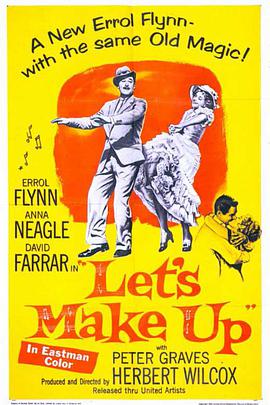
春日紫丁香 (1954) [电影] 豆瓣
Let's Make Up
导演: Herbert Wilcox 演员: Errol Flynn / Anna Neagle
其它标题: Let's Make Up
A young entertainer, Carole Beaumont, is wooed by actor-producer Charles King but, uncertain of her feelings, she resists his attentions. During an air raid, a bomb explosion rocks the café and Carole is knocked unconscious. In her confused state, fantasies flash through her mind, and she seems to become Nell Gwyn of Old Drury, with Charles King looking very much like King Charles. Recovering, she is advised by her doctor to take a rest in the country and, there,another beau, Albert Gutman, prompts his grandmother, Lady Drayton, to invite Carole to their family home at Windsor. She accepts and telephones Charles but hangs up when his phone is answered by a female voice. Looking out on Windsor Castle, she sees herself as the young Queen Victoria and Albert as Prince Albert. Influenced by her day-dream, she accepts Albert's proposal. Charles arrives to tell her that all arrangements are made for her to leave with him and the company for Burma, but she refuses saying she will never marry an actor. Barmaid Kate tells Charles why Carole feels the way she does about actors: Carole's mother, Lillian Grey, was with a touring show in 1913 when the handsome star, John Beaumont raised her from the chorus to be his partner in his first West End show. They were a success, fell in love and were married. But the war soon took Beau off to Flanders and Lillian was left to become a great star on her own. Carole was born in wartime, but saw little of her busy mother.
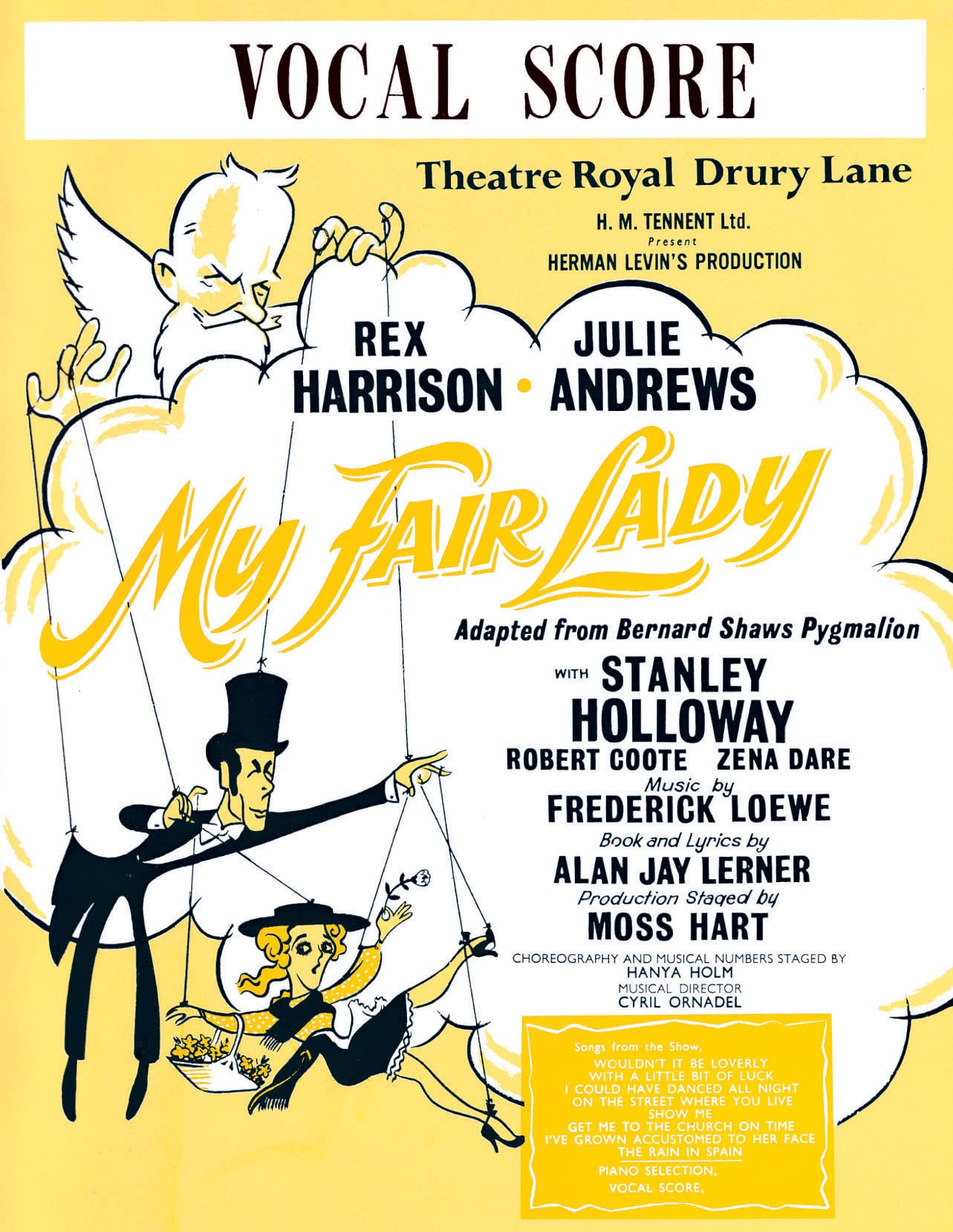
窈窕淑女 1979 London Revival版 [演出] 豆瓣
所属 演出: 窈窕淑女
语言: 英语 english 剧团: unknown 剧院: Adelphi Theatre 导演: Robin Midgley
其它标题: 1979 London Revival版 编剧: Alan Jay Lerner 作曲: Fredrick Loewe 演员: Liz Robertson / Tony Britton
Act I
In Edwardian London, Eliza Doolittle is a flower girl with a thick Cockney accent. The noted phonetician Professor Henry Higgins encounters Eliza at Covent Garden and laments the vulgarity of her dialect ("Why Can't the English?"). Higgins also meets Colonel Pickering, another linguist, and invites him to stay as his houseguest. Eliza and her friends wonder what it would be like to live a comfortable life ("Wouldn't It Be Loverly?").
Eliza's father, Alfred P. Doolittle, stops by the next morning searching for money for a drink ("With a Little Bit of Luck"). Soon after, Eliza comes to Higgins's house, seeking elocution lessons so that she can get a job as an assistant in a florist's shop. Higgins wagers Pickering that, within six months, by teaching Eliza to speak properly, he will enable her to pass for a proper lady.
Eliza becomes part of Higgins's household. Though Higgins sees himself as a kindhearted man who merely cannot get along with women ("I'm an Ordinary Man"), to others he appears self-absorbed and misogynistic. Eliza endures Higgins's tyrannical speech tutoring. Frustrated, she dreams of different ways to kill him ("Just You Wait"). Higgins's servants lament the stressful atmosphere ("The Servants' Chorus").
Just as Higgins is about to give up on her, Eliza suddenly recites one of her diction exercises in perfect upper-class style ("The Rain in Spain"). Though Mrs Pearce, the housekeeper, insists that Eliza go to bed, she declares she is too excited to sleep ("I Could Have Danced All Night").
For her first public tryout, Higgins takes Eliza to his mother's box at Ascot Racecourse ("Ascot Gavotte"). Though Eliza shocks everyone when she forgets herself while watching a race and reverts to foul language, she does capture the heart of Freddy Eynsford-Hill. Freddy calls on Eliza that evening, and he declares that he will wait for her in the street outside Higgins' house ("On the Street Where You Live").
Eliza's final test requires her to pass as a lady at the Embassy Ball. After more weeks of preparation, she is ready. All the ladies and gentlemen at the ball admire her, and the Queen of Transylvania invites her to dance with the prince ("Embassy Waltz"). A Hungarian phonetician, Zoltan Karpathy, attempts to discover Eliza's origins. Higgins allows Karpathy to dance with Eliza.
Act II
The ball is a success; Karpathy has declared Eliza to be a Hungarian princess. Pickering and Higgins revel in their triumph ("You Did It"), failing to pay attention to Eliza. Eliza is insulted at receiving no credit for her success, packing up and leaving the Higgins house. As she leaves she finds Freddy, who begins to tell her how much he loves her, but she tells him that she has heard enough words; if he really loves her, he should show it ("Show Me").
Eliza and Freddy return to Covent Garden but she finds she no longer feels at home there. Her father is there as well, and he tells her that he has received a surprise bequest from an American millionaire, which has raised him to middle-class respectability, and now must marry his lover. Doolittle and his friends have one last spree before the wedding ("Get Me to the Church on Time").
Higgins awakens the next morning. He finds himself out of sorts without Eliza. He wonders why she left after the triumph at the ball and concludes that men (especially himself) are far superior to women ("A Hymn to Him"). Pickering notices the Professor's lack of consideration, and also leaves the Higgins house.
Higgins despondently visits his mother's house, where he finds Eliza. Eliza declares she no longer needs Higgins ("Without You"). As Higgins walks home, he realizes he's grown attached to Eliza ("I've Grown Accustomed to Her Face"). At home, he sentimentally reviews the recording he made the day Eliza first came to him for lessons, hearing his own harsh words. Eliza suddenly appears in his home. In suppressed joy at their reunion, Professor Higgins scoffs and asks, "Eliza, where the devil are my slippers?"

荣耀六十年 (1938) [电影] 豆瓣 IMDb
Sixty Glorious Years
导演: Herbert Wilcox 演员: Anna Neagle / Anton Walbrook
其它标题: Sixty Glorious Years
Sixty Glorious Years is an exercise in the creation of iconography, both for Victoria and its star, Anna Neagle (who subsequently became known as 'Regal Neagle'). Just as Elizabeth I commissioned artists to create flattering iconic images for public consumption, so this film performs a similar function, for Neagle is more beautiful than the real life Victoria. Controversial events (such as the 'Irish problem') are omitted and unpleasant aspects of Victoria's character (her petulance, arrogance, favouritism and 'right to privilege') are glossed over as endearing little 'whims'. Albert acts as a moderating influence when she goes too far.
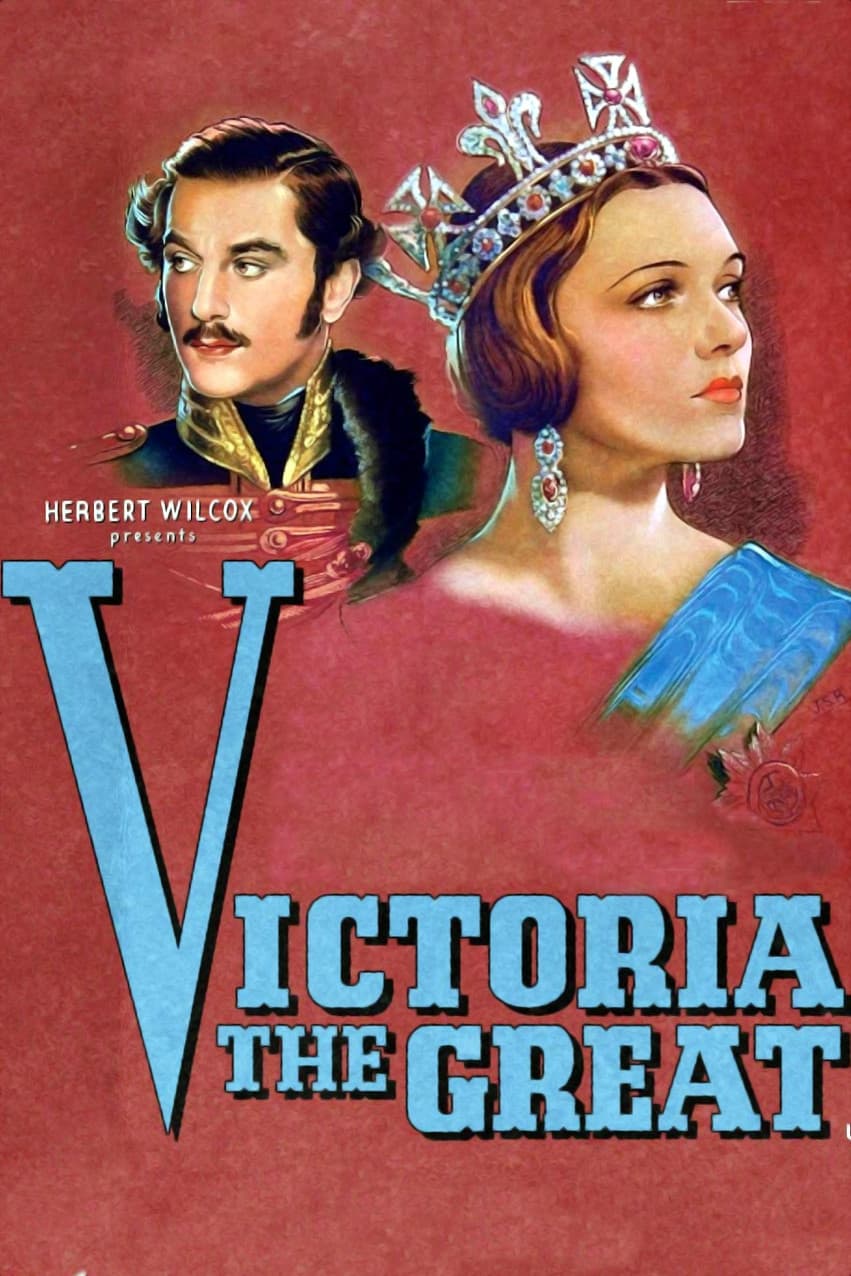
The film followed a year after the highly successful Victoria the Great (d. Herbert Wilcox, 1937). Again the screenplay is by Miles Malleson and Robert Vansittart, and many of the supporting cast (the cream of acting talent of period) repeat their roles, this time for the colour cameras. This was the first full length Technicolor film of cinematographer Freddie Young, who captures the spectacle of royal weddings, grand balls and opulent interiors, with scenes actually filmed at royal palaces. Vivid battle scenes, set in Alexander Korda's empire territory (Sevastopol and the Sudan), rival those in The Four Feathers (d. Zoltan Korda 1939).
The title music sets the tone: a regal choir sings over a shot of the crown. Elgar's 1901 'Pomp and Circumstance' march is heard during the diamond jubilee celebrations and, as Victoria's coffin lies in state, the film concludes with Anthony Collins' stately music accompanied by the text of Rudyard Kipling's 'Lest we forget'. Combined with the emotional appeal of scenes of Victoria connecting with her 'ordinary folk', this is stirring stuff.
The film connects with contemporary events of 1938. The release of two celebratory royal films was intended to boost public affection for the monarchy in the wake of Edward VIII's abdication. Anglo-German relations were another touchy subject. With another war on the horizon, influential voices wanted appeasement, and the film could be seen to fit that agenda. Victoria herself was of mainly German descent, nicknamed 'the grandmother of Europe', while Albert is a 'good German', charmingly played by Anton Walbrook as a cultured, decent man.
Sixty Glorious Years now seems unduly formal and reverential. Had movies existed during Victoria's reign (they only emerged at the end) this might have been the kind of film produced. Unlike Mrs Brown (d. John Madden, 1997), it is all so very 'Victorian'.
Roger Philip Mellor
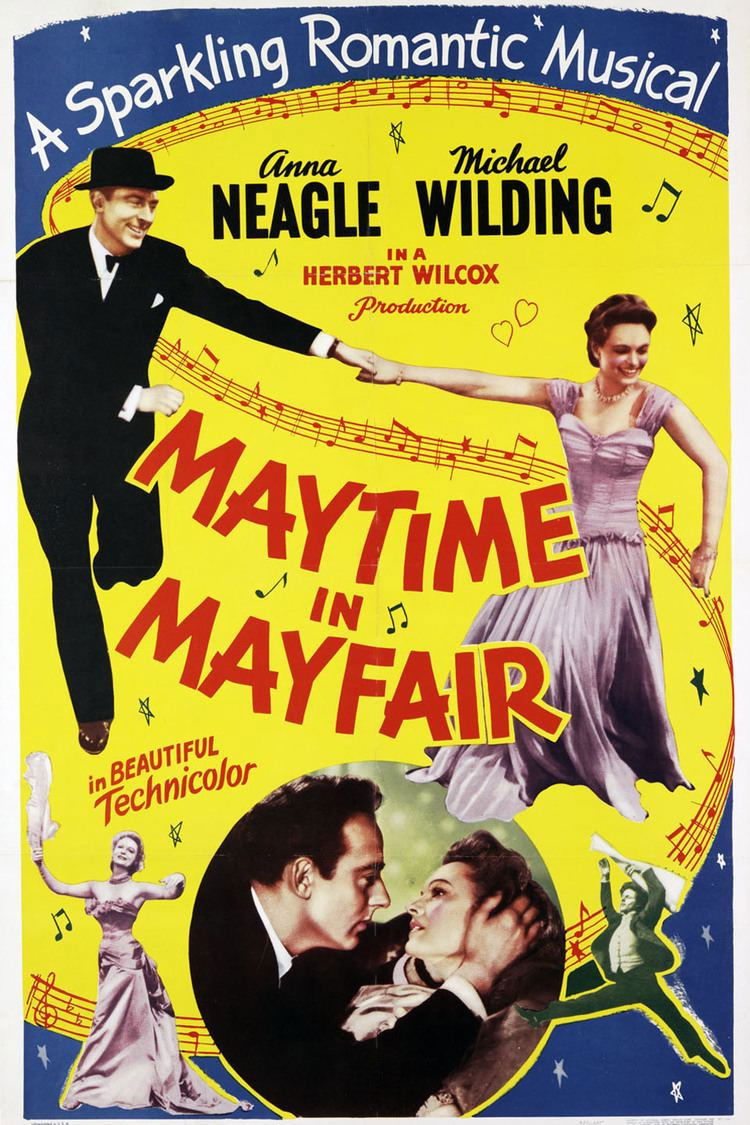
五月千金 (1949) [电影] 维基数据 IMDb TMDB 豆瓣
Maytime in Mayfair
其它标题: Maytime in Mayfair / 五月情歌
Penniless man-about-town Michael Gore-Brown is delighted to hear he has been left a high-class Mayfair fashion salon. His intention is to sell it as quickly as possible, but on meeting Ellen, chief designer and manager, he quickly changes his mind and turns his attention to courting her.
The Queen's Affair (1934) [电影] 豆瓣 IMDb
The Queen's Affair
导演: 赫伯特·威尔科克斯 演员: Anna Neagle / 费尔南德·格雷维
其它标题: Runaway Queen
Poor New York shop girl Nadina receives the unexpected news that she is next in line to be queen of an Eastern European country. On her arrival in Ruritania, a revolution is in progress, and only minutes before her coronation, Nadina is forced into exile. She flees to Paris with her nurse, and then travels on to Switzerland. There Nadina encounters the Ruritanian revolutionary leader Carl, recuperating from the trials of revolution, and the couple unexpectedly fall in love. When the revolution collapses in Ruritania, they return and marry, thus forming a constitutional monarchy supported by all the people.