Keith Miller — 演员 (6)
比才:卡门 (2010) [电影] TMDB 豆瓣
Bizet: Carmen
9.2 (5 个评分) 导演: Gary Halvorson 演员: Roberto Alagna / Elina Garanca
其它标题: Bizet: Carmen / 大都会歌剧院高清转播系列
从在看到卡门的第一眼开始,年轻的军长唐豪塞就坠入了卡门用美艳和欲望所编制的陷阱之中。为了和卡门双宿双飞,他毫不犹豫的抛弃了乡下温柔贤惠的情人,不仅如此,在卡门身陷险境的时刻,唐豪塞伸出了援手,同时也断送了自己的大好前程。
和卡门在一起之后,唐豪塞似乎就没有走运过,在经历了牢狱之灾后他加入了卡门所在的走私团伙。天性奔放自由的卡门对唐豪塞的态度渐渐的冷淡了下来,讽刺的是,她对斗牛士埃斯卡米里奥的态度倒是热情的很,忍无可忍的唐豪塞决定要与埃斯卡米里奥决斗,一场悲剧眼看就要发生。
图兰朵 2009年大都会歌剧团版 [演出] 豆瓣
所属 演出: 图兰朵
语言: italian 意大利语 剧团: Metropolitan Opera Orchestra 大都会歌剧团管弦乐团 ; Metropolitan Opera Chorus 大都会歌剧团合唱团 ; Metropolitan Opera Ballet 大都会歌剧团芭蕾舞团 剧院: Metropolitan Opera House 大都会歌剧院 导演: Franco Zeffirelli / David Kneuss
其它标题: 2009年大都会歌剧团版 编剧: Giuseppe Adami / Renato Simoni 作曲: Giacomo Puccini 演员: Maria Guleghina / Marcello Giordani
Place: Peking, China
Time: Legendary times
Act 1
In China, beautiful Princess Turandot will only marry a suitor who can answer 3 secret riddles. A Mandarin announces the law of the land (Aria – Popolo di Pechino! – "People of Peking!"). The Prince of Persia has failed to answer the three riddles, and he is to be beheaded at the next moonrising. As the crowd surges towards the gates of the palace, the imperial guards brutally repulse them, causing a blind old man to be knocked to the ground. The old man's slave-girl, Liù, cries out for help. A young man hears her cry and recognizes that the old man is his long-lost father, Timur, the deposed king of Tartary. The young Prince of Tartary is overjoyed at seeing Timur alive, but still urges Timur to not speak his name because he is afraid that the Chinese rulers, who have conquered Tartary, may kill or harm them. Timur then tells his son that, of all his servants, only Liù has remained faithful to him. When the Prince asks her why, she tells him that once, long ago in the palace, the Prince had smiled at her (Trio with chorus – The crowd, Liù, Prince of Tartary, Timur: Indietro, cani! – "Back, dogs!").
The moon rises, and the crowd's cries for blood dissolve into silence. The doomed Prince of Persia, who is on his way to be executed, is led before the crowd. The young Prince is so handsome and kind that the crowd and the Prince of Tartary decide that they want Turandot to act compassionately, and they beg Turandot to appear and spare his life (Aria – The crowd, Prince of Tartary: O giovinetto! – "O youth!"). She then appears, and with a single imperious gesture, orders the execution to continue. The Prince of Tartary, who has never seen Turandot before, falls immediately in love with her, and joyfully cries out Turandot's name three times, foreshadowing the riddles to come. Then the Prince of Persia cries out one final time. The crowd, horrified, screams out one final time and the Prince of Persia is beheaded.
The Prince of Tartary is dazzled by Turandot's beauty. He is about to rush towards the gong and to strike it three times – the symbolic gesture of whoever wishes to attempt to solve the riddles so that he can marry Turandot – when the ministers Ping, Pang, and Pong appear. They urge him cynically to not lose his head for Turandot and to instead go back to his own country (Fermo, che fai?). Timur urges his son to desist, and Liù, who is secretly in love with the Prince, pleads with him not to attempt to solve the riddles (Signore, ascolta! – "Lord, hear!"). Liù's words touch the Prince's heart. He begs Liù to make Timur's exile more bearable by not abandoning Timur if the Prince fails to answer the riddles (Non piangere, Liù – "Do not cry, Liù"). The three ministers, Timur, and Liù then try one last time to stop the Prince (Ah! Per l'ultima volta! – "Ah! For the last time!") from attempting to answer the riddles, but he refuses to heed their advice.
He calls Turandot's name three times, and each time Liù, Timur, and the ministers reply, "Death!" and the crowd declares, "We're already digging your grave!" Rushing to the gong that hangs in front of the palace, the Prince strikes it three times, declaring himself to be a suitor. From the palace balcony, Turandot accepts his challenge, as Ping, Pang, and Pong laugh at the Prince's foolishness.
Act 2
Scene 1: A pavilion in the imperial palace. Before sunrise
Ping, Pang, and Pong lament their place as ministers, poring over palace documents and presiding over endless rituals. They prepare themselves for either a wedding or a funeral (Trio – Ping, Pang, Pong: Ola, Pang!). Ping suddenly longs for his country house in Honan, with its small lake surrounded by bamboo. Pong remembers his grove of forests near Tsiang, and Pang recalls his gardens near Kiu. The three share their fond memories of their lives away from the palace (Trio – Ping, Pang, Pong: Ho una casa nell'Honan – "I have a house in Honan"). They turn their thoughts back to how they have been accompanying young princes to their deaths. As the palace trumpet sounds, the ministers ready themselves for another spectacle as they await the entrance of their Emperor.
Scene 2: The courtyard of the palace. Sunrise
The Emperor Altoum, father of Turandot, sits on his grand throne in his palace. Weary of having to judge his isolated daughter's sport, he urges the Prince to withdraw his challenge, but the Prince refuses (Aria – Altoum, the Prince: Un giuramento atroce – "An atrocious oath"). Turandot enters and explains (In questa reggia – "In this palace") that her ancestress of millennia past, Princess Lo-u-Ling, reigned over her kingdom "in silence and joy, resisting the harsh domination of men" until she was raped and murdered by an invading foreign prince. Turandot claims that Lo-u-Ling now lives in her, and out of revenge, Turandot has sworn to never let any man wed her. She warns the Prince to withdraw but again he refuses. The Princess presents her first riddle: Straniero, ascolta! – "What is born each night and dies each dawn?" The Prince correctly replies, Speranza – "Hope." The Princess, unnerved, presents her second riddle (Guizza al pari di fiamma – "What flickers red and warm like a flame, but is not fire?") The Prince thinks for a moment before replying, Sangue – "Blood". Turandot is shaken. The crowd cheers the Prince, provoking Turandot's anger. She presents her third riddle (Gelo che ti da foco – "What is ice which gives you fire and which your fire freezes still more?"). He proclaims, "It is Turandot! Turandot!"
The crowd cheers for the triumphant Prince. Turandot throws herself at her father's feet and pleads with him not to leave her to the Prince's mercy. The Emperor insists that an oath is sacred and that it is Turandot's duty to wed the Prince (Duet – Turandot, Altoum, the Prince: Figlio del cielo). She cries out in despair, "Will you take me by force? (Mi porterai con la forza?) The Prince stops her, saying that he has a riddle for her: Tre enigmi m'hai proposto – "You do not know my name. Tell me my name before sunrise, and at dawn, I will die." Turandot accepts. The Emperor then declares that he hopes that he will be able to call the Prince his son when the sun next rises.
Act 3
Scene 1: The palace gardens. Night
In the distance, heralds call out Turandot's command: Cosi comanda Turandot – "This night, none shall sleep in Peking! The penalty for all will be death if the Prince's name is not discovered by morning". The Prince waits for dawn and anticipates his victory: Nessun dorma – "Nobody shall sleep!"
Ping, Pong, and Pang appear and offer the Prince women and riches if he will only give up Turandot (Tu che guardi le stelle), but he refuses. A group of soldiers then drag in Timur and Liù. They have been seen speaking to the Prince, so they must know his name. Turandot enters and orders Timur and Liù to speak. The Prince feigns ignorance, saying they know nothing. But when the guards begin to treat Timur harshly, Liù declares that she alone knows the Prince's name, but she will not reveal it. Ping demands the Prince's name, and when Liù refuses to say it, she is tortured. Turandot is clearly taken aback by Liù's resolve and asks Liù who or what gave her such a strong resolve. Liù answers, "Princess, love!" (Principessa, amore!). Turandot demands that Ping tear the Prince's name from Liù, and Ping orders Liù to be tortured even more. Liù counters Turandot (Tu che di gel sei cinta – "You who are begirdled by ice"), saying that Turandot too will learn the exquisite joy of being guided by caring and compassionate love.[note 1] Having spoken, Liù seizes a dagger from a soldier's belt and stabs herself. As she staggers towards the Prince and falls dead, the crowd screams for her to speak the Prince's name. Since Timur is blind, he must be told about Liù's death, and he cries out in anguish. When Timur warns that the gods will be offended by Liù's death, the crowd becomes subdued, very afraid and ashamed. The grieving Timur and the crowd follow Liù's body as it is carried away. Everybody departs, leaving the Prince and Turandot alone. He reproaches Turandot for her cruelty (Duet – The Prince, Turandot: Principessa di morte – "Princess of death"), then takes her in his arms and kisses her in spite of her resistance.
The Prince tries to convince Turandot to love him. At first she feels disgusted, but after he kisses her, she feels herself becoming more ardently desiring to be held and compassionately loved by him. She admits that ever since she met the Prince, she realized she both hated and loved him. She asks him to ask for nothing more and to leave, taking his mystery with him. The Prince, however, then reveals his name: "Calaf, son of Timur – Calaf, figlio di Timur", thereby placing his life in Turandot's hands. She can now destroy him if she wants (Duet – Turandot, Calaf: Del primo pianto).
Scene 2: The courtyard of the palace. Dawn
Turandot and Calaf approach the Emperor's throne. She declares that she knows the Prince's name: Diecimila anni al nostro Imperatore! – "It is ... love!" The crowd cheers and acclaims the two lovers (O sole! Vita! Eternità).
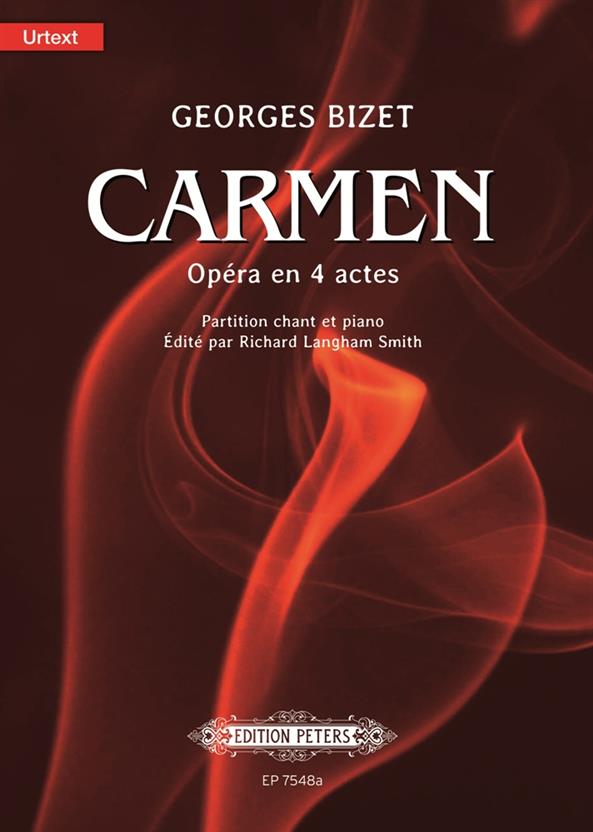
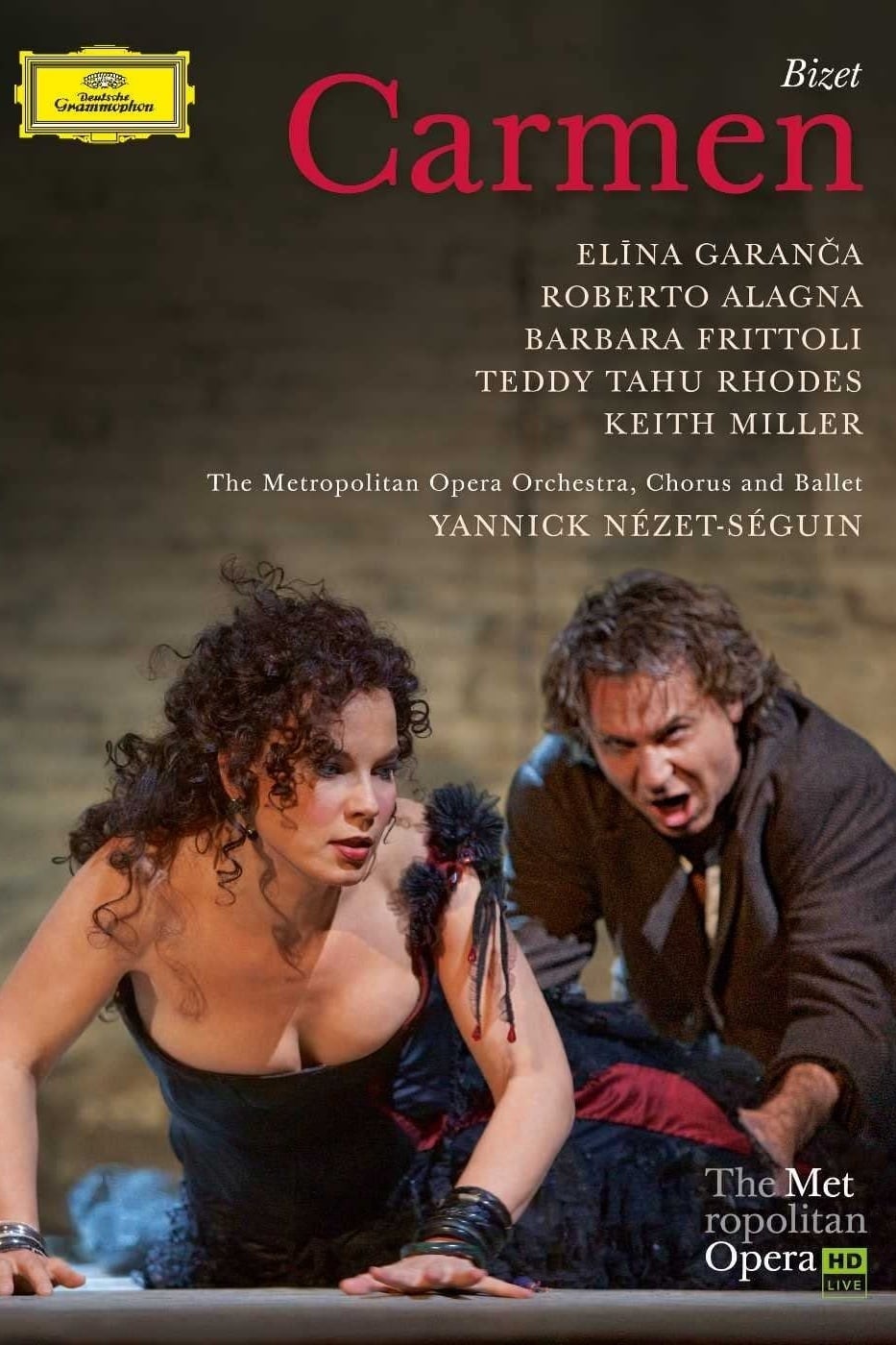
卡门 2010年大都会歌剧团版 [演出] 豆瓣
所属 演出: 卡门
语言: 法语 french 剧团: Metropolitan Opera Orchestra 大都会歌剧团管弦乐团 ; Metropolitan Opera Chorus 大都会歌剧团合唱团 ; Metropolitan Opera Ballet 大都会歌剧团芭蕾舞团 剧院: Metropolitan Opera House 大都会歌剧院 导演: Richard Eyre
其它标题: 2010年大都会歌剧团版 编剧: Henri Meilhac / Ludovic Halévy 作曲: Georges Bizet 演员: Elīna Garanča / Roberto Alagna
Place: Seville, Spain, and surrounding hills
Time: Around 1820
Act 1
A square, in Seville. On the right, a door to the tobacco factory. At the back, a bridge. On the left, a guardhouse.
A group of soldiers relaxes in the square, waiting for the changing of the guard and commenting on the passers-by ("Sur la place, chacun passe"). Micaëla appears, seeking José. Moralès tells her that "José is not yet on duty" and invites her to wait with them. She declines, saying she will return later. José arrives with the new guard, who is greeted and imitated by a crowd of urchins ("Avec la garde montante").
As the factory bell rings, the cigarette girls emerge and exchange banter with young men in the crowd ("La cloche a sonné"). Carmen enters and sings her provocative habanera on the untameable nature of love ("L'amour est un oiseau rebelle"). The men plead with her to choose a lover, and after some teasing she throws a flower to Don José, who thus far has been ignoring her but is now annoyed by her insolence.
As the women go back to the factory, Micaëla returns and gives José a letter and a kiss from his mother ("Parle-moi de ma mère!"). He reads that his mother wants him to return home and marry Micaëla, who retreats in shy embarrassment on learning this. Just as José declares that he is ready to heed his mother's wishes, the women stream from the factory in great agitation. Zuniga, the officer of the guard, learns that Carmen has attacked a woman with a knife. When challenged, Carmen answers with mocking defiance ("Tra la la... Coupe-moi, brûle-moi"); Zuniga orders José to tie her hands while he prepares the prison warrant. Left alone with José, Carmen beguiles him with a seguidilla, in which she sings of a night of dancing and passion with her lover—whoever that may be—in Lillas Pastia's tavern. Confused yet mesmerised, José agrees to free her hands; as she is led away she pushes her escort to the ground and runs off laughing. José is arrested for dereliction of duty.
Act 2
Lillas Pastia's Inn
Two months have passed. Carmen and her friends Frasquita and Mercédès are entertaining Zuniga and other officers ("Les tringles des sistres tintaient") in Pastia's inn. Carmen is delighted to learn of José's release from two months' detention. Outside, a chorus and procession announces the arrival of the toreador Escamillo ("Vivat, vivat le Toréro"). Invited inside, he introduces himself with the "Toreador Song" ("Votre toast, je peux vous le rendre") and sets his sights on Carmen, who brushes him aside. Lillas Pastia hustles the crowds and the soldiers away.
When only Carmen, Frasquita and Mercédès remain, smugglers Dancaïre and Remendado arrive and reveal their plans to dispose of some recently acquired contraband ("Nous avons en tête une affaire"). Frasquita and Mercédès are keen to help them, but Carmen refuses, since she wishes to wait for José. After the smugglers leave, José arrives. Carmen treats him to a private exotic dance ("Je vais danser en votre honneur ... La la la"), but her song is joined by a distant bugle call from the barracks. When José says he must return to duty, she mocks him, and he answers by showing her the flower that she threw to him in the square ("La fleur que tu m'avais jetée"). Unconvinced, Carmen demands he show his love by leaving with her. José refuses to desert, but as he prepares to depart, Zuniga enters looking for Carmen. He and José fight, and are separated by the returning smugglers, who restrain Zuniga. Having attacked a superior officer, José now has no choice but to join Carmen and the smugglers ("Suis-nous à travers la campagne").
Act 3
A wild spot in the mountains
Carmen and José enter with the smugglers and their booty ("Écoute, écoute, compagnons"); Carmen has now become bored with José and tells him scornfully that he should go back to his mother. Frasquita and Mercédès amuse themselves by reading their fortunes from the cards; Carmen joins them and finds that the cards are foretelling her death, and José's. The women depart to suborn the customs officers who are watching the locality. José is placed on guard duty.
Micaëla enters with a guide, seeking José and determined to rescue him from Carmen ("Je dis que rien ne m'épouvante"). On hearing a gunshot she hides in fear; it is José, who has fired at an intruder who proves to be Escamillo. José's pleasure at meeting the bullfighter turns to anger when Escamillo declares his infatuation with Carmen. The pair fight ("Je suis Escamillo, toréro de Grenade"), but are interrupted by the returning smugglers and girls ("Holà, holà José"). As Escamillo leaves he invites everyone to his next bullfight in Seville. Micaëla is discovered; at first, José will not leave with her despite Carmen's mockery, but he agrees to go when told that his mother is dying. As he departs, vowing he will return, Escamillo is heard in the distance, singing the toreador's song.
Act 4
A square in Seville. At the back, the walls of an ancient amphitheatre
Zuniga, Frasquita and Mercédès are among the crowd awaiting the arrival of the bullfighters ("Les voici ! Voici la quadrille!"). Escamillo enters with Carmen, and they express their mutual love ("Si tu m'aimes, Carmen"). As Escamillo goes into the arena, Frasquita and Mercedes warn Carmen that José is nearby, but Carmen is unafraid and willing to speak to him. Alone, she is confronted by the desperate José ("C'est toi ! C'est moi !"). While he pleads vainly for her to return to him, cheers are heard from the arena. As José makes his last entreaty, Carmen contemptuously throws down the ring he gave her and attempts to enter the arena. He then stabs her, and as Escamillo is acclaimed by the crowds, Carmen dies. José kneels and sings "Ah! Carmen! ma Carmen adorée!"; as the crowd exits the arena, José confesses to killing the woman he loved.
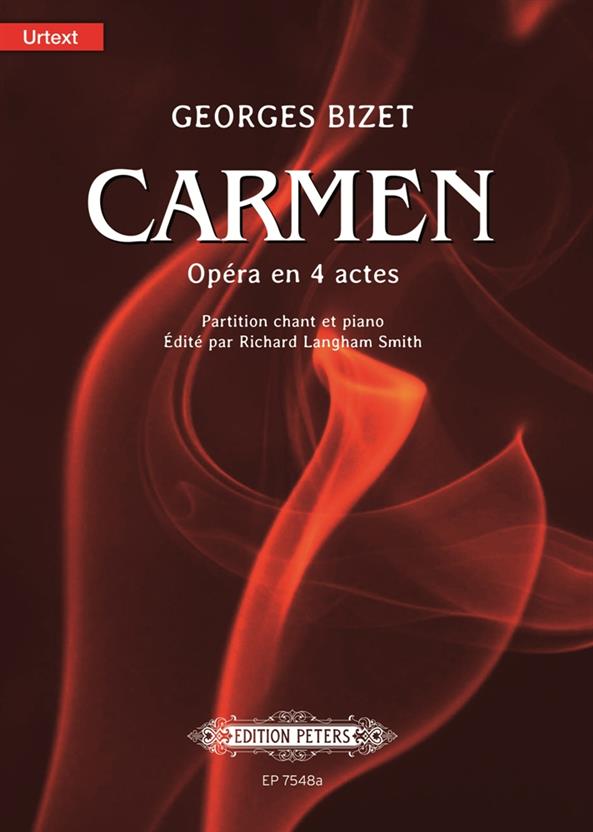
卡门 2014年大都会歌剧团版 [演出] 豆瓣
所属 演出: 卡门
语言: 法语 french 剧团: Metropolitan Opera Orchestra 大都会歌剧团管弦乐团 ; Metropolitan Opera Chorus 大都会歌剧团合唱团 ; Metropolitan Opera Ballet 大都会歌剧团芭蕾舞团 剧院: Metropolitan Opera House 大都会歌剧院 导演: Richard Eyre
其它标题: 2014年大都会歌剧团版 编剧: Henri Meilhac / Ludovic Halévy 作曲: Georges Bizet 演员: Anita Rachvelishvili / Aleksandrs Antonenko
Place: Seville, Spain, and surrounding hills
Time: Around 1820
Act 1
A square, in Seville. On the right, a door to the tobacco factory. At the back, a bridge. On the left, a guardhouse.
A group of soldiers relaxes in the square, waiting for the changing of the guard and commenting on the passers-by ("Sur la place, chacun passe"). Micaëla appears, seeking José. Moralès tells her that "José is not yet on duty" and invites her to wait with them. She declines, saying she will return later. José arrives with the new guard, who is greeted and imitated by a crowd of urchins ("Avec la garde montante").
As the factory bell rings, the cigarette girls emerge and exchange banter with young men in the crowd ("La cloche a sonné"). Carmen enters and sings her provocative habanera on the untameable nature of love ("L'amour est un oiseau rebelle"). The men plead with her to choose a lover, and after some teasing she throws a flower to Don José, who thus far has been ignoring her but is now annoyed by her insolence.
As the women go back to the factory, Micaëla returns and gives José a letter and a kiss from his mother ("Parle-moi de ma mère!"). He reads that his mother wants him to return home and marry Micaëla, who retreats in shy embarrassment on learning this. Just as José declares that he is ready to heed his mother's wishes, the women stream from the factory in great agitation. Zuniga, the officer of the guard, learns that Carmen has attacked a woman with a knife. When challenged, Carmen answers with mocking defiance ("Tra la la... Coupe-moi, brûle-moi"); Zuniga orders José to tie her hands while he prepares the prison warrant. Left alone with José, Carmen beguiles him with a seguidilla, in which she sings of a night of dancing and passion with her lover—whoever that may be—in Lillas Pastia's tavern. Confused yet mesmerised, José agrees to free her hands; as she is led away she pushes her escort to the ground and runs off laughing. José is arrested for dereliction of duty.
Act 2
Lillas Pastia's Inn
Two months have passed. Carmen and her friends Frasquita and Mercédès are entertaining Zuniga and other officers ("Les tringles des sistres tintaient") in Pastia's inn. Carmen is delighted to learn of José's release from two months' detention. Outside, a chorus and procession announces the arrival of the toreador Escamillo ("Vivat, vivat le Toréro"). Invited inside, he introduces himself with the "Toreador Song" ("Votre toast, je peux vous le rendre") and sets his sights on Carmen, who brushes him aside. Lillas Pastia hustles the crowds and the soldiers away.
When only Carmen, Frasquita and Mercédès remain, smugglers Dancaïre and Remendado arrive and reveal their plans to dispose of some recently acquired contraband ("Nous avons en tête une affaire"). Frasquita and Mercédès are keen to help them, but Carmen refuses, since she wishes to wait for José. After the smugglers leave, José arrives. Carmen treats him to a private exotic dance ("Je vais danser en votre honneur ... La la la"), but her song is joined by a distant bugle call from the barracks. When José says he must return to duty, she mocks him, and he answers by showing her the flower that she threw to him in the square ("La fleur que tu m'avais jetée"). Unconvinced, Carmen demands he show his love by leaving with her. José refuses to desert, but as he prepares to depart, Zuniga enters looking for Carmen. He and José fight, and are separated by the returning smugglers, who restrain Zuniga. Having attacked a superior officer, José now has no choice but to join Carmen and the smugglers ("Suis-nous à travers la campagne").
Act 3
A wild spot in the mountains
Carmen and José enter with the smugglers and their booty ("Écoute, écoute, compagnons"); Carmen has now become bored with José and tells him scornfully that he should go back to his mother. Frasquita and Mercédès amuse themselves by reading their fortunes from the cards; Carmen joins them and finds that the cards are foretelling her death, and José's. The women depart to suborn the customs officers who are watching the locality. José is placed on guard duty.
Micaëla enters with a guide, seeking José and determined to rescue him from Carmen ("Je dis que rien ne m'épouvante"). On hearing a gunshot she hides in fear; it is José, who has fired at an intruder who proves to be Escamillo. José's pleasure at meeting the bullfighter turns to anger when Escamillo declares his infatuation with Carmen. The pair fight ("Je suis Escamillo, toréro de Grenade"), but are interrupted by the returning smugglers and girls ("Holà, holà José"). As Escamillo leaves he invites everyone to his next bullfight in Seville. Micaëla is discovered; at first, José will not leave with her despite Carmen's mockery, but he agrees to go when told that his mother is dying. As he departs, vowing he will return, Escamillo is heard in the distance, singing the toreador's song.
Act 4
A square in Seville. At the back, the walls of an ancient amphitheatre
Zuniga, Frasquita and Mercédès are among the crowd awaiting the arrival of the bullfighters ("Les voici ! Voici la quadrille!"). Escamillo enters with Carmen, and they express their mutual love ("Si tu m'aimes, Carmen"). As Escamillo goes into the arena, Frasquita and Mercedes warn Carmen that José is nearby, but Carmen is unafraid and willing to speak to him. Alone, she is confronted by the desperate José ("C'est toi ! C'est moi !"). While he pleads vainly for her to return to him, cheers are heard from the arena. As José makes his last entreaty, Carmen contemptuously throws down the ring he gave her and attempts to enter the arena. He then stabs her, and as Escamillo is acclaimed by the crowds, Carmen dies. José kneels and sings "Ah! Carmen! ma Carmen adorée!"; as the crowd exits the arena, José confesses to killing the woman he loved.
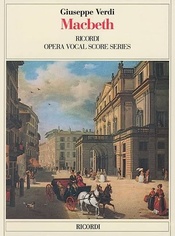
麦克白 2008年大都会歌剧团版 [演出] 豆瓣
所属 演出: 麦克白
语言: italian 意大利语 剧团: Metropolitan Opera Orchestra 大都会歌剧团管弦乐团 ; Metropolitan Opera Chorus 大都会歌剧团合唱团 ; Metropolitan Opera Ballet 大都会歌剧团芭蕾舞团 剧院: Metropolitan Opera House 大都会歌剧院 导演: Adrian Noble
其它标题: 2008年大都会歌剧团版 编剧: Francesco Maria Piave / Andrea Maffei 作曲: Giuseppe Verdi 演员: Željko Lučić / Maria Guleghina
Place: Scotland
Time: 11th century
Act 1
Scene 1: A heath
Groups of witches gather in a wood beside a battlefield, exchanging stories of the "evils" they have done. The victorious generals Macbeth and Banco enter. The witches hail Macbeth as Thane of Glamis (a title he already holds by inheritance), Thane of Cawdor, and king "hereafter." Banco is greeted as "lesser than Macbeth, but greater", never a king himself, but the progenitor of a line of future kings. The witches vanish, and messengers from the king appear naming Macbeth Thane of Cawdor. Macbeth protests that the holder of that title is still alive, but the messengers reply that the former Thane has been executed as a traitor. Banco, mistrusting the witches, is horrified to find that they have spoken the truth. In a duet, Macbeth and Banco muse that the first of the witches' prophecies has been fulfilled. Macbeth ponders how close he is to the throne, and whether fate will crown him without his taking action, yet dreams of blood and treachery: while Banco ponders on whether the minions of Hell will sometimes reveal an honest truth in order to lead one to future damnation.
Scene 2: Macbeth's castle
Lady Macbeth reads a letter from her husband telling of the encounter with the witches. She is determined to propel Macbeth to the throne - by fair means or foul.
[Revised version, 1865: Vieni! t'affretta!/ "Come! Hurry!"]
Lady Macbeth is advised that King Duncan will stay in the castle that night; she is determined to see him killed (Or tutti, sorgete / "Arise now, all you ministers of hell"). When Macbeth returns she urges him to take the opportunity to kill the King. The King and the nobles arrive and Macbeth is emboldened to carry out the murder (Mi si affaccia un pugnal? / "Is this a dagger which I see before me?"), but afterwards is filled with horror. Disgusted at his cowardice, Lady Macbeth completes the crime, incriminating the sleeping guards by smearing them with Duncan's blood and planting on them Macbeth's dagger. Macduff arrives for an appointment with the King, while Banco stands guard, only for Macduff instead to discover the murder. He rouses the castle while Banco also bears witness to the fact of Duncan's murder. The chorus calls on God to avenge the killing (Schiudi, inferno, . . / "Open wide thy gaping maw, O Hell").
Act 2
Scene 1: A room in the castle
Macbeth is now king: Duncan's son Malcolm has fled the country, suspicion having conveniently fallen on him for his father's murder: but Macbeth is still disturbed by the prophecy that Banco, not he, will found a great royal line. To prevent this he tells his wife that he will have both Banco and his son murdered as they come to a banquet.
[1865 revised version: In her aria, La luce langue / "The light fades", Lady Macbeth exults in the powers of darkness]
Scene 2: Outside the castle
A gang of murderers lie in wait. Banco, sensing danger shares his misgivings with his son. (Come dal ciel precipita / "O, how the darkness falls from heaven"). The murderers attack and stab him to death, but his son escapes.
Scene 3: A dining hall in the castle
Macbeth receives the guests and Lady Macbeth sings a brindisi (Si colmi il calice / "Fill up the cup"). The assassination is reported to Macbeth, but when he returns to the table the ghost of Banco is sitting in his place. Macbeth raves at the ghost and the horrified guests believe he has gone mad. Lady Macbeth manages to calm the situation once - and even mocks it by calling for a toast to the absent Banco (whose death is not yet public knowledge), only for the ghost to appear a second time and terrify Macbeth into insanity again. Macduff resolves to leave the country, saying it is ruled by a cursed hand and only the wicked may remain: the other guests are terrified by Macbeth's talk of ghosts, phantoms and witches. The banquet ends abruptly with their hurried, frightened departure.
Act 3
The witches' cave
The witches gather around a cauldron in a dark cave. Macbeth enters and they conjure up three apparitions for him. The first advises him to beware of Macduff. The second tells him that he cannot be harmed by a man 'born of woman'. The third that he cannot be conquered till Birnam Wood marches against him. (Macbeth: O lieto augurio / "O, happy augury! No wood has ever moved by magic power")
Macbeth is then shown the ghost of Banco and his descendants, eight future Kings of Scotland, verifying the original prophecy. (Macbeth: Fuggi regal fantasima / "Begone, royal phantom that reminds me of Banco"). He collapses, but regains consciousness in the castle.
[Original 1847 version: The act ends with Macbeth recovering and resolving to assert his authority: Vada in fiamme, e in polve cada / "Macduff's lofty stronghold shall / Be set fire....".]
A herald announces the arrival of the Queen (Duet: Vi trovo alfin! / "I've found you at last"). Macbeth tells his wife about his encounter with the witches and they resolve to track down and kill Banco's son, as well as Macduff and his family (whom they do not yet know has already fled the country). (Duet: Ora di morte e di vendetta / "Hour of death and of vengeance").
Act 4
Scene 1: Near the border between England and Scotland
Scottish refugees stand near the English border (Chorus: Patria oppressa / "Down-trodden country"):
[Original 1847 version: While each version uses the same libretto, the music of this chorus is different. It begins with a less ominous, much shorter orchestral introduction and is sung straight through by the entire chorus.]
[1865 revised version: the music is divided into sections for the male and female members, then it unites them towards the end. The revised version is 2 minutes longer than the original.]
In the distance lies Birnam Wood. Macduff is determined to avenge the deaths of his wife and children at the hands of the tyrant (Ah, la paterna mano / "Ah, the paternal hand"). He is joined by Malcolm, the son of King Duncan, and the English army. Malcolm orders each soldier to cut a branch from a tree in Birnam Wood and carry it as they attack Macbeth's army. They are determined to liberate Scotland from tyranny (Chorus: La patria tradita / "Our country betrayed").
Scene 2: Macbeth's castle
A doctor and a servant observe the Queen as she walks in her sleep, wringing her hands and attempting to clean them of blood (Una macchia è qui tuttora! / "Yet here's a spot"). She raves about the deaths of both Duncan and Banco, and even about the deaths of Macduff's family, and that all the perfumes of Arabia would not clean the blood off her hands: all are things that the horrified witnesses would never dare to repeat to any living man.
Scene 3: The battlefield
Macbeth has learned that an army of Scottish rebels backed by England is advancing against him, but is reassured by remembering the words of the apparitions, that no man born of woman can harm him. However, in an aria (Pietà, rispetto, amore / "Compassion, honour, love") he contemplates the fact that he is already hated and feared: there will be no compassion, honour and love for him in his old age even if he wins this battle, nor kind words on a royal tomb, only curses and hatred. He receives the news of the Queen's death with indifference. Rallying his troops he learns that Birnam Wood has indeed come to his castle. Battle is joined.
[Original 1847 version's ending: Macduff pursues and fights Macbeth who falls. He tells Macbeth that he was not "born of woman" but "ripped" from his mother's womb. Fighting continues. Mortally wounded, Macbeth, in a final aria - Mal per me che m'affidai / "Trusting in the prophecies of Hell" - proclaims that trusting in these prophecies has caused his downfall. He dies on stage, while Macduff's men proclaim Malcolm to be the new King.]
Macduff pursues and fights Macbeth who falls wounded. He tells Macbeth that he was not "born of woman" but "untimely ripped" from his mother's womb. Macbeth responds in anguish (Cielo! / "Heaven") and the two continue fighting, then disappear from view. Macduff returns indicating to his men that he has killed Macbeth. He then turns to Malcolm, hailing him as King. The scene ends with a hymn to victory sung by bards, soldiers, and Scottish women (Salve, o re!/ "Hail, oh King!). Malcolm as King, and Macduff as hero, together swear to restore the realm to greatness.
西部女郎 2011年大都会歌剧团版 [演出] 豆瓣
所属 演出: 西部女郎
语言: italian 意大利语 剧团: Metropolitan Opera Orchestra 大都会歌剧团管弦乐团 ; Metropolitan Opera Chorus 大都会歌剧团合唱团 剧院: Metropolitan Opera House 大都会歌剧院 导演: Giancarlo del Monaco
其它标题: 2011年大都会歌剧团版 编剧: Guelfo Civinini / Carlo Zangarini 作曲: Giacomo Puccini 演员: Deborah Voigt / Marcello Giordani
Time:1849 to 1850
Place: A mining camp at the foot of the Cloudy Mountains, California
Act 1
Inside the Polka Saloon
A group of Gold Rush miners enter the "Polka" saloon after a day working at the mine ("Hello! Hello! Alla 'Polka'"). After a song by traveling minstrel Jake Wallace ("Che faranno i vecchi miei"), one of the miners, Jim Larkens, is homesick and the miners collect enough money for his fare home ("Jim, perchè piangi?").
A group of miners playing cards discover that Sid is cheating and want to attack him. Sheriff Jack Rance quiets the fight and pins two cards to Sid's jacket, as a sign of a cheat.
A Wells Fargo agent, Ashby, enters and announces that he is chasing the bandit Ramerrez and his gang of Mexicans. Rance toasts Minnie, the woman who owns the saloon, as his future wife, which makes Sonora jealous. The two men begin to fight. Rance draws his revolver but at that moment, a shot rings out and Minnie stands next to the bar with a rifle in her hands ("Hello, Minnie!"). She gives the miners a reading lesson from the Bible ("Dove eravamo?").
The Pony Express rider arrives ("La posta!") and delivers a telegram from Nina Micheltorena, offering to reveal Ramerrez's hideout. The sheriff tells Minnie that he loves her, but Minnie puts him off as she is waiting for the right man ("Ti voglio bene, Minnie").
A stranger enters the saloon and asks for a whisky and water. He introduces himself as Dick Johnson from Sacramento, whom Minnie had met earlier. Johnson invites Minnie to dance with him and she accepts. Angrily, Rance watches them.
Ashby returns with the captured Ramerrez gang member, Castro. Upon seeing his leader, Johnson, in the saloon, Castro agrees to lead Rance, Ashby and the miners in a search for Ramerrez, and the group then follows him on a false trail and in what turns out to be a wild goose chase. But before Castro leaves, he whispers to Johnson that somebody will whistle and Johnson must reply to confirm that the place is clear. A whistle is heard, but Johnson fails to reply.
Minnie shows Johnson the keg of gold that she and the miners take turns to guard at night and Johnson reassures her that the gold will be safe there. Before he leaves the saloon, he promises to visit her at her cabin. They confess their love for each other. Minnie begins to cry, and Johnson comforts her before he leaves.
Act 2
Minnie's dwelling, later that evening
Wowkle, a Native American woman who is Minnie's servant, her lover Billy Jackrabbit and their baby are present as Minnie enters, wanting to get ready for Johnson's visit. Johnson enters Minnie's cabin and she tells him all about her life. It begins to snow. They kiss and Minnie asks him to stay till morning. He denies knowing Nina Micheltorena. As Johnson hides, a posse enters looking for Ramerrez and reveal to Minnie that Johnson is the bandit Ramerrez himself. Angry, she orders Johnson to leave. After he leaves, Minnie hears a gunshot and she knows Johnson has been shot. Johnson staggers in and collapses, Minnie helps him by hiding him up in the loft. Rance enters Minnie's cabin looking for the bandit and is about to give up searching for Johnson when drops of blood fall on his hand. Rance forces Johnson to climb down. Minnie desperately makes Rance an offer: if she beats him at poker, he must let Johnson go free; if Rance wins, she will marry him. Hiding some cards in her stockings, Minnie cheats and wins. Rance honors the deal and Minnie throws herself on the unconscious Johnson on the floor.
Act 3
In the Great Californian Forest at dawn, sometime later
Johnson is again on the run from Ashby and the miners. Nick and Rance are discussing Johnson and wonder what Minnie sees in him when Ashby arrives in triumph: Johnson has been captured. Rance and the miners all want Johnson to be hanged. Johnson accepts the sentence and only asks the miners not to tell Minnie about his capture and his fate ("Ch'ella mi creda"). Minnie arrives, armed with a pistol, just before the execution and throws herself in front of Johnson to protect him. While Rance tries to proceed, she convinces the miners that they owe her too much to kill the man she loves, and asks them to forgive him ("Ah! Ah! E Minnie!"). One by one, the miners yield to her plea ("E anche tu lo vorrai, Joe"). Rance is not happy but finally he too gives in. Sonora unties Johnson and sets him free. The miners bid Minnie farewell ("Le tue parole sono di Dio"). Minnie and Johnson leave California to start a new life together.