Anaïs Nin — 作者 (8)
The Diary of Anaïs Nin, 1931–1934 [图书] 谷歌图书
作者: Anaïs Nin publishing house: Houghton Mifflin Harcourt 1969 - 3
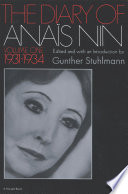
The acclaimed author details her bohemian life in 1930s Paris—including her famous affair with Henry Miller—in the classic first volume of her diaries.Born in France to Cuban parents, Anais Nin began keeping a diary at the age of eleven and continued the practice for the rest of her life. Confessional, scandalous, and thoroughly absorbing, her diaries became one of the most celebrated literary projects of the twentieth century. Writing candidly of her marriages and affairs—including those with psychoanalyst Otto Rank and author Henry Miller—Nin presents a passionate and detailed record of a modern woman’s journey of self-discovery. Edited and with an introduction by Gunther Stuhlmann, this celebrated first volume begins in the winter of 1931 and ends in the fall of 1934. It covers an auspicious time in Nin’s life, from when she is about to publish her first book to her decision to leave Paris for New York.
The Veiled Woman [图书] 豆瓣
作者: Anaïs Nin publishing house: Penguin Classics 2018 - 2
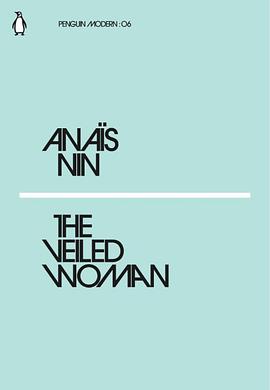
'What did she expect of him? What was her quest? Did she have an unfulfilled desire?'
Transgressive desires and sexual encounters are recounted in these four pieces from one of the greatest writers of erotic fiction.
House of Incest [图书] 谷歌图书
作者: Anaïs Nin publishing house: Sky Blue Press 2010 - 7
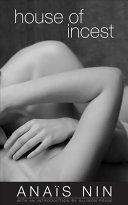
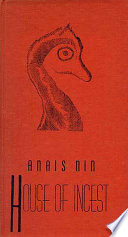
The House of Incest, Anais Nin's famous prose poem, was first published in Paris in 1936 and immediately drew attention from the era's prominent writers, including Henry Miller and Lawrence Durrell. While written in English, it is considered a landmark work in the French surrealist tradition and one of the most unique books in 20th century literature.
House of Incest [图书] 谷歌图书
作者: Anaïs Nin / Gunther Stuhlmann publishing house: Swallow Press/Ohio University Press 2020
With an introduction by Allison Pease, this new edition of House of Incest is a lyrical journey into the subconscious mind of one of the most celebrated feminist writers of the twentieth-century. Originally published in 1936,  House of Incest  is Anaïs Nin's first work of fiction. Based on Nin's dreams, the novel is a surrealistic look within the narrator's subconscious as she attempts to distance herself from a series of all-consuming and often taboo desires she cannot bear to let go. The incest Nin depicts is a metaphor--a selfish love wherein a woman can appreciate only qualities in a lover that are similar to her own. Through a descriptive exploration of romances and attractions between women, between a sister and her beloved brother, and with a Christ-like man, Nin's narrator discovers what she thinks is truth: that a woman's most perfect love is of herself. At first, this self-love seems ideal because it is attainable without fear and risk of heartbreak. But in time, the narrator's chosen isolation and self-possessed anguish give way to a visceral nightmare from which she is unable to wake.
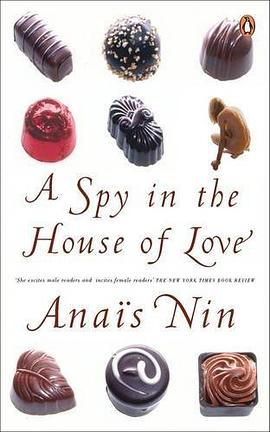
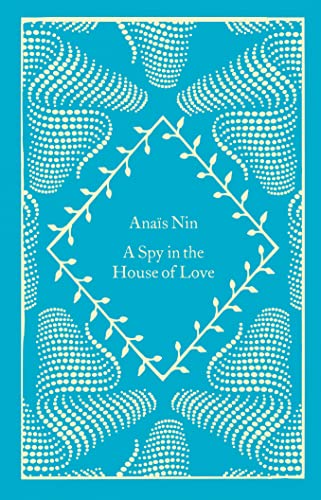
A Spy in the House of Love [图书] 豆瓣
作者: Anaïs Nin publishing house: Penguin Books Ltd 2006
This new authoritative edition of A Spy in the House of Love contains an introduction by Anais Nin, character descriptions, a publishing history, and a chronology of Nin's life and work.
Originally published in book form in 1954, A Spy in the House of Love contains some of Anais Nin's best poetic prose. The main character, Sabina, realizes that she is a composite of many selves, each one seeking identity within relationships with five very different men, and while she seeks to live out each part of herself, she also craves unity, setting the stage for the battle for self-awareness.
Consider the following passage, which describes Sabina's encounter with Philip, whom she has met in a nightclub:
"The trembling premonitions shaking the hand, the body, made dancing unbearable, waiting unbearable, smoking and talking unbearable. Soon would come the untamable seizure of sensual cannibalism, the joyous epilepsies.
"They fled from the eyes of the world, the singer's prophetic, harsh, ovarian prologues. Down the rusty bars of ladders to the undergrounds of the night propitious to the first man and woman at the beginning of the world, where there were no words by which to possess each other, no music for serenades, no presents to court with, no tournaments to impress and force a yielding, no secondary instruments, no adornments, necklaces, crowns to subdue, but only one ritual, a joyous, joyous, joyous, joyous impaling of woman on man's sensual mast."
Part realism and part fantasy, A Spy in the House of Love achieves a level of writing that is very rare in the English language.
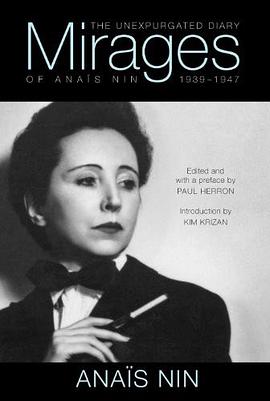
Mirages: The Unexpurgated Diary of Anaïs Nin, 1939–1947 [图书] 豆瓣
作者: Anaïs Nin / 金·克里桑 publishing house: Swallow Press 2015 - 9
Mirages opens at the dawn of World War II, when Anaïs Nin fled Paris, where she lived for fifteen years with her husband, banker Hugh Guiler, and ends in 1947 when she meets the man who would be “the One,” the lover who would satisfy her insatiable hunger for connection. In the middle looms a period Nin describes as “hell,” during which she experiences a kind of erotic madness, a delirium that fuels her search for love. As a child suffering abandonment by her father, Anaïs wrote, “Close your eyes to the ugly things,” and, against a horrifying backdrop of war and death, Nin combats the world’s darkness with her own search for light.
Mirages collects, for the first time, the story that was cut from all of Nin’s other published diaries, particularly volumes 3 and 4 of The Diary of Anaïs Nin, which cover the same time period. It is the long-awaited successor to the previous unexpurgated diaries Henry and June, Incest, Fire, and Nearer the Moon. Mirages answers the questions Nin readers have been asking for decades: What led to the demise of Nin’s love affair with Henry Miller? Just how troubled was her marriage to Hugh Guiler? What is the story behind Nin’s “children,” the effeminate young men she seemed to collect at will? Mirages is a deeply personal story of heartbreak, despair, desperation, carnage, and deep mourning, but it is also one of courage, persistence, evolution, and redemption that reaches beyond the personal to the universal.