Pierre Braunberger — Producer (10)
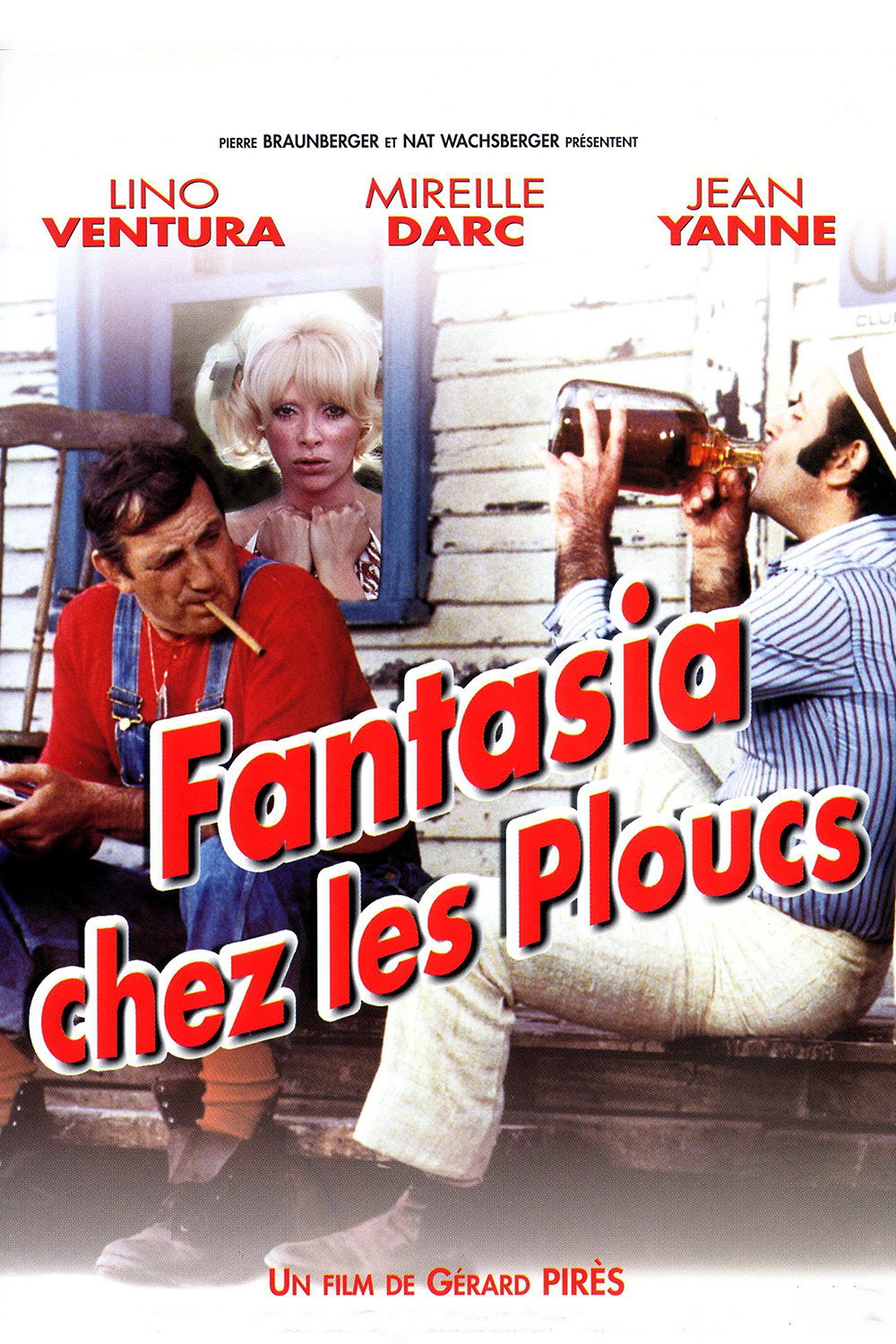
Fantasia Among the Squares (1971) [Movie] TMDB IMDb WikiData
Fantasia chez les ploucs
director: 吉拉尔·皮雷 actor: Lino Ventura / 让·雅南
other title: Die Filzlaus kehrt zurück / Fantasia chez les ploucs
Sagamore Noonan lives in seclusion on a farm in Alabama, where he distills moonshine during Prohibition. He receives a visit from his brother Doc Noonan and his son Billy. A young stripper and her gangster boyfriend come to disturb their peace.
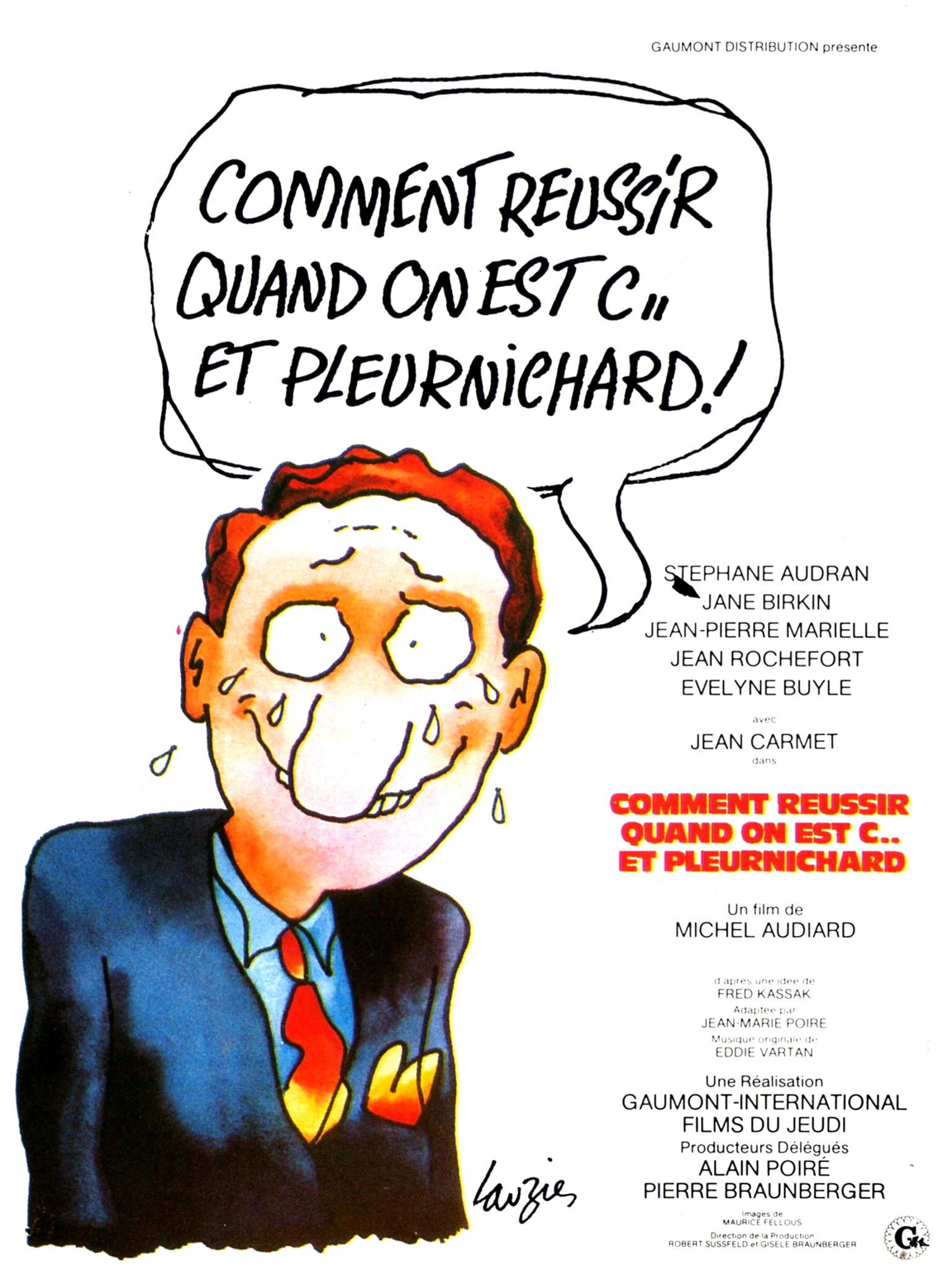
How to Make Good When One Is a Jerk and a Crybaby (1974) [Movie] TMDB IMDb WikiData
Comment réussir quand on est con et pleurnichard
other title: Comment réussir quand on est con et pleurnichard / Comment réussir... quand on est con et pleurnichard
A story about a guy who still lives with his mother and sells some really awful alcohol to bartenders. The only way for him to do this is to cry and invent himself an awful life. Then he meets the beautiful woman whose goal in life is to sleep with the less exciting guys on Earth.
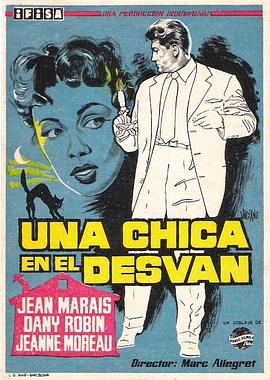
Julietta (1953) [Movie] Douban TMDB IMDb WikiData
Julietta
director: 马克·阿莱格雷 actor: Jean Marais / 妲妮·罗宾
other title: 卓烈苔 / Una chica en el desván
...after "les amants de minuit" a charming romantic story directed by Roger Richebé the precedent year.This one was directed by Marc Allégret who is essentially renowned for his pre WW2 work.The fifties were his brother Yves 's time ("une si jolie petite plage" "manèges")and by 1955,he had fallen into mediocrity ("en effeuilllant la marguerite" ," sois belle et tais-toi").
"Julietta" is a harmless little comedy(much less entertaining that " les amants de minuit")which is watchable only because of the three actors:Jean Marais,Dany Robin and Jeanne Moreau;the latter probably had the worst part of a brilliant career:she portrays here a snub squeamish yellow-bellied bourgeois whom Marais takes to his desirable property;the problem is that he has already taken in Robin before,and he has got to hide her from Moreau's jealousy.You can describe the plot as an endless hide-and -seek game.
NB:Dany Robin's career ended with Hitchcock's "Topaz" (1969),but it was one of the master's worst works (it might actually be the worst).She tragically died in a fire in 1995.
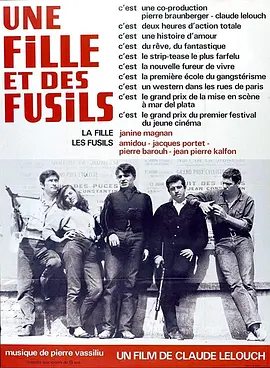
In the Affirmative (1964) [Movie] Douban IMDb WikiData TMDB
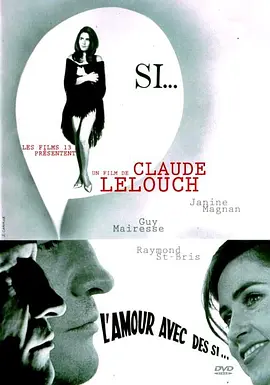
L'Amour avec des si...
director: Claude Lelouch actor: Guy Mairesse / Janine Magnan
other title: L'amour avec des si / L'Amour avec des si...
The film is a road movie that follows a middle aged man who gives a young woman a lift. On the car radio, news bulletins warn the population against a recently escaped sadist who is known to prey on young women and children. Lelouch often cuts away from the main story, if only briefly, to parallel events that are not necessarily crucial to the story but illustrate what is suggested by the radio.
Three Immoral Women (1979) [Movie] IMDb WikiData Douban TMDB
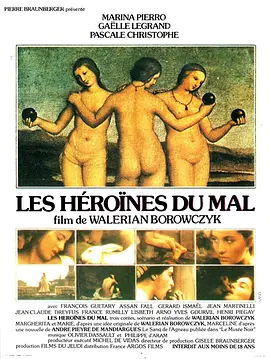
Les héroïnes du mal
other title: 三个不道德的女人 / Les héroïnes du mal
The first episode – featuring frequent Borowczyk muse Marina Pierro – is the longest and, in a way, most substantial: it’s set in Renaissance Rome, with the lusty (and perpetually nude) leading lady sexually involved with famous painters and church benefactors. The second episode is the most notorious and, consequently, gave the film its controversial poster – featuring a rabbit slowly disappearing under the skirt of a teenage girl (played by Gaelle Legrand). The third and final episode, which has a modern-day setting, is the shortest – but also, possibly, the most outrageous: Pascale Christophe is a young married woman who’s abducted on a busy Parisian street by a small-time hood hidden inside a cardboard box!
Jaguar (1967) [Movie] Douban TMDB IMDb WikiData
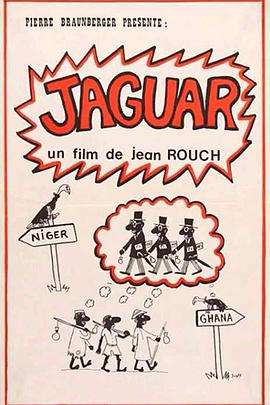
Jaguar
director: Jean Rouch actor: Damouré Zika / Lam Ibrahim Dia
other title: 美洲豹
Three young men from the Savannah of Niger leave their homeland to seek wealth and adventure on the coast and in the cities of Ghana. This film is the story of their travels, their encounters along the way, their experiences in Accra and Kumasi, and, after three months, their return to their families and friends at home. The film is part documentary, part fiction, and part reflective commentary. There was no portable sound synchronized equipment in the early 1950s when Jaguar was shot. Instead, Rouch had the main characters (his friends and "accomplices") improvise a narrative while they viewed the film, which was itself improvized along the way. The resulting soundtrack consists of remembered dialogue, of joking and exclamations, of questions and explanations about the action on the screen.

Short-term, rural migration to the cities is common to much of contemporary Africa. Here we meet Lam the herdsman, Illo the fisherman and Damoure, their unsettled but literate friend. The three trek for more than a month south through Dahomey to Ghana, crossing the land of the Somba people (whose nudity shocks them), eating coconuts "more delicious than cheese," and delighting in the ocean with its waves and starfish. Eventually they part ways. Damoure and Illo go to Accra and Lam to Kumasi, where they find jobs as dockworker, foreman for a lumberman, and cattleherder for a city butcher. Having made their separate journeys, they meet again in Kumasi with a fourth friend, and set up an open-air stall, Petit a Petit, in which they hawk everything from alarm clocks to pictures of Queen Elizabeth.

Financially successful but homesick, the friends decide to leave the excitement, turmoil and bewildering complexity of the city to return home to Niger before the rains. Lam rejoins his herd, enriched with a new umbrella and a lance; Illo, "magician of the river," catches a hippo and distributes everything he has brought from his journey to his family; and Damoure admires anew the beauty of Niger women.

Yet although life in the village resumes as usual, Illo, Lam and Damoure have been "jaguars" in the city: sophisticated "keen young men" with fancy hairdos, cigarettes, sunglasses, money, and knowledge of the urban world. The film raises, but does not answer, questions about the meaning of this experience and the transformations it may entail in the lives of the returned youths. Jaguar, Thomas Beidelman has written, "does succeed in catch ing the flavor of what it must be like to pass to and from a modern city and a rural village in Africa . . . jaguar could be an eloquent document on the process of social change."

The flavor, it might be added, is very gay. Rouch has pointed out that jaguar does not attempt to reveal the misery and pain of the annual migration, or the boredom of village life in the dry season (eight months of the year) when young men, no longer warriors as in the past, have nothing to do. Few men, in actuality, become "jaguars" in the carefree style of Damoure, Lam, and Illo. For most, the city is a struggle. Yet jaguar is nonetheless a vivid portrayal of the ideal of migration, a fantasy imparted through the improvised actions and spirited commentary of the characters. In this film Rouch has developed a form one might call "ethnographic fantasy," with an authenticity and reality as important, although quite different, from that of Rouch's own monograph on rural migration to Accra.