王冲 — 演员 (12)
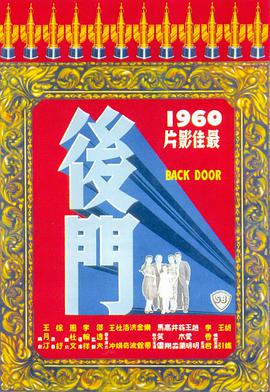
后门 (1960) [电影] 豆瓣
後門
其它标题:
後門
/
Rear Entrance
徐天鹤(王引 饰)和妻子(蝴蝶 饰)结婚多年,夫妻两人的感情一直非常的恩爱,他们唯一的遗憾就是无法拥有一个属于他们的孩子。邻居家一个名叫阿琳(王爱明 饰)的小女孩,因为不受父亲和继母的喜爱,常常孤独的一个人在后门玩,她唯一的朋友是一只小猫。
不忍心看到阿琳寂寞的样子,徐天鹤夫妻两人经过同邻居的协商,决定领养阿琳。在徐家,阿琳终于感受到了家庭的温暖和亲人的呵护。就在一家人其乐融融之际,阿琳的亲生母亲史小姐(李香君 饰)忽然现身,想要带走阿琳,这一举动自然遭到了徐天鹤夫妻的拒绝,可是史小姐实在舍不得女儿,于是以探望孩子为理由,成为了徐家的常客。
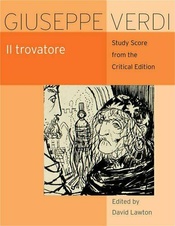
游吟诗人 2014年中国国家大剧院版 [演出] 豆瓣
所属 演出: 游吟诗人
语言:
italian 意大利语
剧团:
中国国家大剧院管弦乐团;中国国家大剧院合唱团
剧院:
中国国家大剧院
导演:
Hugo de Ana
其它标题:
2014年中国国家大剧院版
编剧:
Salvadore Cammarano
/
Leone Emanuele Bardare
作曲:
Giuseppe Verdi
演员:
Luciano Ganci / 戴玉强
/
和慧 / 周晓琳
…
Place: Biscay and Aragon (Spain)
Time: Fifteenth century.
Act 1: The Duel
Scene 1: The guard room in the castle of Luna (The Palace of Aljafería, Zaragoza, Spain)
Ferrando, the captain of the guards, orders his men to keep watch while Count di Luna wanders restlessly beneath the windows of Leonora, lady-in-waiting to the Princess. Di Luna loves Leonora and is jealous of his successful rival, a troubadour whose identity he does not know. In order to keep the guards awake, Ferrando narrates the history of the count (Racconto: Di due figli vivea padre beato / "The good Count di Luna lived happily, the father of two sons"): many years ago, a gypsy was wrongfully accused of having bewitched the youngest of the di Luna children; the child had fallen sick, and for this the gypsy had been burnt alive as a witch, her protests of innocence ignored. Dying, she had commanded her daughter Azucena to avenge her, which she did by abducting the baby. Although the burnt bones of a child were found in the ashes of the pyre, the father refused to believe his son's death. Dying, the father commanded his firstborn, the new Count di Luna, to seek Azucena.
Scene 2: Garden in the palace of the princess
Leonora confesses her love for the Troubadour to her confidante, Ines (Cavatina:Tacea la notte placida / "The peaceful night lay silent"... Di tale amor / "A love that words can scarcely describe"), in which she tells how she fell in love with a mystery knight, victor at a tournament: lost track of him when a civil war broke out: then encountered him again, in disguise as a wandering troubadour who sang beneath her window. When they have gone, Count di Luna enters, intending to pay court to Leonora himself, but hears the voice of his rival, in the distance: (Deserto sulla terra / "Alone upon this earth"). Leonora in the darkness briefly mistakes the count for her lover, until the Troubadour himself enters the garden, and she rushes to his arms. The Count challenges his rival to reveal his true identity, which he does: Manrico, a knight now outlawed and under death sentence for his allegiance to a rival prince. Manrico in turn challenges him to call the guards, but the Count regards this encounter as a personal rather than political matter, and challenges Manrico instead to a duel over their common love. Leonora tries to intervene, but cannot stop them from fighting (Trio: Di geloso amor sprezzato / "The fire of jealous love" ).
Act 2: The Gypsy Woman
Scene 1: The gypsies' camp
The gypsies sing the Anvil Chorus: Vedi le fosche notturne / "See! The endless sky casts off her sombre nightly garb...". Azucena, the daughter of the Gypsy burnt by the count, is still haunted by her duty to avenge her mother (Canzone: Stride la vampa / "The flames are roaring!"). The Gypsies break camp while Azucena confesses to Manrico that after stealing the di Luna baby she had intended to burn the count's little son along with her mother, but overwhelmed by the screams and the gruesome scene of her mother's execution, she became confused and threw her own child into the flames instead (Racconto: Condotta ell'era in ceppi / "They dragged her in bonds").
Manrico realises that he is not the son of Azucena, but loves her as if she were indeed his mother, as she has always been faithful and loving to him - and, indeed, saved his life only recently, discovering him left for dead on a battlefield after being caught in ambush. Manrico tells Azucena that he defeated di Luna in their earlier duel, but was held back from killing him by a mysterious power (Duet: Mal reggendo / "He was helpless under my savage attack"): and Azucena reproaches him for having stayed his hand then, especially since it was the Count's forces that defeated him in the subsequent battle of Pelilla. A messenger arrives and reports that Manrico's allies have taken Castle Castellor, which Manrico is ordered to hold in the name of his prince: and also that Leonora, who believes Manrico dead, is about to enter a convent and take the veil that night. Although Azucena tries to prevent him from leaving in his weak state (Ferma! Son io che parlo a te! / "I must talk to you"), Manrico rushes away to prevent her from carrying out this intent.
Scene 2: In front of the convent
Di Luna and his attendants intend to abduct Leonora and the Count sings of his love for her (Aria: Il balen del suo sorriso / "The light of her smile" ... Per me ora fatale / "Fatal hour of my life"). Leonora and the nuns appear in procession, but Manrico prevents di Luna from carrying out his plans and takes Leonora away with him, although once again leaving the Count behind unharmed, as the soldiers on both sides back down from bloodshed, the Count being held back by his own men.
Act 3: The Son of the Gypsy Woman
Scene 1: Di Luna's camp
Di Luna and his army are attacking the fortress Castellor where Manrico has taken refuge with Leonora (Chorus: Or co' dadi ma fra poco / "Now we play at dice"). Ferrando drags in Azucena, who has been captured wandering near the camp. When she hears di Luna’s name, Azucena’s reactions arouse suspicion and Ferrando recognizes her as the supposed murderer of the count’s brother. Azucena cries out to her son Manrico to rescue her and the count realizes that he has the means to flush his enemy out of the fortress. He orders his men to build a pyre and burn Azucena before the walls.
Scene 2: A chamber in the castle
Inside the castle, Manrico and Leonora are preparing to be married. She is frightened; the battle with di Luna is imminent and Manrico’s forces are outnumbered. He assures her of his love (Aria: Ah sì, ben mio, coll'essere / "Ah, yes, my love, in being yours"), even in the face of death. When news of Azucena’s capture reaches him, he summons his men and desperately prepares to attack (Cabaletta: Di quella pira l'orrendo foco / "The horrid flames of that pyre"). Leonora faints.
Act 4: The Punishment
Scene 1: Before the dungeon keep
Manrico has failed to free Azucena and has been imprisoned himself. Leonora attempts to free him (Aria: D'amor sull'ali rosee / "On the rosy wings of love"; Chorus & Duet: Miserere / "Lord, thy mercy on this soul") by begging di Luna for mercy and offers herself in place of her lover. She promises to give herself to the count, but secretly swallows poison from her ring in order to die before di Luna can possess her (Duet: Mira, d'acerbe lagrime / "See the bitter tears I shed").
Scene 2: In the dungeon
Manrico and Azucena are awaiting their execution. Manrico attempts to soothe Azucena, whose mind wanders to happier days in the mountains (Duet: Ai nostri monti ritorneremo / "Again to our mountains we shall return"). At last the gypsy slumbers. Leonora comes to Manrico and tells him that he is saved, begging him to escape. When he discovers she cannot accompany him, he refuses to leave his prison. He believes Leonora has betrayed him until he realizes that she has taken poison to remain true to him. As she dies in agony in Manrico's arms she confesses that she prefers to die with him than to marry another (Trio: Prima che d'altri vivere / "Rather than live as another's"). The count has heard Leonora's last words and orders Manrico's execution. Azucena awakes and tries to stop di Luna. Once Manrico is dead, she cries: Egli era tuo fratello! Sei vendicata, o madre. / "He was your brother ... You are avenged, oh mother!"
Time: Fifteenth century.
Act 1: The Duel
Scene 1: The guard room in the castle of Luna (The Palace of Aljafería, Zaragoza, Spain)
Ferrando, the captain of the guards, orders his men to keep watch while Count di Luna wanders restlessly beneath the windows of Leonora, lady-in-waiting to the Princess. Di Luna loves Leonora and is jealous of his successful rival, a troubadour whose identity he does not know. In order to keep the guards awake, Ferrando narrates the history of the count (Racconto: Di due figli vivea padre beato / "The good Count di Luna lived happily, the father of two sons"): many years ago, a gypsy was wrongfully accused of having bewitched the youngest of the di Luna children; the child had fallen sick, and for this the gypsy had been burnt alive as a witch, her protests of innocence ignored. Dying, she had commanded her daughter Azucena to avenge her, which she did by abducting the baby. Although the burnt bones of a child were found in the ashes of the pyre, the father refused to believe his son's death. Dying, the father commanded his firstborn, the new Count di Luna, to seek Azucena.
Scene 2: Garden in the palace of the princess
Leonora confesses her love for the Troubadour to her confidante, Ines (Cavatina:Tacea la notte placida / "The peaceful night lay silent"... Di tale amor / "A love that words can scarcely describe"), in which she tells how she fell in love with a mystery knight, victor at a tournament: lost track of him when a civil war broke out: then encountered him again, in disguise as a wandering troubadour who sang beneath her window. When they have gone, Count di Luna enters, intending to pay court to Leonora himself, but hears the voice of his rival, in the distance: (Deserto sulla terra / "Alone upon this earth"). Leonora in the darkness briefly mistakes the count for her lover, until the Troubadour himself enters the garden, and she rushes to his arms. The Count challenges his rival to reveal his true identity, which he does: Manrico, a knight now outlawed and under death sentence for his allegiance to a rival prince. Manrico in turn challenges him to call the guards, but the Count regards this encounter as a personal rather than political matter, and challenges Manrico instead to a duel over their common love. Leonora tries to intervene, but cannot stop them from fighting (Trio: Di geloso amor sprezzato / "The fire of jealous love" ).
Act 2: The Gypsy Woman
Scene 1: The gypsies' camp
The gypsies sing the Anvil Chorus: Vedi le fosche notturne / "See! The endless sky casts off her sombre nightly garb...". Azucena, the daughter of the Gypsy burnt by the count, is still haunted by her duty to avenge her mother (Canzone: Stride la vampa / "The flames are roaring!"). The Gypsies break camp while Azucena confesses to Manrico that after stealing the di Luna baby she had intended to burn the count's little son along with her mother, but overwhelmed by the screams and the gruesome scene of her mother's execution, she became confused and threw her own child into the flames instead (Racconto: Condotta ell'era in ceppi / "They dragged her in bonds").
Manrico realises that he is not the son of Azucena, but loves her as if she were indeed his mother, as she has always been faithful and loving to him - and, indeed, saved his life only recently, discovering him left for dead on a battlefield after being caught in ambush. Manrico tells Azucena that he defeated di Luna in their earlier duel, but was held back from killing him by a mysterious power (Duet: Mal reggendo / "He was helpless under my savage attack"): and Azucena reproaches him for having stayed his hand then, especially since it was the Count's forces that defeated him in the subsequent battle of Pelilla. A messenger arrives and reports that Manrico's allies have taken Castle Castellor, which Manrico is ordered to hold in the name of his prince: and also that Leonora, who believes Manrico dead, is about to enter a convent and take the veil that night. Although Azucena tries to prevent him from leaving in his weak state (Ferma! Son io che parlo a te! / "I must talk to you"), Manrico rushes away to prevent her from carrying out this intent.
Scene 2: In front of the convent
Di Luna and his attendants intend to abduct Leonora and the Count sings of his love for her (Aria: Il balen del suo sorriso / "The light of her smile" ... Per me ora fatale / "Fatal hour of my life"). Leonora and the nuns appear in procession, but Manrico prevents di Luna from carrying out his plans and takes Leonora away with him, although once again leaving the Count behind unharmed, as the soldiers on both sides back down from bloodshed, the Count being held back by his own men.
Act 3: The Son of the Gypsy Woman
Scene 1: Di Luna's camp
Di Luna and his army are attacking the fortress Castellor where Manrico has taken refuge with Leonora (Chorus: Or co' dadi ma fra poco / "Now we play at dice"). Ferrando drags in Azucena, who has been captured wandering near the camp. When she hears di Luna’s name, Azucena’s reactions arouse suspicion and Ferrando recognizes her as the supposed murderer of the count’s brother. Azucena cries out to her son Manrico to rescue her and the count realizes that he has the means to flush his enemy out of the fortress. He orders his men to build a pyre and burn Azucena before the walls.
Scene 2: A chamber in the castle
Inside the castle, Manrico and Leonora are preparing to be married. She is frightened; the battle with di Luna is imminent and Manrico’s forces are outnumbered. He assures her of his love (Aria: Ah sì, ben mio, coll'essere / "Ah, yes, my love, in being yours"), even in the face of death. When news of Azucena’s capture reaches him, he summons his men and desperately prepares to attack (Cabaletta: Di quella pira l'orrendo foco / "The horrid flames of that pyre"). Leonora faints.
Act 4: The Punishment
Scene 1: Before the dungeon keep
Manrico has failed to free Azucena and has been imprisoned himself. Leonora attempts to free him (Aria: D'amor sull'ali rosee / "On the rosy wings of love"; Chorus & Duet: Miserere / "Lord, thy mercy on this soul") by begging di Luna for mercy and offers herself in place of her lover. She promises to give herself to the count, but secretly swallows poison from her ring in order to die before di Luna can possess her (Duet: Mira, d'acerbe lagrime / "See the bitter tears I shed").
Scene 2: In the dungeon
Manrico and Azucena are awaiting their execution. Manrico attempts to soothe Azucena, whose mind wanders to happier days in the mountains (Duet: Ai nostri monti ritorneremo / "Again to our mountains we shall return"). At last the gypsy slumbers. Leonora comes to Manrico and tells him that he is saved, begging him to escape. When he discovers she cannot accompany him, he refuses to leave his prison. He believes Leonora has betrayed him until he realizes that she has taken poison to remain true to him. As she dies in agony in Manrico's arms she confesses that she prefers to die with him than to marry another (Trio: Prima che d'altri vivere / "Rather than live as another's"). The count has heard Leonora's last words and orders Manrico's execution. Azucena awakes and tries to stop di Luna. Once Manrico is dead, she cries: Egli era tuo fratello! Sei vendicata, o madre. / "He was your brother ... You are avenged, oh mother!"
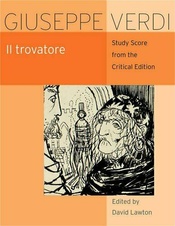
游吟诗人 2021年中国国家大剧院版 [演出] 豆瓣
所属 演出: 游吟诗人
语言:
italian 意大利语
剧团:
中国国家大剧院管弦乐团;中国国家大剧院合唱团;中国国家大剧院歌剧演员队
剧院:
中国国家大剧院
导演:
张安琪
其它标题:
2021年中国国家大剧院版
编剧:
Salvadore Cammarano
/
Leone Emanuele Bardare
作曲:
Giuseppe Verdi
演员:
王冲
/
周晓琳
…
Place: Biscay and Aragon (Spain)
Time: Fifteenth century.
Act 1: The Duel
Scene 1: The guard room in the castle of Luna (The Palace of Aljafería, Zaragoza, Spain)
Ferrando, the captain of the guards, orders his men to keep watch while Count di Luna wanders restlessly beneath the windows of Leonora, lady-in-waiting to the Princess. Di Luna loves Leonora and is jealous of his successful rival, a troubadour whose identity he does not know. In order to keep the guards awake, Ferrando narrates the history of the count (Racconto: Di due figli vivea padre beato / "The good Count di Luna lived happily, the father of two sons"): many years ago, a gypsy was wrongfully accused of having bewitched the youngest of the di Luna children; the child had fallen sick, and for this the gypsy had been burnt alive as a witch, her protests of innocence ignored. Dying, she had commanded her daughter Azucena to avenge her, which she did by abducting the baby. Although the burnt bones of a child were found in the ashes of the pyre, the father refused to believe his son's death. Dying, the father commanded his firstborn, the new Count di Luna, to seek Azucena.
Scene 2: Garden in the palace of the princess
Leonora confesses her love for the Troubadour to her confidante, Ines (Cavatina:Tacea la notte placida / "The peaceful night lay silent"... Di tale amor / "A love that words can scarcely describe"), in which she tells how she fell in love with a mystery knight, victor at a tournament: lost track of him when a civil war broke out: then encountered him again, in disguise as a wandering troubadour who sang beneath her window. When they have gone, Count di Luna enters, intending to pay court to Leonora himself, but hears the voice of his rival, in the distance: (Deserto sulla terra / "Alone upon this earth"). Leonora in the darkness briefly mistakes the count for her lover, until the Troubadour himself enters the garden, and she rushes to his arms. The Count challenges his rival to reveal his true identity, which he does: Manrico, a knight now outlawed and under death sentence for his allegiance to a rival prince. Manrico in turn challenges him to call the guards, but the Count regards this encounter as a personal rather than political matter, and challenges Manrico instead to a duel over their common love. Leonora tries to intervene, but cannot stop them from fighting (Trio: Di geloso amor sprezzato / "The fire of jealous love" ).
Act 2: The Gypsy Woman
Scene 1: The gypsies' camp
The gypsies sing the Anvil Chorus: Vedi le fosche notturne / "See! The endless sky casts off her sombre nightly garb...". Azucena, the daughter of the Gypsy burnt by the count, is still haunted by her duty to avenge her mother (Canzone: Stride la vampa / "The flames are roaring!"). The Gypsies break camp while Azucena confesses to Manrico that after stealing the di Luna baby she had intended to burn the count's little son along with her mother, but overwhelmed by the screams and the gruesome scene of her mother's execution, she became confused and threw her own child into the flames instead (Racconto: Condotta ell'era in ceppi / "They dragged her in bonds").
Manrico realises that he is not the son of Azucena, but loves her as if she were indeed his mother, as she has always been faithful and loving to him - and, indeed, saved his life only recently, discovering him left for dead on a battlefield after being caught in ambush. Manrico tells Azucena that he defeated di Luna in their earlier duel, but was held back from killing him by a mysterious power (Duet: Mal reggendo / "He was helpless under my savage attack"): and Azucena reproaches him for having stayed his hand then, especially since it was the Count's forces that defeated him in the subsequent battle of Pelilla. A messenger arrives and reports that Manrico's allies have taken Castle Castellor, which Manrico is ordered to hold in the name of his prince: and also that Leonora, who believes Manrico dead, is about to enter a convent and take the veil that night. Although Azucena tries to prevent him from leaving in his weak state (Ferma! Son io che parlo a te! / "I must talk to you"), Manrico rushes away to prevent her from carrying out this intent.
Scene 2: In front of the convent
Di Luna and his attendants intend to abduct Leonora and the Count sings of his love for her (Aria: Il balen del suo sorriso / "The light of her smile" ... Per me ora fatale / "Fatal hour of my life"). Leonora and the nuns appear in procession, but Manrico prevents di Luna from carrying out his plans and takes Leonora away with him, although once again leaving the Count behind unharmed, as the soldiers on both sides back down from bloodshed, the Count being held back by his own men.
Act 3: The Son of the Gypsy Woman
Scene 1: Di Luna's camp
Di Luna and his army are attacking the fortress Castellor where Manrico has taken refuge with Leonora (Chorus: Or co' dadi ma fra poco / "Now we play at dice"). Ferrando drags in Azucena, who has been captured wandering near the camp. When she hears di Luna’s name, Azucena’s reactions arouse suspicion and Ferrando recognizes her as the supposed murderer of the count’s brother. Azucena cries out to her son Manrico to rescue her and the count realizes that he has the means to flush his enemy out of the fortress. He orders his men to build a pyre and burn Azucena before the walls.
Scene 2: A chamber in the castle
Inside the castle, Manrico and Leonora are preparing to be married. She is frightened; the battle with di Luna is imminent and Manrico’s forces are outnumbered. He assures her of his love (Aria: Ah sì, ben mio, coll'essere / "Ah, yes, my love, in being yours"), even in the face of death. When news of Azucena’s capture reaches him, he summons his men and desperately prepares to attack (Cabaletta: Di quella pira l'orrendo foco / "The horrid flames of that pyre"). Leonora faints.
Act 4: The Punishment
Scene 1: Before the dungeon keep
Manrico has failed to free Azucena and has been imprisoned himself. Leonora attempts to free him (Aria: D'amor sull'ali rosee / "On the rosy wings of love"; Chorus & Duet: Miserere / "Lord, thy mercy on this soul") by begging di Luna for mercy and offers herself in place of her lover. She promises to give herself to the count, but secretly swallows poison from her ring in order to die before di Luna can possess her (Duet: Mira, d'acerbe lagrime / "See the bitter tears I shed").
Scene 2: In the dungeon
Manrico and Azucena are awaiting their execution. Manrico attempts to soothe Azucena, whose mind wanders to happier days in the mountains (Duet: Ai nostri monti ritorneremo / "Again to our mountains we shall return"). At last the gypsy slumbers. Leonora comes to Manrico and tells him that he is saved, begging him to escape. When he discovers she cannot accompany him, he refuses to leave his prison. He believes Leonora has betrayed him until he realizes that she has taken poison to remain true to him. As she dies in agony in Manrico's arms she confesses that she prefers to die with him than to marry another (Trio: Prima che d'altri vivere / "Rather than live as another's"). The count has heard Leonora's last words and orders Manrico's execution. Azucena awakes and tries to stop di Luna. Once Manrico is dead, she cries: Egli era tuo fratello! Sei vendicata, o madre. / "He was your brother ... You are avenged, oh mother!"
Time: Fifteenth century.
Act 1: The Duel
Scene 1: The guard room in the castle of Luna (The Palace of Aljafería, Zaragoza, Spain)
Ferrando, the captain of the guards, orders his men to keep watch while Count di Luna wanders restlessly beneath the windows of Leonora, lady-in-waiting to the Princess. Di Luna loves Leonora and is jealous of his successful rival, a troubadour whose identity he does not know. In order to keep the guards awake, Ferrando narrates the history of the count (Racconto: Di due figli vivea padre beato / "The good Count di Luna lived happily, the father of two sons"): many years ago, a gypsy was wrongfully accused of having bewitched the youngest of the di Luna children; the child had fallen sick, and for this the gypsy had been burnt alive as a witch, her protests of innocence ignored. Dying, she had commanded her daughter Azucena to avenge her, which she did by abducting the baby. Although the burnt bones of a child were found in the ashes of the pyre, the father refused to believe his son's death. Dying, the father commanded his firstborn, the new Count di Luna, to seek Azucena.
Scene 2: Garden in the palace of the princess
Leonora confesses her love for the Troubadour to her confidante, Ines (Cavatina:Tacea la notte placida / "The peaceful night lay silent"... Di tale amor / "A love that words can scarcely describe"), in which she tells how she fell in love with a mystery knight, victor at a tournament: lost track of him when a civil war broke out: then encountered him again, in disguise as a wandering troubadour who sang beneath her window. When they have gone, Count di Luna enters, intending to pay court to Leonora himself, but hears the voice of his rival, in the distance: (Deserto sulla terra / "Alone upon this earth"). Leonora in the darkness briefly mistakes the count for her lover, until the Troubadour himself enters the garden, and she rushes to his arms. The Count challenges his rival to reveal his true identity, which he does: Manrico, a knight now outlawed and under death sentence for his allegiance to a rival prince. Manrico in turn challenges him to call the guards, but the Count regards this encounter as a personal rather than political matter, and challenges Manrico instead to a duel over their common love. Leonora tries to intervene, but cannot stop them from fighting (Trio: Di geloso amor sprezzato / "The fire of jealous love" ).
Act 2: The Gypsy Woman
Scene 1: The gypsies' camp
The gypsies sing the Anvil Chorus: Vedi le fosche notturne / "See! The endless sky casts off her sombre nightly garb...". Azucena, the daughter of the Gypsy burnt by the count, is still haunted by her duty to avenge her mother (Canzone: Stride la vampa / "The flames are roaring!"). The Gypsies break camp while Azucena confesses to Manrico that after stealing the di Luna baby she had intended to burn the count's little son along with her mother, but overwhelmed by the screams and the gruesome scene of her mother's execution, she became confused and threw her own child into the flames instead (Racconto: Condotta ell'era in ceppi / "They dragged her in bonds").
Manrico realises that he is not the son of Azucena, but loves her as if she were indeed his mother, as she has always been faithful and loving to him - and, indeed, saved his life only recently, discovering him left for dead on a battlefield after being caught in ambush. Manrico tells Azucena that he defeated di Luna in their earlier duel, but was held back from killing him by a mysterious power (Duet: Mal reggendo / "He was helpless under my savage attack"): and Azucena reproaches him for having stayed his hand then, especially since it was the Count's forces that defeated him in the subsequent battle of Pelilla. A messenger arrives and reports that Manrico's allies have taken Castle Castellor, which Manrico is ordered to hold in the name of his prince: and also that Leonora, who believes Manrico dead, is about to enter a convent and take the veil that night. Although Azucena tries to prevent him from leaving in his weak state (Ferma! Son io che parlo a te! / "I must talk to you"), Manrico rushes away to prevent her from carrying out this intent.
Scene 2: In front of the convent
Di Luna and his attendants intend to abduct Leonora and the Count sings of his love for her (Aria: Il balen del suo sorriso / "The light of her smile" ... Per me ora fatale / "Fatal hour of my life"). Leonora and the nuns appear in procession, but Manrico prevents di Luna from carrying out his plans and takes Leonora away with him, although once again leaving the Count behind unharmed, as the soldiers on both sides back down from bloodshed, the Count being held back by his own men.
Act 3: The Son of the Gypsy Woman
Scene 1: Di Luna's camp
Di Luna and his army are attacking the fortress Castellor where Manrico has taken refuge with Leonora (Chorus: Or co' dadi ma fra poco / "Now we play at dice"). Ferrando drags in Azucena, who has been captured wandering near the camp. When she hears di Luna’s name, Azucena’s reactions arouse suspicion and Ferrando recognizes her as the supposed murderer of the count’s brother. Azucena cries out to her son Manrico to rescue her and the count realizes that he has the means to flush his enemy out of the fortress. He orders his men to build a pyre and burn Azucena before the walls.
Scene 2: A chamber in the castle
Inside the castle, Manrico and Leonora are preparing to be married. She is frightened; the battle with di Luna is imminent and Manrico’s forces are outnumbered. He assures her of his love (Aria: Ah sì, ben mio, coll'essere / "Ah, yes, my love, in being yours"), even in the face of death. When news of Azucena’s capture reaches him, he summons his men and desperately prepares to attack (Cabaletta: Di quella pira l'orrendo foco / "The horrid flames of that pyre"). Leonora faints.
Act 4: The Punishment
Scene 1: Before the dungeon keep
Manrico has failed to free Azucena and has been imprisoned himself. Leonora attempts to free him (Aria: D'amor sull'ali rosee / "On the rosy wings of love"; Chorus & Duet: Miserere / "Lord, thy mercy on this soul") by begging di Luna for mercy and offers herself in place of her lover. She promises to give herself to the count, but secretly swallows poison from her ring in order to die before di Luna can possess her (Duet: Mira, d'acerbe lagrime / "See the bitter tears I shed").
Scene 2: In the dungeon
Manrico and Azucena are awaiting their execution. Manrico attempts to soothe Azucena, whose mind wanders to happier days in the mountains (Duet: Ai nostri monti ritorneremo / "Again to our mountains we shall return"). At last the gypsy slumbers. Leonora comes to Manrico and tells him that he is saved, begging him to escape. When he discovers she cannot accompany him, he refuses to leave his prison. He believes Leonora has betrayed him until he realizes that she has taken poison to remain true to him. As she dies in agony in Manrico's arms she confesses that she prefers to die with him than to marry another (Trio: Prima che d'altri vivere / "Rather than live as another's"). The count has heard Leonora's last words and orders Manrico's execution. Azucena awakes and tries to stop di Luna. Once Manrico is dead, she cries: Egli era tuo fratello! Sei vendicata, o madre. / "He was your brother ... You are avenged, oh mother!"
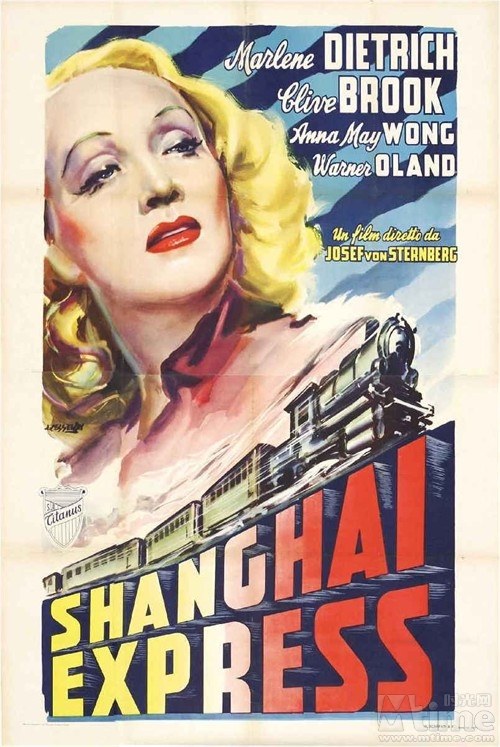
波希米亚人 2020年中国国家大剧院版 [演出] 豆瓣
所属 演出: 波希米亚人
语言:
italian 意大利语
剧团:
中国国家大剧院管弦乐团;中国国家大剧院合唱团;中国国家大剧院驻院歌剧演员队
剧院:
中国国家大剧院
导演:
沈亮
Place: Paris
Time: Around 1830
Act 1
In the four bohemians' garret (Christmas Eve)
Marcello is painting while Rodolfo gazes out of the window. They complain of the cold. In order to keep warm, they burn the manuscript of Rodolfo's drama. Colline, the philosopher, enters shivering and disgruntled at not having been able to pawn some books. Schaunard, the musician of the group, arrives with food, wine and cigars. He explains the source of his riches: a job with an eccentric English gentleman, who ordered him to play his violin to a parrot until it died. The others hardly listen to his tale as they set up the table to eat and drink. Schaunard interrupts, telling them that they must save the food for the days ahead: tonight they will all celebrate his good fortune by dining at Cafe Momus, and he will pay.
The friends are interrupted by Benoît, the landlord, who arrives to collect the rent. They flatter him and ply him with wine. In his drunkenness, he begins to boast of his amorous adventures, but when he also reveals that he is married, they thrust him from the room—without the rent payment—in comic moral indignation. The rent money is divided for their evening out in the Quartier Latin.
Marcello, Schaunard and Colline go out, but Rodolfo remains alone for a moment in order to finish an article he is writing, promising to join his friends soon. There is a knock at the door. It is a girl who lives in another room in the building. Her candle has blown out, and she has no matches; she asks Rodolfo to light it. She is briefly overcome with faintness, and Rodolfo helps her to a chair and offers her a glass of wine. She thanks him. After a few minutes, she says that she is better and must go. But as she turns to leave, she realizes that she has lost her key.
Her candle goes out in the draught and Rodolfo's candle goes out too; the pair stumble in the dark. Rodolfo, eager to spend time with the girl, to whom he is already attracted, finds the key and pockets it, feigning innocence. He takes her cold hand (Che gelida manina—"What a cold little hand") and tells her of his life as a poet, then asks her to tell him more about her life. The girl says her name is Mimì (Sì, mi chiamano Mimì—"Yes, they call me Mimì"), and describes her simple life as an embroiderer. Impatiently, the waiting friends call Rodolfo. He answers and turns to see Mimì bathed in moonlight (duet, Rodolfo and Mimì: O soave fanciulla—"Oh lovely girl"). They realize that they have fallen in love. Rodolfo suggests remaining at home with Mimì, but she decides to accompany him to the Cafe Momus. As they leave, they sing of their newfound love.
Act 2
Quartier Latin (same evening)
A great crowd, including children, has gathered with street sellers announcing their wares (chorus: Aranci, datteri! Caldi i marroni!—"Oranges, dates! Hot chestnuts!"). The friends arrive; Rodolfo buys Mimì a bonnet from a vendor, while Colline buys a coat and Schaunard a horn. Parisians gossip with friends and bargain with the vendors; the children of the streets clamor to see the wares of Parpignol, the toy seller. The friends enter the Cafe Momus.
As the men and Mimì dine at the cafe, Musetta, formerly Marcello's sweetheart, arrives with her rich (and elderly) government minister admirer, Alcindoro, whom she is tormenting. It is clear she has tired of him. To the delight of the Parisians and the embarrassment of her patron, she sings a risqué song (Musetta's waltz: Quando m'en vo'—"When I go along"), hoping to reclaim Marcello's attention. The ploy works; at the same time, Mimì recognizes that Musetta truly loves Marcello. To be rid of Alcindoro for a bit, Musetta pretends to be suffering from a tight shoe and sends him to the shoemaker to get her shoe mended. Alcindoro leaves, and Musetta and Marcello fall rapturously into each other's arms.
The friends are presented with their bill. However, Schaunard's purse has gone missing and no one else has enough money to pay. The sly Musetta has the entire bill charged to Alcindoro. The sound of a military band is heard, and the friends leave. Alcindoro returns with the repaired shoe seeking Musetta. The waiter hands him the bill and, dumbfounded, Alcindoro sinks into a chair.
Act 3
At the toll gate at the Barrière d'Enfer (late February)
Peddlers pass through the barriers and enter the city. Mimì appears, coughing violently. She tries to find Marcello, who is currently living in a little tavern where he paints signs for the innkeeper. She tells him of her hard life with Rodolfo, who abandoned her the night before, and of Rodolfo's terrible jealousy (O buon Marcello, aiuto!—"Oh, good Marcello, help me!"). Marcello tells her that Rodolfo is asleep inside, and expresses concern about Mimì's cough. Rodolfo wakes up and comes out looking for Marcello. Mimì hides and overhears Rodolfo first telling Marcello that he left Mimì because of her coquettishness, but finally confessing that his jealousy is a sham: he fears she is slowly being consumed by a deadly illness (most likely tuberculosis, known by the catchall name "consumption" in the nineteenth century). Rodolfo, in his poverty, can do little to help Mimì and hopes that his pretended unkindness will inspire her to seek another, wealthier suitor (Marcello, finalmente—"Marcello, finally").
Out of kindness towards Mimì, Marcello tries to silence him, but she has already heard all. Her weeping and coughing reveal her presence, and Rodolfo hurries to her. Musetta's laughter is heard and Marcello goes to find out what has happened. Mimì tells Rodolfo that she is leaving him, and asks that they separate amicably (Mimì: Donde lieta uscì—"From here she happily left"); but their love for one another is too strong for the pair to part. As a compromise, they agree to remain together until the spring, when the world is coming to life again and no one feels truly alone. Meanwhile, Marcello has found Musetta, and the couple quarrel fiercely about Musetta's flirtatiousness: an antithetical counterpoint to the other pair's reconciliation (quartet: Mimì, Rodolfo, Musetta, Marcello: Addio dolce svegliare alla mattina!—"Goodbye, sweet awakening in the morning!").
Act 4
Back in the garret (some months later)
Marcello and Rodolfo are trying to work, though they are primarily talking about their girlfriends, who have left them and found wealthy lovers. Rodolfo has seen Musetta in a fine carriage and Marcello has seen Mimì dressed like a queen. The men both express their nostalgia (duet: O Mimì, tu più non torni—"O Mimì, will you not return?"). Schaunard and Colline arrive with a very frugal dinner and all parody eating a plentiful banquet, dance together and sing, before Schaunard and Colline engage in a mock duel.
Musetta suddenly appears; Mimì, who took up with a wealthy viscount after leaving Rodolfo in the spring, has left her patron. Musetta found her that day in the street, severely weakened by her illness, and Mimì begged Musetta to bring her to Rodolfo. Mimì, haggard and pale, is assisted onto a bed. Briefly, she feels as though she is recovering. Musetta and Marcello leave to sell Musetta's earrings in order to buy medicine, and Colline leaves to pawn his overcoat (Vecchia zimarra—"Old coat"). Schaunard leaves with Colline to give Mimì and Rodolfo some time together. Mimì tells Rodolfo that her love for him is her whole life (aria/duet, Mimì and Rodolfo: Sono andati?—"Have they gone?").
To Mimì's delight, Rodolfo presents her with the pink bonnet he bought her, which he has kept as a souvenir of their love. They remember past happiness and their first meeting—the candles, the lost key. Suddenly, Mimì is overwhelmed by a coughing fit. The others return, with a gift of a muff to warm Mimì's hands and some medicine. Mimì gently thanks Rodolfo for the muff, which she believes is a present from him, reassures him that she is better and falls asleep. Musetta prays. Schaunard discovers that Mimì has died. Rodolfo rushes to the bed, calling Mimì's name in anguish, weeping helplessly as the curtain falls.
Time: Around 1830
Act 1
In the four bohemians' garret (Christmas Eve)
Marcello is painting while Rodolfo gazes out of the window. They complain of the cold. In order to keep warm, they burn the manuscript of Rodolfo's drama. Colline, the philosopher, enters shivering and disgruntled at not having been able to pawn some books. Schaunard, the musician of the group, arrives with food, wine and cigars. He explains the source of his riches: a job with an eccentric English gentleman, who ordered him to play his violin to a parrot until it died. The others hardly listen to his tale as they set up the table to eat and drink. Schaunard interrupts, telling them that they must save the food for the days ahead: tonight they will all celebrate his good fortune by dining at Cafe Momus, and he will pay.
The friends are interrupted by Benoît, the landlord, who arrives to collect the rent. They flatter him and ply him with wine. In his drunkenness, he begins to boast of his amorous adventures, but when he also reveals that he is married, they thrust him from the room—without the rent payment—in comic moral indignation. The rent money is divided for their evening out in the Quartier Latin.
Marcello, Schaunard and Colline go out, but Rodolfo remains alone for a moment in order to finish an article he is writing, promising to join his friends soon. There is a knock at the door. It is a girl who lives in another room in the building. Her candle has blown out, and she has no matches; she asks Rodolfo to light it. She is briefly overcome with faintness, and Rodolfo helps her to a chair and offers her a glass of wine. She thanks him. After a few minutes, she says that she is better and must go. But as she turns to leave, she realizes that she has lost her key.
Her candle goes out in the draught and Rodolfo's candle goes out too; the pair stumble in the dark. Rodolfo, eager to spend time with the girl, to whom he is already attracted, finds the key and pockets it, feigning innocence. He takes her cold hand (Che gelida manina—"What a cold little hand") and tells her of his life as a poet, then asks her to tell him more about her life. The girl says her name is Mimì (Sì, mi chiamano Mimì—"Yes, they call me Mimì"), and describes her simple life as an embroiderer. Impatiently, the waiting friends call Rodolfo. He answers and turns to see Mimì bathed in moonlight (duet, Rodolfo and Mimì: O soave fanciulla—"Oh lovely girl"). They realize that they have fallen in love. Rodolfo suggests remaining at home with Mimì, but she decides to accompany him to the Cafe Momus. As they leave, they sing of their newfound love.
Act 2
Quartier Latin (same evening)
A great crowd, including children, has gathered with street sellers announcing their wares (chorus: Aranci, datteri! Caldi i marroni!—"Oranges, dates! Hot chestnuts!"). The friends arrive; Rodolfo buys Mimì a bonnet from a vendor, while Colline buys a coat and Schaunard a horn. Parisians gossip with friends and bargain with the vendors; the children of the streets clamor to see the wares of Parpignol, the toy seller. The friends enter the Cafe Momus.
As the men and Mimì dine at the cafe, Musetta, formerly Marcello's sweetheart, arrives with her rich (and elderly) government minister admirer, Alcindoro, whom she is tormenting. It is clear she has tired of him. To the delight of the Parisians and the embarrassment of her patron, she sings a risqué song (Musetta's waltz: Quando m'en vo'—"When I go along"), hoping to reclaim Marcello's attention. The ploy works; at the same time, Mimì recognizes that Musetta truly loves Marcello. To be rid of Alcindoro for a bit, Musetta pretends to be suffering from a tight shoe and sends him to the shoemaker to get her shoe mended. Alcindoro leaves, and Musetta and Marcello fall rapturously into each other's arms.
The friends are presented with their bill. However, Schaunard's purse has gone missing and no one else has enough money to pay. The sly Musetta has the entire bill charged to Alcindoro. The sound of a military band is heard, and the friends leave. Alcindoro returns with the repaired shoe seeking Musetta. The waiter hands him the bill and, dumbfounded, Alcindoro sinks into a chair.
Act 3
At the toll gate at the Barrière d'Enfer (late February)
Peddlers pass through the barriers and enter the city. Mimì appears, coughing violently. She tries to find Marcello, who is currently living in a little tavern where he paints signs for the innkeeper. She tells him of her hard life with Rodolfo, who abandoned her the night before, and of Rodolfo's terrible jealousy (O buon Marcello, aiuto!—"Oh, good Marcello, help me!"). Marcello tells her that Rodolfo is asleep inside, and expresses concern about Mimì's cough. Rodolfo wakes up and comes out looking for Marcello. Mimì hides and overhears Rodolfo first telling Marcello that he left Mimì because of her coquettishness, but finally confessing that his jealousy is a sham: he fears she is slowly being consumed by a deadly illness (most likely tuberculosis, known by the catchall name "consumption" in the nineteenth century). Rodolfo, in his poverty, can do little to help Mimì and hopes that his pretended unkindness will inspire her to seek another, wealthier suitor (Marcello, finalmente—"Marcello, finally").
Out of kindness towards Mimì, Marcello tries to silence him, but she has already heard all. Her weeping and coughing reveal her presence, and Rodolfo hurries to her. Musetta's laughter is heard and Marcello goes to find out what has happened. Mimì tells Rodolfo that she is leaving him, and asks that they separate amicably (Mimì: Donde lieta uscì—"From here she happily left"); but their love for one another is too strong for the pair to part. As a compromise, they agree to remain together until the spring, when the world is coming to life again and no one feels truly alone. Meanwhile, Marcello has found Musetta, and the couple quarrel fiercely about Musetta's flirtatiousness: an antithetical counterpoint to the other pair's reconciliation (quartet: Mimì, Rodolfo, Musetta, Marcello: Addio dolce svegliare alla mattina!—"Goodbye, sweet awakening in the morning!").
Act 4
Back in the garret (some months later)
Marcello and Rodolfo are trying to work, though they are primarily talking about their girlfriends, who have left them and found wealthy lovers. Rodolfo has seen Musetta in a fine carriage and Marcello has seen Mimì dressed like a queen. The men both express their nostalgia (duet: O Mimì, tu più non torni—"O Mimì, will you not return?"). Schaunard and Colline arrive with a very frugal dinner and all parody eating a plentiful banquet, dance together and sing, before Schaunard and Colline engage in a mock duel.
Musetta suddenly appears; Mimì, who took up with a wealthy viscount after leaving Rodolfo in the spring, has left her patron. Musetta found her that day in the street, severely weakened by her illness, and Mimì begged Musetta to bring her to Rodolfo. Mimì, haggard and pale, is assisted onto a bed. Briefly, she feels as though she is recovering. Musetta and Marcello leave to sell Musetta's earrings in order to buy medicine, and Colline leaves to pawn his overcoat (Vecchia zimarra—"Old coat"). Schaunard leaves with Colline to give Mimì and Rodolfo some time together. Mimì tells Rodolfo that her love for him is her whole life (aria/duet, Mimì and Rodolfo: Sono andati?—"Have they gone?").
To Mimì's delight, Rodolfo presents her with the pink bonnet he bought her, which he has kept as a souvenir of their love. They remember past happiness and their first meeting—the candles, the lost key. Suddenly, Mimì is overwhelmed by a coughing fit. The others return, with a gift of a muff to warm Mimì's hands and some medicine. Mimì gently thanks Rodolfo for the muff, which she believes is a present from him, reassures him that she is better and falls asleep. Musetta prays. Schaunard discovers that Mimì has died. Rodolfo rushes to the bed, calling Mimì's name in anguish, weeping helplessly as the curtain falls.
拉美莫尔的露琪亚 2017年中国国家大剧院版 [演出] 豆瓣
所属 演出: 拉美莫尔的露琪亚
语言:
italian 意大利语
剧团:
中国国家大剧院管弦乐团;中国国家大剧院合唱团
剧院:
北京天桥艺术中心
导演:
Yannis Kokkos
其它标题:
2017年中国国家大剧院版
编剧:
Salvatore Cammarano
作曲:
Gaetano Donizetti
演员:
Venera Gimadieva / 张立萍
/
Stefano Secco / 石倚洁
…
Time: Early 18th century
Place: Scotland
Act 1
Scene 1: The gardens of Ravenswood Castle
Normanno, captain of the castle guard, and other retainers are searching for an intruder. He tells Enrico that he believes that the man is Edgardo of Ravenswood, and that he comes to the castle to meet Enrico's sister, Lucia. It is confirmed that Edgardo is indeed the intruder. Enrico reaffirms his hatred for the Ravenswood family and his determination to end the relationship.
Scene 2: By a fountain at the entrance to the park, beside the castle
Lucia waits for Edgardo. In her famous aria "Regnava nel silenzio", Lucia tells her maid Alisa that she has seen the ghost of a girl killed on the very same spot by a jealous Ravenswood ancestor. Alisa tells Lucia that the apparition is a warning and that she must give up her love for Edgardo. Edgardo enters; for political reasons, he must leave immediately for France. He hopes to make his peace with Enrico and marry Lucia. Lucia tells him this is impossible, and instead they take a sworn vow of marriage and exchange rings. Edgardo leaves.
Act 2
Scene 1: Lord Ashton's apartments
Preparations have been made for the imminent wedding of Lucia to Arturo. Enrico worries about whether Lucia will really submit to the wedding. He shows his sister a forged letter seemingly proving that Edgardo has forgotten her and taken a new lover. Enrico leaves Lucia to further persuasion, this time by Raimondo, Lucia's chaplain and tutor, that she should renounce her vow to Edgardo, for the good of the family, and marry Arturo.
Scene 2: A hall in the castle
Arturo arrives for the marriage. Lucia acts strangely, but Enrico explains that this is due to the death of her mother. Arturo signs the marriage contract, followed reluctantly by Lucia. At that point Edgardo suddenly appears in the hall. Raimondo prevents a fight, but he shows Edgardo Lucia's signature on the marriage contract. Edgardo curses her, demanding that they return their rings to each other. He tramples his ring on the ground, before being forced out of the castle.
Act 3
Scene 1: Wolfcrag
Enrico visits Edgardo to challenge him to a duel. He tells him that Lucia is already enjoying her bridal bed. Edgardo agrees to fight him. They will meet later by the graveyard of the Ravenswoods, near the Wolf's Crag.
Scene 2: A Hall
Raimondo interrupts the marriage celebrations to tell the guests that Lucia has gone mad and killed her bridegroom Arturo. Lucia enters. In the aria "Il dolce suono" she imagines being with Edgardo, soon to be happily married. Enrico enters and at first threatens Lucia but later softens when he realizes her condition. Lucia collapses. Raimondo blames Normanno for precipitating the whole tragedy.
Scene 3: The graveyard of the Ravenswood family
Edgardo is resolved to kill himself on Enrico's sword. He learns that Lucia is dying and then Raimondo comes to tell him that she has already died. Edgardo stabs himself with a dagger, hoping to be reunited with Lucia in heaven.
Place: Scotland
Act 1
Scene 1: The gardens of Ravenswood Castle
Normanno, captain of the castle guard, and other retainers are searching for an intruder. He tells Enrico that he believes that the man is Edgardo of Ravenswood, and that he comes to the castle to meet Enrico's sister, Lucia. It is confirmed that Edgardo is indeed the intruder. Enrico reaffirms his hatred for the Ravenswood family and his determination to end the relationship.
Scene 2: By a fountain at the entrance to the park, beside the castle
Lucia waits for Edgardo. In her famous aria "Regnava nel silenzio", Lucia tells her maid Alisa that she has seen the ghost of a girl killed on the very same spot by a jealous Ravenswood ancestor. Alisa tells Lucia that the apparition is a warning and that she must give up her love for Edgardo. Edgardo enters; for political reasons, he must leave immediately for France. He hopes to make his peace with Enrico and marry Lucia. Lucia tells him this is impossible, and instead they take a sworn vow of marriage and exchange rings. Edgardo leaves.
Act 2
Scene 1: Lord Ashton's apartments
Preparations have been made for the imminent wedding of Lucia to Arturo. Enrico worries about whether Lucia will really submit to the wedding. He shows his sister a forged letter seemingly proving that Edgardo has forgotten her and taken a new lover. Enrico leaves Lucia to further persuasion, this time by Raimondo, Lucia's chaplain and tutor, that she should renounce her vow to Edgardo, for the good of the family, and marry Arturo.
Scene 2: A hall in the castle
Arturo arrives for the marriage. Lucia acts strangely, but Enrico explains that this is due to the death of her mother. Arturo signs the marriage contract, followed reluctantly by Lucia. At that point Edgardo suddenly appears in the hall. Raimondo prevents a fight, but he shows Edgardo Lucia's signature on the marriage contract. Edgardo curses her, demanding that they return their rings to each other. He tramples his ring on the ground, before being forced out of the castle.
Act 3
Scene 1: Wolfcrag
Enrico visits Edgardo to challenge him to a duel. He tells him that Lucia is already enjoying her bridal bed. Edgardo agrees to fight him. They will meet later by the graveyard of the Ravenswoods, near the Wolf's Crag.
Scene 2: A Hall
Raimondo interrupts the marriage celebrations to tell the guests that Lucia has gone mad and killed her bridegroom Arturo. Lucia enters. In the aria "Il dolce suono" she imagines being with Edgardo, soon to be happily married. Enrico enters and at first threatens Lucia but later softens when he realizes her condition. Lucia collapses. Raimondo blames Normanno for precipitating the whole tragedy.
Scene 3: The graveyard of the Ravenswood family
Edgardo is resolved to kill himself on Enrico's sword. He learns that Lucia is dying and then Raimondo comes to tell him that she has already died. Edgardo stabs himself with a dagger, hoping to be reunited with Lucia in heaven.
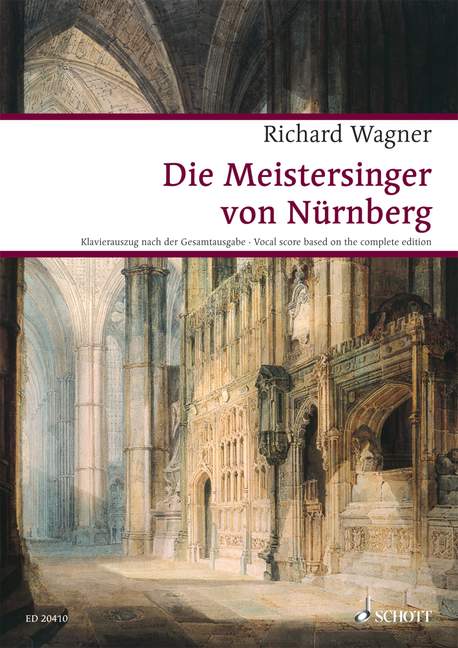
纽伦堡的名歌手 2018年中国国家大剧院版 [演出] 豆瓣
所属 演出: 纽伦堡的名歌手
语言:
german 德语
剧团:
中国国家大剧院管弦乐团;中国国家大剧院合唱团;北京管乐交响乐团
剧院:
中国国家大剧院
导演:
Kasper Holten
其它标题:
2018年中国国家大剧院版
编剧:
Richard Wagner
作曲:
Richard Wagner
演员:
Johan Reuter
/
Daniel Kirch
…
Nuremberg, towards the middle of the sixteenth century.
Act 1
Prelude (Vorspiel), one of Wagner’s most familiar pieces of music.
Scene 1: Interior of Katharinenkirche (St. Catherine's Church)[notes 1] in Nuremberg, St John's Eve or Midsummer's Eve, June 23
After the prelude, a church service is just ending with a singing of Da zu dir der Heiland kam (When the Saviour came to thee), an impressive pastiche of a Lutheran chorale, as Walther von Stolzing, a young knight from Franconia, addresses Eva Pogner, whom he had met earlier, and asks her if she is engaged to anyone. Eva and Walther have fallen in love at first sight, but she informs him that her father, the goldsmith and mastersinger Veit Pogner, has arranged to give her hand in marriage to the winner of the guild's song contest on St. John's Day (Midsummer's Day), tomorrow. Eva's maid, Magdalena, gets David, Hans Sachs's apprentice, to tell Walther about the mastersingers' art. The hope is for Walther to qualify as a mastersinger during the guild meeting, traditionally held in the church after Mass, and thus earn a place in the song contest despite his utter ignorance of the master-guild's rules and conventions.
Scene 2
As the other apprentices set up the church for the meeting, David warns Walther that it is not easy to become a mastersinger; it takes many years of learning and practice. David gives a confusing lecture on the mastersingers' rules for composing and singing. (Many of the tunes he describes were real master-tunes from the period.) Walther is confused by the complicated rules, but is determined to try for a place in the guild anyway.
Scene 3
The first mastersingers file into the church, including Eva's wealthy father Veit Pogner and the town clerk Beckmesser. Beckmesser, a clever technical singer who was expecting to win the contest without opposition, is distressed to see that Walther is Pogner's guest and intends to enter the contest. Meanwhile, Pogner introduces Walther to the other mastersingers as they arrive. Fritz Kothner the baker, serving as chairman of this meeting, calls the roll. Pogner, addressing the assembly, announces his offer of his daughter's hand for the winner of the song contest. When Hans Sachs argues that Eva ought to have a say in the matter, Pogner agrees that Eva may refuse the winner of the contest, but she must still marry a mastersinger. Another suggestion by Sachs, that the townspeople, rather than the masters, should be called upon to judge the winner of the contest, is rejected by the other masters. Pogner formally introduces Walther as a candidate for admission into the masterguild. Questioned by Kothner about his background, Walther states that his teacher in poetry was Walther von der Vogelweide whose works he studied in his own private library in Franconia, and his teachers in music were the birds and nature itself. Reluctantly the masters agree to admit him, provided he can perform a master-song of his own composition. Walther chooses love as the topic for his song and therefore is to be judged by Beckmesser alone, the "Marker" of the guild for worldly matters. At the signal to begin (Fanget an!), Walther launches into a novel free-form tune (So rief der Lenz in den Wald), breaking all the mastersingers' rules, and his song is constantly interrupted by the scratch of Beckmesser's chalk on his chalkboard, maliciously noting one violation after another. When Beckmesser has completely covered the slate with symbols of Walther's errors, he interrupts the song and argues that there is no point in finishing it. Sachs tries to convince the masters to let Walther continue, but Beckmesser sarcastically tells Sachs to stop trying to set policy and instead, to finish making his (Beckmesser's) new shoes, which are overdue. Raising his voice over the masters' argument, Walther finishes his song, but the masters reject him and he rushes out of the church.
Act 2
Scene 1: Evening in a Nuremberg street, at the corner between Pogner's house and Hans Sachs's house, opposite. A lime tree stands outside Pogner's house, an elder outside Sachs's. The apprentices are closing the shutters
David informs Magdalena of Walther's failure. In her disappointment, Magdalena leaves without giving David the food she had brought for him. This arouses the derision of the other apprentices, and David is about to turn on them when Sachs arrives and hustles his apprentice into the workshop.
Scene 2
Pogner arrives with Eva, engaging in a roundabout conversation: Eva is hesitant to ask about the outcome of Walther's application, and Pogner has private doubts about whether it was wise to offer his daughter's hand in marriage for the song contest. As they enter their house, Magdalena appears and tells Eva about the rumours of Walther's failure. Eva decides to ask Sachs about the matter.
Scene 3
As twilight falls, Hans Sachs takes a seat in front of his house, to work on a new pair of shoes for Beckmesser. He muses on Walther's song, which has made a deep impression on him. ("Was duftet doch der Flieder", often called "the Fliedermonolog")
Scene 4
Eva approaches Sachs, and they discuss tomorrow's song contest. Eva is unenthusiastic about Beckmesser, who appears to be the only eligible contestant. She hints that she would not mind if Sachs, a widower, were to win the contest. Though touched, Sachs protests that he would be too old a husband for her. Upon further prompting, Sachs describes Walther's failure at the guild meeting. This causes Eva to storm off angrily, confirming Sachs's suspicion that she has fallen in love with Walther. Eva is intercepted by Magdalena, who informs her that Beckmesser is coming to serenade her. Eva, determined to search for Walther, tells Magdalena to pose as her (Eva) at the bedroom window.
Scene 5
Just as Eva is about to leave, Walther appears. He tells her that he has been rejected by the mastersingers, and the two prepare to elope. However, Sachs has overheard their plans. As they are passing by, he illuminates the street with his lantern, forcing them to hide in the shadow of Pogner's house. Walther makes up his mind to confront Sachs, but is interrupted by the arrival of Beckmesser.
Scene 6
As Eva and Walther retreat further into the shadows, Beckmesser begins his serenade. Sachs interrupts him by launching into a full-bellied cobbling song, and hammering the soles of the half-made shoes. Annoyed, Beckmesser tells Sachs to stop, but the cobbler replies that he has to finish tempering the soles of the shoes, whose lateness Beckmesser had publicly complained about in Act 1. Sachs offers a compromise: he will be quiet and let Beckmesser sing, but he (Sachs) will be Beckmesser's "marker", and mark each of Beckmesser's musical/poetical errors by striking one of the soles with his hammer. Beckmesser, who has spotted someone at Eva's window (Magdalena in disguise), has no time to argue. He tries to sing his serenade, but he makes so many mistakes (his tune repeatedly places accents on the wrong syllables of the words) that from the repeated knocks Sachs finishes the shoes. David wakes up and sees Beckmesser apparently serenading Magdalena. He attacks Beckmesser in a fit of jealous rage. The entire neighborhood is awakened by the noise. The other apprentices rush into the fray, and the situation degenerates into a full-blown riot. In the confusion, Walther tries to escape with Eva, but Sachs pushes Eva into her home and drags Walther into his own workshop. Quiet is restored as abruptly as it was broken. A lone figure walks through the street – the nightwatchman, calling out the hour.
Act 3, Scenes 1–4
Prelude (Vorspiel), a meditative orchestral introduction using music from two key episodes to be heard in Act 3: Sachs's Scene 1 monologue "Wahn! Wahn!" and the "Wittenburg Nightingale" quasi-chorale sung by the townspeople to greet Sachs in Scene 5.
Scene 1: Sachs's workshop
As morning dawns, Sachs is reading a large book. Lost in thought, he does not respond as David returns from delivering Beckmesser's shoes. David finally manages to attract his master's attention, and they discuss the upcoming festivities – it is St. John's day, Hans Sachs's name day. David recites his verses for Sachs, and leaves to prepare for the festival. Alone, Sachs ponders last night's riot. "Madness! Madness! Everywhere madness!" (Wahn! Wahn! Überall Wahn!) His attempt to prevent an elopement had ended in shocking violence. Nevertheless, he is resolved to make madness work for him today.
Scene 2
Sachs gives Walther an interactive lesson on the history and philosophy of music and mastersinging, and teaches him to moderate his singing according to the spirit (if not the strict letter) of the masters' rules. Walther demonstrates his understanding by composing two sections of a new Prize Song in a more acceptable style than his previous effort from act 1. Sachs writes down the new verses as Walther sings them. A final section remains to be composed, but Walther postpones the task. The two men leave the room to dress for the festival.
Scene 3
Beckmesser, still sore from his drubbing the night before, enters the workshop. He spots the verses of the Prize Song, written in Sachs's handwriting, and infers that Sachs is secretly planning to enter the contest for Eva's hand. The cobbler re-enters the room and Beckmesser confronts him with the verses and asks if he wrote them. Sachs confirms that the handwriting is his, but does not clarify that he was not the author but merely served as scribe. However, he goes on to say that he has no intention of wooing Eva or entering the contest, and he presents the manuscript to Beckmesser as a gift. He promises never to claim the song for his own, and warns Beckmesser that it is a very difficult song to interpret and sing. Beckmesser, his confidence restored by the prospect of using verses written by the famous Hans Sachs, ignores the warning and rushes off to prepare for the song contest. Sachs smiles at Beckmesser's foolishness but expresses hope that Beckmesser will learn to be better in the future.
Scene 4
Eva arrives at the workshop. She is looking for Walther, but pretends to have complaints about a shoe that Sachs made for her. Sachs realizes that the shoe is a perfect fit, but pretends to set about altering the stitching. As he works, he tells Eva that he has just heard a beautiful song, lacking only an ending. Eva cries out as Walther enters the room, splendidly attired for the festival, and sings the third and final section of the Prize Song. The couple are overwhelmed with gratitude for Sachs, and Eva asks Sachs to forgive her for having manipulated his feelings. The cobbler brushes them off with bantering complaints about his lot as a shoemaker, poet, and widower. At last, however, he admits to Eva that, despite his feelings for her, he is resolved to avoid the fate of King Marke (a reference to the subject of another Wagner opera, Tristan und Isolde, in which an old man tries to marry a much-younger woman), thus conferring his blessing upon the lovers. David and Magdalena appear. Sachs announces to the group that a new master-song has been born, which, following the rules of the mastersingers, is to be baptized. As an apprentice cannot serve as a witness for the baptism, he promotes David to the rank of journeyman with the traditional cuff on the ear (and by this also "promoting" him as a groom and Magdalena as a bride). He then christens the Prize Song the Morning Dream Song (Selige Morgentraumdeut-Weise). After celebrating their good fortune with an extended quintet (Selig, wie die Sonne meines Glückes lacht) — musically capping the first four scenes of Act III — the group departs for the festival.
Act 3, Scene 5
Almost an act in itself, this scene occupies about 45 minutes of the two hours of Act III and is separated from the preceding four scenes by a Verwandlungsmusik, a transforming Interlude. Meadow on the Pegnitz River. It is the Feast of St. John.
Various guilds enter boasting of their contributions to Nürnberg’s success as a city. Wagner depicts three: the Cobblers, whose chorus, Sankt Krispin, lobet ihn!, uses the signature cry streck! streck! streck!; the Tailors, who sing the chorus Als Nürnberg belagert war with the goat cry meck! meck! meck!; and the Bakers, who cut the tailors off with Hungersnot! Hungersnot!, or Famine, famine!, and its beck! beck! beck!, or bake, bake, bake!
This sequence leads into the well-known Tanz der Lehrbuben, or Dance of the Apprentices. The mastersingers themselves then arrive grandly in a section usually referred to as the “Procession of the Masters.” The crowd sings the praises of Hans Sachs, the most beloved and famous of the mastersingers. Here Wagner provides a rousing chorus, Wach’ auf, es nahet gen den Tag, using words written by the historical Sachs himself and musically relates it to the “Wittenberg Nightingale.”
The prize contest begins. Beckmesser attempts to sing the verses that he had obtained from Sachs. However, he garbles the words (Morgen ich leuchte) and fails to fit them to an appropriate melody, and ends up singing so clumsily that the crowd laughs him off. Before storming off in anger, he yells that the song was not even his: Hans Sachs tricked him into singing it. The crowd is confused. How could the great Hans Sachs have written such a bad song? Sachs tells them that the song is not his own, and also that it is in fact a beautiful song which the masters will love when they hear it sung correctly. To prove this, he calls a witness: Walther. The people are so curious about the song (correctly worded as Morgenlich leuchtend im rosigen Schein) that they allow Walther to sing it, and everyone is won over in spite of its novelty.
They declare Walther the winner, and the mastersingers want to make him a member of their guild on the spot. At first Walther is tempted to reject their offer, but Sachs intervenes once more and explains that art, even ground-breaking, contrary art like Walther’s, can only exist within a cultural tradition, which tradition the art sustains and improves. Walther is convinced; he agrees to join. Pogner places the symbolic master-hood medal around his neck, Eva takes his hand, and the people sing once more the praises of Hans Sachs, the beloved mastersinger of Nuremberg.
Act 1
Prelude (Vorspiel), one of Wagner’s most familiar pieces of music.
Scene 1: Interior of Katharinenkirche (St. Catherine's Church)[notes 1] in Nuremberg, St John's Eve or Midsummer's Eve, June 23
After the prelude, a church service is just ending with a singing of Da zu dir der Heiland kam (When the Saviour came to thee), an impressive pastiche of a Lutheran chorale, as Walther von Stolzing, a young knight from Franconia, addresses Eva Pogner, whom he had met earlier, and asks her if she is engaged to anyone. Eva and Walther have fallen in love at first sight, but she informs him that her father, the goldsmith and mastersinger Veit Pogner, has arranged to give her hand in marriage to the winner of the guild's song contest on St. John's Day (Midsummer's Day), tomorrow. Eva's maid, Magdalena, gets David, Hans Sachs's apprentice, to tell Walther about the mastersingers' art. The hope is for Walther to qualify as a mastersinger during the guild meeting, traditionally held in the church after Mass, and thus earn a place in the song contest despite his utter ignorance of the master-guild's rules and conventions.
Scene 2
As the other apprentices set up the church for the meeting, David warns Walther that it is not easy to become a mastersinger; it takes many years of learning and practice. David gives a confusing lecture on the mastersingers' rules for composing and singing. (Many of the tunes he describes were real master-tunes from the period.) Walther is confused by the complicated rules, but is determined to try for a place in the guild anyway.
Scene 3
The first mastersingers file into the church, including Eva's wealthy father Veit Pogner and the town clerk Beckmesser. Beckmesser, a clever technical singer who was expecting to win the contest without opposition, is distressed to see that Walther is Pogner's guest and intends to enter the contest. Meanwhile, Pogner introduces Walther to the other mastersingers as they arrive. Fritz Kothner the baker, serving as chairman of this meeting, calls the roll. Pogner, addressing the assembly, announces his offer of his daughter's hand for the winner of the song contest. When Hans Sachs argues that Eva ought to have a say in the matter, Pogner agrees that Eva may refuse the winner of the contest, but she must still marry a mastersinger. Another suggestion by Sachs, that the townspeople, rather than the masters, should be called upon to judge the winner of the contest, is rejected by the other masters. Pogner formally introduces Walther as a candidate for admission into the masterguild. Questioned by Kothner about his background, Walther states that his teacher in poetry was Walther von der Vogelweide whose works he studied in his own private library in Franconia, and his teachers in music were the birds and nature itself. Reluctantly the masters agree to admit him, provided he can perform a master-song of his own composition. Walther chooses love as the topic for his song and therefore is to be judged by Beckmesser alone, the "Marker" of the guild for worldly matters. At the signal to begin (Fanget an!), Walther launches into a novel free-form tune (So rief der Lenz in den Wald), breaking all the mastersingers' rules, and his song is constantly interrupted by the scratch of Beckmesser's chalk on his chalkboard, maliciously noting one violation after another. When Beckmesser has completely covered the slate with symbols of Walther's errors, he interrupts the song and argues that there is no point in finishing it. Sachs tries to convince the masters to let Walther continue, but Beckmesser sarcastically tells Sachs to stop trying to set policy and instead, to finish making his (Beckmesser's) new shoes, which are overdue. Raising his voice over the masters' argument, Walther finishes his song, but the masters reject him and he rushes out of the church.
Act 2
Scene 1: Evening in a Nuremberg street, at the corner between Pogner's house and Hans Sachs's house, opposite. A lime tree stands outside Pogner's house, an elder outside Sachs's. The apprentices are closing the shutters
David informs Magdalena of Walther's failure. In her disappointment, Magdalena leaves without giving David the food she had brought for him. This arouses the derision of the other apprentices, and David is about to turn on them when Sachs arrives and hustles his apprentice into the workshop.
Scene 2
Pogner arrives with Eva, engaging in a roundabout conversation: Eva is hesitant to ask about the outcome of Walther's application, and Pogner has private doubts about whether it was wise to offer his daughter's hand in marriage for the song contest. As they enter their house, Magdalena appears and tells Eva about the rumours of Walther's failure. Eva decides to ask Sachs about the matter.
Scene 3
As twilight falls, Hans Sachs takes a seat in front of his house, to work on a new pair of shoes for Beckmesser. He muses on Walther's song, which has made a deep impression on him. ("Was duftet doch der Flieder", often called "the Fliedermonolog")
Scene 4
Eva approaches Sachs, and they discuss tomorrow's song contest. Eva is unenthusiastic about Beckmesser, who appears to be the only eligible contestant. She hints that she would not mind if Sachs, a widower, were to win the contest. Though touched, Sachs protests that he would be too old a husband for her. Upon further prompting, Sachs describes Walther's failure at the guild meeting. This causes Eva to storm off angrily, confirming Sachs's suspicion that she has fallen in love with Walther. Eva is intercepted by Magdalena, who informs her that Beckmesser is coming to serenade her. Eva, determined to search for Walther, tells Magdalena to pose as her (Eva) at the bedroom window.
Scene 5
Just as Eva is about to leave, Walther appears. He tells her that he has been rejected by the mastersingers, and the two prepare to elope. However, Sachs has overheard their plans. As they are passing by, he illuminates the street with his lantern, forcing them to hide in the shadow of Pogner's house. Walther makes up his mind to confront Sachs, but is interrupted by the arrival of Beckmesser.
Scene 6
As Eva and Walther retreat further into the shadows, Beckmesser begins his serenade. Sachs interrupts him by launching into a full-bellied cobbling song, and hammering the soles of the half-made shoes. Annoyed, Beckmesser tells Sachs to stop, but the cobbler replies that he has to finish tempering the soles of the shoes, whose lateness Beckmesser had publicly complained about in Act 1. Sachs offers a compromise: he will be quiet and let Beckmesser sing, but he (Sachs) will be Beckmesser's "marker", and mark each of Beckmesser's musical/poetical errors by striking one of the soles with his hammer. Beckmesser, who has spotted someone at Eva's window (Magdalena in disguise), has no time to argue. He tries to sing his serenade, but he makes so many mistakes (his tune repeatedly places accents on the wrong syllables of the words) that from the repeated knocks Sachs finishes the shoes. David wakes up and sees Beckmesser apparently serenading Magdalena. He attacks Beckmesser in a fit of jealous rage. The entire neighborhood is awakened by the noise. The other apprentices rush into the fray, and the situation degenerates into a full-blown riot. In the confusion, Walther tries to escape with Eva, but Sachs pushes Eva into her home and drags Walther into his own workshop. Quiet is restored as abruptly as it was broken. A lone figure walks through the street – the nightwatchman, calling out the hour.
Act 3, Scenes 1–4
Prelude (Vorspiel), a meditative orchestral introduction using music from two key episodes to be heard in Act 3: Sachs's Scene 1 monologue "Wahn! Wahn!" and the "Wittenburg Nightingale" quasi-chorale sung by the townspeople to greet Sachs in Scene 5.
Scene 1: Sachs's workshop
As morning dawns, Sachs is reading a large book. Lost in thought, he does not respond as David returns from delivering Beckmesser's shoes. David finally manages to attract his master's attention, and they discuss the upcoming festivities – it is St. John's day, Hans Sachs's name day. David recites his verses for Sachs, and leaves to prepare for the festival. Alone, Sachs ponders last night's riot. "Madness! Madness! Everywhere madness!" (Wahn! Wahn! Überall Wahn!) His attempt to prevent an elopement had ended in shocking violence. Nevertheless, he is resolved to make madness work for him today.
Scene 2
Sachs gives Walther an interactive lesson on the history and philosophy of music and mastersinging, and teaches him to moderate his singing according to the spirit (if not the strict letter) of the masters' rules. Walther demonstrates his understanding by composing two sections of a new Prize Song in a more acceptable style than his previous effort from act 1. Sachs writes down the new verses as Walther sings them. A final section remains to be composed, but Walther postpones the task. The two men leave the room to dress for the festival.
Scene 3
Beckmesser, still sore from his drubbing the night before, enters the workshop. He spots the verses of the Prize Song, written in Sachs's handwriting, and infers that Sachs is secretly planning to enter the contest for Eva's hand. The cobbler re-enters the room and Beckmesser confronts him with the verses and asks if he wrote them. Sachs confirms that the handwriting is his, but does not clarify that he was not the author but merely served as scribe. However, he goes on to say that he has no intention of wooing Eva or entering the contest, and he presents the manuscript to Beckmesser as a gift. He promises never to claim the song for his own, and warns Beckmesser that it is a very difficult song to interpret and sing. Beckmesser, his confidence restored by the prospect of using verses written by the famous Hans Sachs, ignores the warning and rushes off to prepare for the song contest. Sachs smiles at Beckmesser's foolishness but expresses hope that Beckmesser will learn to be better in the future.
Scene 4
Eva arrives at the workshop. She is looking for Walther, but pretends to have complaints about a shoe that Sachs made for her. Sachs realizes that the shoe is a perfect fit, but pretends to set about altering the stitching. As he works, he tells Eva that he has just heard a beautiful song, lacking only an ending. Eva cries out as Walther enters the room, splendidly attired for the festival, and sings the third and final section of the Prize Song. The couple are overwhelmed with gratitude for Sachs, and Eva asks Sachs to forgive her for having manipulated his feelings. The cobbler brushes them off with bantering complaints about his lot as a shoemaker, poet, and widower. At last, however, he admits to Eva that, despite his feelings for her, he is resolved to avoid the fate of King Marke (a reference to the subject of another Wagner opera, Tristan und Isolde, in which an old man tries to marry a much-younger woman), thus conferring his blessing upon the lovers. David and Magdalena appear. Sachs announces to the group that a new master-song has been born, which, following the rules of the mastersingers, is to be baptized. As an apprentice cannot serve as a witness for the baptism, he promotes David to the rank of journeyman with the traditional cuff on the ear (and by this also "promoting" him as a groom and Magdalena as a bride). He then christens the Prize Song the Morning Dream Song (Selige Morgentraumdeut-Weise). After celebrating their good fortune with an extended quintet (Selig, wie die Sonne meines Glückes lacht) — musically capping the first four scenes of Act III — the group departs for the festival.
Act 3, Scene 5
Almost an act in itself, this scene occupies about 45 minutes of the two hours of Act III and is separated from the preceding four scenes by a Verwandlungsmusik, a transforming Interlude. Meadow on the Pegnitz River. It is the Feast of St. John.
Various guilds enter boasting of their contributions to Nürnberg’s success as a city. Wagner depicts three: the Cobblers, whose chorus, Sankt Krispin, lobet ihn!, uses the signature cry streck! streck! streck!; the Tailors, who sing the chorus Als Nürnberg belagert war with the goat cry meck! meck! meck!; and the Bakers, who cut the tailors off with Hungersnot! Hungersnot!, or Famine, famine!, and its beck! beck! beck!, or bake, bake, bake!
This sequence leads into the well-known Tanz der Lehrbuben, or Dance of the Apprentices. The mastersingers themselves then arrive grandly in a section usually referred to as the “Procession of the Masters.” The crowd sings the praises of Hans Sachs, the most beloved and famous of the mastersingers. Here Wagner provides a rousing chorus, Wach’ auf, es nahet gen den Tag, using words written by the historical Sachs himself and musically relates it to the “Wittenberg Nightingale.”
The prize contest begins. Beckmesser attempts to sing the verses that he had obtained from Sachs. However, he garbles the words (Morgen ich leuchte) and fails to fit them to an appropriate melody, and ends up singing so clumsily that the crowd laughs him off. Before storming off in anger, he yells that the song was not even his: Hans Sachs tricked him into singing it. The crowd is confused. How could the great Hans Sachs have written such a bad song? Sachs tells them that the song is not his own, and also that it is in fact a beautiful song which the masters will love when they hear it sung correctly. To prove this, he calls a witness: Walther. The people are so curious about the song (correctly worded as Morgenlich leuchtend im rosigen Schein) that they allow Walther to sing it, and everyone is won over in spite of its novelty.
They declare Walther the winner, and the mastersingers want to make him a member of their guild on the spot. At first Walther is tempted to reject their offer, but Sachs intervenes once more and explains that art, even ground-breaking, contrary art like Walther’s, can only exist within a cultural tradition, which tradition the art sustains and improves. Walther is convinced; he agrees to join. Pogner places the symbolic master-hood medal around his neck, Eva takes his hand, and the people sing once more the praises of Hans Sachs, the beloved mastersinger of Nuremberg.
The Bowery (1933) [电影] TMDB 维基数据 IMDb
The Bowery
导演:
Raoul Walsh
演员:
Wallace Beery
/
George Raft
…
其它标题:
El arrabal
/
Les Faubourgs de New York
…
"In the Gay Nineties New York had grown up into bustles and balloon Sleeves ... but The Bowery had grown younger, louder and more rowdy until it was known as the 'Livest Mile on the face of the globe' ... the cradle of men who were later to be famous.
王牌特务 (1987) [剧集]
导演:
王建军
演员:
翟乃社
/
李媛媛
…
《密探》讲述一九四九年,国共谈判走向破灭边缘,在人心浮动的大上海,国民党军械工业局总部内一次突击检查中,意外发现超过三个旅的军事枪械被神秘报废失踪,军械工业局总工程师卢方舟牵涉其中。而此时上海地下党张翔被暗杀,打入国民党内部的特工刘花被捕,联络员陶弟知踪,整个上海地下党组织面临全面暴露。
身份神秘的国民党南京专员潘飞突然秘密来到上海,失踪的陶昌弟竟出现在国民党保密局的大楼内,而国民局军械局局长杜时元的态度也变的暖昧起来,种种迹象表明上海地下党组织内有一名代号"老D"的特务。而国民党内部同样一名代号"火石"的特工存在,并肩负重大任务。国民党保密处处长程天伦亲率王牌特务孟眉设置重重陷阱追查卧底特工"火石",与此同时孟眉拉拢引诱了爱国爱生领袖谢君夫,并安排其打入地下党组织,地下党组织再次陷入危境。
特务"老D"究竟是谁?特工"火石"的重大任务又是什么?失踪的三个旅的军火在哪?身份神秘的潘非是敌是友?种种谜团使敌我双方的斗争陷入了重重迷雾之中……
身份神秘的国民党南京专员潘飞突然秘密来到上海,失踪的陶昌弟竟出现在国民党保密局的大楼内,而国民局军械局局长杜时元的态度也变的暖昧起来,种种迹象表明上海地下党组织内有一名代号"老D"的特务。而国民党内部同样一名代号"火石"的特工存在,并肩负重大任务。国民党保密处处长程天伦亲率王牌特务孟眉设置重重陷阱追查卧底特工"火石",与此同时孟眉拉拢引诱了爱国爱生领袖谢君夫,并安排其打入地下党组织,地下党组织再次陷入危境。
特务"老D"究竟是谁?特工"火石"的重大任务又是什么?失踪的三个旅的军火在哪?身份神秘的潘非是敌是友?种种谜团使敌我双方的斗争陷入了重重迷雾之中……
王牌特务 (1987) [剧集] 豆瓣
导演:
王建军
演员:
翟乃社
/
李媛媛
…
《密探》讲述一九四九年,国共谈判走向破灭边缘,在人心浮动的大上海,国民党军械工业局总部内一次突击检查中,意外发现超过三个旅的军事枪械被神秘报废失踪,军械工业局总工程师卢方舟牵涉其中。而此时上海地下党张翔被暗杀,打入国民党内部的特工刘花被捕,联络员陶弟知踪,整个上海地下党组织面临全面暴露。
身份神秘的国民党南京专员潘飞突然秘密来到上海,失踪的陶昌弟竟出现在国民党保密局的大楼内,而国民局军械局局长杜时元的态度也变的暖昧起来,种种迹象表明上海地下党组织内有一名代号"老D"的特务。而国民党内部同样一名代号"火石"的特工存在,并肩负重大任务。国民党保密处处长程天伦亲率王牌特务孟眉设置重重陷阱追查卧底特工"火石",与此同时孟眉拉拢引诱了爱国爱生领袖谢君夫,并安排其打入地下党组织,地下党组织再次陷入危境。
特务"老D"究竟是谁?特工"火石"的重大任务又是什么?失踪的三个旅的军火在哪?身份神秘的潘非是敌是友?种种谜团使敌我双方的斗争陷入了重重迷雾之中……
身份神秘的国民党南京专员潘飞突然秘密来到上海,失踪的陶昌弟竟出现在国民党保密局的大楼内,而国民局军械局局长杜时元的态度也变的暖昧起来,种种迹象表明上海地下党组织内有一名代号"老D"的特务。而国民党内部同样一名代号"火石"的特工存在,并肩负重大任务。国民党保密处处长程天伦亲率王牌特务孟眉设置重重陷阱追查卧底特工"火石",与此同时孟眉拉拢引诱了爱国爱生领袖谢君夫,并安排其打入地下党组织,地下党组织再次陷入危境。
特务"老D"究竟是谁?特工"火石"的重大任务又是什么?失踪的三个旅的军火在哪?身份神秘的潘非是敌是友?种种谜团使敌我双方的斗争陷入了重重迷雾之中……