Masao Adachi — Director (12)
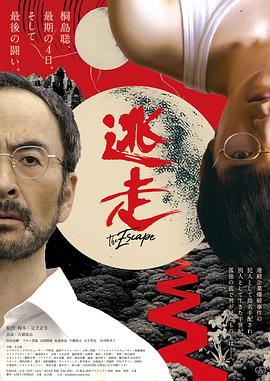
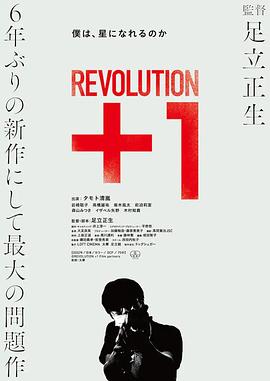
REVOLUTION+1 (2022) [Movie] Douban TMDB IMDb WikiData
REVOLUTION+1
other title:
革命+1
/
레볼루션 +1
…
Tatsuya Kawakami's mother becomes a member of a religious group after her husband commits suicide, and makes a large donation to the organization. Her three children are forced to live in poverty, and her eldest son, who is blind in one eye due to illness, takes his own life. Kawakami comes to believe that the religious group has ruined his life, so he creates a homemade gun and carries out an assassination plot against former prime minister Shinzo Abe, who has close ties to the religious group, which has been accused of siphoning off money from its members.
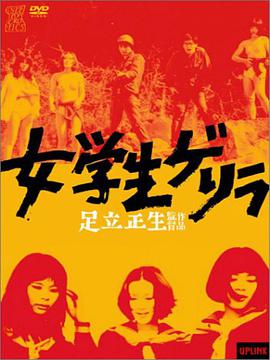
女学生游击队 (1969) [Movie] Douban
女学生ゲリラ
director:
足立正生
actor:
芦川絵理
/
花村亜流芽
…
other title:
女学生ゲリラ
/
Student Guerilla
…
卒業を間近に控えた高校三年生の明子(芦川絵里)、絹代(花村亜流芽)、時子(万屋真理)の三人は、自分たち不良の劣等生を冷たく扱ってきた学校に復讐するため卒業式の妨害を密かに企てていた。彼女たちのたくらみを知った同級生の誠一(新田等々)と五郎(福間健二)も加わり式の前日に三年生全員の成績表と卒業証書を盗み出し、自衛隊員から色仕掛けで奪った武器を手にドン詰まりの山岳アジトに立てこもったのだった。しかし、そこには先客が居た。頭の少しおかしいはぐれ自衛官木下(谷川俊之)に発見され、5人は拘束されてしまった。足立正生監督の若松プロ作品。
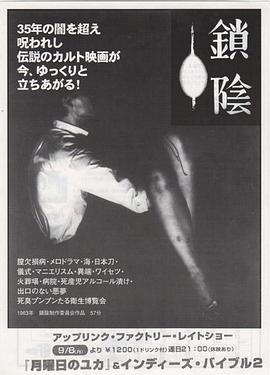
1963 (1963) [Movie] Douban IMDb TMDB
鎖陰
director:
Masao Adachi
actor:
竹田ひろし
/
木村京子
…
other title:
锁阴
/
鎖陰
…
Sa-in (Blocked Vagina) 1963. Directed by Masao Adachi with some students of Nihon University (Nihon University Film Study Club) Blocked Vagina represents the blocked situation following the demonstrations against the AMPO in 1960. There was a happening during the projection of this movie Sa-in no Go (The Ceremony of the Blocked Vagina) with fight against the police. The film was stole during that fight. Pou Pou / Pu Pu (1959) by Motoharu Jonouchi. Surrealist movie by Motoharu Jonouchi a friend of Masao Adachi from Nichidai, Nihon University.
性地带 (1968) [Movie] Douban
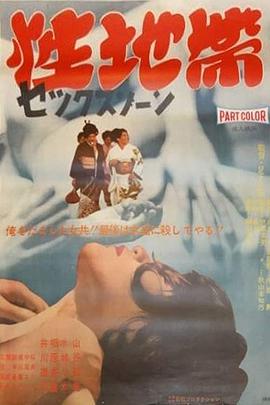
性地帯〈セックスゾーン〉
other title:
性地帯〈セックスゾーン〉
/
Sei chitai
Inspired by the true story of a Geisha murdered in a city famous for its baths, Adachi forged here his favorite style, a kind of conceptual documentary recounting the incident in monotone. The same event that at the beginning of Violated Angels escaped every principle of causality, is portrayed here as a singular anti-spectacle.
Gingakei (1967) [Movie] Douban TMDB IMDb
銀河系
director:
Masao Adachi
actor:
Akira Hanagami
/
竹邑類
…
other title:
银河系
/
銀河系
…
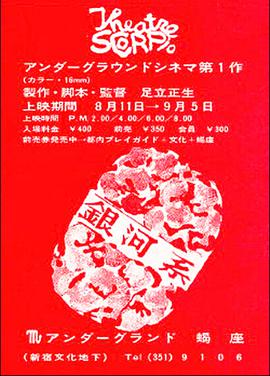
A car wreck on a beach road. While the passengers gather round the broken engine the driver, a young man meets his doppelganger on the beach. He beats and strangles him to death. A hospital. The young man walks down a flight of stairs passing a group of beautiful nurses and is hit by a crutch, thrown by his doppelganger who’d been waiting for him at the top of the staircase. Again he beats him to death with the crutch disposing of the corpse in the nearby toilet room. Leaving the toilet the young man is again confronted with his living doppelganger and collapses. A car. The young man now drives through Tokyo’s outskirts accompanied by a beautiful woman who tries to hug and kiss him. Desperately he tries to escape from her leaping through the windshield of the driving car now flying high above the highways landing on a table on the rooftop of a building trying to hide from the woman, who somehow managed to follow him through the air…
Sounds crazy? It’s the synopsis of the first 10 minutes of Adachi’s independently produced experiment in classical surrealism, a dreamlike Möbius-strip of a film, which was the formal opening film at the famous underground theatre Zasori-za located in the basement of Shinjuku Bunka, the headquaters of ATG and the Tokyo underground movements of the 60’s. The original print was sepia-tinted, hence the distorted colour of the stills.
Sounds crazy? It’s the synopsis of the first 10 minutes of Adachi’s independently produced experiment in classical surrealism, a dreamlike Möbius-strip of a film, which was the formal opening film at the famous underground theatre Zasori-za located in the basement of Shinjuku Bunka, the headquaters of ATG and the Tokyo underground movements of the 60’s. The original print was sepia-tinted, hence the distorted colour of the stills.
Abortion (1966) [Movie] Douban
other title:
堕胎
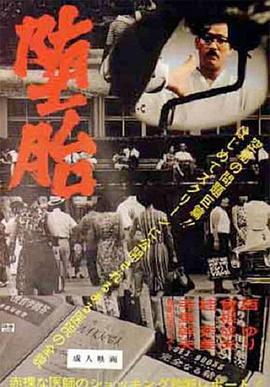
Masao Adachi's Datai (Abortion) is about a crazy gynaecologist who wants to liberate mankind from sexual problems by radically separating sex on the one hand and reproduction, which should be left to artificial wombs, on the other. For the opening scene Adachi used a birth scene from an older 16mm sex education film, either a pre-war osan eiga or a post-war basukon eiga. Datai is Adachi's first pink eiga movie.
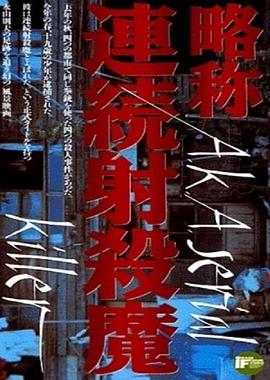
A.K.A. Serial Killer (1969) [Movie] Douban
略称・連続射殺魔
7.5 (6 ratings)
director:
足立正生
other title:
略称:连环射杀魔
/
略称・連続射殺魔
…
A horrifying series of murders, committed by a teenaged killer in 1968, prompted a group of filmmakers to chart his path, capturing the things he might have seen before committing his crimes. Their result is this provocative, rarely-screened meditation on geography and society.
In 1969, Adachi, who had already made a number of important films, led a group of people, who were all in the vanguard of filmmaking in Japan, in making a film called “AKA. Serial Killer.” The camera eye mostly shows various landscapes across Japan, following the itinerary of a young informal worker, Norio Nagayama, who ended up committing a series of shootings in these places. Then a relatively known film director made a narrative film about Nagayama’s miserable upbringing and tried to make a statement about the social inequality that was supposed to have been responsible for his crime (The film is “Naked Nineteen -Hadaka no Jyuukyuu-sai-” directed by Kaneto Shindo, 1970). Meanwhile this group decided to pursue a totally different approach, which, precisely speaking, is neither a story film nor documentary. It is an attempt to see exactly what Nagayama saw along his itinerary looking for a better job, a better place, which never existed. The resulting film shows a series of terrains that have been transformed to the effect of losing genius loci or the singularities of place and became a series of postcard-like landscapes. This was the most straightforward critique of capital’s “real subsumption,” namely, the overall commodification of the everyday, which corresponds to the critique of “spectacle” by Guy Debord (The key word used in the debate provoked by the film was fukei in Japanese, which is commonly translated as “landscape.” As opposed to that, the music critic Yuzo Sakuramoto suggested to use “spectacle.”).
足立正生 Masao Adachi
男,生于1939年5月13日,福冈
他为大岛渚和若松孝二写下了不少杰出的剧本。
当他还是大学生的时候,他来到了若松的制片公司,要求加入,若松说:欢迎,我会好好折磨你的。足立写剧本很快,两天一个。后来若松回忆起来,说当时的确对他很狠,甚至说:如果下雨,就是你的错。
1971年,足立加入日本赤军,成为领袖之一,后来转战中东,1997年2月15日被黎巴嫩警方逮捕。2000年3月18日被黎巴嫩政府送回日本,在成田机场,足立被日本警方逮捕。
In 1969, Adachi, who had already made a number of important films, led a group of people, who were all in the vanguard of filmmaking in Japan, in making a film called “AKA. Serial Killer.” The camera eye mostly shows various landscapes across Japan, following the itinerary of a young informal worker, Norio Nagayama, who ended up committing a series of shootings in these places. Then a relatively known film director made a narrative film about Nagayama’s miserable upbringing and tried to make a statement about the social inequality that was supposed to have been responsible for his crime (The film is “Naked Nineteen -Hadaka no Jyuukyuu-sai-” directed by Kaneto Shindo, 1970). Meanwhile this group decided to pursue a totally different approach, which, precisely speaking, is neither a story film nor documentary. It is an attempt to see exactly what Nagayama saw along his itinerary looking for a better job, a better place, which never existed. The resulting film shows a series of terrains that have been transformed to the effect of losing genius loci or the singularities of place and became a series of postcard-like landscapes. This was the most straightforward critique of capital’s “real subsumption,” namely, the overall commodification of the everyday, which corresponds to the critique of “spectacle” by Guy Debord (The key word used in the debate provoked by the film was fukei in Japanese, which is commonly translated as “landscape.” As opposed to that, the music critic Yuzo Sakuramoto suggested to use “spectacle.”).
足立正生 Masao Adachi
男,生于1939年5月13日,福冈
他为大岛渚和若松孝二写下了不少杰出的剧本。
当他还是大学生的时候,他来到了若松的制片公司,要求加入,若松说:欢迎,我会好好折磨你的。足立写剧本很快,两天一个。后来若松回忆起来,说当时的确对他很狠,甚至说:如果下雨,就是你的错。
1971年,足立加入日本赤军,成为领袖之一,后来转战中东,1997年2月15日被黎巴嫩警方逮捕。2000年3月18日被黎巴嫩政府送回日本,在成田机场,足立被日本警方逮捕。
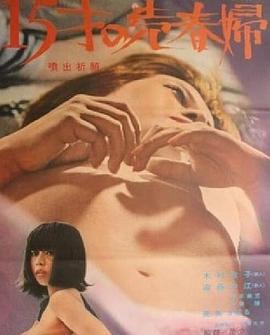
Gushing Prayer (1971) [Movie] Douban IMDb TMDB
噴出祈願 15歳の売春婦
director:
足立正生
actor:
佐々木天
/
斉藤博
other title:
滔滔不绝的祈祷者
/
噴出祈願 15歳の売春婦
…
A young prostitute tries to understand why she suffers from melancholy and benumbed feelings. Against a background of sexual liberation and political subversion, this latest libertine work by radical film director M. Adachi is one of the very few existing feminist erotic films. Masao Adachi's personality and films deserve careful consideration. Relatively unknown as yet to Western audiences, he happens to be one of the most radical film-makers around in recent years. Gushing Prayer, shows the influence of Koji Wakamatsu, another enfant terrible of Japanese cinema whom Adachi assisted on many films. Gushing Prayer does not hesitate to show the resentments and dissatisfactions of someone who ought to be nothing more than an object of fantasies. Highly pertinent, with a bold avant-garde style, he sets the record straight as far as the sexual desires of supposedly liberated Japanese women are concerned. One of the rare feminist films of the 70's, it audaciously evokes sexual liberation and political subversion.
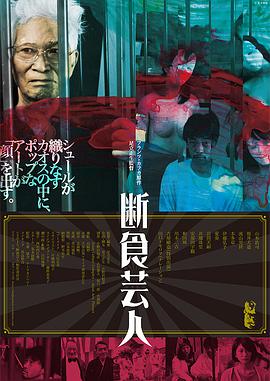
Artist of Fasting (2016) [Movie] Douban TMDB IMDb
断食芸人
other title:
饥饿艺术家
/
断食芸人
…
A wordless man stages an unexplained hunger strike and the people surrounding him exploit his silence to further their own cause...
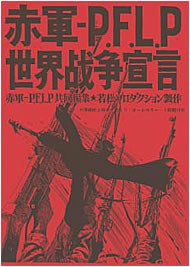
The Red Army/PFLP: Declaration of World War (1971) [Movie] Douban WikiData IMDb TMDB
赤軍-PLFP 世界戦争宣言
other title:
赤軍 PFLP 世界戦争宣言
/
赤軍-PLFP 世界戦争宣言
…
1971 film directed by Masao Adachi, Kōji Wakamatsu