Marius Petipa — 导演 (28)
睡美人 (2007) [电影] 豆瓣
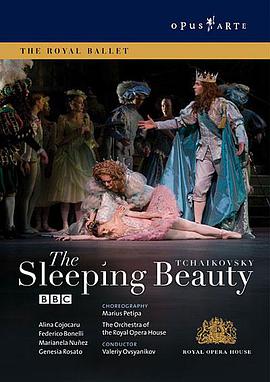
The Sleeping Beauty
导演: Ross MacGibbon / Marius Petipa 演员: Alina Cojocaru / Federico Bonelli
其它标题: The Sleeping Beauty
国王和王后迎来了他们可爱的小女儿奥罗拉公主(Alina Cojocaru 饰),为了庆祝这个崭新的小小生命的降临,城堡里举行了盛大的宴会。国王邀请了仙女和女巫们参加晚宴,哪知道仙女们迟到了,这让久候的女巫(玛丽安莉拉·努尼斯 Marianela Nuñez 饰)感到非常的生气。女巫设下了恶毒的诅咒,诅咒奥罗拉公主将在她16岁那一年被纺锤刺破手指而死。
仙女无法破解女巫的诅咒,却将诅咒换了一种形式,被纺锤刺中的公主不会死去,而是陷入永久的沉睡之中。一晃眼16年过去,虽然国王和王后一直对公主的安全严防死守,但悲剧还是发生了,沉沉睡去的奥罗拉公主进入了幻想世界中,体验到了截然不同的人生。
舞姬 [演出] Eggplant.place 豆瓣
La Bayadere
类型: 舞剧 编剧: Marius Petipa / Sergei Khudekov
其它标题: La Bayadere / 印度寺庙的舞女 / 神殿舞娘 导演: 大卫·维尔科克斯 / Galina Stepanenko 演员: Svetlana Zakharova / Alexey Loparevich / Maria Aleksandrova / Vladislav Lantratov / Andrei Sitnikov
古典芭蕾舞剧《舞姬》(La Bayadere) ,又译《印度寺庙的舞女》,改编自印度著名诗剧《沙恭达罗》,原剧的编导是有着“古典芭蕾之父”和“俄罗斯学派奠基人”美誉的马里于斯·珀蒂帕,也是著名作曲家路德维希·明库斯继舞剧《堂·吉诃德》之后的又一力作。
1877年2月4日,该剧在圣彼得堡帝国剧院(今马林斯基剧院)由俄罗斯帝国芭蕾舞团(今马林斯基剧院芭蕾舞团)首演,编剧S.库德科夫、M.珀蒂帕,作曲A.明库斯,编导佩蒂帕,布景K.伊万诺夫、P.朗班、O.阿莱格里和A.夸普,舞姬妮姬娅(Nikiya)由Y.瓦泽姆饰演,公主甘姆扎蒂(Gamzatti)由M.戈尔申科娃饰演,国王(Dugmanta)由C.约翰松饰演,武士索罗尔(Solor)由L.伊万诺夫饰演,三幕中的男子独舞由P.热德特担任。
《舞姬》是古典芭蕾最辉煌时期俄罗斯古典芭蕾的一部经典作品,它的出现比《天鹅湖》还要早,对世界芭蕾的发展起着十分深远的影响,许多芭蕾经典作品都是在其基础上而变化衍生过来的,堪称世界芭蕾的奠基作品之一。
《舞姬》也是佩蒂帕创作中期最为成功的作品之一,究其原因,可谓多方面的:不仅有简练单纯的动作、气势恢弘的音乐、七彩斑斓的服装、变幻莫测的灯光,以及由此创造出的艺术魅力——扣人心弦的悲剧、扑朔迷离的幻觉、崇高圣洁的气氛、玲珑剔透的美感,而且有辉煌铺张的舞台景观、令人心醉的异国情调、对刻骨铭心的爱情与灵魂不朽的生命之讴歌、对芭蕾的诗意品质之强调。
在编舞史上,《舞姬》可谓真正开了芭蕾舞剧交响编舞法之先河,比《天鹅湖》早了17年。熟悉《天鹅湖》二幕“天鹅湖畔”舞蹈的观众,不难在《舞姬》四幕一场《幽灵王国》中的白色大群舞中,看到熟悉的舞姿变奏、队型调度、诗情画意和透明美感。 在《舞姬》中,珀蒂帕充分显示了编排古典芭蕾双人舞、群舞的才能。他的舞蹈既保存了古典芭蕾的高度技术,又有严整、合于逻辑的发展。
“舞姬”是印度寺庙中特有的职业舞女,其职能是用美妙的舞蹈去专门侍奉诸神。这部芭蕾舞剧的文学基础来自印度著名诗剧《沙恭达罗》,并融合了西方童话故事《泥人卡尔》中的线索。剧情梗概是,倾国倾城的舞姬妮姬娅与英勇潇洒的武士索罗尔一见钟情,并深深地堕入爱河不可自拔,但悲剧则在于索罗尔随后却在不得已的情况下,同国王的千金甘姆扎蒂订了婚。出于嫉妒之心,甘姆扎蒂送给妮姬娅一篮藏有毒蛇的鲜花,使妮姬娅因遭毒蛇之咬而死于非命。索罗尔梦中来到幽灵王国,与妮姬娅相会,两人情不自禁地缠绵共舞,深情缅怀更默默追忆那朝露般短暂的爱情。在索罗尔与甘姆扎蒂的婚礼上,善定胜恶的奇迹发生了:随着山崩地裂般的巨响,寺庙倒塌了,将两位同床异梦的新婚燕儿,连同他们的不幸婚姻一道埋葬。
该剧有许多版本,其中一种版本如下:
第一场 古印度的神殿
一队武士在外狩猎,来到一座神殿饮水休憩。神殿的舞姬上前伺候。武士首领被一舞姬的美色和仪态吸引。大祭司看出领队的心仪,催他和部下离开,同时警告众舞姬不可和神殿外的人来往,她们必须对神忠心耿耿。武士返回,向等候他的舞姬表明他矢志不渝的爱情。武士和舞姬却不知,大祭司已窥见他们的爱情盟誓。
第二场 皇宫-夜晚
国王对女儿即将举行的婚礼兴高采烈,对未来的女婿赞不绝口,却不知道女儿的未婚夫最近竟然和神殿的舞姬幽会。大祭司赶到皇宫,告诉公主武士不忠之事。公主不信,让他带舞姬来宫中。公主和舞姬当面对质后,舞姬被卫士关押。
第三场 宫殿-第二天
为了庆祝女儿将要举行的婚礼,国王决定举办盛大的庆典。在庆典当中,大祭司请求释放舞姬。国王不知道这一切,询问女儿,才发现女儿真地囚禁了大祭司的舞姬。舞姬被释放,立即冲向心爱的武士怀抱,但武士并不情愿接纳她。舞姬痛苦地避开,不敢相信那晚发生的一切已不复存在的事实。公主认为根除舞姬的时机已到,她递给舞姬一个藏有毒蛇的花篮。毒蛇发现目标后,立即攻击,但在混乱当中毒蛇也咬中了公主。毒蛇迅速被杀死,国王唤人拿来解药给公主。大祭司给垂死的舞姬同样的解药,但她宁愿死。
第四和第五场 皇宫寝室
武士深深地被白天的事困扰,吸鸦片来麻痹他的精神。在昏迷中,他梦到舞姬的灵魂进入了一个幽灵王国。他进入那个王国祈求,并得到了她的原谅。在梦中他再次誓言对她的爱,但被他的朋友叫醒了,因为去神殿完婚的时辰到了。
第六场 神殿
神殿里气氛肃穆,舞姬们默默地怀念死去的朋友。一对新人和急着进行婚礼的国王一起进入神殿。仪式中,武士被他所背叛的女孩的幻影所烦扰,行为变得怪异。那个幽灵提醒他在金色神像前的誓言,他惊恐万分。国王强制婚礼进行下去,大祭司祈求金色神像完成武士和公主的婚礼,但是神灵发怒了,一阵强烈的地震摧毁了神殿和其中的一切。一个白色的温柔的幽灵悲哀地俯瞰着这最后的场景。
舞姬 俄罗斯帝国芭蕾舞团1877年首演版 [演出] 豆瓣
所属 演出: 舞姬
剧团: 俄罗斯帝国芭蕾舞团 剧院: 圣彼得堡帝国剧院 导演: Marius Petipa
其它标题: 俄罗斯帝国芭蕾舞团1877年首演版 作曲: Ludwig Minkus 演员: Y.瓦泽姆 / C.约翰松
古典芭蕾舞剧《舞姬》(La Bayadere) ,又译《印度寺庙的舞女》,改编自印度著名诗剧《沙恭达罗》,原剧的编导是有着“古典芭蕾之父”和“俄罗斯学派奠基人”美誉的马里于斯·珀蒂帕,也是著名作曲家路德维希·明库斯继舞剧《堂·吉诃德》之后的又一力作。
1877年2月4日,该剧在圣彼得堡帝国剧院(今马林斯基剧院)由俄罗斯帝国芭蕾舞团(今马林斯基剧院芭蕾舞团)首演,编剧S.库德科夫、M.珀蒂帕,作曲A.明库斯,编导佩蒂帕,布景K.伊万诺夫、P.朗班、O.阿莱格里和A.夸普,舞姬妮姬娅(Nikiya)由Y.瓦泽姆饰演,公主甘姆扎蒂(Gamzatti)由M.戈尔申科娃饰演,国王(Dugmanta)由C.约翰松饰演,武士索罗尔(Solor)由L.伊万诺夫饰演,三幕中的男子独舞由P.热德特担任。
《舞姬》是古典芭蕾最辉煌时期俄罗斯古典芭蕾的一部经典作品,它的出现比《天鹅湖》还要早,对世界芭蕾的发展起着十分深远的影响,许多芭蕾经典作品都是在其基础上而变化衍生过来的,堪称世界芭蕾的奠基作品之一。
《舞姬》也是佩蒂帕创作中期最为成功的作品之一,究其原因,可谓多方面的:不仅有简练单纯的动作、气势恢弘的音乐、七彩斑斓的服装、变幻莫测的灯光,以及由此创造出的艺术魅力——扣人心弦的悲剧、扑朔迷离的幻觉、崇高圣洁的气氛、玲珑剔透的美感,而且有辉煌铺张的舞台景观、令人心醉的异国情调、对刻骨铭心的爱情与灵魂不朽的生命之讴歌、对芭蕾的诗意品质之强调。
在编舞史上,《舞姬》可谓真正开了芭蕾舞剧交响编舞法之先河,比《天鹅湖》早了17年。熟悉《天鹅湖》二幕“天鹅湖畔”舞蹈的观众,不难在《舞姬》四幕一场《幽灵王国》中的白色大群舞中,看到熟悉的舞姿变奏、队型调度、诗情画意和透明美感。 在《舞姬》中,珀蒂帕充分显示了编排古典芭蕾双人舞、群舞的才能。他的舞蹈既保存了古典芭蕾的高度技术,又有严整、合于逻辑的发展。
“舞姬”是印度寺庙中特有的职业舞女,其职能是用美妙的舞蹈去专门侍奉诸神。这部芭蕾舞剧的文学基础来自印度著名诗剧《沙恭达罗》,并融合了西方童话故事《泥人卡尔》中的线索。剧情梗概是,倾国倾城的舞姬妮姬娅与英勇潇洒的武士索罗尔一见钟情,并深深地堕入爱河不可自拔,但悲剧则在于索罗尔随后却在不得已的情况下,同国王的千金甘姆扎蒂订了婚。出于嫉妒之心,甘姆扎蒂送给妮姬娅一篮藏有毒蛇的鲜花,使妮姬娅因遭毒蛇之咬而死于非命。索罗尔梦中来到幽灵王国,与妮姬娅相会,两人情不自禁地缠绵共舞,深情缅怀更默默追忆那朝露般短暂的爱情。在索罗尔与甘姆扎蒂的婚礼上,善定胜恶的奇迹发生了:随着山崩地裂般的巨响,寺庙倒塌了,将两位同床异梦的新婚燕儿,连同他们的不幸婚姻一道埋葬。
该剧有许多版本,其中一种版本如下:
第一场 古印度的神殿
一队武士在外狩猎,来到一座神殿饮水休憩。神殿的舞姬上前伺候。武士首领被一舞姬的美色和仪态吸引。大祭司看出领队的心仪,催他和部下离开,同时警告众舞姬不可和神殿外的人来往,她们必须对神忠心耿耿。武士返回,向等候他的舞姬表明他矢志不渝的爱情。武士和舞姬却不知,大祭司已窥见他们的爱情盟誓。
第二场 皇宫-夜晚
国王对女儿即将举行的婚礼兴高采烈,对未来的女婿赞不绝口,却不知道女儿的未婚夫最近竟然和神殿的舞姬幽会。大祭司赶到皇宫,告诉公主武士不忠之事。公主不信,让他带舞姬来宫中。公主和舞姬当面对质后,舞姬被卫士关押。
第三场 宫殿-第二天
为了庆祝女儿将要举行的婚礼,国王决定举办盛大的庆典。在庆典当中,大祭司请求释放舞姬。国王不知道这一切,询问女儿,才发现女儿真地囚禁了大祭司的舞姬。舞姬被释放,立即冲向心爱的武士怀抱,但武士并不情愿接纳她。舞姬痛苦地避开,不敢相信那晚发生的一切已不复存在的事实。公主认为根除舞姬的时机已到,她递给舞姬一个藏有毒蛇的花篮。毒蛇发现目标后,立即攻击,但在混乱当中毒蛇也咬中了公主。毒蛇迅速被杀死,国王唤人拿来解药给公主。大祭司给垂死的舞姬同样的解药,但她宁愿死。
第四和第五场 皇宫寝室
武士深深地被白天的事困扰,吸鸦片来麻痹他的精神。在昏迷中,他梦到舞姬的灵魂进入了一个幽灵王国。他进入那个王国祈求,并得到了她的原谅。在梦中他再次誓言对她的爱,但被他的朋友叫醒了,因为去神殿完婚的时辰到了。
第六场 神殿
神殿里气氛肃穆,舞姬们默默地怀念死去的朋友。一对新人和急着进行婚礼的国王一起进入神殿。仪式中,武士被他所背叛的女孩的幻影所烦扰,行为变得怪异。那个幽灵提醒他在金色神像前的誓言,他惊恐万分。国王强制婚礼进行下去,大祭司祈求金色神像完成武士和公主的婚礼,但是神灵发怒了,一阵强烈的地震摧毁了神殿和其中的一切。一个白色的温柔的幽灵悲哀地俯瞰着这最后的场景。
舞姬 马林斯基剧院芭蕾舞团2015年上海国际艺术节版 [演出] 豆瓣
所属 演出: 舞姬
剧团: 马林斯基剧院芭蕾舞团 剧院: 上海东方艺术中心 导演: Marius Petipa
其它标题: 马林斯基剧院芭蕾舞团2015年上海国际艺术节版 作曲: Ludwig Minkus 演员: Oxana Skorik / Ulyana Lopatkina
古典芭蕾舞剧《舞姬》(La Bayadere) ,又译《印度寺庙的舞女》,改编自印度著名诗剧《沙恭达罗》,原剧的编导是有着“古典芭蕾之父”和“俄罗斯学派奠基人”美誉的马里于斯·珀蒂帕,也是著名作曲家路德维希·明库斯继舞剧《堂·吉诃德》之后的又一力作。
1877年2月4日,该剧在圣彼得堡帝国剧院(今马林斯基剧院)由俄罗斯帝国芭蕾舞团(今马林斯基剧院芭蕾舞团)首演,编剧S.库德科夫、M.珀蒂帕,作曲A.明库斯,编导佩蒂帕,布景K.伊万诺夫、P.朗班、O.阿莱格里和A.夸普,舞姬妮姬娅(Nikiya)由Y.瓦泽姆饰演,公主甘姆扎蒂(Gamzatti)由M.戈尔申科娃饰演,国王(Dugmanta)由C.约翰松饰演,武士索罗尔(Solor)由L.伊万诺夫饰演,三幕中的男子独舞由P.热德特担任。
《舞姬》是古典芭蕾最辉煌时期俄罗斯古典芭蕾的一部经典作品,它的出现比《天鹅湖》还要早,对世界芭蕾的发展起着十分深远的影响,许多芭蕾经典作品都是在其基础上而变化衍生过来的,堪称世界芭蕾的奠基作品之一。
《舞姬》也是佩蒂帕创作中期最为成功的作品之一,究其原因,可谓多方面的:不仅有简练单纯的动作、气势恢弘的音乐、七彩斑斓的服装、变幻莫测的灯光,以及由此创造出的艺术魅力——扣人心弦的悲剧、扑朔迷离的幻觉、崇高圣洁的气氛、玲珑剔透的美感,而且有辉煌铺张的舞台景观、令人心醉的异国情调、对刻骨铭心的爱情与灵魂不朽的生命之讴歌、对芭蕾的诗意品质之强调。
在编舞史上,《舞姬》可谓真正开了芭蕾舞剧交响编舞法之先河,比《天鹅湖》早了17年。熟悉《天鹅湖》二幕“天鹅湖畔”舞蹈的观众,不难在《舞姬》四幕一场《幽灵王国》中的白色大群舞中,看到熟悉的舞姿变奏、队型调度、诗情画意和透明美感。 在《舞姬》中,珀蒂帕充分显示了编排古典芭蕾双人舞、群舞的才能。他的舞蹈既保存了古典芭蕾的高度技术,又有严整、合于逻辑的发展。
“舞姬”是印度寺庙中特有的职业舞女,其职能是用美妙的舞蹈去专门侍奉诸神。这部芭蕾舞剧的文学基础来自印度著名诗剧《沙恭达罗》,并融合了西方童话故事《泥人卡尔》中的线索。剧情梗概是,倾国倾城的舞姬妮姬娅与英勇潇洒的武士索罗尔一见钟情,并深深地堕入爱河不可自拔,但悲剧则在于索罗尔随后却在不得已的情况下,同国王的千金甘姆扎蒂订了婚。出于嫉妒之心,甘姆扎蒂送给妮姬娅一篮藏有毒蛇的鲜花,使妮姬娅因遭毒蛇之咬而死于非命。索罗尔梦中来到幽灵王国,与妮姬娅相会,两人情不自禁地缠绵共舞,深情缅怀更默默追忆那朝露般短暂的爱情。在索罗尔与甘姆扎蒂的婚礼上,善定胜恶的奇迹发生了:随着山崩地裂般的巨响,寺庙倒塌了,将两位同床异梦的新婚燕儿,连同他们的不幸婚姻一道埋葬。
该剧有许多版本,其中一种版本如下:
第一场 古印度的神殿
一队武士在外狩猎,来到一座神殿饮水休憩。神殿的舞姬上前伺候。武士首领被一舞姬的美色和仪态吸引。大祭司看出领队的心仪,催他和部下离开,同时警告众舞姬不可和神殿外的人来往,她们必须对神忠心耿耿。武士返回,向等候他的舞姬表明他矢志不渝的爱情。武士和舞姬却不知,大祭司已窥见他们的爱情盟誓。
第二场 皇宫-夜晚
国王对女儿即将举行的婚礼兴高采烈,对未来的女婿赞不绝口,却不知道女儿的未婚夫最近竟然和神殿的舞姬幽会。大祭司赶到皇宫,告诉公主武士不忠之事。公主不信,让他带舞姬来宫中。公主和舞姬当面对质后,舞姬被卫士关押。
第三场 宫殿-第二天
为了庆祝女儿将要举行的婚礼,国王决定举办盛大的庆典。在庆典当中,大祭司请求释放舞姬。国王不知道这一切,询问女儿,才发现女儿真地囚禁了大祭司的舞姬。舞姬被释放,立即冲向心爱的武士怀抱,但武士并不情愿接纳她。舞姬痛苦地避开,不敢相信那晚发生的一切已不复存在的事实。公主认为根除舞姬的时机已到,她递给舞姬一个藏有毒蛇的花篮。毒蛇发现目标后,立即攻击,但在混乱当中毒蛇也咬中了公主。毒蛇迅速被杀死,国王唤人拿来解药给公主。大祭司给垂死的舞姬同样的解药,但她宁愿死。
第四和第五场 皇宫寝室
武士深深地被白天的事困扰,吸鸦片来麻痹他的精神。在昏迷中,他梦到舞姬的灵魂进入了一个幽灵王国。他进入那个王国祈求,并得到了她的原谅。在梦中他再次誓言对她的爱,但被他的朋友叫醒了,因为去神殿完婚的时辰到了。
第六场 神殿
神殿里气氛肃穆,舞姬们默默地怀念死去的朋友。一对新人和急着进行婚礼的国王一起进入神殿。仪式中,武士被他所背叛的女孩的幻影所烦扰,行为变得怪异。那个幽灵提醒他在金色神像前的誓言,他惊恐万分。国王强制婚礼进行下去,大祭司祈求金色神像完成武士和公主的婚礼,但是神灵发怒了,一阵强烈的地震摧毁了神殿和其中的一切。一个白色的温柔的幽灵悲哀地俯瞰着这最后的场景。
舞姬 2017香港艺术节巴伐利亚国家芭蕾舞团版 [演出] 豆瓣
所属 演出: 舞姬
导演: Marius Petipa / Patrice Bart
其它标题: 2017香港艺术节巴伐利亚国家芭蕾舞团版 作曲: Ludwig Minkus / Michael Schmidtsdorff
古典芭蕾舞剧《舞姬》(La Bayadere) ,又译《印度寺庙的舞女》,改编自印度著名诗剧《沙恭达罗》,原剧的编导是有着“古典芭蕾之父”和“俄罗斯学派奠基人”美誉的马里于斯·珀蒂帕,也是著名作曲家路德维希·明库斯继舞剧《堂·吉诃德》之后的又一力作。
1877年2月4日,该剧在圣彼得堡帝国剧院(今马林斯基剧院)由俄罗斯帝国芭蕾舞团(今马林斯基剧院芭蕾舞团)首演,编剧S.库德科夫、M.珀蒂帕,作曲A.明库斯,编导佩蒂帕,布景K.伊万诺夫、P.朗班、O.阿莱格里和A.夸普,舞姬妮姬娅(Nikiya)由Y.瓦泽姆饰演,公主甘姆扎蒂(Gamzatti)由M.戈尔申科娃饰演,国王(Dugmanta)由C.约翰松饰演,武士索罗尔(Solor)由L.伊万诺夫饰演,三幕中的男子独舞由P.热德特担任。
《舞姬》是古典芭蕾最辉煌时期俄罗斯古典芭蕾的一部经典作品,它的出现比《天鹅湖》还要早,对世界芭蕾的发展起着十分深远的影响,许多芭蕾经典作品都是在其基础上而变化衍生过来的,堪称世界芭蕾的奠基作品之一。
《舞姬》也是佩蒂帕创作中期最为成功的作品之一,究其原因,可谓多方面的:不仅有简练单纯的动作、气势恢弘的音乐、七彩斑斓的服装、变幻莫测的灯光,以及由此创造出的艺术魅力——扣人心弦的悲剧、扑朔迷离的幻觉、崇高圣洁的气氛、玲珑剔透的美感,而且有辉煌铺张的舞台景观、令人心醉的异国情调、对刻骨铭心的爱情与灵魂不朽的生命之讴歌、对芭蕾的诗意品质之强调。
在编舞史上,《舞姬》可谓真正开了芭蕾舞剧交响编舞法之先河,比《天鹅湖》早了17年。熟悉《天鹅湖》二幕“天鹅湖畔”舞蹈的观众,不难在《舞姬》四幕一场《幽灵王国》中的白色大群舞中,看到熟悉的舞姿变奏、队型调度、诗情画意和透明美感。 在《舞姬》中,珀蒂帕充分显示了编排古典芭蕾双人舞、群舞的才能。他的舞蹈既保存了古典芭蕾的高度技术,又有严整、合于逻辑的发展。
“舞姬”是印度寺庙中特有的职业舞女,其职能是用美妙的舞蹈去专门侍奉诸神。这部芭蕾舞剧的文学基础来自印度著名诗剧《沙恭达罗》,并融合了西方童话故事《泥人卡尔》中的线索。剧情梗概是,倾国倾城的舞姬妮姬娅与英勇潇洒的武士索罗尔一见钟情,并深深地堕入爱河不可自拔,但悲剧则在于索罗尔随后却在不得已的情况下,同国王的千金甘姆扎蒂订了婚。出于嫉妒之心,甘姆扎蒂送给妮姬娅一篮藏有毒蛇的鲜花,使妮姬娅因遭毒蛇之咬而死于非命。索罗尔梦中来到幽灵王国,与妮姬娅相会,两人情不自禁地缠绵共舞,深情缅怀更默默追忆那朝露般短暂的爱情。在索罗尔与甘姆扎蒂的婚礼上,善定胜恶的奇迹发生了:随着山崩地裂般的巨响,寺庙倒塌了,将两位同床异梦的新婚燕儿,连同他们的不幸婚姻一道埋葬。
该剧有许多版本,其中一种版本如下:
第一场 古印度的神殿
一队武士在外狩猎,来到一座神殿饮水休憩。神殿的舞姬上前伺候。武士首领被一舞姬的美色和仪态吸引。大祭司看出领队的心仪,催他和部下离开,同时警告众舞姬不可和神殿外的人来往,她们必须对神忠心耿耿。武士返回,向等候他的舞姬表明他矢志不渝的爱情。武士和舞姬却不知,大祭司已窥见他们的爱情盟誓。
第二场 皇宫-夜晚
国王对女儿即将举行的婚礼兴高采烈,对未来的女婿赞不绝口,却不知道女儿的未婚夫最近竟然和神殿的舞姬幽会。大祭司赶到皇宫,告诉公主武士不忠之事。公主不信,让他带舞姬来宫中。公主和舞姬当面对质后,舞姬被卫士关押。
第三场 宫殿-第二天
为了庆祝女儿将要举行的婚礼,国王决定举办盛大的庆典。在庆典当中,大祭司请求释放舞姬。国王不知道这一切,询问女儿,才发现女儿真地囚禁了大祭司的舞姬。舞姬被释放,立即冲向心爱的武士怀抱,但武士并不情愿接纳她。舞姬痛苦地避开,不敢相信那晚发生的一切已不复存在的事实。公主认为根除舞姬的时机已到,她递给舞姬一个藏有毒蛇的花篮。毒蛇发现目标后,立即攻击,但在混乱当中毒蛇也咬中了公主。毒蛇迅速被杀死,国王唤人拿来解药给公主。大祭司给垂死的舞姬同样的解药,但她宁愿死。
第四和第五场 皇宫寝室
武士深深地被白天的事困扰,吸鸦片来麻痹他的精神。在昏迷中,他梦到舞姬的灵魂进入了一个幽灵王国。他进入那个王国祈求,并得到了她的原谅。在梦中他再次誓言对她的爱,但被他的朋友叫醒了,因为去神殿完婚的时辰到了。
第六场 神殿
神殿里气氛肃穆,舞姬们默默地怀念死去的朋友。一对新人和急着进行婚礼的国王一起进入神殿。仪式中,武士被他所背叛的女孩的幻影所烦扰,行为变得怪异。那个幽灵提醒他在金色神像前的誓言,他惊恐万分。国王强制婚礼进行下去,大祭司祈求金色神像完成武士和公主的婚礼,但是神灵发怒了,一阵强烈的地震摧毁了神殿和其中的一切。一个白色的温柔的幽灵悲哀地俯瞰着这最后的场景。
吉赛尔 1884年马林斯基剧院芭蕾舞团版 [演出] 豆瓣
所属 演出: 吉赛尔
剧团: 马林斯基剧院芭蕾舞团 导演: Marius Petipa
其它标题: 1884年马林斯基剧院芭蕾舞团版 编剧: Jules-Henri Vernoy de Saint-Georges / Théophile Gautier 作曲: Adolphe Adam 演员: Maria Gorshenkova
Act I
The ballet opens on a sunny autumnal morning in the Rhineland during the Middle Ages. The grape harvest is in progress. Duke Albrecht of Silesia, a young nobleman, has fallen in love with a shy, beautiful peasant girl, Giselle, despite being betrothed to Bathilde, the daughter of the Duke of Courland. Albrecht disguises himself as a humble villager called "Loys" in order to court the enchanting and innocent Giselle, who knows nothing of his true identity. With the help of his squire, Albrecht hides his fine attire, hunting horn, and sword before coaxing Giselle out of her house to romance her as the harvest festivities begin.
Hilarion, a local gamekeeper, is also in love with Giselle and is highly suspicious of the newcomer who has won Giselle's affections. He tries to convince the naive Giselle that her beau cannot be trusted, but she ignores his warnings. Giselle's mother, Berthe, is very protective of her daughter, as Giselle has a weak heart that leaves her in delicate health. She discourages a relationship between Giselle and Loys, thinking Hilarion would be a better match, and disapproves of Giselle's fondness for dancing, due to the strain on her heart.
A party of noblemen seeking refreshment following the rigors of the hunt arrive in the village, Albrecht's betrothed, Bathilde, among them. Albrecht hurries away, knowing he would be recognized and greeted by Bathilde, exposing him as a nobleman. The villagers welcome the party, offer them drinks, and perform several dances.[2][3] Bathilde is charmed with Giselle's sweet and demure nature, not knowing of her relationship with Albrecht. Giselle is honored when the beautiful and regal stranger offers her a necklace as a gift before the group of nobles depart.
The villagers continue the harvest festivities, and Albrecht emerges again to dance with Giselle, who is named the Harvest Queen. Hilarion interrupts the festivities. He has discovered Albrecht's finely made sword and presents it as proof that the lovesick peasant boy is really a nobleman who is promised to another woman. Using Albrecht's hunting horn, Hilarion calls back the party of noblemen. Albrecht has no time to hide and has no choice but to greet Bathilde as his betrothed. All are shocked by the revelation, but none more than Giselle, who becomes inconsolable when faced with her lover's deception. Knowing that they can never be together, Giselle flies into a mad fit of grief in which all the tender moments she shared with "Loys" flash before her eyes. She begins to dance wildly and erratically, ultimately causing her weak heart to give out. She collapses before dying in Albrecht's arms. Hilarion and Albrecht turn on each other in rage before Albrecht flees the scene in misery. The curtain closes as Berthe weeps over her daughter's body.
In the original version, taken up again recently by a production of the ROB, Giselle stabs herself with Albrecht's sword, which explains why her body is laid to rest in the forest, in unhallowed ground, where the Wilis have the power to summon her. Most modern versions are sanitized and have edited out the suicide.
Act II
Late at night, Hilarion mourns at Giselle's forest grave, but is frightened away by the arrival of the Wilis, the ghostly spirits of maidens betrayed by their lovers. Many Wili were abandoned on their wedding days, and all died of broken hearts. The Wilis, led by their merciless queen Myrtha, dance and haunt the forest at night to exact their revenge on any man they encounter, regardless of who he may be, forcing their victims to dance until they die of exhaustion.
Myrtha and the Wilis rouse Giselle's spirit from her grave and induct her into their clan before disappearing into the forest. Albrecht arrives to lay flowers on Giselle's grave and he weeps with guilt over her death. Giselle's spirit appears and Albrecht begs her forgiveness. Giselle, her love undiminished unlike her vengeful sisters, gently forgives him. She disappears to join the rest of the Wilis and Albrecht desperately follows her.
Meanwhile, the Wilis have cornered a terrified Hilarion. They use their magic to force him to dance until he is nearly dead, and then drown him in a nearby lake. Then they spy Albrecht, and turn on him, sentencing him to death as well. He pleads to Myrtha for his life, but she coldly refuses. Giselle's pleas are also dismissed and Albrecht is forced to dance until sunrise. However, the power of Giselle's love counters the Wilis' magic and spares his life. The other spirits return to their graves at daybreak, but Giselle has broken through the chains of hatred and vengeance that control the Wilis, and is thus released from their powers and will haunt the forest no longer. After bidding a tender farewell to Albrecht, Giselle returns to her grave to rest in peace.
睡美人 [演出] 豆瓣
Спящая Красавица
类型: 舞剧 编剧: Ivan Vsevolozhsky
其它标题: Спящая Красавица / The Sleeping Beauty 导演: Marius Petipa / Alexander Gorsky 演员: Carlotta Brianza / Pavel Gerdt / Marie Petipa / Enrico Cecchetti / Varvara Nikitina
Time: Baroque
Place: Europe
Prologue (The Christening)
King Florestan XXIV and his Queen have welcomed their first child, Princess Aurora, and declare a grand christening ceremony to honor her. Six fairies are invited to the ceremony to bestow gifts on the child. Each fairy brings a gift of a virtue or positive trait, such as beauty, courage, sweetness, musical talent, and mischief. The most powerful fairy, the Lilac Fairy, arrives with her entourage, but before she can bestow her gift, the evil fairy Carabosse arrives with her minions. Carabosse furiously asks the King and Queen why she had not received an invitation to the christening. The blame falls on Catalabutte, the Master of Ceremonies who was in charge of the guest list. Carabosse gleefully tears his wig off and beats him with her staff, before placing a curse upon the baby princess as revenge: Aurora will indeed grow up to be a beautiful, healthy, delightful young lady, but on her sixteenth birthday she will prick her finger on a spindle and die. The King and Queen are horrified and beg Carabosse for mercy, but she shows none. However, the Lilac Fairy intervenes. Though she does not have enough power to completely undo the curse, she alters it, allowing the spindle to cause a peaceful 100-year sleep for the princess, rather than death. At the end of those 100 years, she will be woken by the kiss of a handsome prince. Relieved that Aurora's life will ultimately be spared, the court is set at ease.
Act I (The Spell)
It is the day of Princess Aurora's sixteenth birthday. Celebrations are underway, though the King is still unsettled by Carabosse's omen. The master of ceremonies discovers several peasant ladies frolicking about with knitting needles and alerts the King, who initially sentences the women to a harsh punishment. The Queen gently persuades him to spare the innocent citizens, and he agrees. An elaborate waltz is performed and Princess Aurora arrives. She is introduced to four suitors by her doting parents. Aurora and the suitors perform the famous Rose Adagio. Presently, a cloaked stranger appears and offers a gift to the princess: a spindle. Having never seen one before, Aurora curiously examines the strange object as her parents desperately try to intervene. As predicted, she pricks her finger. While initially appearing to recover quickly, she falls into a swoon and collapses. The cloaked stranger reveals herself to be Carabosse, who believes that her curse still stands and that the princess is dead. Once again, the Lilac Fairy quells the hubbub and reminds the King and Queen that Aurora is merely asleep. The princess is carried off to bed, and the Lilac Fairy casts a spell of slumber over the entire kingdom, which will only be broken when Aurora awakens. A thick layer of thorny plants grows over the palace, hiding it from view.
Act II (The Vision)
One hundred years later, Prince Désiré is attending a hunting party. Though his companions are lighthearted, the prince is unhappy and eventually asks to be left alone. On his own in the forest, he is met by the Lilac Fairy, who has chosen him to awaken Aurora. She shows him a vision of the beautiful princess, and the prince is immediately smitten. The Lilac Fairy explains the situation, and Désiré begs to be taken to the princess. The Lilac Fairy takes him to the hidden castle. Carabosse makes one last attempt to cement her vengeful curse, but the Lilac Fairy and the prince manage to defeat her together at last. Once inside the castle, Désiré awakens Aurora with a kiss. The rest of the court wakes as well, and the King and Queen heartily approve when the prince proposes marriage and the princess accepts.
Act III (The Wedding)
The royal wedding is under way. Guests include the Jewel Fairies: Diamond, Gold, Silver and Sapphire, and of course the Lilac Fairy. Fairytale characters are in attendance, including Puss in Boots and The White Cat, Princess Florine and the Bluebird, and others. Aurora and Désiré perform a grand Pas de Deux, and the entire ensemble dances. The prince and princess are married, with the Lilac Fairy blessing the union.
睡美人 1890年首演版 [演出] 豆瓣
所属 演出: 睡美人
剧团: 帝国马林斯基剧院芭蕾舞团 剧院: 帝国马林斯基剧院 导演: Marius Petipa
其它标题: 1890年首演版 编剧: Ivan Vsevolozhsky 作曲: Pyotr Ilyich Tchaikovsky 演员: Carlotta Brianza / Pavel Gerdt
Time: Baroque
Place: Europe
Prologue (The Christening)
King Florestan XXIV and his Queen have welcomed their first child, Princess Aurora, and declare a grand christening ceremony to honor her. Six fairies are invited to the ceremony to bestow gifts on the child. Each fairy brings a gift of a virtue or positive trait, such as beauty, courage, sweetness, musical talent, and mischief. The most powerful fairy, the Lilac Fairy, arrives with her entourage, but before she can bestow her gift, the evil fairy Carabosse arrives with her minions. Carabosse furiously asks the King and Queen why she had not received an invitation to the christening. The blame falls on Catalabutte, the Master of Ceremonies who was in charge of the guest list. Carabosse gleefully tears his wig off and beats him with her staff, before placing a curse upon the baby princess as revenge: Aurora will indeed grow up to be a beautiful, healthy, delightful young lady, but on her sixteenth birthday she will prick her finger on a spindle and die. The King and Queen are horrified and beg Carabosse for mercy, but she shows none. However, the Lilac Fairy intervenes. Though she does not have enough power to completely undo the curse, she alters it, allowing the spindle to cause a peaceful 100-year sleep for the princess, rather than death. At the end of those 100 years, she will be woken by the kiss of a handsome prince. Relieved that Aurora's life will ultimately be spared, the court is set at ease.
Act I (The Spell)
It is the day of Princess Aurora's sixteenth birthday. Celebrations are underway, though the King is still unsettled by Carabosse's omen. The master of ceremonies discovers several peasant ladies frolicking about with knitting needles and alerts the King, who initially sentences the women to a harsh punishment. The Queen gently persuades him to spare the innocent citizens, and he agrees. An elaborate waltz is performed and Princess Aurora arrives. She is introduced to four suitors by her doting parents. Aurora and the suitors perform the famous Rose Adagio. Presently, a cloaked stranger appears and offers a gift to the princess: a spindle. Having never seen one before, Aurora curiously examines the strange object as her parents desperately try to intervene. As predicted, she pricks her finger. While initially appearing to recover quickly, she falls into a swoon and collapses. The cloaked stranger reveals herself to be Carabosse, who believes that her curse still stands and that the princess is dead. Once again, the Lilac Fairy quells the hubbub and reminds the King and Queen that Aurora is merely asleep. The princess is carried off to bed, and the Lilac Fairy casts a spell of slumber over the entire kingdom, which will only be broken when Aurora awakens. A thick layer of thorny plants grows over the palace, hiding it from view.
Act II (The Vision)
One hundred years later, Prince Désiré is attending a hunting party. Though his companions are lighthearted, the prince is unhappy and eventually asks to be left alone. On his own in the forest, he is met by the Lilac Fairy, who has chosen him to awaken Aurora. She shows him a vision of the beautiful princess, and the prince is immediately smitten. The Lilac Fairy explains the situation, and Désiré begs to be taken to the princess. The Lilac Fairy takes him to the hidden castle. Carabosse makes one last attempt to cement her vengeful curse, but the Lilac Fairy and the prince manage to defeat her together at last. Once inside the castle, Désiré awakens Aurora with a kiss. The rest of the court wakes as well, and the King and Queen heartily approve when the prince proposes marriage and the princess accepts.
Act III (The Wedding)
The royal wedding is under way. Guests include the Jewel Fairies: Diamond, Gold, Silver and Sapphire, and of course the Lilac Fairy. Fairytale characters are in attendance, including Puss in Boots and The White Cat, Princess Florine and the Bluebird, and others. Aurora and Désiré perform a grand Pas de Deux, and the entire ensemble dances. The prince and princess are married, with the Lilac Fairy blessing the union.
睡美人 2015年美国芭蕾舞剧团版 [演出] 豆瓣
所属 演出: 睡美人
剧团: American Ballet Theatre Orchestra 美国芭蕾舞剧团管弦乐团 ; American Ballet Theatre 美国芭蕾舞剧团 剧院: Metropolitan Opera House 大都会歌剧院 导演: Marius Petipa / Alexei Ratmansky
其它标题: 2015年美国芭蕾舞剧团版 作曲: Pyotr Ilyich Tchaikovsky 演员: Gillian Murphy / Marcelo Gomes
Time: Baroque
Place: Europe
Prologue (The Christening)
King Florestan XXIV and his Queen have welcomed their first child, Princess Aurora, and declare a grand christening ceremony to honor her. Six fairies are invited to the ceremony to bestow gifts on the child. Each fairy brings a gift of a virtue or positive trait, such as beauty, courage, sweetness, musical talent, and mischief. The most powerful fairy, the Lilac Fairy, arrives with her entourage, but before she can bestow her gift, the evil fairy Carabosse arrives with her minions. Carabosse furiously asks the King and Queen why she had not received an invitation to the christening. The blame falls on Catalabutte, the Master of Ceremonies who was in charge of the guest list. Carabosse gleefully tears his wig off and beats him with her staff, before placing a curse upon the baby princess as revenge: Aurora will indeed grow up to be a beautiful, healthy, delightful young lady, but on her sixteenth birthday she will prick her finger on a spindle and die. The King and Queen are horrified and beg Carabosse for mercy, but she shows none. However, the Lilac Fairy intervenes. Though she does not have enough power to completely undo the curse, she alters it, allowing the spindle to cause a peaceful 100-year sleep for the princess, rather than death. At the end of those 100 years, she will be woken by the kiss of a handsome prince. Relieved that Aurora's life will ultimately be spared, the court is set at ease.
Act I (The Spell)
It is the day of Princess Aurora's sixteenth birthday. Celebrations are underway, though the King is still unsettled by Carabosse's omen. The master of ceremonies discovers several peasant ladies frolicking about with knitting needles and alerts the King, who initially sentences the women to a harsh punishment. The Queen gently persuades him to spare the innocent citizens, and he agrees. An elaborate waltz is performed and Princess Aurora arrives. She is introduced to four suitors by her doting parents. Aurora and the suitors perform the famous Rose Adagio. Presently, a cloaked stranger appears and offers a gift to the princess: a spindle. Having never seen one before, Aurora curiously examines the strange object as her parents desperately try to intervene. As predicted, she pricks her finger. While initially appearing to recover quickly, she falls into a swoon and collapses. The cloaked stranger reveals herself to be Carabosse, who believes that her curse still stands and that the princess is dead. Once again, the Lilac Fairy quells the hubbub and reminds the King and Queen that Aurora is merely asleep. The princess is carried off to bed, and the Lilac Fairy casts a spell of slumber over the entire kingdom, which will only be broken when Aurora awakens. A thick layer of thorny plants grows over the palace, hiding it from view.
Act II (The Vision)
One hundred years later, Prince Désiré is attending a hunting party. Though his companions are lighthearted, the prince is unhappy and eventually asks to be left alone. On his own in the forest, he is met by the Lilac Fairy, who has chosen him to awaken Aurora. She shows him a vision of the beautiful princess, and the prince is immediately smitten. The Lilac Fairy explains the situation, and Désiré begs to be taken to the princess. The Lilac Fairy takes him to the hidden castle. Carabosse makes one last attempt to cement her vengeful curse, but the Lilac Fairy and the prince manage to defeat her together at last. Once inside the castle, Désiré awakens Aurora with a kiss. The rest of the court wakes as well, and the King and Queen heartily approve when the prince proposes marriage and the princess accepts.
Act III (The Wedding)
The royal wedding is under way. Guests include the Jewel Fairies: Diamond, Gold, Silver and Sapphire, and of course the Lilac Fairy. Fairytale characters are in attendance, including Puss in Boots and The White Cat, Princess Florine and the Bluebird, and others. Aurora and Désiré perform a grand Pas de Deux, and the entire ensemble dances. The prince and princess are married, with the Lilac Fairy blessing the union.
天鹅湖 [演出] 豆瓣
Лебединое озеро
8.9 (16 个评分) 类型: 舞剧
其它标题: Лебединое озеро / Swan Lake 导演: Vyacheslav Gordeev / Apollinari Dudko 演员: Anna Shcherbakova / Anton Geyker / Yelena Yevteyeva / John Markovsky / Valeri Panov
Swan Lake is generally presented in either four acts, four scenes (primarily outside Russia and Eastern Europe) or three acts, four scenes (primarily in Russia and Eastern Europe). The biggest difference of productions all over the world is that the ending, originally tragic, is now sometimes altered to a happy ending.
Prologue
Some productions include a prologue that shows how Odette first meets Rothbart, who turns Odette into a swan.
Act 1
A magnificent park before a palace
[Scène: Allegro giusto] Prince Siegfried is celebrating his birthday with his tutor, friends and peasants [Waltz]. The revelries are interrupted by Siegfried's mother, the Queen [Scène: Allegro moderato], who is concerned about her son's carefree lifestyle. She tells him that he must choose a bride at the royal ball the following evening (some productions include the presentation of some possible candidates). Siegfried is upset that he cannot marry for love. His friend Benno and the tutor try to lift his troubled mood. As evening falls [Sujet], Benno sees a flock of swans flying overhead and suggests they go on a hunt [Finale I]. Siegfried and his friends take their crossbows and set off in pursuit of the swans.
Act 2
A lakeside clearing in a forest by the ruins of a chapel. A moonlit night.
Siegfried has become separated from his friends. He arrives at the lakeside clearing, just as a flock of swans land [Scène. Moderato]. He aims his crossbow [Scène. Allegro moderato], but freezes when one of them transforms into a beautiful maiden, Odette [Scène. Moderato]. At first, she is terrified of Siegfried. When he promises not to harm her, she explains she and her companions are victims of a spell cast by the evil owl-like sorcerer Rothbart. By day they are turned into swans and only at night, by the side of the enchanted lake – created from the tears of Odette's mother – do they return to human form. The spell can only be broken if one who has never loved before swears to love Odette forever. Rothbart suddenly appears [Scène. Allegro vivo]. Siegfried threatens to kill him but Odette intercedes – if Rothbart dies before the spell is broken, it can never be undone.
As Rothbart disappears, the swan maidens fill the clearing [Scène: Allegro, Moderato assai quasi andante]. Siegfried breaks his crossbow, and sets about winning Odette's trust as the two fall in love. But as dawn arrives, the evil spell draws Odette and her companions back to the lake and they are turned into swans again.
Act 3
An opulent hall in the palace
Guests arrive at the palace for a costume ball. Six princesses are presented to the prince [Entrance of the Guests and Waltz], as candidates for marriage. Rothbart arrives in disguise [Scène: Allegro, Allegro giusto] with his daughter, Odile, who is transformed to look like Odette. Though the princesses try to attract the prince with their dances [Pas de six], Siegfried has eyes only for Odile. [Scène: Allegro, Tempo di valse, Allegro vivo] Odette appears (usually at the castle window) and attempts to warn Siegfried, but he does not see her. He then proclaims to the court that he will marry "Odette" (Odile) before Rothbart shows him a magical vision of Odette. Grief-stricken and realizing his mistake, Siegfried hurries back to the lake.
Act 4
By the lakeside
Odette is distraught. The swan-maidens try to comfort her. Siegfried returns to the lake and makes a passionate apology. She forgives him, but his betrayal cannot be undone. Rather than remain a swan forever, Odette chooses to die. Siegfried chooses to die with her and they leap into the lake. This breaks Rothbart's spell over the swan maidens, causing him to lose his power over them and he dies. In an apotheosis, the swan maidens watch as Siegfried and Odette ascend into the Heavens together, forever united in love.
1877 libretto synopsis
Act 1: Prince Siegfried, his friends, and a group of peasants are celebrating the Prince's coming of age. Siegfried's mother arrives to inform him that she wishes for him to marry soon so that she may make sure that he does not disgrace their family line by his marriage. She has organised a ball where Siegfried is to choose his bride from among the daughters of the nobility. After the celebration, Siegfried and his friend, Benno, spot a flock of flying swans and decide to hunt them.
Act 2: Siegfried and Benno track the swans to a lake, but they vanish. A woman wearing a crown appears and meets the two men. She tells them that her name is Odette and she was one of the swans they were hunting. She tells them her story: Odette's mother, a good fairy, had married a knight, but she died and the knight remarried. Odette's stepmother was a witch who wanted to kill her, but her grandfather saved her. Odette's grandfather had cried so much over the death of Odette's mother that he created the lake with his tears. Odette and her companions live in the lake with Odette's grandfather, and can transform themselves into swans whenever they wish. Odette's stepmother still wants to kill her, and stalks her in the form of an owl, but Odette has a crown which protects her from harm. When Odette gets married, the witch will lose the power to harm her. Siegfried falls in love with Odette but Odette fears that the witch will ruin their happiness.
Act 3: Several young noblewomen dance at Siegfried's ball, but the Prince refuses to marry any of them. Baron von Rothbart and his daughter, Odile, arrive. Siegfried thinks that Odile looks like Odette, but Benno doesn't agree. Siegfried dances with Odile as he grows more and more enamored with her, and eventually agrees to marry her. At that moment, Rothbart transforms into a demon, Odile laughs, and a white swan wearing a crown appears in the window. The Prince runs out of the castle.
Act 4: In tears, Odette tells her friends that Siegfried did not keep his vow of love. Seeing that Siegfried is coming, Odette's friends leave and urge her to go with them, but Odette wants to see Siegfried one last time. A storm begins. Siegfried enters and begs Odette for forgiveness. Odette refuses and attempts to leave. Siegfried snatches the crown from her head and throws it in the lake, saying "Willing or unwilling, you will always remain with me!" The owl flies overhead, carrying away the crown. "What have you done? I am dying!" Odette says, and falls into Siegfried's arms. The lake rises from the storm and drowns Odette and Siegfried. The storm quiets, and a group of swans appears on the lake.
Alternative endings
Many different endings exist, ranging from romantic to tragic.
In 1950, Konstantin Sergeyev staged a new Swan Lake for the Mariinsky Ballet (then the Kirov) after Petipa and Ivanov, but included some bits of Vaganova and Gorsky. Under the Soviet regime, the tragic ending was replaced with a happy one, so that in the Mariinsky and Bolshoi versions, Odette and Siegfried lived happily ever after.
In the version danced today by the Mariinsky Ballet, the ending is one of a "happily ever after" in which Siegfried fights Rothbart and tears off his wing, killing him. Odette is restored to human form and she and Siegfried are happily united. This version has often been used by Russian and Chinese ballet companies. A similar ending was used in The Swan Princess.
In the 1986 version Rudolf Nureyev choreographed for the Paris Opera Ballet, Rothbart fights with Siegfried, who is overcome and dies, leaving Rothbart to take Odette triumphantly up to the heavens.
In a version which has an ending very close to the 1895 Mariinsky revival, danced by American Ballet Theatre in 2005, Siegfried's mistaken pledge of fidelity to Odile consigns Odette to remain a swan forever. After realizing that her last moment of humanity is at hand, Odette commits suicide by throwing herself into the lake. The Prince does so as well. This act of sacrifice and love breaks Rothbart's power, and he is destroyed. In the final tableau, the lovers are seen rising together to heaven in apotheosis.
In a version danced by New York City Ballet in 2006 (with choreography by Peter Martins after Lev Ivanov, Marius Petipa, and George Balanchine), the Prince's declaration that he wishes to marry Odile constitutes a betrayal that condemns Odette to remain a swan forever. Odette is called away into swan form, and Siegfried is left alone in grief as the curtain falls.
In the 2006 version by Stanton Welch for Houston Ballet, also based upon Petipa and Ivanov, the last scene has Prince Siegfried attempting to kill Rothbart with his crossbow, missing and hitting Odette instead. Odette falls, Rothbart's spell now broken, and regains human form. The Prince embraces her as she dies, then carries her lifeless body into the lake, where he also drowns himself.
In a version danced by San Francisco Ballet in 2009, Siegfried and Odette throw themselves into the lake, as in the 1895 Mariinsky revival, and Rothbart is destroyed. Two swans, implied to be the lovers, are then seen flying past the Moon.
In a version danced by National Ballet of Canada in 2010, Odette forgives Siegfried for his betrayal and the promise of reconciliation shines momentarily before Rothbart summons forth a violent storm. Rothbart and Siegfried struggle. When the storm subsides, Odette is left alone to mourn the dead Siegfried.
In the 2012 version performed at Blackpool Grand Theatre by the Russian State Ballet of Siberia the Prince drags Rothbart into the lake and both drown. Odette is left as a swan.
In the 2015 English National Ballet version My First Swan Lake, specifically recreated for young children, the power of Siegfried and Odette's love enables the other swans to rise up and defeat Rothbart, who falls to his death. This breaks the curse, and Siegfried and Odette live happily ever after. This is like the Mariinsky Ballet's "Happily ever after" endings. In a new production in 2018, Odile helps Siegfried and Odette in the end. Rotbart, who is not the father, but Odile's brother in this production, is forgiven and he gives up his evil power. Odette and Siegfried live happily ever after and stay friends with Rotbart and Odile. This is actually the only Swan Lake production that grants a peaceful solution and a happily ever after even for the characters Odile and Rotbart.
In Hübbe and Schandorff's 2015 and 2016 Royal Danish Ballet production, Siegfried is forced by Rothbart to marry his daughter, after condemning Odette to her curse as a swan forever by mistakenly professing his love to Odile.
天鹅湖 2004年斯卡拉剧院版 [演出] 豆瓣
所属 演出: 天鹅湖
剧团: Orchestra del Teatro alla Scala 斯卡拉剧院管弦乐团 ; Corpo di ballo del Teatro alla Scala 斯卡拉剧院舞蹈团 剧院: Teatro alla Scala 斯卡拉剧院 导演: Marius Petipa / Lev Ivanov
其它标题: 2004年斯卡拉剧院版 作曲: Pyotr Ilyich Tchaikovsky 演员: Svetlana Zakharova / Roberto Bolle
Swan Lake is generally presented in either four acts, four scenes (primarily outside Russia and Eastern Europe) or three acts, four scenes (primarily in Russia and Eastern Europe). The biggest difference of productions all over the world is that the ending, originally tragic, is now sometimes altered to a happy ending.
Prologue
Some productions include a prologue that shows how Odette first meets Rothbart, who turns Odette into a swan.
Act 1
A magnificent park before a palace
[Scène: Allegro giusto] Prince Siegfried is celebrating his birthday with his tutor, friends and peasants [Waltz]. The revelries are interrupted by Siegfried's mother, the Queen [Scène: Allegro moderato], who is concerned about her son's carefree lifestyle. She tells him that he must choose a bride at the royal ball the following evening (some productions include the presentation of some possible candidates). Siegfried is upset that he cannot marry for love. His friend Benno and the tutor try to lift his troubled mood. As evening falls [Sujet], Benno sees a flock of swans flying overhead and suggests they go on a hunt [Finale I]. Siegfried and his friends take their crossbows and set off in pursuit of the swans.
Act 2
A lakeside clearing in a forest by the ruins of a chapel. A moonlit night.
Siegfried has become separated from his friends. He arrives at the lakeside clearing, just as a flock of swans land [Scène. Moderato]. He aims his crossbow [Scène. Allegro moderato], but freezes when one of them transforms into a beautiful maiden, Odette [Scène. Moderato]. At first, she is terrified of Siegfried. When he promises not to harm her, she explains she and her companions are victims of a spell cast by the evil owl-like sorcerer Rothbart. By day they are turned into swans and only at night, by the side of the enchanted lake – created from the tears of Odette's mother – do they return to human form. The spell can only be broken if one who has never loved before swears to love Odette forever. Rothbart suddenly appears [Scène. Allegro vivo]. Siegfried threatens to kill him but Odette intercedes – if Rothbart dies before the spell is broken, it can never be undone.
As Rothbart disappears, the swan maidens fill the clearing [Scène: Allegro, Moderato assai quasi andante]. Siegfried breaks his crossbow, and sets about winning Odette's trust as the two fall in love. But as dawn arrives, the evil spell draws Odette and her companions back to the lake and they are turned into swans again.
Act 3
An opulent hall in the palace
Guests arrive at the palace for a costume ball. Six princesses are presented to the prince [Entrance of the Guests and Waltz], as candidates for marriage. Rothbart arrives in disguise [Scène: Allegro, Allegro giusto] with his daughter, Odile, who is transformed to look like Odette. Though the princesses try to attract the prince with their dances [Pas de six], Siegfried has eyes only for Odile. [Scène: Allegro, Tempo di valse, Allegro vivo] Odette appears (usually at the castle window) and attempts to warn Siegfried, but he does not see her. He then proclaims to the court that he will marry "Odette" (Odile) before Rothbart shows him a magical vision of Odette. Grief-stricken and realizing his mistake, Siegfried hurries back to the lake.
Act 4
By the lakeside
Odette is distraught. The swan-maidens try to comfort her. Siegfried returns to the lake and makes a passionate apology. She forgives him, but his betrayal cannot be undone. Rather than remain a swan forever, Odette chooses to die. Siegfried chooses to die with her and they leap into the lake. This breaks Rothbart's spell over the swan maidens, causing him to lose his power over them and he dies. In an apotheosis, the swan maidens watch as Siegfried and Odette ascend into the Heavens together, forever united in love.
1877 libretto synopsis
Act 1: Prince Siegfried, his friends, and a group of peasants are celebrating the Prince's coming of age. Siegfried's mother arrives to inform him that she wishes for him to marry soon so that she may make sure that he does not disgrace their family line by his marriage. She has organised a ball where Siegfried is to choose his bride from among the daughters of the nobility. After the celebration, Siegfried and his friend, Benno, spot a flock of flying swans and decide to hunt them.
Act 2: Siegfried and Benno track the swans to a lake, but they vanish. A woman wearing a crown appears and meets the two men. She tells them that her name is Odette and she was one of the swans they were hunting. She tells them her story: Odette's mother, a good fairy, had married a knight, but she died and the knight remarried. Odette's stepmother was a witch who wanted to kill her, but her grandfather saved her. Odette's grandfather had cried so much over the death of Odette's mother that he created the lake with his tears. Odette and her companions live in the lake with Odette's grandfather, and can transform themselves into swans whenever they wish. Odette's stepmother still wants to kill her, and stalks her in the form of an owl, but Odette has a crown which protects her from harm. When Odette gets married, the witch will lose the power to harm her. Siegfried falls in love with Odette but Odette fears that the witch will ruin their happiness.
Act 3: Several young noblewomen dance at Siegfried's ball, but the Prince refuses to marry any of them. Baron von Rothbart and his daughter, Odile, arrive. Siegfried thinks that Odile looks like Odette, but Benno doesn't agree. Siegfried dances with Odile as he grows more and more enamored with her, and eventually agrees to marry her. At that moment, Rothbart transforms into a demon, Odile laughs, and a white swan wearing a crown appears in the window. The Prince runs out of the castle.
Act 4: In tears, Odette tells her friends that Siegfried did not keep his vow of love. Seeing that Siegfried is coming, Odette's friends leave and urge her to go with them, but Odette wants to see Siegfried one last time. A storm begins. Siegfried enters and begs Odette for forgiveness. Odette refuses and attempts to leave. Siegfried snatches the crown from her head and throws it in the lake, saying "Willing or unwilling, you will always remain with me!" The owl flies overhead, carrying away the crown. "What have you done? I am dying!" Odette says, and falls into Siegfried's arms. The lake rises from the storm and drowns Odette and Siegfried. The storm quiets, and a group of swans appears on the lake.
Alternative endings
Many different endings exist, ranging from romantic to tragic.
In 1950, Konstantin Sergeyev staged a new Swan Lake for the Mariinsky Ballet (then the Kirov) after Petipa and Ivanov, but included some bits of Vaganova and Gorsky. Under the Soviet regime, the tragic ending was replaced with a happy one, so that in the Mariinsky and Bolshoi versions, Odette and Siegfried lived happily ever after.
In the version danced today by the Mariinsky Ballet, the ending is one of a "happily ever after" in which Siegfried fights Rothbart and tears off his wing, killing him. Odette is restored to human form and she and Siegfried are happily united. This version has often been used by Russian and Chinese ballet companies. A similar ending was used in The Swan Princess.
In the 1986 version Rudolf Nureyev choreographed for the Paris Opera Ballet, Rothbart fights with Siegfried, who is overcome and dies, leaving Rothbart to take Odette triumphantly up to the heavens.
In a version which has an ending very close to the 1895 Mariinsky revival, danced by American Ballet Theatre in 2005, Siegfried's mistaken pledge of fidelity to Odile consigns Odette to remain a swan forever. After realizing that her last moment of humanity is at hand, Odette commits suicide by throwing herself into the lake. The Prince does so as well. This act of sacrifice and love breaks Rothbart's power, and he is destroyed. In the final tableau, the lovers are seen rising together to heaven in apotheosis.
In a version danced by New York City Ballet in 2006 (with choreography by Peter Martins after Lev Ivanov, Marius Petipa, and George Balanchine), the Prince's declaration that he wishes to marry Odile constitutes a betrayal that condemns Odette to remain a swan forever. Odette is called away into swan form, and Siegfried is left alone in grief as the curtain falls.
In the 2006 version by Stanton Welch for Houston Ballet, also based upon Petipa and Ivanov, the last scene has Prince Siegfried attempting to kill Rothbart with his crossbow, missing and hitting Odette instead. Odette falls, Rothbart's spell now broken, and regains human form. The Prince embraces her as she dies, then carries her lifeless body into the lake, where he also drowns himself.
In a version danced by San Francisco Ballet in 2009, Siegfried and Odette throw themselves into the lake, as in the 1895 Mariinsky revival, and Rothbart is destroyed. Two swans, implied to be the lovers, are then seen flying past the Moon.
In a version danced by National Ballet of Canada in 2010, Odette forgives Siegfried for his betrayal and the promise of reconciliation shines momentarily before Rothbart summons forth a violent storm. Rothbart and Siegfried struggle. When the storm subsides, Odette is left alone to mourn the dead Siegfried.
In the 2012 version performed at Blackpool Grand Theatre by the Russian State Ballet of Siberia the Prince drags Rothbart into the lake and both drown. Odette is left as a swan.
In the 2015 English National Ballet version My First Swan Lake, specifically recreated for young children, the power of Siegfried and Odette's love enables the other swans to rise up and defeat Rothbart, who falls to his death. This breaks the curse, and Siegfried and Odette live happily ever after. This is like the Mariinsky Ballet's "Happily ever after" endings. In a new production in 2018, Odile helps Siegfried and Odette in the end. Rotbart, who is not the father, but Odile's brother in this production, is forgiven and he gives up his evil power. Odette and Siegfried live happily ever after and stay friends with Rotbart and Odile. This is actually the only Swan Lake production that grants a peaceful solution and a happily ever after even for the characters Odile and Rotbart.
In Hübbe and Schandorff's 2015 and 2016 Royal Danish Ballet production, Siegfried is forced by Rothbart to marry his daughter, after condemning Odette to her curse as a swan forever by mistakenly professing his love to Odile.

天鹅湖 2013年美国芭蕾舞剧团在中国国家大剧院演出版 [演出] 豆瓣
所属 演出: 天鹅湖
剧团: American Ballet Theatre 美国芭蕾舞剧团 剧院: 中国国家大剧院 导演: Marius Petipa / Lev Ivanov
其它标题: 2013年美国芭蕾舞剧团在中国国家大剧院演出版 作曲: Pyotr Ilyich Tchaikovsky 演员: Veronika Part / Marcelo Gomes
Swan Lake is generally presented in either four acts, four scenes (primarily outside Russia and Eastern Europe) or three acts, four scenes (primarily in Russia and Eastern Europe). The biggest difference of productions all over the world is that the ending, originally tragic, is now sometimes altered to a happy ending.
Prologue
Some productions include a prologue that shows how Odette first meets Rothbart, who turns Odette into a swan.
Act 1
A magnificent park before a palace
[Scène: Allegro giusto] Prince Siegfried is celebrating his birthday with his tutor, friends and peasants [Waltz]. The revelries are interrupted by Siegfried's mother, the Queen [Scène: Allegro moderato], who is concerned about her son's carefree lifestyle. She tells him that he must choose a bride at the royal ball the following evening (some productions include the presentation of some possible candidates). Siegfried is upset that he cannot marry for love. His friend Benno and the tutor try to lift his troubled mood. As evening falls [Sujet], Benno sees a flock of swans flying overhead and suggests they go on a hunt [Finale I]. Siegfried and his friends take their crossbows and set off in pursuit of the swans.
Act 2
A lakeside clearing in a forest by the ruins of a chapel. A moonlit night.
Siegfried has become separated from his friends. He arrives at the lakeside clearing, just as a flock of swans land [Scène. Moderato]. He aims his crossbow [Scène. Allegro moderato], but freezes when one of them transforms into a beautiful maiden, Odette [Scène. Moderato]. At first, she is terrified of Siegfried. When he promises not to harm her, she explains she and her companions are victims of a spell cast by the evil owl-like sorcerer Rothbart. By day they are turned into swans and only at night, by the side of the enchanted lake – created from the tears of Odette's mother – do they return to human form. The spell can only be broken if one who has never loved before swears to love Odette forever. Rothbart suddenly appears [Scène. Allegro vivo]. Siegfried threatens to kill him but Odette intercedes – if Rothbart dies before the spell is broken, it can never be undone.
As Rothbart disappears, the swan maidens fill the clearing [Scène: Allegro, Moderato assai quasi andante]. Siegfried breaks his crossbow, and sets about winning Odette's trust as the two fall in love. But as dawn arrives, the evil spell draws Odette and her companions back to the lake and they are turned into swans again.
Act 3
An opulent hall in the palace
Guests arrive at the palace for a costume ball. Six princesses are presented to the prince [Entrance of the Guests and Waltz], as candidates for marriage. Rothbart arrives in disguise [Scène: Allegro, Allegro giusto] with his daughter, Odile, who is transformed to look like Odette. Though the princesses try to attract the prince with their dances [Pas de six], Siegfried has eyes only for Odile. [Scène: Allegro, Tempo di valse, Allegro vivo] Odette appears (usually at the castle window) and attempts to warn Siegfried, but he does not see her. He then proclaims to the court that he will marry "Odette" (Odile) before Rothbart shows him a magical vision of Odette. Grief-stricken and realizing his mistake, Siegfried hurries back to the lake.
Act 4
By the lakeside
Odette is distraught. The swan-maidens try to comfort her. Siegfried returns to the lake and makes a passionate apology. She forgives him, but his betrayal cannot be undone. Rather than remain a swan forever, Odette chooses to die. Siegfried chooses to die with her and they leap into the lake. This breaks Rothbart's spell over the swan maidens, causing him to lose his power over them and he dies. In an apotheosis, the swan maidens watch as Siegfried and Odette ascend into the Heavens together, forever united in love.
1877 libretto synopsis
Act 1: Prince Siegfried, his friends, and a group of peasants are celebrating the Prince's coming of age. Siegfried's mother arrives to inform him that she wishes for him to marry soon so that she may make sure that he does not disgrace their family line by his marriage. She has organised a ball where Siegfried is to choose his bride from among the daughters of the nobility. After the celebration, Siegfried and his friend, Benno, spot a flock of flying swans and decide to hunt them.
Act 2: Siegfried and Benno track the swans to a lake, but they vanish. A woman wearing a crown appears and meets the two men. She tells them that her name is Odette and she was one of the swans they were hunting. She tells them her story: Odette's mother, a good fairy, had married a knight, but she died and the knight remarried. Odette's stepmother was a witch who wanted to kill her, but her grandfather saved her. Odette's grandfather had cried so much over the death of Odette's mother that he created the lake with his tears. Odette and her companions live in the lake with Odette's grandfather, and can transform themselves into swans whenever they wish. Odette's stepmother still wants to kill her, and stalks her in the form of an owl, but Odette has a crown which protects her from harm. When Odette gets married, the witch will lose the power to harm her. Siegfried falls in love with Odette but Odette fears that the witch will ruin their happiness.
Act 3: Several young noblewomen dance at Siegfried's ball, but the Prince refuses to marry any of them. Baron von Rothbart and his daughter, Odile, arrive. Siegfried thinks that Odile looks like Odette, but Benno doesn't agree. Siegfried dances with Odile as he grows more and more enamored with her, and eventually agrees to marry her. At that moment, Rothbart transforms into a demon, Odile laughs, and a white swan wearing a crown appears in the window. The Prince runs out of the castle.
Act 4: In tears, Odette tells her friends that Siegfried did not keep his vow of love. Seeing that Siegfried is coming, Odette's friends leave and urge her to go with them, but Odette wants to see Siegfried one last time. A storm begins. Siegfried enters and begs Odette for forgiveness. Odette refuses and attempts to leave. Siegfried snatches the crown from her head and throws it in the lake, saying "Willing or unwilling, you will always remain with me!" The owl flies overhead, carrying away the crown. "What have you done? I am dying!" Odette says, and falls into Siegfried's arms. The lake rises from the storm and drowns Odette and Siegfried. The storm quiets, and a group of swans appears on the lake.
Alternative endings
Many different endings exist, ranging from romantic to tragic.
In 1950, Konstantin Sergeyev staged a new Swan Lake for the Mariinsky Ballet (then the Kirov) after Petipa and Ivanov, but included some bits of Vaganova and Gorsky. Under the Soviet regime, the tragic ending was replaced with a happy one, so that in the Mariinsky and Bolshoi versions, Odette and Siegfried lived happily ever after.
In the version danced today by the Mariinsky Ballet, the ending is one of a "happily ever after" in which Siegfried fights Rothbart and tears off his wing, killing him. Odette is restored to human form and she and Siegfried are happily united. This version has often been used by Russian and Chinese ballet companies. A similar ending was used in The Swan Princess.
In the 1986 version Rudolf Nureyev choreographed for the Paris Opera Ballet, Rothbart fights with Siegfried, who is overcome and dies, leaving Rothbart to take Odette triumphantly up to the heavens.
In a version which has an ending very close to the 1895 Mariinsky revival, danced by American Ballet Theatre in 2005, Siegfried's mistaken pledge of fidelity to Odile consigns Odette to remain a swan forever. After realizing that her last moment of humanity is at hand, Odette commits suicide by throwing herself into the lake. The Prince does so as well. This act of sacrifice and love breaks Rothbart's power, and he is destroyed. In the final tableau, the lovers are seen rising together to heaven in apotheosis.
In a version danced by New York City Ballet in 2006 (with choreography by Peter Martins after Lev Ivanov, Marius Petipa, and George Balanchine), the Prince's declaration that he wishes to marry Odile constitutes a betrayal that condemns Odette to remain a swan forever. Odette is called away into swan form, and Siegfried is left alone in grief as the curtain falls.
In the 2006 version by Stanton Welch for Houston Ballet, also based upon Petipa and Ivanov, the last scene has Prince Siegfried attempting to kill Rothbart with his crossbow, missing and hitting Odette instead. Odette falls, Rothbart's spell now broken, and regains human form. The Prince embraces her as she dies, then carries her lifeless body into the lake, where he also drowns himself.
In a version danced by San Francisco Ballet in 2009, Siegfried and Odette throw themselves into the lake, as in the 1895 Mariinsky revival, and Rothbart is destroyed. Two swans, implied to be the lovers, are then seen flying past the Moon.
In a version danced by National Ballet of Canada in 2010, Odette forgives Siegfried for his betrayal and the promise of reconciliation shines momentarily before Rothbart summons forth a violent storm. Rothbart and Siegfried struggle. When the storm subsides, Odette is left alone to mourn the dead Siegfried.
In the 2012 version performed at Blackpool Grand Theatre by the Russian State Ballet of Siberia the Prince drags Rothbart into the lake and both drown. Odette is left as a swan.
In the 2015 English National Ballet version My First Swan Lake, specifically recreated for young children, the power of Siegfried and Odette's love enables the other swans to rise up and defeat Rothbart, who falls to his death. This breaks the curse, and Siegfried and Odette live happily ever after. This is like the Mariinsky Ballet's "Happily ever after" endings. In a new production in 2018, Odile helps Siegfried and Odette in the end. Rotbart, who is not the father, but Odile's brother in this production, is forgiven and he gives up his evil power. Odette and Siegfried live happily ever after and stay friends with Rotbart and Odile. This is actually the only Swan Lake production that grants a peaceful solution and a happily ever after even for the characters Odile and Rotbart.
In Hübbe and Schandorff's 2015 and 2016 Royal Danish Ballet production, Siegfried is forced by Rothbart to marry his daughter, after condemning Odette to her curse as a swan forever by mistakenly professing his love to Odile.

天鹅湖 1958年北京舞蹈学校版 [演出] 豆瓣
所属 演出: 天鹅湖
剧团: 北京舞蹈学校 剧院: 天桥剧场 导演: Marius Petipa / Lev Ivanov
其它标题: 1958年北京舞蹈学校版 作曲: Pyotr Ilyich Tchaikovsky 演员: 白淑湘 / 刘庆棠
Swan Lake is generally presented in either four acts, four scenes (primarily outside Russia and Eastern Europe) or three acts, four scenes (primarily in Russia and Eastern Europe). The biggest difference of productions all over the world is that the ending, originally tragic, is now sometimes altered to a happy ending.
Prologue
Some productions include a prologue that shows how Odette first meets Rothbart, who turns Odette into a swan.
Act 1
A magnificent park before a palace
[Scène: Allegro giusto] Prince Siegfried is celebrating his birthday with his tutor, friends and peasants [Waltz]. The revelries are interrupted by Siegfried's mother, the Queen [Scène: Allegro moderato], who is concerned about her son's carefree lifestyle. She tells him that he must choose a bride at the royal ball the following evening (some productions include the presentation of some possible candidates). Siegfried is upset that he cannot marry for love. His friend Benno and the tutor try to lift his troubled mood. As evening falls [Sujet], Benno sees a flock of swans flying overhead and suggests they go on a hunt [Finale I]. Siegfried and his friends take their crossbows and set off in pursuit of the swans.
Act 2
A lakeside clearing in a forest by the ruins of a chapel. A moonlit night.
Siegfried has become separated from his friends. He arrives at the lakeside clearing, just as a flock of swans land [Scène. Moderato]. He aims his crossbow [Scène. Allegro moderato], but freezes when one of them transforms into a beautiful maiden, Odette [Scène. Moderato]. At first, she is terrified of Siegfried. When he promises not to harm her, she explains she and her companions are victims of a spell cast by the evil owl-like sorcerer Rothbart. By day they are turned into swans and only at night, by the side of the enchanted lake – created from the tears of Odette's mother – do they return to human form. The spell can only be broken if one who has never loved before swears to love Odette forever. Rothbart suddenly appears [Scène. Allegro vivo]. Siegfried threatens to kill him but Odette intercedes – if Rothbart dies before the spell is broken, it can never be undone.
As Rothbart disappears, the swan maidens fill the clearing [Scène: Allegro, Moderato assai quasi andante]. Siegfried breaks his crossbow, and sets about winning Odette's trust as the two fall in love. But as dawn arrives, the evil spell draws Odette and her companions back to the lake and they are turned into swans again.
Act 3
An opulent hall in the palace
Guests arrive at the palace for a costume ball. Six princesses are presented to the prince [Entrance of the Guests and Waltz], as candidates for marriage. Rothbart arrives in disguise [Scène: Allegro, Allegro giusto] with his daughter, Odile, who is transformed to look like Odette. Though the princesses try to attract the prince with their dances [Pas de six], Siegfried has eyes only for Odile. [Scène: Allegro, Tempo di valse, Allegro vivo] Odette appears (usually at the castle window) and attempts to warn Siegfried, but he does not see her. He then proclaims to the court that he will marry "Odette" (Odile) before Rothbart shows him a magical vision of Odette. Grief-stricken and realizing his mistake, Siegfried hurries back to the lake.
Act 4
By the lakeside
Odette is distraught. The swan-maidens try to comfort her. Siegfried returns to the lake and makes a passionate apology. She forgives him, but his betrayal cannot be undone. Rather than remain a swan forever, Odette chooses to die. Siegfried chooses to die with her and they leap into the lake. This breaks Rothbart's spell over the swan maidens, causing him to lose his power over them and he dies. In an apotheosis, the swan maidens watch as Siegfried and Odette ascend into the Heavens together, forever united in love.
1877 libretto synopsis
Act 1: Prince Siegfried, his friends, and a group of peasants are celebrating the Prince's coming of age. Siegfried's mother arrives to inform him that she wishes for him to marry soon so that she may make sure that he does not disgrace their family line by his marriage. She has organised a ball where Siegfried is to choose his bride from among the daughters of the nobility. After the celebration, Siegfried and his friend, Benno, spot a flock of flying swans and decide to hunt them.
Act 2: Siegfried and Benno track the swans to a lake, but they vanish. A woman wearing a crown appears and meets the two men. She tells them that her name is Odette and she was one of the swans they were hunting. She tells them her story: Odette's mother, a good fairy, had married a knight, but she died and the knight remarried. Odette's stepmother was a witch who wanted to kill her, but her grandfather saved her. Odette's grandfather had cried so much over the death of Odette's mother that he created the lake with his tears. Odette and her companions live in the lake with Odette's grandfather, and can transform themselves into swans whenever they wish. Odette's stepmother still wants to kill her, and stalks her in the form of an owl, but Odette has a crown which protects her from harm. When Odette gets married, the witch will lose the power to harm her. Siegfried falls in love with Odette but Odette fears that the witch will ruin their happiness.
Act 3: Several young noblewomen dance at Siegfried's ball, but the Prince refuses to marry any of them. Baron von Rothbart and his daughter, Odile, arrive. Siegfried thinks that Odile looks like Odette, but Benno doesn't agree. Siegfried dances with Odile as he grows more and more enamored with her, and eventually agrees to marry her. At that moment, Rothbart transforms into a demon, Odile laughs, and a white swan wearing a crown appears in the window. The Prince runs out of the castle.
Act 4: In tears, Odette tells her friends that Siegfried did not keep his vow of love. Seeing that Siegfried is coming, Odette's friends leave and urge her to go with them, but Odette wants to see Siegfried one last time. A storm begins. Siegfried enters and begs Odette for forgiveness. Odette refuses and attempts to leave. Siegfried snatches the crown from her head and throws it in the lake, saying "Willing or unwilling, you will always remain with me!" The owl flies overhead, carrying away the crown. "What have you done? I am dying!" Odette says, and falls into Siegfried's arms. The lake rises from the storm and drowns Odette and Siegfried. The storm quiets, and a group of swans appears on the lake.
Alternative endings
Many different endings exist, ranging from romantic to tragic.
In 1950, Konstantin Sergeyev staged a new Swan Lake for the Mariinsky Ballet (then the Kirov) after Petipa and Ivanov, but included some bits of Vaganova and Gorsky. Under the Soviet regime, the tragic ending was replaced with a happy one, so that in the Mariinsky and Bolshoi versions, Odette and Siegfried lived happily ever after.
In the version danced today by the Mariinsky Ballet, the ending is one of a "happily ever after" in which Siegfried fights Rothbart and tears off his wing, killing him. Odette is restored to human form and she and Siegfried are happily united. This version has often been used by Russian and Chinese ballet companies. A similar ending was used in The Swan Princess.
In the 1986 version Rudolf Nureyev choreographed for the Paris Opera Ballet, Rothbart fights with Siegfried, who is overcome and dies, leaving Rothbart to take Odette triumphantly up to the heavens.
In a version which has an ending very close to the 1895 Mariinsky revival, danced by American Ballet Theatre in 2005, Siegfried's mistaken pledge of fidelity to Odile consigns Odette to remain a swan forever. After realizing that her last moment of humanity is at hand, Odette commits suicide by throwing herself into the lake. The Prince does so as well. This act of sacrifice and love breaks Rothbart's power, and he is destroyed. In the final tableau, the lovers are seen rising together to heaven in apotheosis.
In a version danced by New York City Ballet in 2006 (with choreography by Peter Martins after Lev Ivanov, Marius Petipa, and George Balanchine), the Prince's declaration that he wishes to marry Odile constitutes a betrayal that condemns Odette to remain a swan forever. Odette is called away into swan form, and Siegfried is left alone in grief as the curtain falls.
In the 2006 version by Stanton Welch for Houston Ballet, also based upon Petipa and Ivanov, the last scene has Prince Siegfried attempting to kill Rothbart with his crossbow, missing and hitting Odette instead. Odette falls, Rothbart's spell now broken, and regains human form. The Prince embraces her as she dies, then carries her lifeless body into the lake, where he also drowns himself.
In a version danced by San Francisco Ballet in 2009, Siegfried and Odette throw themselves into the lake, as in the 1895 Mariinsky revival, and Rothbart is destroyed. Two swans, implied to be the lovers, are then seen flying past the Moon.
In a version danced by National Ballet of Canada in 2010, Odette forgives Siegfried for his betrayal and the promise of reconciliation shines momentarily before Rothbart summons forth a violent storm. Rothbart and Siegfried struggle. When the storm subsides, Odette is left alone to mourn the dead Siegfried.
In the 2012 version performed at Blackpool Grand Theatre by the Russian State Ballet of Siberia the Prince drags Rothbart into the lake and both drown. Odette is left as a swan.
In the 2015 English National Ballet version My First Swan Lake, specifically recreated for young children, the power of Siegfried and Odette's love enables the other swans to rise up and defeat Rothbart, who falls to his death. This breaks the curse, and Siegfried and Odette live happily ever after. This is like the Mariinsky Ballet's "Happily ever after" endings. In a new production in 2018, Odile helps Siegfried and Odette in the end. Rotbart, who is not the father, but Odile's brother in this production, is forgiven and he gives up his evil power. Odette and Siegfried live happily ever after and stay friends with Rotbart and Odile. This is actually the only Swan Lake production that grants a peaceful solution and a happily ever after even for the characters Odile and Rotbart.
In Hübbe and Schandorff's 2015 and 2016 Royal Danish Ballet production, Siegfried is forced by Rothbart to marry his daughter, after condemning Odette to her curse as a swan forever by mistakenly professing his love to Odile.

天鹅湖 英格兰国家芭蕾舞团版 [演出] 豆瓣
所属 演出: 天鹅湖
剧团: English National Ballet 英格兰国家芭蕾舞团 剧院: London Coliseum 伦敦大剧场 导演: Marius Petipa / Lev Ivanov
其它标题: 英格兰国家芭蕾舞团版 作曲: Pyotr Ilyich Tchaikovsky 演员: Erina Takahashi / Yonah Acosta
Swan Lake is generally presented in either four acts, four scenes (primarily outside Russia and Eastern Europe) or three acts, four scenes (primarily in Russia and Eastern Europe). The biggest difference of productions all over the world is that the ending, originally tragic, is now sometimes altered to a happy ending.
Prologue
Some productions include a prologue that shows how Odette first meets Rothbart, who turns Odette into a swan.
Act 1
A magnificent park before a palace
[Scène: Allegro giusto] Prince Siegfried is celebrating his birthday with his tutor, friends and peasants [Waltz]. The revelries are interrupted by Siegfried's mother, the Queen [Scène: Allegro moderato], who is concerned about her son's carefree lifestyle. She tells him that he must choose a bride at the royal ball the following evening (some productions include the presentation of some possible candidates). Siegfried is upset that he cannot marry for love. His friend Benno and the tutor try to lift his troubled mood. As evening falls [Sujet], Benno sees a flock of swans flying overhead and suggests they go on a hunt [Finale I]. Siegfried and his friends take their crossbows and set off in pursuit of the swans.
Act 2
A lakeside clearing in a forest by the ruins of a chapel. A moonlit night.
Siegfried has become separated from his friends. He arrives at the lakeside clearing, just as a flock of swans land [Scène. Moderato]. He aims his crossbow [Scène. Allegro moderato], but freezes when one of them transforms into a beautiful maiden, Odette [Scène. Moderato]. At first, she is terrified of Siegfried. When he promises not to harm her, she explains she and her companions are victims of a spell cast by the evil owl-like sorcerer Rothbart. By day they are turned into swans and only at night, by the side of the enchanted lake – created from the tears of Odette's mother – do they return to human form. The spell can only be broken if one who has never loved before swears to love Odette forever. Rothbart suddenly appears [Scène. Allegro vivo]. Siegfried threatens to kill him but Odette intercedes – if Rothbart dies before the spell is broken, it can never be undone.
As Rothbart disappears, the swan maidens fill the clearing [Scène: Allegro, Moderato assai quasi andante]. Siegfried breaks his crossbow, and sets about winning Odette's trust as the two fall in love. But as dawn arrives, the evil spell draws Odette and her companions back to the lake and they are turned into swans again.
Act 3
An opulent hall in the palace
Guests arrive at the palace for a costume ball. Six princesses are presented to the prince [Entrance of the Guests and Waltz], as candidates for marriage. Rothbart arrives in disguise [Scène: Allegro, Allegro giusto] with his daughter, Odile, who is transformed to look like Odette. Though the princesses try to attract the prince with their dances [Pas de six], Siegfried has eyes only for Odile. [Scène: Allegro, Tempo di valse, Allegro vivo] Odette appears (usually at the castle window) and attempts to warn Siegfried, but he does not see her. He then proclaims to the court that he will marry "Odette" (Odile) before Rothbart shows him a magical vision of Odette. Grief-stricken and realizing his mistake, Siegfried hurries back to the lake.
Act 4
By the lakeside
Odette is distraught. The swan-maidens try to comfort her. Siegfried returns to the lake and makes a passionate apology. She forgives him, but his betrayal cannot be undone. Rather than remain a swan forever, Odette chooses to die. Siegfried chooses to die with her and they leap into the lake. This breaks Rothbart's spell over the swan maidens, causing him to lose his power over them and he dies. In an apotheosis, the swan maidens watch as Siegfried and Odette ascend into the Heavens together, forever united in love.
1877 libretto synopsis
Act 1: Prince Siegfried, his friends, and a group of peasants are celebrating the Prince's coming of age. Siegfried's mother arrives to inform him that she wishes for him to marry soon so that she may make sure that he does not disgrace their family line by his marriage. She has organised a ball where Siegfried is to choose his bride from among the daughters of the nobility. After the celebration, Siegfried and his friend, Benno, spot a flock of flying swans and decide to hunt them.
Act 2: Siegfried and Benno track the swans to a lake, but they vanish. A woman wearing a crown appears and meets the two men. She tells them that her name is Odette and she was one of the swans they were hunting. She tells them her story: Odette's mother, a good fairy, had married a knight, but she died and the knight remarried. Odette's stepmother was a witch who wanted to kill her, but her grandfather saved her. Odette's grandfather had cried so much over the death of Odette's mother that he created the lake with his tears. Odette and her companions live in the lake with Odette's grandfather, and can transform themselves into swans whenever they wish. Odette's stepmother still wants to kill her, and stalks her in the form of an owl, but Odette has a crown which protects her from harm. When Odette gets married, the witch will lose the power to harm her. Siegfried falls in love with Odette but Odette fears that the witch will ruin their happiness.
Act 3: Several young noblewomen dance at Siegfried's ball, but the Prince refuses to marry any of them. Baron von Rothbart and his daughter, Odile, arrive. Siegfried thinks that Odile looks like Odette, but Benno doesn't agree. Siegfried dances with Odile as he grows more and more enamored with her, and eventually agrees to marry her. At that moment, Rothbart transforms into a demon, Odile laughs, and a white swan wearing a crown appears in the window. The Prince runs out of the castle.
Act 4: In tears, Odette tells her friends that Siegfried did not keep his vow of love. Seeing that Siegfried is coming, Odette's friends leave and urge her to go with them, but Odette wants to see Siegfried one last time. A storm begins. Siegfried enters and begs Odette for forgiveness. Odette refuses and attempts to leave. Siegfried snatches the crown from her head and throws it in the lake, saying "Willing or unwilling, you will always remain with me!" The owl flies overhead, carrying away the crown. "What have you done? I am dying!" Odette says, and falls into Siegfried's arms. The lake rises from the storm and drowns Odette and Siegfried. The storm quiets, and a group of swans appears on the lake.
Alternative endings
Many different endings exist, ranging from romantic to tragic.
In 1950, Konstantin Sergeyev staged a new Swan Lake for the Mariinsky Ballet (then the Kirov) after Petipa and Ivanov, but included some bits of Vaganova and Gorsky. Under the Soviet regime, the tragic ending was replaced with a happy one, so that in the Mariinsky and Bolshoi versions, Odette and Siegfried lived happily ever after.
In the version danced today by the Mariinsky Ballet, the ending is one of a "happily ever after" in which Siegfried fights Rothbart and tears off his wing, killing him. Odette is restored to human form and she and Siegfried are happily united. This version has often been used by Russian and Chinese ballet companies. A similar ending was used in The Swan Princess.
In the 1986 version Rudolf Nureyev choreographed for the Paris Opera Ballet, Rothbart fights with Siegfried, who is overcome and dies, leaving Rothbart to take Odette triumphantly up to the heavens.
In a version which has an ending very close to the 1895 Mariinsky revival, danced by American Ballet Theatre in 2005, Siegfried's mistaken pledge of fidelity to Odile consigns Odette to remain a swan forever. After realizing that her last moment of humanity is at hand, Odette commits suicide by throwing herself into the lake. The Prince does so as well. This act of sacrifice and love breaks Rothbart's power, and he is destroyed. In the final tableau, the lovers are seen rising together to heaven in apotheosis.
In a version danced by New York City Ballet in 2006 (with choreography by Peter Martins after Lev Ivanov, Marius Petipa, and George Balanchine), the Prince's declaration that he wishes to marry Odile constitutes a betrayal that condemns Odette to remain a swan forever. Odette is called away into swan form, and Siegfried is left alone in grief as the curtain falls.
In the 2006 version by Stanton Welch for Houston Ballet, also based upon Petipa and Ivanov, the last scene has Prince Siegfried attempting to kill Rothbart with his crossbow, missing and hitting Odette instead. Odette falls, Rothbart's spell now broken, and regains human form. The Prince embraces her as she dies, then carries her lifeless body into the lake, where he also drowns himself.
In a version danced by San Francisco Ballet in 2009, Siegfried and Odette throw themselves into the lake, as in the 1895 Mariinsky revival, and Rothbart is destroyed. Two swans, implied to be the lovers, are then seen flying past the Moon.
In a version danced by National Ballet of Canada in 2010, Odette forgives Siegfried for his betrayal and the promise of reconciliation shines momentarily before Rothbart summons forth a violent storm. Rothbart and Siegfried struggle. When the storm subsides, Odette is left alone to mourn the dead Siegfried.
In the 2012 version performed at Blackpool Grand Theatre by the Russian State Ballet of Siberia the Prince drags Rothbart into the lake and both drown. Odette is left as a swan.
In the 2015 English National Ballet version My First Swan Lake, specifically recreated for young children, the power of Siegfried and Odette's love enables the other swans to rise up and defeat Rothbart, who falls to his death. This breaks the curse, and Siegfried and Odette live happily ever after. This is like the Mariinsky Ballet's "Happily ever after" endings. In a new production in 2018, Odile helps Siegfried and Odette in the end. Rotbart, who is not the father, but Odile's brother in this production, is forgiven and he gives up his evil power. Odette and Siegfried live happily ever after and stay friends with Rotbart and Odile. This is actually the only Swan Lake production that grants a peaceful solution and a happily ever after even for the characters Odile and Rotbart.
In Hübbe and Schandorff's 2015 and 2016 Royal Danish Ballet production, Siegfried is forced by Rothbart to marry his daughter, after condemning Odette to her curse as a swan forever by mistakenly professing his love to Odile.
天鹅湖 1895年帝国马林斯基剧院版 [演出] 豆瓣
所属 演出: 天鹅湖
剧团: 帝国马林斯基剧院芭蕾舞团 剧院: 帝国马林斯基剧院 导演: Marius Petipa / Lev Ivanov
其它标题: 1895年帝国马林斯基剧院版 作曲: Peter Ilyich Tchaikovsky 演员: Pierina Legnani / Pavel Gerdt
Swan Lake is generally presented in either four acts, four scenes (primarily outside Russia and Eastern Europe) or three acts, four scenes (primarily in Russia and Eastern Europe). The biggest difference of productions all over the world is that the ending, originally tragic, is now sometimes altered to a happy ending.
Prologue
Some productions include a prologue that shows how Odette first meets Rothbart, who turns Odette into a swan.
Act 1
A magnificent park before a palace
[Scène: Allegro giusto] Prince Siegfried is celebrating his birthday with his tutor, friends and peasants [Waltz]. The revelries are interrupted by Siegfried's mother, the Queen [Scène: Allegro moderato], who is concerned about her son's carefree lifestyle. She tells him that he must choose a bride at the royal ball the following evening (some productions include the presentation of some possible candidates). Siegfried is upset that he cannot marry for love. His friend Benno and the tutor try to lift his troubled mood. As evening falls [Sujet], Benno sees a flock of swans flying overhead and suggests they go on a hunt [Finale I]. Siegfried and his friends take their crossbows and set off in pursuit of the swans.
Act 2
A lakeside clearing in a forest by the ruins of a chapel. A moonlit night.
Siegfried has become separated from his friends. He arrives at the lakeside clearing, just as a flock of swans land [Scène. Moderato]. He aims his crossbow [Scène. Allegro moderato], but freezes when one of them transforms into a beautiful maiden, Odette [Scène. Moderato]. At first, she is terrified of Siegfried. When he promises not to harm her, she explains she and her companions are victims of a spell cast by the evil owl-like sorcerer Rothbart. By day they are turned into swans and only at night, by the side of the enchanted lake – created from the tears of Odette's mother – do they return to human form. The spell can only be broken if one who has never loved before swears to love Odette forever. Rothbart suddenly appears [Scène. Allegro vivo]. Siegfried threatens to kill him but Odette intercedes – if Rothbart dies before the spell is broken, it can never be undone.
As Rothbart disappears, the swan maidens fill the clearing [Scène: Allegro, Moderato assai quasi andante]. Siegfried breaks his crossbow, and sets about winning Odette's trust as the two fall in love. But as dawn arrives, the evil spell draws Odette and her companions back to the lake and they are turned into swans again.
Act 3
An opulent hall in the palace
Guests arrive at the palace for a costume ball. Six princesses are presented to the prince [Entrance of the Guests and Waltz], as candidates for marriage. Rothbart arrives in disguise [Scène: Allegro, Allegro giusto] with his daughter, Odile, who is transformed to look like Odette. Though the princesses try to attract the prince with their dances [Pas de six], Siegfried has eyes only for Odile. [Scène: Allegro, Tempo di valse, Allegro vivo] Odette appears (usually at the castle window) and attempts to warn Siegfried, but he does not see her. He then proclaims to the court that he will marry "Odette" (Odile) before Rothbart shows him a magical vision of Odette. Grief-stricken and realizing his mistake, Siegfried hurries back to the lake.
Act 4
By the lakeside
Odette is distraught. The swan-maidens try to comfort her. Siegfried returns to the lake and makes a passionate apology. She forgives him, but his betrayal cannot be undone. Rather than remain a swan forever, Odette chooses to die. Siegfried chooses to die with her and they leap into the lake. This breaks Rothbart's spell over the swan maidens, causing him to lose his power over them and he dies. In an apotheosis, the swan maidens watch as Siegfried and Odette ascend into the Heavens together, forever united in love.
1877 libretto synopsis
Act 1: Prince Siegfried, his friends, and a group of peasants are celebrating the Prince's coming of age. Siegfried's mother arrives to inform him that she wishes for him to marry soon so that she may make sure that he does not disgrace their family line by his marriage. She has organised a ball where Siegfried is to choose his bride from among the daughters of the nobility. After the celebration, Siegfried and his friend, Benno, spot a flock of flying swans and decide to hunt them.
Act 2: Siegfried and Benno track the swans to a lake, but they vanish. A woman wearing a crown appears and meets the two men. She tells them that her name is Odette and she was one of the swans they were hunting. She tells them her story: Odette's mother, a good fairy, had married a knight, but she died and the knight remarried. Odette's stepmother was a witch who wanted to kill her, but her grandfather saved her. Odette's grandfather had cried so much over the death of Odette's mother that he created the lake with his tears. Odette and her companions live in the lake with Odette's grandfather, and can transform themselves into swans whenever they wish. Odette's stepmother still wants to kill her, and stalks her in the form of an owl, but Odette has a crown which protects her from harm. When Odette gets married, the witch will lose the power to harm her. Siegfried falls in love with Odette but Odette fears that the witch will ruin their happiness.
Act 3: Several young noblewomen dance at Siegfried's ball, but the Prince refuses to marry any of them. Baron von Rothbart and his daughter, Odile, arrive. Siegfried thinks that Odile looks like Odette, but Benno doesn't agree. Siegfried dances with Odile as he grows more and more enamored with her, and eventually agrees to marry her. At that moment, Rothbart transforms into a demon, Odile laughs, and a white swan wearing a crown appears in the window. The Prince runs out of the castle.
Act 4: In tears, Odette tells her friends that Siegfried did not keep his vow of love. Seeing that Siegfried is coming, Odette's friends leave and urge her to go with them, but Odette wants to see Siegfried one last time. A storm begins. Siegfried enters and begs Odette for forgiveness. Odette refuses and attempts to leave. Siegfried snatches the crown from her head and throws it in the lake, saying "Willing or unwilling, you will always remain with me!" The owl flies overhead, carrying away the crown. "What have you done? I am dying!" Odette says, and falls into Siegfried's arms. The lake rises from the storm and drowns Odette and Siegfried. The storm quiets, and a group of swans appears on the lake.
Alternative endings
Many different endings exist, ranging from romantic to tragic.
In 1950, Konstantin Sergeyev staged a new Swan Lake for the Mariinsky Ballet (then the Kirov) after Petipa and Ivanov, but included some bits of Vaganova and Gorsky. Under the Soviet regime, the tragic ending was replaced with a happy one, so that in the Mariinsky and Bolshoi versions, Odette and Siegfried lived happily ever after.
In the version danced today by the Mariinsky Ballet, the ending is one of a "happily ever after" in which Siegfried fights Rothbart and tears off his wing, killing him. Odette is restored to human form and she and Siegfried are happily united. This version has often been used by Russian and Chinese ballet companies. A similar ending was used in The Swan Princess.
In the 1986 version Rudolf Nureyev choreographed for the Paris Opera Ballet, Rothbart fights with Siegfried, who is overcome and dies, leaving Rothbart to take Odette triumphantly up to the heavens.
In a version which has an ending very close to the 1895 Mariinsky revival, danced by American Ballet Theatre in 2005, Siegfried's mistaken pledge of fidelity to Odile consigns Odette to remain a swan forever. After realizing that her last moment of humanity is at hand, Odette commits suicide by throwing herself into the lake. The Prince does so as well. This act of sacrifice and love breaks Rothbart's power, and he is destroyed. In the final tableau, the lovers are seen rising together to heaven in apotheosis.
In a version danced by New York City Ballet in 2006 (with choreography by Peter Martins after Lev Ivanov, Marius Petipa, and George Balanchine), the Prince's declaration that he wishes to marry Odile constitutes a betrayal that condemns Odette to remain a swan forever. Odette is called away into swan form, and Siegfried is left alone in grief as the curtain falls.
In the 2006 version by Stanton Welch for Houston Ballet, also based upon Petipa and Ivanov, the last scene has Prince Siegfried attempting to kill Rothbart with his crossbow, missing and hitting Odette instead. Odette falls, Rothbart's spell now broken, and regains human form. The Prince embraces her as she dies, then carries her lifeless body into the lake, where he also drowns himself.
In a version danced by San Francisco Ballet in 2009, Siegfried and Odette throw themselves into the lake, as in the 1895 Mariinsky revival, and Rothbart is destroyed. Two swans, implied to be the lovers, are then seen flying past the Moon.
In a version danced by National Ballet of Canada in 2010, Odette forgives Siegfried for his betrayal and the promise of reconciliation shines momentarily before Rothbart summons forth a violent storm. Rothbart and Siegfried struggle. When the storm subsides, Odette is left alone to mourn the dead Siegfried.
In the 2012 version performed at Blackpool Grand Theatre by the Russian State Ballet of Siberia the Prince drags Rothbart into the lake and both drown. Odette is left as a swan.
In the 2015 English National Ballet version My First Swan Lake, specifically recreated for young children, the power of Siegfried and Odette's love enables the other swans to rise up and defeat Rothbart, who falls to his death. This breaks the curse, and Siegfried and Odette live happily ever after. This is like the Mariinsky Ballet's "Happily ever after" endings. In a new production in 2018, Odile helps Siegfried and Odette in the end. Rotbart, who is not the father, but Odile's brother in this production, is forgiven and he gives up his evil power. Odette and Siegfried live happily ever after and stay friends with Rotbart and Odile. This is actually the only Swan Lake production that grants a peaceful solution and a happily ever after even for the characters Odile and Rotbart.
In Hübbe and Schandorff's 2015 and 2016 Royal Danish Ballet production, Siegfried is forced by Rothbart to marry his daughter, after condemning Odette to her curse as a swan forever by mistakenly professing his love to Odile.
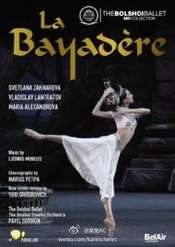
堂吉诃德 [演出] 豆瓣
Дон Кихот
类型: 舞剧 编剧: Marius Petipa / Carlos Acosta
其它标题: Дон Кихот / Don Quixote 导演: Marius Petipa / Rudolf Nureyev 演员: Christopher Saunders / Philip Mosley / Gary Avis / Akane Takada / Alexander Campbell
Prologue
Don Quixote's Study
Bachelor Sanson Carrasco is seen covering a bookcase with wallpaper, while Antonina is putting some rusty old armour and a helmet made of pasteboard into a cupboard. Don Quixote de la Mancha enters, reading a book. He goes to the bookcase and, not finding it, believes it has been stolen by evil magicians. Then he settles into an armchair and continues reading. He delights in stories of brave knights, fabulous giants and other fantastical creatures, but most of all Don Quixote dreams of his beloved Dulcinea, a woman that he believes to be so lovely and noble that she must be divinity. Gradually he nods and falls asleep to dream of their romantic adventures. Darkness falls.
Suddenly his servant, Sancho Panza, climbs hurriedly through the window. In pursuit are several angry women from the market from whom he has stolen bread and a chicken. Awakened by the commotion, Don Quixote sends the women away. Don Quixote tells Sancho that he is determined to seek adventures as a knight-errant, all the while searching for his beloved Dulcinea. He shows him the pasteboard helmet, which, with one sweep from his sword, becomes a shapeless mass on the floor. Antonina suggests that he should use a shaving basin instead, which would make a splendid helmet. Don Quixote enthusiastically agrees and, placing it on his head, orders Sancho to bring him his armour, sword and spear, and to make ready his horse, Rocinante.
Act I
A market-place in Barcelona
Kitri, an inn-keeper's daughter, steals out of her house to meet her beloved, the barber Basilio. Her father, Lorenzo, sees the lovers and sends Basilio away, bringing Kitri to tears. Now comes the rich nobleman Gamache, who, likewise in love with Kitri, goes to Lorenzo and asks for his daughter's hand. The innkeeper accepts with delight but Kitri, appalled at the thought of wedding the foppish nobleman, runs away.
Dancing begins in the square and some toreadors try to kidnap the girls they fancy, but their relatives and lovers hasten to their aid. At this moment Don Quixote arrives mounted on Rocinante, followed by Sancho, who is riding a donkey. At his master's command Sancho sounds his rusted horn, causing the townspeople to cover their ears. Lorenzo runs out of his inn, and Don Quixote, taking him for the lord of a famous castle, dismounts Rocinante and, falling to his knees, begs to be allowed to serve him. Charmed, Lorenzo invites the knight to sit on his balcony. Sancho remains in the square where he is surrounded by girls who induce him to take part in a game of blind man's bluff. Then some boys bring in a blanket on which they place Sancho and proceed to toss him into the air. Don Quixote hurries to his assistance and sets him free.
Peasants gather in the square and dancing resumes. Kitri returns and, noticing her, Don Quixote acclaims her as his Dulcinea, whom evil magicians have reduced to human form. Becoming jealous of her affection for Basilio, Don Quixote attempts to woo her by partnering her in a minuet. Lorenzo berates Kitri for carrying on with Basilio. Kitri and Basilio then run away, and Lorenzo and Gamache follow them. Don Quixote orders Sancho to bring Rocinante, so that he may also set out in pursuit.
Act II
Scene 1 – A camp of gypsies among the windmills outside the village
Kitri, disguised as a boy is seen walking with Harlequin from a troupe of travelling actors. They guess she is a girl and ask her to stay with them.
Scene 2 - The Puppet Theatre
A clown is seen walking with Graziosa, the gypsy chief's daughter. A gypsy tells the chief of the approach of Don Quixote. The chief plans a trick for his benefit and, putting on a mantle crown, sits down as though he were a king on a throne. Don Quixote is deceived and kneels to the chief in homage. The chief bids that he sit beside him and orders a festival to be given in his honor. This begins with Gypsy dances and is followed by a performance of the marionette theatre. Don Quixote is delighted with the entertainment but, mistaking the heroine for his Dulcinea and the marionettes for soldiers attacking her, he rises to assault them. The gypsies are terrified. At this moment the clown and Graziosa run away.
Scene 3 - The Windmills
Flushed with victory, the knight kneels and renders thanks to heaven. Seeing the moon, he takes it for his Dulcinea and tries to get to her. As he approaches the windmills he can see the moon no longer and thinks that evil magicians have hidden his beloved mistress. So, spear in hand, he tilts at the wings of the windmill, which he mistakes for a giant. Alas, the knight is caught by one of the wings and flung into the air. He falls unconscious at Sancho's feet.
Scene 4 – A forest
Through the trees appears Sancho leading Rocinante, upon which sits the wounded Don Quixote. The servant lifts his master down and places him on the grass, so that he may rest. Then, tying up the horse, he goes to sleep. Don Quixote also tries to sleep, but is troubled by fantastic dreams.
Scene 5 – The enchanted Garden of Dulcinea
Fairies appear surrounded by gnomes and Don Quixote finds himself dressed in shining armor. Then comes a succession of fearsome monsters, the last being a gigantic spider, who spins a web. The knight attacks the spider, which he slashes in half with his sword. At that same moment the spider's web vanishes to reveal a beautiful garden, filled with dryads and beautiful women, presided over by the Queen of the Dryads and Amor. Among them is Dulcinea and Don Quixote kneels before his beloved. At this moment everything vanishes.
Act III
The Square
Back at the square, Kitri and Basilio join those who are dancing. At the height of the merriment, Lorenzo and Gamache arrive, followed by Don Quixote and Sancho. Seeing his daughter, Lorenzo decides to give his blessing to her union with the nobleman Gamache. Basilio becomes annoyed and, reproaching Kitri for her unfaithfulness, draws a sword and stabs himself. As he lies dying he begs Lorenzo to unite him with Kitri, but Lorenzo and Gamache refuse. Don Quixote approaches Gamache and challenges him to a duel for having refused a dying man's wish. Gamache declines to fight and the merrymakers drive him out of the inn. Taking pity, Lorenzo agrees to unite Basilio and Kitri. At this moment, Basilio pulls out the sword and tells everyone it was a joke.
Act IV
The Tavern
A magnificent feast is held in honour of Don Quixote. Suddenly the Knight of the Silver Moon challenges him to a duel, which results in the latter being vanquished. The victorious knight proves to be none other than Bachelor Sanson Carrasco, who forces Don Quixote to vow that he will not unsheathe his sword for a whole year. The sorrowful knight, true to his vow, takes up his warlike gear and, followed by Sancho, sets out for home.
堂吉诃德 2013年中央芭蕾舞团版 [演出] 豆瓣
所属 演出: 堂吉诃德
剧团: 中央芭蕾舞团 剧院: 天桥剧场 导演: Marius Petipa / Rudolf Nureyev
其它标题: 2013年中央芭蕾舞团版 作曲: Ludwig Minkus / John Lanchbery
Prologue
Don Quixote's Study
Bachelor Sanson Carrasco is seen covering a bookcase with wallpaper, while Antonina is putting some rusty old armour and a helmet made of pasteboard into a cupboard. Don Quixote de la Mancha enters, reading a book. He goes to the bookcase and, not finding it, believes it has been stolen by evil magicians. Then he settles into an armchair and continues reading. He delights in stories of brave knights, fabulous giants and other fantastical creatures, but most of all Don Quixote dreams of his beloved Dulcinea, a woman that he believes to be so lovely and noble that she must be divinity. Gradually he nods and falls asleep to dream of their romantic adventures. Darkness falls.
Suddenly his servant, Sancho Panza, climbs hurriedly through the window. In pursuit are several angry women from the market from whom he has stolen bread and a chicken. Awakened by the commotion, Don Quixote sends the women away. Don Quixote tells Sancho that he is determined to seek adventures as a knight-errant, all the while searching for his beloved Dulcinea. He shows him the pasteboard helmet, which, with one sweep from his sword, becomes a shapeless mass on the floor. Antonina suggests that he should use a shaving basin instead, which would make a splendid helmet. Don Quixote enthusiastically agrees and, placing it on his head, orders Sancho to bring him his armour, sword and spear, and to make ready his horse, Rocinante.
Act I
A market-place in Barcelona
Kitri, an inn-keeper's daughter, steals out of her house to meet her beloved, the barber Basilio. Her father, Lorenzo, sees the lovers and sends Basilio away, bringing Kitri to tears. Now comes the rich nobleman Gamache, who, likewise in love with Kitri, goes to Lorenzo and asks for his daughter's hand. The innkeeper accepts with delight but Kitri, appalled at the thought of wedding the foppish nobleman, runs away.
Dancing begins in the square and some toreadors try to kidnap the girls they fancy, but their relatives and lovers hasten to their aid. At this moment Don Quixote arrives mounted on Rocinante, followed by Sancho, who is riding a donkey. At his master's command Sancho sounds his rusted horn, causing the townspeople to cover their ears. Lorenzo runs out of his inn, and Don Quixote, taking him for the lord of a famous castle, dismounts Rocinante and, falling to his knees, begs to be allowed to serve him. Charmed, Lorenzo invites the knight to sit on his balcony. Sancho remains in the square where he is surrounded by girls who induce him to take part in a game of blind man's bluff. Then some boys bring in a blanket on which they place Sancho and proceed to toss him into the air. Don Quixote hurries to his assistance and sets him free.
Peasants gather in the square and dancing resumes. Kitri returns and, noticing her, Don Quixote acclaims her as his Dulcinea, whom evil magicians have reduced to human form. Becoming jealous of her affection for Basilio, Don Quixote attempts to woo her by partnering her in a minuet. Lorenzo berates Kitri for carrying on with Basilio. Kitri and Basilio then run away, and Lorenzo and Gamache follow them. Don Quixote orders Sancho to bring Rocinante, so that he may also set out in pursuit.
Act II
Scene 1 – A camp of gypsies among the windmills outside the village
Kitri, disguised as a boy is seen walking with Harlequin from a troupe of travelling actors. They guess she is a girl and ask her to stay with them.
Scene 2 - The Puppet Theatre
A clown is seen walking with Graziosa, the gypsy chief's daughter. A gypsy tells the chief of the approach of Don Quixote. The chief plans a trick for his benefit and, putting on a mantle crown, sits down as though he were a king on a throne. Don Quixote is deceived and kneels to the chief in homage. The chief bids that he sit beside him and orders a festival to be given in his honor. This begins with Gypsy dances and is followed by a performance of the marionette theatre. Don Quixote is delighted with the entertainment but, mistaking the heroine for his Dulcinea and the marionettes for soldiers attacking her, he rises to assault them. The gypsies are terrified. At this moment the clown and Graziosa run away.
Scene 3 - The Windmills
Flushed with victory, the knight kneels and renders thanks to heaven. Seeing the moon, he takes it for his Dulcinea and tries to get to her. As he approaches the windmills he can see the moon no longer and thinks that evil magicians have hidden his beloved mistress. So, spear in hand, he tilts at the wings of the windmill, which he mistakes for a giant. Alas, the knight is caught by one of the wings and flung into the air. He falls unconscious at Sancho's feet.
Scene 4 – A forest
Through the trees appears Sancho leading Rocinante, upon which sits the wounded Don Quixote. The servant lifts his master down and places him on the grass, so that he may rest. Then, tying up the horse, he goes to sleep. Don Quixote also tries to sleep, but is troubled by fantastic dreams.
Scene 5 – The enchanted Garden of Dulcinea
Fairies appear surrounded by gnomes and Don Quixote finds himself dressed in shining armor. Then comes a succession of fearsome monsters, the last being a gigantic spider, who spins a web. The knight attacks the spider, which he slashes in half with his sword. At that same moment the spider's web vanishes to reveal a beautiful garden, filled with dryads and beautiful women, presided over by the Queen of the Dryads and Amor. Among them is Dulcinea and Don Quixote kneels before his beloved. At this moment everything vanishes.
Act III
The Square
Back at the square, Kitri and Basilio join those who are dancing. At the height of the merriment, Lorenzo and Gamache arrive, followed by Don Quixote and Sancho. Seeing his daughter, Lorenzo decides to give his blessing to her union with the nobleman Gamache. Basilio becomes annoyed and, reproaching Kitri for her unfaithfulness, draws a sword and stabs himself. As he lies dying he begs Lorenzo to unite him with Kitri, but Lorenzo and Gamache refuse. Don Quixote approaches Gamache and challenges him to a duel for having refused a dying man's wish. Gamache declines to fight and the merrymakers drive him out of the inn. Taking pity, Lorenzo agrees to unite Basilio and Kitri. At this moment, Basilio pulls out the sword and tells everyone it was a joke.
Act IV
The Tavern
A magnificent feast is held in honour of Don Quixote. Suddenly the Knight of the Silver Moon challenges him to a duel, which results in the latter being vanquished. The victorious knight proves to be none other than Bachelor Sanson Carrasco, who forces Don Quixote to vow that he will not unsheathe his sword for a whole year. The sorrowful knight, true to his vow, takes up his warlike gear and, followed by Sancho, sets out for home.
堂吉诃德 1985年中央芭蕾舞团版 [演出] 豆瓣
所属 演出: 堂吉诃德
剧团: 中央芭蕾舞团 导演: Marius Petipa / Rudolf Nureyev
其它标题: 1985年中央芭蕾舞团版 作曲: Ludwig Minkus / John Lanchbery
Prologue
Don Quixote's Study
Bachelor Sanson Carrasco is seen covering a bookcase with wallpaper, while Antonina is putting some rusty old armour and a helmet made of pasteboard into a cupboard. Don Quixote de la Mancha enters, reading a book. He goes to the bookcase and, not finding it, believes it has been stolen by evil magicians. Then he settles into an armchair and continues reading. He delights in stories of brave knights, fabulous giants and other fantastical creatures, but most of all Don Quixote dreams of his beloved Dulcinea, a woman that he believes to be so lovely and noble that she must be divinity. Gradually he nods and falls asleep to dream of their romantic adventures. Darkness falls.
Suddenly his servant, Sancho Panza, climbs hurriedly through the window. In pursuit are several angry women from the market from whom he has stolen bread and a chicken. Awakened by the commotion, Don Quixote sends the women away. Don Quixote tells Sancho that he is determined to seek adventures as a knight-errant, all the while searching for his beloved Dulcinea. He shows him the pasteboard helmet, which, with one sweep from his sword, becomes a shapeless mass on the floor. Antonina suggests that he should use a shaving basin instead, which would make a splendid helmet. Don Quixote enthusiastically agrees and, placing it on his head, orders Sancho to bring him his armour, sword and spear, and to make ready his horse, Rocinante.
Act I
A market-place in Barcelona
Kitri, an inn-keeper's daughter, steals out of her house to meet her beloved, the barber Basilio. Her father, Lorenzo, sees the lovers and sends Basilio away, bringing Kitri to tears. Now comes the rich nobleman Gamache, who, likewise in love with Kitri, goes to Lorenzo and asks for his daughter's hand. The innkeeper accepts with delight but Kitri, appalled at the thought of wedding the foppish nobleman, runs away.
Dancing begins in the square and some toreadors try to kidnap the girls they fancy, but their relatives and lovers hasten to their aid. At this moment Don Quixote arrives mounted on Rocinante, followed by Sancho, who is riding a donkey. At his master's command Sancho sounds his rusted horn, causing the townspeople to cover their ears. Lorenzo runs out of his inn, and Don Quixote, taking him for the lord of a famous castle, dismounts Rocinante and, falling to his knees, begs to be allowed to serve him. Charmed, Lorenzo invites the knight to sit on his balcony. Sancho remains in the square where he is surrounded by girls who induce him to take part in a game of blind man's bluff. Then some boys bring in a blanket on which they place Sancho and proceed to toss him into the air. Don Quixote hurries to his assistance and sets him free.
Peasants gather in the square and dancing resumes. Kitri returns and, noticing her, Don Quixote acclaims her as his Dulcinea, whom evil magicians have reduced to human form. Becoming jealous of her affection for Basilio, Don Quixote attempts to woo her by partnering her in a minuet. Lorenzo berates Kitri for carrying on with Basilio. Kitri and Basilio then run away, and Lorenzo and Gamache follow them. Don Quixote orders Sancho to bring Rocinante, so that he may also set out in pursuit.
Act II
Scene 1 – A camp of gypsies among the windmills outside the village
Kitri, disguised as a boy is seen walking with Harlequin from a troupe of travelling actors. They guess she is a girl and ask her to stay with them.
Scene 2 - The Puppet Theatre
A clown is seen walking with Graziosa, the gypsy chief's daughter. A gypsy tells the chief of the approach of Don Quixote. The chief plans a trick for his benefit and, putting on a mantle crown, sits down as though he were a king on a throne. Don Quixote is deceived and kneels to the chief in homage. The chief bids that he sit beside him and orders a festival to be given in his honor. This begins with Gypsy dances and is followed by a performance of the marionette theatre. Don Quixote is delighted with the entertainment but, mistaking the heroine for his Dulcinea and the marionettes for soldiers attacking her, he rises to assault them. The gypsies are terrified. At this moment the clown and Graziosa run away.
Scene 3 - The Windmills
Flushed with victory, the knight kneels and renders thanks to heaven. Seeing the moon, he takes it for his Dulcinea and tries to get to her. As he approaches the windmills he can see the moon no longer and thinks that evil magicians have hidden his beloved mistress. So, spear in hand, he tilts at the wings of the windmill, which he mistakes for a giant. Alas, the knight is caught by one of the wings and flung into the air. He falls unconscious at Sancho's feet.
Scene 4 – A forest
Through the trees appears Sancho leading Rocinante, upon which sits the wounded Don Quixote. The servant lifts his master down and places him on the grass, so that he may rest. Then, tying up the horse, he goes to sleep. Don Quixote also tries to sleep, but is troubled by fantastic dreams.
Scene 5 – The enchanted Garden of Dulcinea
Fairies appear surrounded by gnomes and Don Quixote finds himself dressed in shining armor. Then comes a succession of fearsome monsters, the last being a gigantic spider, who spins a web. The knight attacks the spider, which he slashes in half with his sword. At that same moment the spider's web vanishes to reveal a beautiful garden, filled with dryads and beautiful women, presided over by the Queen of the Dryads and Amor. Among them is Dulcinea and Don Quixote kneels before his beloved. At this moment everything vanishes.
Act III
The Square
Back at the square, Kitri and Basilio join those who are dancing. At the height of the merriment, Lorenzo and Gamache arrive, followed by Don Quixote and Sancho. Seeing his daughter, Lorenzo decides to give his blessing to her union with the nobleman Gamache. Basilio becomes annoyed and, reproaching Kitri for her unfaithfulness, draws a sword and stabs himself. As he lies dying he begs Lorenzo to unite him with Kitri, but Lorenzo and Gamache refuse. Don Quixote approaches Gamache and challenges him to a duel for having refused a dying man's wish. Gamache declines to fight and the merrymakers drive him out of the inn. Taking pity, Lorenzo agrees to unite Basilio and Kitri. At this moment, Basilio pulls out the sword and tells everyone it was a joke.
Act IV
The Tavern
A magnificent feast is held in honour of Don Quixote. Suddenly the Knight of the Silver Moon challenges him to a duel, which results in the latter being vanquished. The victorious knight proves to be none other than Bachelor Sanson Carrasco, who forces Don Quixote to vow that he will not unsheathe his sword for a whole year. The sorrowful knight, true to his vow, takes up his warlike gear and, followed by Sancho, sets out for home.
堂吉诃德 1966年维也纳国家歌剧院版 [演出] 豆瓣
所属 演出: 堂吉诃德
剧团: Orchester der Wiener Staatsoper 维也纳国家歌剧院管弦乐团 ; Ballett der Wiener Staatsoper 维也纳国家歌剧院芭蕾舞团 剧院: Wiener Staatsoper 维也纳国家歌剧院 导演: Marius Petipa / Rudolf Nureyev
其它标题: 1966年维也纳国家歌剧院版 作曲: Ludwig Minkus / John Lanchbery
Prologue
Don Quixote's Study
Bachelor Sanson Carrasco is seen covering a bookcase with wallpaper, while Antonina is putting some rusty old armour and a helmet made of pasteboard into a cupboard. Don Quixote de la Mancha enters, reading a book. He goes to the bookcase and, not finding it, believes it has been stolen by evil magicians. Then he settles into an armchair and continues reading. He delights in stories of brave knights, fabulous giants and other fantastical creatures, but most of all Don Quixote dreams of his beloved Dulcinea, a woman that he believes to be so lovely and noble that she must be divinity. Gradually he nods and falls asleep to dream of their romantic adventures. Darkness falls.
Suddenly his servant, Sancho Panza, climbs hurriedly through the window. In pursuit are several angry women from the market from whom he has stolen bread and a chicken. Awakened by the commotion, Don Quixote sends the women away. Don Quixote tells Sancho that he is determined to seek adventures as a knight-errant, all the while searching for his beloved Dulcinea. He shows him the pasteboard helmet, which, with one sweep from his sword, becomes a shapeless mass on the floor. Antonina suggests that he should use a shaving basin instead, which would make a splendid helmet. Don Quixote enthusiastically agrees and, placing it on his head, orders Sancho to bring him his armour, sword and spear, and to make ready his horse, Rocinante.
Act I
A market-place in Barcelona
Kitri, an inn-keeper's daughter, steals out of her house to meet her beloved, the barber Basilio. Her father, Lorenzo, sees the lovers and sends Basilio away, bringing Kitri to tears. Now comes the rich nobleman Gamache, who, likewise in love with Kitri, goes to Lorenzo and asks for his daughter's hand. The innkeeper accepts with delight but Kitri, appalled at the thought of wedding the foppish nobleman, runs away.
Dancing begins in the square and some toreadors try to kidnap the girls they fancy, but their relatives and lovers hasten to their aid. At this moment Don Quixote arrives mounted on Rocinante, followed by Sancho, who is riding a donkey. At his master's command Sancho sounds his rusted horn, causing the townspeople to cover their ears. Lorenzo runs out of his inn, and Don Quixote, taking him for the lord of a famous castle, dismounts Rocinante and, falling to his knees, begs to be allowed to serve him. Charmed, Lorenzo invites the knight to sit on his balcony. Sancho remains in the square where he is surrounded by girls who induce him to take part in a game of blind man's bluff. Then some boys bring in a blanket on which they place Sancho and proceed to toss him into the air. Don Quixote hurries to his assistance and sets him free.
Peasants gather in the square and dancing resumes. Kitri returns and, noticing her, Don Quixote acclaims her as his Dulcinea, whom evil magicians have reduced to human form. Becoming jealous of her affection for Basilio, Don Quixote attempts to woo her by partnering her in a minuet. Lorenzo berates Kitri for carrying on with Basilio. Kitri and Basilio then run away, and Lorenzo and Gamache follow them. Don Quixote orders Sancho to bring Rocinante, so that he may also set out in pursuit.
Act II
Scene 1 – A camp of gypsies among the windmills outside the village
Kitri, disguised as a boy is seen walking with Harlequin from a troupe of travelling actors. They guess she is a girl and ask her to stay with them.
Scene 2 - The Puppet Theatre
A clown is seen walking with Graziosa, the gypsy chief's daughter. A gypsy tells the chief of the approach of Don Quixote. The chief plans a trick for his benefit and, putting on a mantle crown, sits down as though he were a king on a throne. Don Quixote is deceived and kneels to the chief in homage. The chief bids that he sit beside him and orders a festival to be given in his honor. This begins with Gypsy dances and is followed by a performance of the marionette theatre. Don Quixote is delighted with the entertainment but, mistaking the heroine for his Dulcinea and the marionettes for soldiers attacking her, he rises to assault them. The gypsies are terrified. At this moment the clown and Graziosa run away.
Scene 3 - The Windmills
Flushed with victory, the knight kneels and renders thanks to heaven. Seeing the moon, he takes it for his Dulcinea and tries to get to her. As he approaches the windmills he can see the moon no longer and thinks that evil magicians have hidden his beloved mistress. So, spear in hand, he tilts at the wings of the windmill, which he mistakes for a giant. Alas, the knight is caught by one of the wings and flung into the air. He falls unconscious at Sancho's feet.
Scene 4 – A forest
Through the trees appears Sancho leading Rocinante, upon which sits the wounded Don Quixote. The servant lifts his master down and places him on the grass, so that he may rest. Then, tying up the horse, he goes to sleep. Don Quixote also tries to sleep, but is troubled by fantastic dreams.
Scene 5 – The enchanted Garden of Dulcinea
Fairies appear surrounded by gnomes and Don Quixote finds himself dressed in shining armor. Then comes a succession of fearsome monsters, the last being a gigantic spider, who spins a web. The knight attacks the spider, which he slashes in half with his sword. At that same moment the spider's web vanishes to reveal a beautiful garden, filled with dryads and beautiful women, presided over by the Queen of the Dryads and Amor. Among them is Dulcinea and Don Quixote kneels before his beloved. At this moment everything vanishes.
Act III
The Square
Back at the square, Kitri and Basilio join those who are dancing. At the height of the merriment, Lorenzo and Gamache arrive, followed by Don Quixote and Sancho. Seeing his daughter, Lorenzo decides to give his blessing to her union with the nobleman Gamache. Basilio becomes annoyed and, reproaching Kitri for her unfaithfulness, draws a sword and stabs himself. As he lies dying he begs Lorenzo to unite him with Kitri, but Lorenzo and Gamache refuse. Don Quixote approaches Gamache and challenges him to a duel for having refused a dying man's wish. Gamache declines to fight and the merrymakers drive him out of the inn. Taking pity, Lorenzo agrees to unite Basilio and Kitri. At this moment, Basilio pulls out the sword and tells everyone it was a joke.
Act IV
The Tavern
A magnificent feast is held in honour of Don Quixote. Suddenly the Knight of the Silver Moon challenges him to a duel, which results in the latter being vanquished. The victorious knight proves to be none other than Bachelor Sanson Carrasco, who forces Don Quixote to vow that he will not unsheathe his sword for a whole year. The sorrowful knight, true to his vow, takes up his warlike gear and, followed by Sancho, sets out for home.
堂吉诃德 1997年中央芭蕾舞团版 [演出] 豆瓣
所属 演出: 堂吉诃德
剧团: 中央芭蕾舞团 导演: Marius Petipa / Rudolf Nureyev
其它标题: 1997年中央芭蕾舞团版 作曲: Ludwig Minkus / John Lanchbery
Prologue
Don Quixote's Study
Bachelor Sanson Carrasco is seen covering a bookcase with wallpaper, while Antonina is putting some rusty old armour and a helmet made of pasteboard into a cupboard. Don Quixote de la Mancha enters, reading a book. He goes to the bookcase and, not finding it, believes it has been stolen by evil magicians. Then he settles into an armchair and continues reading. He delights in stories of brave knights, fabulous giants and other fantastical creatures, but most of all Don Quixote dreams of his beloved Dulcinea, a woman that he believes to be so lovely and noble that she must be divinity. Gradually he nods and falls asleep to dream of their romantic adventures. Darkness falls.
Suddenly his servant, Sancho Panza, climbs hurriedly through the window. In pursuit are several angry women from the market from whom he has stolen bread and a chicken. Awakened by the commotion, Don Quixote sends the women away. Don Quixote tells Sancho that he is determined to seek adventures as a knight-errant, all the while searching for his beloved Dulcinea. He shows him the pasteboard helmet, which, with one sweep from his sword, becomes a shapeless mass on the floor. Antonina suggests that he should use a shaving basin instead, which would make a splendid helmet. Don Quixote enthusiastically agrees and, placing it on his head, orders Sancho to bring him his armour, sword and spear, and to make ready his horse, Rocinante.
Act I
A market-place in Barcelona
Kitri, an inn-keeper's daughter, steals out of her house to meet her beloved, the barber Basilio. Her father, Lorenzo, sees the lovers and sends Basilio away, bringing Kitri to tears. Now comes the rich nobleman Gamache, who, likewise in love with Kitri, goes to Lorenzo and asks for his daughter's hand. The innkeeper accepts with delight but Kitri, appalled at the thought of wedding the foppish nobleman, runs away.
Dancing begins in the square and some toreadors try to kidnap the girls they fancy, but their relatives and lovers hasten to their aid. At this moment Don Quixote arrives mounted on Rocinante, followed by Sancho, who is riding a donkey. At his master's command Sancho sounds his rusted horn, causing the townspeople to cover their ears. Lorenzo runs out of his inn, and Don Quixote, taking him for the lord of a famous castle, dismounts Rocinante and, falling to his knees, begs to be allowed to serve him. Charmed, Lorenzo invites the knight to sit on his balcony. Sancho remains in the square where he is surrounded by girls who induce him to take part in a game of blind man's bluff. Then some boys bring in a blanket on which they place Sancho and proceed to toss him into the air. Don Quixote hurries to his assistance and sets him free.
Peasants gather in the square and dancing resumes. Kitri returns and, noticing her, Don Quixote acclaims her as his Dulcinea, whom evil magicians have reduced to human form. Becoming jealous of her affection for Basilio, Don Quixote attempts to woo her by partnering her in a minuet. Lorenzo berates Kitri for carrying on with Basilio. Kitri and Basilio then run away, and Lorenzo and Gamache follow them. Don Quixote orders Sancho to bring Rocinante, so that he may also set out in pursuit.
Act II
Scene 1 – A camp of gypsies among the windmills outside the village
Kitri, disguised as a boy is seen walking with Harlequin from a troupe of travelling actors. They guess she is a girl and ask her to stay with them.
Scene 2 - The Puppet Theatre
A clown is seen walking with Graziosa, the gypsy chief's daughter. A gypsy tells the chief of the approach of Don Quixote. The chief plans a trick for his benefit and, putting on a mantle crown, sits down as though he were a king on a throne. Don Quixote is deceived and kneels to the chief in homage. The chief bids that he sit beside him and orders a festival to be given in his honor. This begins with Gypsy dances and is followed by a performance of the marionette theatre. Don Quixote is delighted with the entertainment but, mistaking the heroine for his Dulcinea and the marionettes for soldiers attacking her, he rises to assault them. The gypsies are terrified. At this moment the clown and Graziosa run away.
Scene 3 - The Windmills
Flushed with victory, the knight kneels and renders thanks to heaven. Seeing the moon, he takes it for his Dulcinea and tries to get to her. As he approaches the windmills he can see the moon no longer and thinks that evil magicians have hidden his beloved mistress. So, spear in hand, he tilts at the wings of the windmill, which he mistakes for a giant. Alas, the knight is caught by one of the wings and flung into the air. He falls unconscious at Sancho's feet.
Scene 4 – A forest
Through the trees appears Sancho leading Rocinante, upon which sits the wounded Don Quixote. The servant lifts his master down and places him on the grass, so that he may rest. Then, tying up the horse, he goes to sleep. Don Quixote also tries to sleep, but is troubled by fantastic dreams.
Scene 5 – The enchanted Garden of Dulcinea
Fairies appear surrounded by gnomes and Don Quixote finds himself dressed in shining armor. Then comes a succession of fearsome monsters, the last being a gigantic spider, who spins a web. The knight attacks the spider, which he slashes in half with his sword. At that same moment the spider's web vanishes to reveal a beautiful garden, filled with dryads and beautiful women, presided over by the Queen of the Dryads and Amor. Among them is Dulcinea and Don Quixote kneels before his beloved. At this moment everything vanishes.
Act III
The Square
Back at the square, Kitri and Basilio join those who are dancing. At the height of the merriment, Lorenzo and Gamache arrive, followed by Don Quixote and Sancho. Seeing his daughter, Lorenzo decides to give his blessing to her union with the nobleman Gamache. Basilio becomes annoyed and, reproaching Kitri for her unfaithfulness, draws a sword and stabs himself. As he lies dying he begs Lorenzo to unite him with Kitri, but Lorenzo and Gamache refuse. Don Quixote approaches Gamache and challenges him to a duel for having refused a dying man's wish. Gamache declines to fight and the merrymakers drive him out of the inn. Taking pity, Lorenzo agrees to unite Basilio and Kitri. At this moment, Basilio pulls out the sword and tells everyone it was a joke.
Act IV
The Tavern
A magnificent feast is held in honour of Don Quixote. Suddenly the Knight of the Silver Moon challenges him to a duel, which results in the latter being vanquished. The victorious knight proves to be none other than Bachelor Sanson Carrasco, who forces Don Quixote to vow that he will not unsheathe his sword for a whole year. The sorrowful knight, true to his vow, takes up his warlike gear and, followed by Sancho, sets out for home.