other title:
音乐之迷
为什么一些曲子能使我们的脚不经意的跟着节奏拍打,为什么一些曲子能使们心情愉悦,为什么一首爱情歌曲能使我们流泪,又为什么一段非洲鼓能使们想到巴赫?
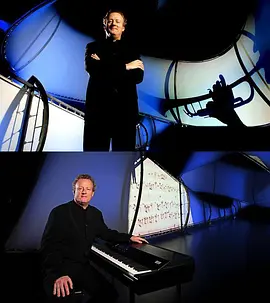
在这四集系列片里面,作曲家Howard Goodall会带领大家揭开音乐的本质,使大家了解音乐是如何影响大家的.音乐总有着一些东西会影响我们每一个人,我们时不时的对音乐作出着反映,不管是轻轻敲打我们的手指还是跟着音乐轻哼又或者随着音乐起舞.在这一个系列片里面,Goodall从旋律,节奏,和弦,和低音这四个部分来提示一部音乐作品是如何完成反映不同的文化.Goodall从他的环球旅行中发现这些基本元素被所有形式的音乐所共有.
1、旋律
为什么我们出生后,旋律就对我们有如此深的影响?旋律总能触到我们感情最深的那部分,爱情,悲伤,信念以及希望.但是音乐的旋律是如何做到的?在这一集中作曲家 Howard Goodall 把旋律看作是音乐最基本的元素.为什么一些旋律全球不同文化下都受欢迎?那些受欢迎的旋律是在不经意之间写成的么?从世纪的角度来看,Howard发现了英国都铎王朝和密西西比三角洲的有趣联系,并揭示出旋律是世界性的适合于各种不同的文化.循着不同的音乐轨迹从古斯塔夫.马勒到保罗.西蒙;从圣歌到保加利亚的乡村音乐,从中世纪的合唱音乐百老汇,Howard探讨并揭示着音乐的秘密.
2、节奏
从我们心脏开始跳动的那一刻,节奏就是我们的一部分.从走路到跳舞,从手指轻轻的拍打到脚尖不经意的击打,人类无时无刻受着节奏的影响.在这一集里,Howard研究了被全世界音乐家所共熟悉的音乐节奏,从Brahms到rappers,从Cuban son 到 Philip Glass, 从 Stevie Wonder到 Fats Waller.究竟为什么一些节奏使我们想跳舞,而一些节奏却使们安静?音乐节奏到底是如何发挥作用的?在一些没有明显节奏的古典音乐里,节奏又是如何作用的,为什么一听到非洲的鼓声又会联想到巴赫?为什么基本上大部分流行歌手都在敲打声开始前唱歌?又为什么像加勒比这样的一个小岛上的音乐节奏却能风靡全球.
3、和弦
和弦音乐盛行在中世纪晚期的西方,然而这种音乐在世界其它地方发展成完全不同的形式.从它演变而来的和声,在接下来的七个世纪,开始展示出其特有的和谐之美.在这一集中,Howard研究了西方和弦音乐的形成,揭示出如今这种音乐形式已经和其它音乐形式融合在一起并形成了新的风格.Howard研究了和弦是如何影响各种音乐的,无论是从古典还是流行.为什么和声一遍又一遍反复的出现在音乐中,无论是在文艺复兴时的音乐还是现代打击乐?作曲家总是喜欢在基本的和声中加入不和谐的曲调来进行尝试.在这一集中我们会看到这种方式到底是如何形成并发挥作用的.
4、低音
音乐被分成,旋律,节奏和和弦.那么音乐中,非常低的音符是什么呢,这些音符会对其它三种元素产生什么影响呢?在这一集中,Howard研究了一些音乐家和作曲师处理低音的方法.在500年中乐器制作者们一直试图制作出一种乐器能够弹出所有形式的的低音.当合成器出现后,他们才终于成功.在Disco,舞曲,和drum 'n' bass的出现后,低音音乐终于成功的站在了舞台的中央.但是低音还有一个重要的角色.除开仅仅提供低沉的背景音乐外,一连串的低音在整章音乐中扮起着重要的作用,它推进了和弦的,使音乐丰满.
Why do some rhythms get our toes tapping, while others make us feel mellow? How does a love song bring tears to our eyes? What links African drumming to J S Bach?
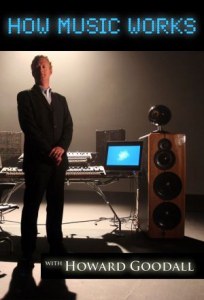
In this new four-part series composer Howard Goodall strips music down to its essential parts to find out how music works.
We all respond to music – whether clicking our fingers, humming along or dancing – there's something out there for everyone. In this series Goodall looks at melody, rhythm, harmony and bass to establish how music is made and how it comes to reflect different cultures.
Setting out on a journey that spans the globe and moves through the centuries, Goodall uncovers the elements that are shared by all styles of music. Following a trail of diverse musical talents from Mahler to David Bowie; the blues to Bulgarian folk songs; medieval choral music to disco; he reveals the tried and tested tricks of the composer's trade.
Melody
Why does melody affect us so deeply, from the moment we are born? Tunes touch our deepest emotions, and are capable of inspiring love, sorrow, faith, and hope. But how does a melody actually work? In this film composer Howard Goodall looks at melody's basic elements. Why are some melodic shapes common to all cultures across the world? Can successful melodies be written at random? If not, what are the familiar melodic patterns composers of all types of music have fallen back on again and again, and why do they work? Setting out on a journey that moves through the centuries, Howard looks at the curious link between Tudor England and the Mississippi Delta, and uncovers melodic shapes common to all cultures across the world. Following a trail of diverse musical sources from Gustav Mahler to Paul Simon, Shaker hymns to Bulgarian folk songs, medieval choral music to the Broadway showstoppers he reveals the tried and tested tricks of the composer's trade.
Rhythm
From the moment our hearts start beating, rhythm is integral to us all. From walking to dancing, from clicking our fingers to tapping our toes, we are all programmed to respond to rhythm. In this film Howard looks at the common rhythmic patterns that have been used by musicians from all cultures, from Brahms to rappers, from the founders of Cuban son to Philip Glass, from Stevie Wonder to Fats Waller. Why do some rhythms make us want to dance, while others make us feel tranquil? How does rhythm 'work' when there is no obvious pulse, as in much classical music? What links African drumming to J S Bach? Why do virtually all popular singers sing ahead of the beat? And how is it that a tiny Caribbean island has produced a rhythm that dominates popular music the world over?
Harmony
In the late middle ages western harmony started on a journey that would take it in a completely separate direction to that of the music of other parts of the world. It discovered chords, and, over the next seven centuries, began to unlock their harmonic possibilities. In this film Howard looks at how western harmony works, and how, in the present day, it has fused with other forms of music to create new styles. Chords led to chord progressions, and Howard looks at how familiar patterns of chord progressions give all kinds of music from classical to popular their sense of forward movement. Why do the same chord patterns appear again and again, from Renaissance Italy to the latest chart hit? Musicians have always liked to tamper with the basic chords, and experiment with dissonance. We see how these tricks of the trade actually work, and the emotional and musical effect they have. From the folk musicians of the middle ages to Bach, Beethoven, and Wagner, from Chuck Berry to David Bowie, Hendrix to Coldplay, the same harmonic techniques surface again and again.
Bass
Music is usually broken down into melody, rhythm and harmony. But what about the very lowest notes in music, that can have an impact on all three? In this film Howard looks at the abiding fascination musicians and composers have had with the bass. For half a millennium instrument makers have been trying to construct instruments of all shapes and sizes capable of thudding, sonorous low notes. Only with the arrival of the synthesizer did they succeed in producing a rival to the mighty organ. With disco, dance, and drum 'n' bass, the bass has arrived centre stage. But bass notes have another, crucial role. Far from just plodding away in the background, bass lines can have a critical effect on the whole structure of a piece of music, helping to drive the chord progressions.