乔治·库卢里斯 — 演员 (5)
圣女贞德 [演出] 豆瓣
Saint Joan
类型: Theater 编剧: George Bernard Shaw / 萧伯纳
其它标题: Saint Joan 导演: 未知 / Margaret Webster 演员: Brian Aherne / A.S. Byron / Eduardo Ciannelli / Katharine Cornell / George Coulouris
Shaw characterised Saint Joan as "A Chronicle Play in 6 Scenes and an Epilogue". Joan, a simple peasant girl, hears voices which she claims to be those of Saint Margaret, Saint Catherine, and the archangel Michael, sent by God to guide her conduct.
Scene 1 begins with Robert de Baudricourt complaining about the inability of the hens on his farm to produce eggs. Joan claims that her voices are telling her to raise a siege against Orléans, and to allow her several of his men for this purpose. Joan also says that she will eventually crown the Dauphin in Rheims cathedral. de Baudricourt ridicules Joan, but his servant feels inspired by her words. de Baudricourt eventually begins to feel the same sense of inspiration, and gives his consent to Joan. The servant enters at the end of the scene to exclaim that the hens have begun to lay eggs again. de Baudricourt interprets this as a sign from God of Joan's divine inspiration.
In Scene 2 (8 March 1429), Joan talks her way into being received at the court of the weak and vain Dauphin. There, she tells him that her voices have commanded her to help him become a true king by rallying his troops to drive out the English occupiers and restore France to greatness. Joan succeeds in doing this through her excellent powers of flattery, negotiation, leadership, and skill on the battlefield.
In Scene 3 (29 April 1429), Dunois and his page are waiting for the wind to turn so that he and his forces can lay siege to Orléans. Joan and Dunois commiserate, and Dunois attempts to explain to her more pragmatic realities of an attack, without the wind at their back. Her replies eventually inspire Dunois to rally the forces, and at the scene's end, the wind turns in their favour.
Ultimately she is betrayed, and captured by the English at the siege of Compiègne. Scene 6 (30 May 1431) deals with her trial. John de Stogumber is adamant that she be executed at once. The Inquisitor, the Bishop of Beauvais, and the Church officials on both sides of the trial have a long discussion on the nature of her heresy. Joan is brought to the court, and continues to assert that her voices speak to her directly from God and that she has no need of the Church's officials. This outrages de Stogumber. She acquiesces to the pressure of torture at the hands of her oppressors, and agrees to sign a confession relinquishing the truth behind her voices, so that she can live a life in permanent confinement without hope of parole. Upon hearing this, Joan changes her mind:
Joan: "You think that life is nothing but not being dead? It is not the bread and water I fear. I can live on bread. It is no hardship to drink water if the water be clean. But to shut me from the light of the sky and the sight of the fields and flowers; to chain my feet so that I can never again climb the hills. To make me breathe foul damp darkness, without these things I cannot live. And by your wanting to take them away from me, or from any human creature, I know that your council is of the devil."
Joan accepts the ultimate punishment of death at the stake as preferable to such an imprisoned existence. de Stogumber vehemently demands that Joan then be taken to the stake for immediate execution. The Inquisitor and the Bishop of Beauvais excommunicate her and deliver her into the hands of the English. The Inquisitor asserts that Joan was fundamentally innocent, in the sense that she was sincere and had no understanding of the church and the law. de Stogumber re-enters, screaming and severely shaken emotionally after seeing Joan die in the flames, the first time that he has witnessed such a death, and realising that he has not understood what it means to burn a person at the stake until he has actually seen it happen. A soldier had given Joan two sticks tied together in a cross before the moment of her death. Bishop Martin Ladvenu also reports that when he approached with a cross to let her see the cross before she died, and he approached too close to the flames, she had warned him of the danger from the stake, which convinced him that she could not have been under the inspiration of the devil.
In the Epilogue, 25 years after Joan's execution, a new trial has cleared her of heresy. Brother Martin brings the news to the now-King Charles. Charles then has a dream in which Joan appears to him. She begins conversing cheerfully not only with Charles, but with her old enemies, who also materialise in the King's bedroom. An emissary from the present day (at the time of the play, the 1920s) brings news that the Catholic Church is to canonise her, in the year 1920. Joan says that saints can work miracles, and asks if she can be resurrected. At this, all the characters desert her one by one, asserting that the world is not prepared to receive a saint such as her. The last to leave is the English soldier, who is about to engage in a conversation with Joan before he is summoned back to hell at the end of his 24-hour respite. The play ends with Joan ultimately despairing that mankind will never accept its saints:
O God that madest this beautiful earth, when will it be ready to accept thy saints? How long, O Lord, how long?
圣女贞德 1936年版 [演出] 豆瓣
所属 演出: 圣女贞德
剧院: Martin Beck Theatre 导演: 未知
其它标题: 1936年版 编剧: George Bernard Shaw 演员: Brian Aherne / A.S. Byron
Shaw characterised Saint Joan as "A Chronicle Play in 6 Scenes and an Epilogue". Joan, a simple peasant girl, hears voices which she claims to be those of Saint Margaret, Saint Catherine, and the archangel Michael, sent by God to guide her conduct.
Scene 1 begins with Robert de Baudricourt complaining about the inability of the hens on his farm to produce eggs. Joan claims that her voices are telling her to raise a siege against Orléans, and to allow her several of his men for this purpose. Joan also says that she will eventually crown the Dauphin in Rheims cathedral. de Baudricourt ridicules Joan, but his servant feels inspired by her words. de Baudricourt eventually begins to feel the same sense of inspiration, and gives his consent to Joan. The servant enters at the end of the scene to exclaim that the hens have begun to lay eggs again. de Baudricourt interprets this as a sign from God of Joan's divine inspiration.
In Scene 2 (8 March 1429), Joan talks her way into being received at the court of the weak and vain Dauphin. There, she tells him that her voices have commanded her to help him become a true king by rallying his troops to drive out the English occupiers and restore France to greatness. Joan succeeds in doing this through her excellent powers of flattery, negotiation, leadership, and skill on the battlefield.
In Scene 3 (29 April 1429), Dunois and his page are waiting for the wind to turn so that he and his forces can lay siege to Orléans. Joan and Dunois commiserate, and Dunois attempts to explain to her more pragmatic realities of an attack, without the wind at their back. Her replies eventually inspire Dunois to rally the forces, and at the scene's end, the wind turns in their favour.
Ultimately she is betrayed, and captured by the English at the siege of Compiègne. Scene 6 (30 May 1431) deals with her trial. John de Stogumber is adamant that she be executed at once. The Inquisitor, the Bishop of Beauvais, and the Church officials on both sides of the trial have a long discussion on the nature of her heresy. Joan is brought to the court, and continues to assert that her voices speak to her directly from God and that she has no need of the Church's officials. This outrages de Stogumber. She acquiesces to the pressure of torture at the hands of her oppressors, and agrees to sign a confession relinquishing the truth behind her voices, so that she can live a life in permanent confinement without hope of parole. Upon hearing this, Joan changes her mind:
Joan: "You think that life is nothing but not being dead? It is not the bread and water I fear. I can live on bread. It is no hardship to drink water if the water be clean. But to shut me from the light of the sky and the sight of the fields and flowers; to chain my feet so that I can never again climb the hills. To make me breathe foul damp darkness, without these things I cannot live. And by your wanting to take them away from me, or from any human creature, I know that your council is of the devil."
Joan accepts the ultimate punishment of death at the stake as preferable to such an imprisoned existence. de Stogumber vehemently demands that Joan then be taken to the stake for immediate execution. The Inquisitor and the Bishop of Beauvais excommunicate her and deliver her into the hands of the English. The Inquisitor asserts that Joan was fundamentally innocent, in the sense that she was sincere and had no understanding of the church and the law. de Stogumber re-enters, screaming and severely shaken emotionally after seeing Joan die in the flames, the first time that he has witnessed such a death, and realising that he has not understood what it means to burn a person at the stake until he has actually seen it happen. A soldier had given Joan two sticks tied together in a cross before the moment of her death. Bishop Martin Ladvenu also reports that when he approached with a cross to let her see the cross before she died, and he approached too close to the flames, she had warned him of the danger from the stake, which convinced him that she could not have been under the inspiration of the devil.
In the Epilogue, 25 years after Joan's execution, a new trial has cleared her of heresy. Brother Martin brings the news to the now-King Charles. Charles then has a dream in which Joan appears to him. She begins conversing cheerfully not only with Charles, but with her old enemies, who also materialise in the King's bedroom. An emissary from the present day (at the time of the play, the 1920s) brings news that the Catholic Church is to canonise her, in the year 1920. Joan says that saints can work miracles, and asks if she can be resurrected. At this, all the characters desert her one by one, asserting that the world is not prepared to receive a saint such as her. The last to leave is the English soldier, who is about to engage in a conversation with Joan before he is summoned back to hell at the end of his 24-hour respite. The play ends with Joan ultimately despairing that mankind will never accept its saints:
O God that madest this beautiful earth, when will it be ready to accept thy saints? How long, O Lord, how long?
墨索里尼传之法西斯暴君 (1985) [剧集] 维基数据 IMDb TMDB
Mussolini: The Untold Story
演员: 乔治·坎贝尔·斯科特 / 维吉妮娅·马德森
其它标题: 무솔리니의 여인들 / Mussolini: The Untold Story
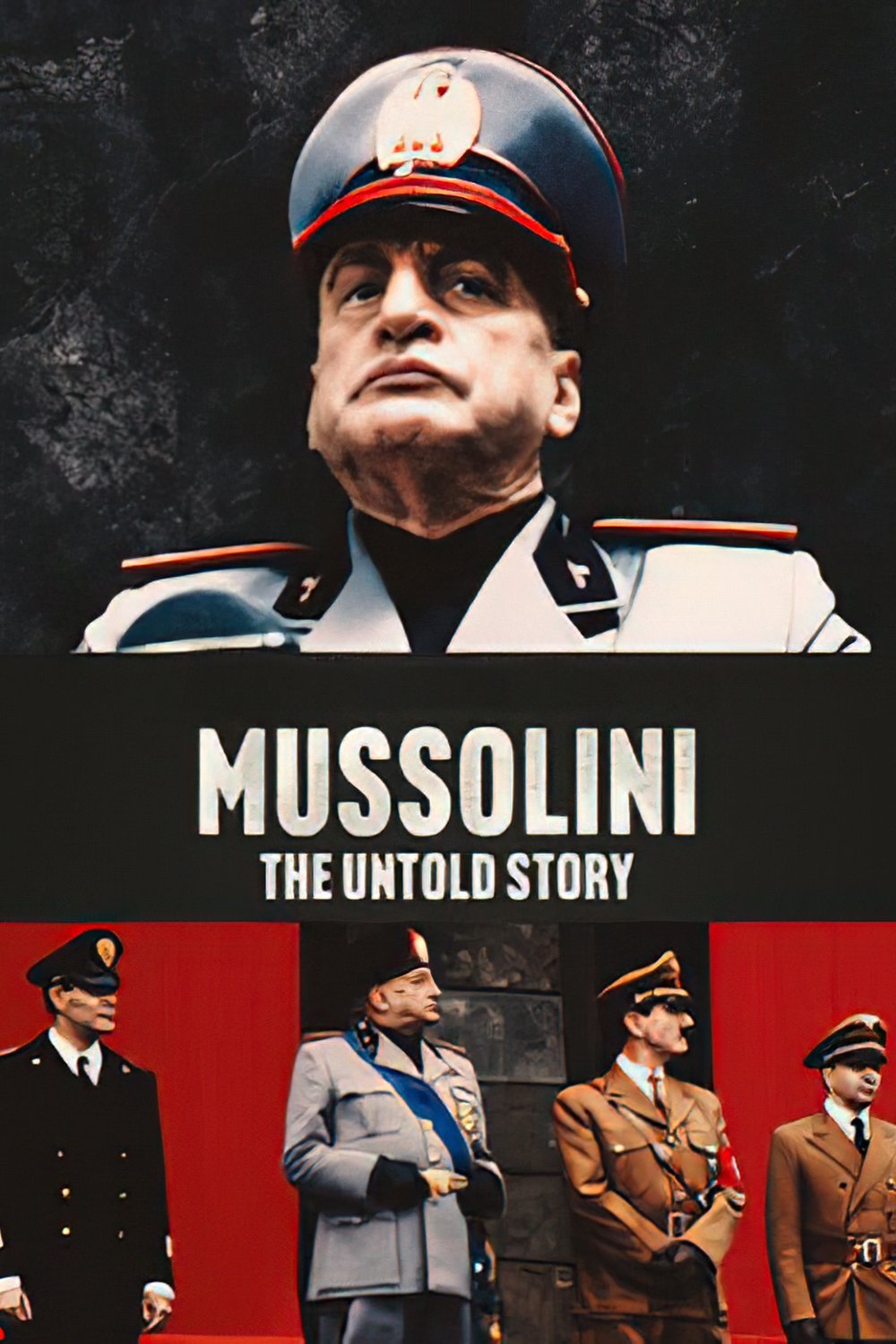
  影片讲述1922年至1943年任意大利首相,独裁者,法西斯主义的创始人墨索里尼的一生。本片运用真实的史料,全面地解读与揭示了墨索里尼在二战中扮演了什么样的角色?他与希特勒,斯大林,丘吉尔,罗斯福之间存在着怎样的私人关系?是谁救了罗马教皇使之免遭德军俘虏?墨索里尼是被谁处决的?这个独裁者私人生活情况如何?
No Blade of Grass (1970) [电影] IMDb 维基数据 TMDB
No Blade of Grass
导演: Cornel Wilde 演员: 奈杰尔·达文波特 / Jean Wallace
其它标题: 풀 한 포기도 없이 / Terre Brûlée
A strange new virus has appeared, which only attacks strains of grasses such as wheat and rice, and the world is descending into famine and chaos. Architect John, along with his family and friends, is making his way from London to his brother's farm in northern England where there will hopefully be food and safety for all of them.
Law and Disorder (1958) [电影] IMDb 维基数据 TMDB
Law and Disorder
导演: 查尔斯·克莱顿 演员: Michael Redgrave / Robert Morley
其它标题: Herzlich Willkommen im Kittchen / L'habit fait le moine
When Percy Brand, a habitual confidence trickster, keeps being sent down, he goes to great lengths to ensure that his son Colin, does not find out about his criminal past. But when Colin becomes an assistant to the Judge, who is about to try Percy for his latest escapade, Percy and his gang have to come up with a plan, to stop them meeting in court.