Roderick MacFarquhar — 作者 (15)
The Politics of China [图书] 豆瓣
Roderick MacFarquhar
作者: Roderick MacFarquhar publishing house: 劍橋大學出版社 1997 - 1
Bringing together substantial essays by leading scholars, this volume offers a comprehensive introduction to and analysis of the politics of the People's Republic of China from 1949 to the mid-1990s. The first four chapters are drawn from The Cambridge History of China, Volumes 14 and 15. The last two chapters have been written specifically for the second edition. Richard Baum's chapter covers the events of the 1980s, and Joseph Fewsmith's concluding essay extends the coverage into the 1990s.
1 One of the only books on post-1949 China that offers complete, chronologically seamless coverage of political history
2 Goes beyond politics to offer historical analysis
3 Contributors are extremely well known and respected in their field
4 New chapter for this edition brings it up to date, covering post-Tiananmen politics
5 First edition was widely adopted for undergraduate courses. The writing is clear enough to expect sales to the general, educated public - especially journalists and policy makers
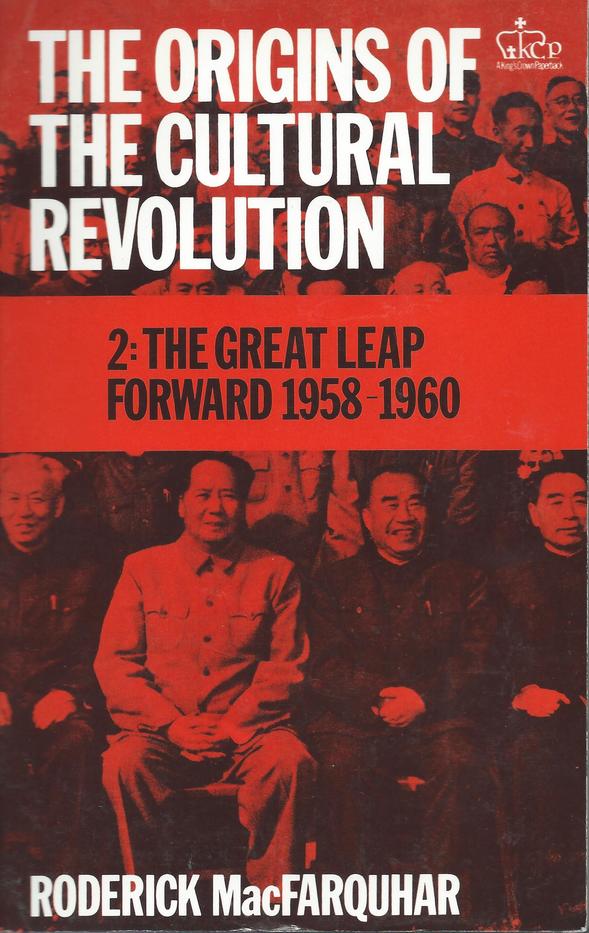
The Origins of the Cultural Revolution, Vol. 2: The Great Leap Forward 1958-1960 [图书] 豆瓣 Goodreads
作者: Roderick MacFarquhar publishing house: Columbia University Press 1987 - 12 其它标题: The Origins of the Cultural Revolution, Vol. 2: The Great Leap Forward 1958-1960
The second volume in a trilogy which examines the politics, economics, culture and international relations of China from the mid-1950s to he mid-1960s, this volume tells the story of the Great Leap Forward--Mao's utopian attempt to propel China economically and socially into the twenty-first century by mobilizing his nation's greatest asset: its disciplined manpower. The effort produced economic disaster and political dissension, and helped to precipitate the Sino-Soviet split. Today's leaders point to it as the beginning of two decades of national trauma, which ended only after the death of Mao and the purge of the Gang of Four. Those leaders have recently authorized the release of a mass of new documentation in the form of political reminiscences, economic statistics, and leaders' speeches. This volume is the first scholarly work to use the new material comprehensively, weaving it into the narrative along with the contemporary record and the revelations published in Red Guard newspapers during the cultural revolution. The result is the most detailed account and analysis to date of what went wrong and why.
文化大革命的起源 [图书] 谷歌图书
作者: Roderick MacFarquhar / 艾平 publishing house: 求实出版社 1989
本书对50年代中期至60年代中期的中国的政治、经济、军事、文化和国际关系等方面一系列重大事件,作详尽考察和透彻分析,揭示了不少鲜为人知的内情.
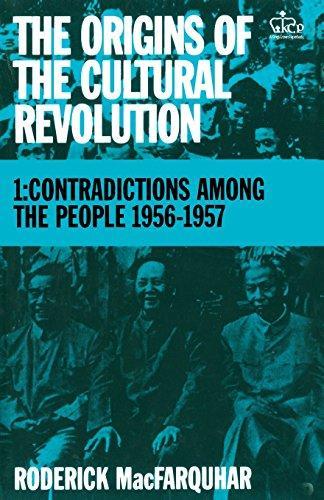
The Origins of the Cultural Revolution, I: Contradictions Among the People, 1956-1957 [图书] Goodreads Goodreads
作者: Roderick MacFarquhar publishing house: Columbia University Press 1974 - 4
In mid-1966 China was engulfed by the 'cultural revolution.' At first this seemed to be just an attack on old customs and superstitions but soon it became apparent that it involved a frontal assault on the Chinese Communist Party. Chairman Mao Tsetung was hailed as China's great supreme commander at frenzied mass rallies, but his old comrades-in-arms were paraded through the streets in disgrace by the youthful Red Guards. Almost a complete generation of communist leaders was purged, and the party which had led one of the world's greatest revolutions was demoralized, paralysed, and — for a time — effectively destroyed. The victorious Red Guards then turned on foreigners (burning down the British embassy and beating up its officials was their most spectacular feat) and on each other. Bitter and bloody internecine warfare was only quelled when at last Chairman Mao ordered the army to restore law and order. By this time it was clear, however, that Mao, the principal architect of the communist regime, was himself the progenitor of the cultural revolution that had threatened to destroy it. The three volumes of this study seek to explain Mao's apparently inexplicable behaviour by showing how a combination of political, economic, social, and international developments, as well as cultural ones, led him to make his fateful decision to launch the cultural revolution. The author presents a history of the tumultuous decade that preceded it, drawing on the revealing documentary materials that appeared during its course and after — this is the first study to make use of the hitherto secret Mao speeches which became available in the summer of 1973 — as well as on the even more copious material of the pre-cultural revolution period. The present volume deals with the famous episode of the blooming of the 'hundred flowers'.
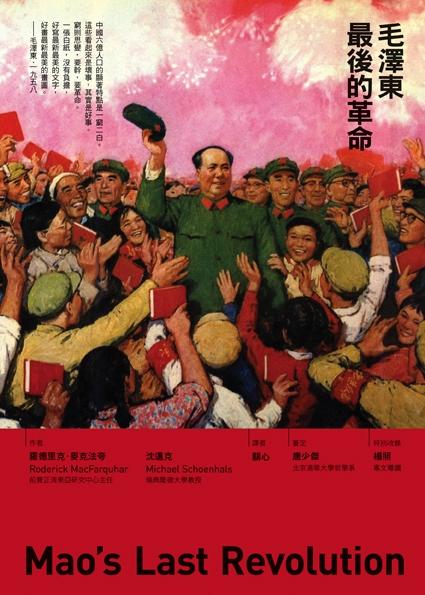
毛澤東最後的革命 [图书] Goodreads 谷歌图书
8.8 (5 个评分) 作者: Roderick MacFarquhar publishing house: 左岸文化 2009
中國六億人口的顯著特點是一窮二白。這些看起來是壞事,其實是好事。窮則思變,要幹,要革命。一張白紙,沒有負擔,好寫最新最美的文字,好畫最新最美的畫圖。<br /><b>——毛澤東,一九五八</b><br /><br />當時人民都造反,正如這之前人民都革命,之後人人又都誨言造反,或乾脆忘掉這段歷史,人人又都成了大災大難的受害者,忘了在災難沒落到自己身上之前,也多多少少當過打手,歷史就這樣一再變臉。你最好別去寫什麼歷史,只回顧個人的經驗。……而且說不準什麼時候,等人忘了,又捲土重來,沒瘋過的人再瘋一遍,沒受過迫害的再去迫害或受迫害,也因為瘋病人生來就有,只看何時發作。<br /><b>——高行健:《一個人的聖經》</b><br /><br />  文化大革命(1966-1976)是中國歷史上的重要分水嶺,是共黨統治中國五十年來最關鍵的十年。在1966年之前,中國還是個典型的共產主義國家,用計畫經濟和一黨專政來統治人民。但到了文化大革命期間,毛澤東居然放任紅衛兵對抗共產黨員,在任何共產國家都不曾出現這種情況。數萬名官員被羞辱、毒打甚至被殺害,社會秩序一片大亂,甚至必須動用軍隊來維持(但方式也同樣殘忍)。<br /><br />  在這本巨作中,麥克法夸爾和沈邁克解釋為何毛澤東要發動文化大革命,描述他如何一手操控這場運動,以及如何不擇手段地誅殺異己。作者也記述在這場駭人的政治災難中,國家如何變成互相屠殺的戰場,整個文化大革命後來完全失控,肅殺的氣氛癱瘓了整個國家。除了平民之外,毛澤東還得忙著對付他的政敵:林彪、周恩來、鄧小平、江青。<br /><br />  毛澤東死後,為了平復這十年間的肅殺與混亂,接任的領導人鄧小平採取改革的路線,此後資本主義在中國欣欣向榮,共黨也不再具有絕對的威權。<br /><br />  《毛澤東最後的革命》這本書,不僅是對毛澤東有精細的分析與批判,也是見證這個轉折年代最具公信力與可讀性的資料。
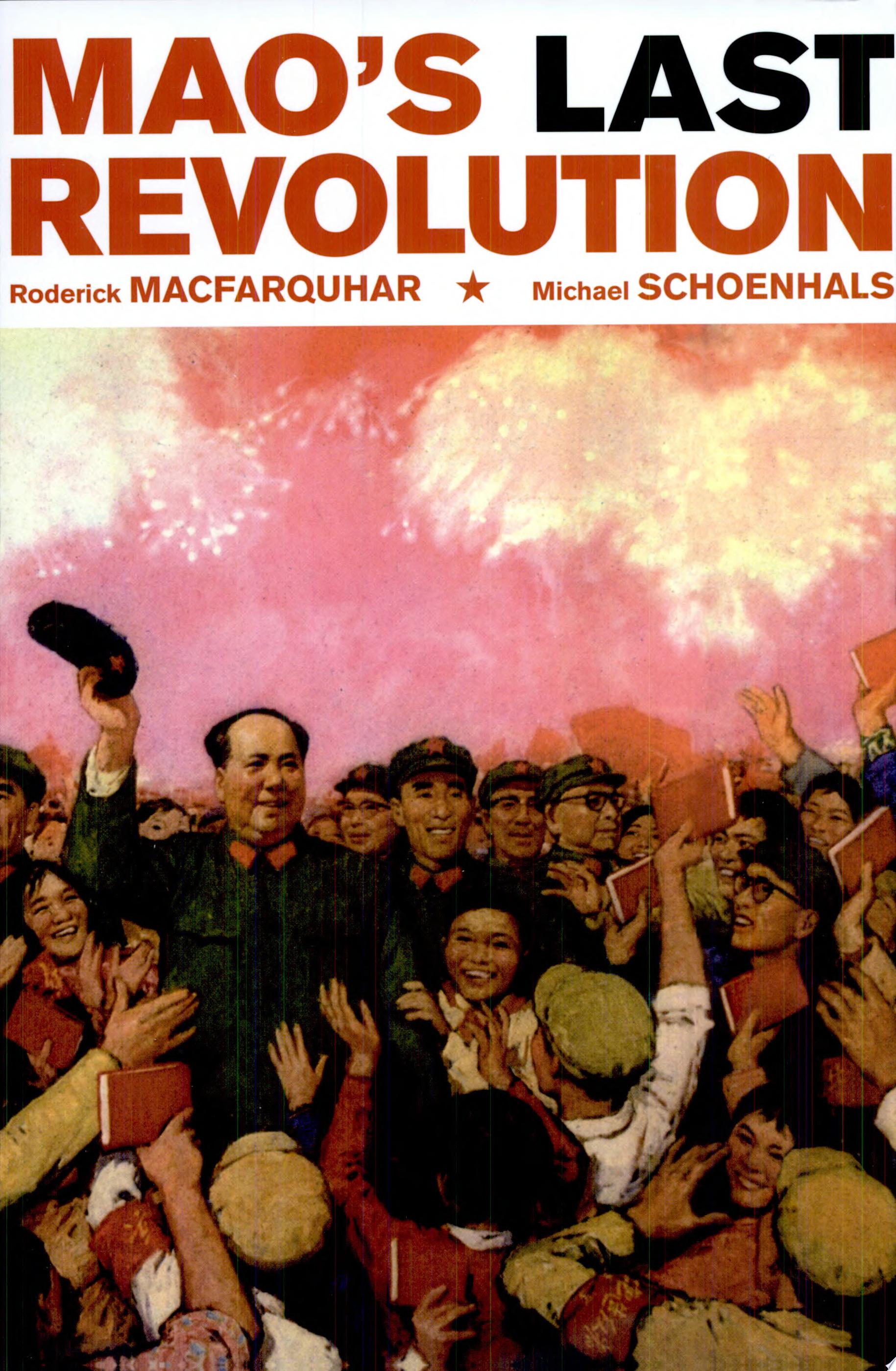
Mao’s Last Revolution [图书] 谷歌图书 Goodreads
Mao's Last Revolution
作者: Roderick MacFarquhar / Michael Schoenhals publishing house: Belknap Press: An Imprint of Harvard University Press 2006 - 8
The Cultural Revolution was a watershed event in the history of the People's Republic of China, the defining decade of half a century of communist rule. Before 1966, China was a typical communist state, with a command economy and a powerful party able to keep the population under control. But during the Cultural Revolution, in a move unprecedented in any communist country, Mao unleashed the Red Guards against the party. Tens of thousands of officials were humiliated, tortured, and even killed. Order had to be restored by the military, whose methods were often equally brutal.

In a masterly book, Roderick MacFarquhar and Michael Schoenhals explain why Mao launched the Cultural Revolution, and show his Machiavellian role in masterminding it (which Chinese publications conceal). In often horrifying detail, they document the Hobbesian state that ensued. The movement veered out of control and terror paralyzed the country. Power struggles raged among Lin Biao, Zhou Enlai, Deng Xiaoping, and Jiang Qing—Mao's wife and leader of the Gang of Four—while Mao often played one against the other.

After Mao's death, in reaction to the killing and the chaos, Deng Xiaoping led China into a reform era in which capitalism flourishes and the party has lost its former authority. In its invaluable critical analysis of Chairman Mao and its brilliant portrait of a culture in turmoil, Mao's Last Revolution offers the most authoritative and compelling account to date of this seminal event in the history of China.

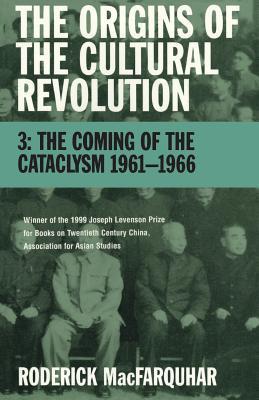
The Origins of the Cultural Revolution, Volume 3 [图书] Goodreads Goodreads
The Origins of the Cultural Revolution, Volume 3
作者: Roderick MacFarquhar publishing house: Columbia University Press 1999 - 11 其它标题: The Origins of the Cultural Revolution, Volume 3
This is the final volume in a trilogy that examines the politics, personalities, economics, culture, and international relations of China from the mid-1950s to the mid-1960s. It seeks to answer the central question: Why did Chairman Mao Zedong launch the Cultural Revolution (1966-76), which plunged China into chaos and almost destroyed its Communist Party?

The Coming of the Cataclysm starts with the great famine of the early 1960s, which resulted in tens of millions of deaths and set in train a series of emergency measures that increasingly divided Mao from his comrades-in-arms. His anger that they were prepared to adopt "capitalist" methods to rescue the country was sharpened by his belief that Moscow had actually gone capitalist and sold out to the "imperialist" West. From 1961 to 1966, the period covered by this volume, the increasingly urgent question for Mao was how to prevent a similar revolutionary degeneration in China. The Cultural Revolution was his answer.

Drawing upon new evidence from Party documents, personal interviews, books, and journals, MacFarquhar details the growing rift between Mao and his colleagues as they attempted to cope with domestic privation and an increasingly hostile international environment--until the Chairman finally decided to smash the unity of the Yan'an Round Table by unleashing society against the party-state.
文化大革命的起源:大跃進 1958-1960年 [图书] Goodreads
The Origins of the Cultural Revolution, Volume 2
Why did Mao Tse-tung launch the cultural revolution which almost destroyed all that he had worked so long and so hard to create?
is the second volume in a trilogy which examines the politics, economics, culture, and international relations of China from the mid-1950s to the mid-1960s in order to answer that question.
This volume tells the story of the Great Leap Forward. Mao's utopian attempt to propel China economically and socially into the twenty-first century by mobilizing his nation's greatest asset: its disciplined manpower. The effect produced economic disaster and political dissension, and helped to precipitate the Sino-Soviet split. Today's leaders point to it as the beginning of two decades of national trauma which ended only after the death Mao and the purge of the "gang of four". Those leaders have recently authorized the release of a mass of new documentation in the form of political reminiscences, economic statistics, and leaders' speeches. This volume is the first scholarly work to use the new material comprehensively, weaving it into the narrative along with the contemporary record and the revelations published in Red Guard newspapers during the cultural revolution. The result is the most detailed account and analysis to date of what went wrong and why.
文化大革命的起源 [图书] 谷歌图书 开放图书馆
作者: Roderick MacFarquhar / 麦克法夸尔 publishing house: 求实出版社 1989 其它标题: 文化大革命的起源
本书对50年代中期至60年代中期的中国的政治、经济、军事、文化和国际关系等方面一系列重大事件,作详尽考察和透彻分析,揭示了不少鲜为人知的内情.
Mao’s Last Revolution [图书] 谷歌图书
作者: Roderick MacFarquhar / Michael Schoenhals publishing house: Harvard University Press 2008 - 03
The Cultural Revolution was a watershed event in the history of the People’s Republic of China, the defining decade of half a century of communist rule. Before 1966, China was a typical communist state, with a command economy and a powerful party able to keep the population under control. But during the Cultural Revolution, in a move unprecedented in any communist country, Mao unleashed the Red Guards against the party. Tens of thousands of officials were humiliated, tortured, and even killed. Order had to be restored by the military, whose methods were often equally brutal.

In a masterly book, Roderick MacFarquhar and Michael Schoenhals explain why Mao launched the Cultural Revolution, and show his Machiavellian role in masterminding it (which Chinese publications conceal). In often horrifying detail, they document the Hobbesian state that ensued. The movement veered out of control and terror paralyzed the country. Power struggles raged among Lin Biao, Zhou Enlai, Deng Xiaoping, and Jiang Qing—Mao’s wife and leader of the Gang of Four—while Mao often played one against the other.

After Mao’s death, in reaction to the killing and the chaos, Deng Xiaoping led China into a reform era in which capitalism flourishes and the party has lost its former authority. In its invaluable critical analysis of Chairman Mao and its brilliant portrait of a culture in turmoil, Mao’s Last Revolution offers the most authoritative and compelling account to date of this seminal event in the history of China.