Tom Hayden — 作者 (2)
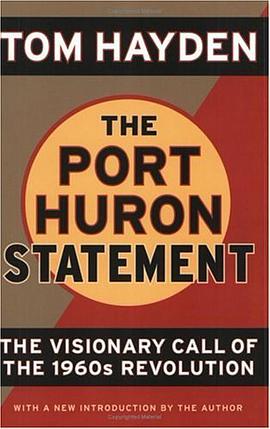
Port Huron Statement [图书] 豆瓣
作者: Tom Hayden 出版社: Thunder's Mouth Press 2005 - 9
Four key periods in American history have most influenced what America is like today: the Revolutionary War, the Civil War, World War II, and the 1960s. No document better frames and explains the 1960s than The Port Huron Statement.
The statement was a generational call for direct participatory democracy in which Americans would have greater say over the decisions affecting their lives. It called for the extension of democratic principles to the workplace as well as the electoral arena. It opposed the dominance of the military-industrial complex with the hope that social movements could reform the Democrats as a party of progressive opposition. In its vision, greater democracy would lessen individuals' alienation. The manifesto's 1962 publication preceded the phenomena of the counter-culture, hippies and back-to-the-land.
Tom Hayden, who drafted the Port Huron Statement in 1962 when he was 21 years old, was among the founders of Students for a Democratic Society, a Freedom Rider in the segregated South, a community organizer in the slums of New Jersey, an opponent of the Vietnam War who was indicted by Richard Nixon, and eventually served in the California Legislature for 18 years.
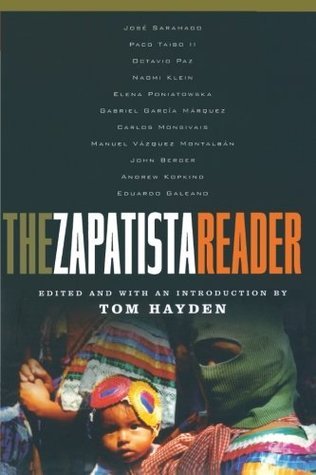
The Zapatista Reader [图书] Goodreads
作者: Tom Hayden / Andrew Kopkind 出版社: Bold Type Books 2002 - 1
The electrifying effect the Zapatista peasant rebellion has had on leading figures in the intellectual, political, and literary world since the Zapatistas woke them up on New Year's Day, 1994, has provided inspiration for activists all over the world. A remarkable synergy has also developed between leading writers, novelists, and journalists and Subcomandante Marcos, the enigmatic, pipe-smoking and balaclavered leader of the Zapatista Army of National Liberation, who seems like a character out of a "magical realism" novel. This reader includes a wide sampling of the best of the writing to emerge on the subject. The book is a journey through an insurgent and magical world of culture and politics, where celebrants and critics debate what Carlos Fuentes has described as the world's first ‘post-communist rebellion.' Included are essays by Paco Taibo II, Octavio Paz, Carlos Fuentes, Elena Poniatowska, Ilan Stavans, Carlos Monsivais, Jorge Castenada, Jose Saramago, John Berger, Marc Cooper, Andrew Kopkind, Bill Weinberg, Gabriel Garcia Marquez, Alma Guillermoprieto and Eduardo Galeano.