Edgar Morin — Author (8)
Mai 68 La Brèche [Book] Douban
The Stars [Book] Douban
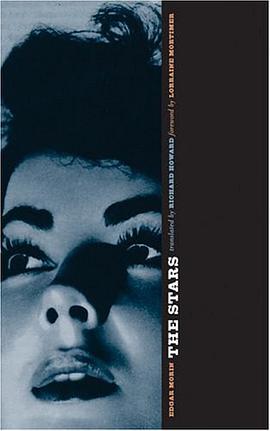
Worshipped as heroes, treated as gods, movie stars are more than objects of admiration. A star's influence touches on every aspect of ordinary life, dictating taste in fashion, lifestyle, and desire. Edgar Morin's remarkable investigation into the cultural and social significance of the star system traces its evolution from the earliest days of the cinema - when stars like Chaplin, Garbo, and Valentino lived at a distance from their fans, far beyond all mortals, to the postwar era in which stars like Humphrey Bogart and Marilyn Monroe became familiar and familial, less unapproachable but more moving, and concludes with an analysis of the furious religious adulation surrounding the life and death of James Dean. Ultimately, Morin finds, stars are more than just creations of the movie studios; they serve as intermediaries between the real and the imaginary. Today, with the cult of fame more pervasive and influential than ever, The Stars remains a vibrant, vital, and surprising work.
On Complexity [Book] Douban
L'Esprit du temps [Book] Douban
The Cinema, or The Imaginary Man [Book] Douban
author:
Edgar Morin
translator:
Lorraine Mortimer
publishing house:
Univ Of Minnesota Press
2005
- 6
When The Cinema, or The Imaginary Man first appeared in 1956, the movies and the moviegoing experience were generally not regarded as worthy of serious scholarly consideration. Yet, French critic and social theorist Edgar Morin perceived in the cinema a complex phenomenon capable of illuminating fundamental truths about thought, imagination, and human nature - which allowed him to connect the mythic universe of gods and spirits present within the most primitive societies to the hyperreality emanating from the images projected on the screen. Now making its English-language debut, this audacious, provocative work draws on insights from poets, filmmakers, anthropologists, and philosophers to restore to the cinema the sense of magic first enjoyed at the dawn of the medium. Morin's inquiry follows two veins of investigation. The first focuses on the cinematic image as the nexus between the real and the imaginary; the second examines the cinema's re-creation of the archaic universe of doubles and ghosts and its power to possess, to bewitch, to nourish dreams, desires, and aspirations. "We experience the cinema in a state of double consciousness," Morin writes, "an astonishing phenomenon where the illusion of reality is inseparable from the awareness that it is really an illusion."
复杂性理论与教育问题 [Book] Douban
《复杂性理论与教育问题》第一篇论著中莫兰应联合国教科文组织之邀,联系他对于“思想改革”的建议,全面陈述了他对于未来教育的理念,涉及他认为在当肖教育中被忽视或遗忘的中心的或根本的问题,以期引起各国教育界人士的思考和讨论。第二篇论著的中心思想是:改革思想和改革教育密不可分、相互促进。它们要求超越简化的片段性的认识,这种认识看不见整体和部分之间的相互作用,把复杂性化解为简单性和遮蔽根本性的问题,还导致科学思想和人文思想的可悲的分裂。改革思想关系到改善我们组织知识的能力和连接两个分离的文化。教育的目标与其说是造就充满知识的头脑,不如说是造就构造得宜的头脑。