Tony Stevenson — 演员 (7)
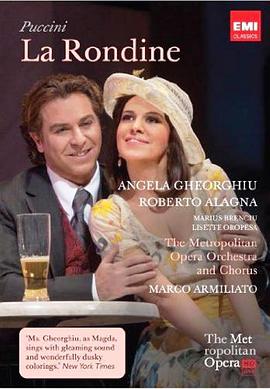
大都会歌剧院高清转播系列 第三季第六集 (2009) [电影] 豆瓣
The Metropolitan Opera HD Live: Season 3, Episode 6 Puccini: La rondine
导演: Brian Large 演员: 安吉拉·乔治乌 / 阿兰尼亚
其它标题: 普契尼《燕子》 / The Metropolitan Opera HD Live: Season 3, Episode 6 Puccini: La rondine
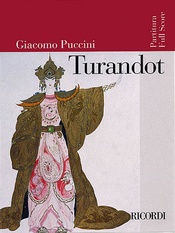
图兰朵 2009年大都会歌剧团版 [演出] 豆瓣
所属 演出: 图兰朵
语言: italian 意大利语 剧团: Metropolitan Opera Orchestra 大都会歌剧团管弦乐团 ; Metropolitan Opera Chorus 大都会歌剧团合唱团 ; Metropolitan Opera Ballet 大都会歌剧团芭蕾舞团 剧院: Metropolitan Opera House 大都会歌剧院 导演: Franco Zeffirelli / David Kneuss
其它标题: 2009年大都会歌剧团版 编剧: Giuseppe Adami / Renato Simoni 作曲: Giacomo Puccini 演员: Maria Guleghina / Marcello Giordani
Place: Peking, China
Time: Legendary times
Act 1
In China, beautiful Princess Turandot will only marry a suitor who can answer 3 secret riddles. A Mandarin announces the law of the land (Aria – Popolo di Pechino! – "People of Peking!"). The Prince of Persia has failed to answer the three riddles, and he is to be beheaded at the next moonrising. As the crowd surges towards the gates of the palace, the imperial guards brutally repulse them, causing a blind old man to be knocked to the ground. The old man's slave-girl, Liù, cries out for help. A young man hears her cry and recognizes that the old man is his long-lost father, Timur, the deposed king of Tartary. The young Prince of Tartary is overjoyed at seeing Timur alive, but still urges Timur to not speak his name because he is afraid that the Chinese rulers, who have conquered Tartary, may kill or harm them. Timur then tells his son that, of all his servants, only Liù has remained faithful to him. When the Prince asks her why, she tells him that once, long ago in the palace, the Prince had smiled at her (Trio with chorus – The crowd, Liù, Prince of Tartary, Timur: Indietro, cani! – "Back, dogs!").
The moon rises, and the crowd's cries for blood dissolve into silence. The doomed Prince of Persia, who is on his way to be executed, is led before the crowd. The young Prince is so handsome and kind that the crowd and the Prince of Tartary decide that they want Turandot to act compassionately, and they beg Turandot to appear and spare his life (Aria – The crowd, Prince of Tartary: O giovinetto! – "O youth!"). She then appears, and with a single imperious gesture, orders the execution to continue. The Prince of Tartary, who has never seen Turandot before, falls immediately in love with her, and joyfully cries out Turandot's name three times, foreshadowing the riddles to come. Then the Prince of Persia cries out one final time. The crowd, horrified, screams out one final time and the Prince of Persia is beheaded.
The Prince of Tartary is dazzled by Turandot's beauty. He is about to rush towards the gong and to strike it three times – the symbolic gesture of whoever wishes to attempt to solve the riddles so that he can marry Turandot – when the ministers Ping, Pang, and Pong appear. They urge him cynically to not lose his head for Turandot and to instead go back to his own country (Fermo, che fai?). Timur urges his son to desist, and Liù, who is secretly in love with the Prince, pleads with him not to attempt to solve the riddles (Signore, ascolta! – "Lord, hear!"). Liù's words touch the Prince's heart. He begs Liù to make Timur's exile more bearable by not abandoning Timur if the Prince fails to answer the riddles (Non piangere, Liù – "Do not cry, Liù"). The three ministers, Timur, and Liù then try one last time to stop the Prince (Ah! Per l'ultima volta! – "Ah! For the last time!") from attempting to answer the riddles, but he refuses to heed their advice.
He calls Turandot's name three times, and each time Liù, Timur, and the ministers reply, "Death!" and the crowd declares, "We're already digging your grave!" Rushing to the gong that hangs in front of the palace, the Prince strikes it three times, declaring himself to be a suitor. From the palace balcony, Turandot accepts his challenge, as Ping, Pang, and Pong laugh at the Prince's foolishness.
Act 2
Scene 1: A pavilion in the imperial palace. Before sunrise
Ping, Pang, and Pong lament their place as ministers, poring over palace documents and presiding over endless rituals. They prepare themselves for either a wedding or a funeral (Trio – Ping, Pang, Pong: Ola, Pang!). Ping suddenly longs for his country house in Honan, with its small lake surrounded by bamboo. Pong remembers his grove of forests near Tsiang, and Pang recalls his gardens near Kiu. The three share their fond memories of their lives away from the palace (Trio – Ping, Pang, Pong: Ho una casa nell'Honan – "I have a house in Honan"). They turn their thoughts back to how they have been accompanying young princes to their deaths. As the palace trumpet sounds, the ministers ready themselves for another spectacle as they await the entrance of their Emperor.
Scene 2: The courtyard of the palace. Sunrise
The Emperor Altoum, father of Turandot, sits on his grand throne in his palace. Weary of having to judge his isolated daughter's sport, he urges the Prince to withdraw his challenge, but the Prince refuses (Aria – Altoum, the Prince: Un giuramento atroce – "An atrocious oath"). Turandot enters and explains (In questa reggia – "In this palace") that her ancestress of millennia past, Princess Lo-u-Ling, reigned over her kingdom "in silence and joy, resisting the harsh domination of men" until she was raped and murdered by an invading foreign prince. Turandot claims that Lo-u-Ling now lives in her, and out of revenge, Turandot has sworn to never let any man wed her. She warns the Prince to withdraw but again he refuses. The Princess presents her first riddle: Straniero, ascolta! – "What is born each night and dies each dawn?" The Prince correctly replies, Speranza – "Hope." The Princess, unnerved, presents her second riddle (Guizza al pari di fiamma – "What flickers red and warm like a flame, but is not fire?") The Prince thinks for a moment before replying, Sangue – "Blood". Turandot is shaken. The crowd cheers the Prince, provoking Turandot's anger. She presents her third riddle (Gelo che ti da foco – "What is ice which gives you fire and which your fire freezes still more?"). He proclaims, "It is Turandot! Turandot!"
The crowd cheers for the triumphant Prince. Turandot throws herself at her father's feet and pleads with him not to leave her to the Prince's mercy. The Emperor insists that an oath is sacred and that it is Turandot's duty to wed the Prince (Duet – Turandot, Altoum, the Prince: Figlio del cielo). She cries out in despair, "Will you take me by force? (Mi porterai con la forza?) The Prince stops her, saying that he has a riddle for her: Tre enigmi m'hai proposto – "You do not know my name. Tell me my name before sunrise, and at dawn, I will die." Turandot accepts. The Emperor then declares that he hopes that he will be able to call the Prince his son when the sun next rises.
Act 3
Scene 1: The palace gardens. Night
In the distance, heralds call out Turandot's command: Cosi comanda Turandot – "This night, none shall sleep in Peking! The penalty for all will be death if the Prince's name is not discovered by morning". The Prince waits for dawn and anticipates his victory: Nessun dorma – "Nobody shall sleep!"
Ping, Pong, and Pang appear and offer the Prince women and riches if he will only give up Turandot (Tu che guardi le stelle), but he refuses. A group of soldiers then drag in Timur and Liù. They have been seen speaking to the Prince, so they must know his name. Turandot enters and orders Timur and Liù to speak. The Prince feigns ignorance, saying they know nothing. But when the guards begin to treat Timur harshly, Liù declares that she alone knows the Prince's name, but she will not reveal it. Ping demands the Prince's name, and when Liù refuses to say it, she is tortured. Turandot is clearly taken aback by Liù's resolve and asks Liù who or what gave her such a strong resolve. Liù answers, "Princess, love!" (Principessa, amore!). Turandot demands that Ping tear the Prince's name from Liù, and Ping orders Liù to be tortured even more. Liù counters Turandot (Tu che di gel sei cinta – "You who are begirdled by ice"), saying that Turandot too will learn the exquisite joy of being guided by caring and compassionate love.[note 1] Having spoken, Liù seizes a dagger from a soldier's belt and stabs herself. As she staggers towards the Prince and falls dead, the crowd screams for her to speak the Prince's name. Since Timur is blind, he must be told about Liù's death, and he cries out in anguish. When Timur warns that the gods will be offended by Liù's death, the crowd becomes subdued, very afraid and ashamed. The grieving Timur and the crowd follow Liù's body as it is carried away. Everybody departs, leaving the Prince and Turandot alone. He reproaches Turandot for her cruelty (Duet – The Prince, Turandot: Principessa di morte – "Princess of death"), then takes her in his arms and kisses her in spite of her resistance.
The Prince tries to convince Turandot to love him. At first she feels disgusted, but after he kisses her, she feels herself becoming more ardently desiring to be held and compassionately loved by him. She admits that ever since she met the Prince, she realized she both hated and loved him. She asks him to ask for nothing more and to leave, taking his mystery with him. The Prince, however, then reveals his name: "Calaf, son of Timur – Calaf, figlio di Timur", thereby placing his life in Turandot's hands. She can now destroy him if she wants (Duet – Turandot, Calaf: Del primo pianto).
Scene 2: The courtyard of the palace. Dawn
Turandot and Calaf approach the Emperor's throne. She declares that she knows the Prince's name: Diecimila anni al nostro Imperatore! – "It is ... love!" The crowd cheers and acclaims the two lovers (O sole! Vita! Eternità).
图兰朵 2019年大都会歌剧团版 [演出] 豆瓣
所属 演出: 图兰朵
语言: italian 意大利语 剧团: Metropolitan Opera Orchestra 大都会歌剧团管弦乐团 ; Metropolitan Opera Chorus 大都会歌剧团合唱团 ; Metropolitan Opera Ballet 大都会歌剧团芭蕾舞团 剧院: Metropolitan Opera House 大都会歌剧院 导演: Franco Zeffirelli / Paula Suozzi
其它标题: 2019年大都会歌剧团版 编剧: Giuseppe Adami / Renato Simoni 作曲: Giacomo Puccini 演员: Christine Goerke / Yusif Eyvazov
Place: Peking, China
Time: Legendary times
Act 1
In China, beautiful Princess Turandot will only marry a suitor who can answer 3 secret riddles. A Mandarin announces the law of the land (Aria – Popolo di Pechino! – "People of Peking!"). The Prince of Persia has failed to answer the three riddles, and he is to be beheaded at the next moonrising. As the crowd surges towards the gates of the palace, the imperial guards brutally repulse them, causing a blind old man to be knocked to the ground. The old man's slave-girl, Liù, cries out for help. A young man hears her cry and recognizes that the old man is his long-lost father, Timur, the deposed king of Tartary. The young Prince of Tartary is overjoyed at seeing Timur alive, but still urges Timur to not speak his name because he is afraid that the Chinese rulers, who have conquered Tartary, may kill or harm them. Timur then tells his son that, of all his servants, only Liù has remained faithful to him. When the Prince asks her why, she tells him that once, long ago in the palace, the Prince had smiled at her (Trio with chorus – The crowd, Liù, Prince of Tartary, Timur: Indietro, cani! – "Back, dogs!").
The moon rises, and the crowd's cries for blood dissolve into silence. The doomed Prince of Persia, who is on his way to be executed, is led before the crowd. The young Prince is so handsome and kind that the crowd and the Prince of Tartary decide that they want Turandot to act compassionately, and they beg Turandot to appear and spare his life (Aria – The crowd, Prince of Tartary: O giovinetto! – "O youth!"). She then appears, and with a single imperious gesture, orders the execution to continue. The Prince of Tartary, who has never seen Turandot before, falls immediately in love with her, and joyfully cries out Turandot's name three times, foreshadowing the riddles to come. Then the Prince of Persia cries out one final time. The crowd, horrified, screams out one final time and the Prince of Persia is beheaded.
The Prince of Tartary is dazzled by Turandot's beauty. He is about to rush towards the gong and to strike it three times – the symbolic gesture of whoever wishes to attempt to solve the riddles so that he can marry Turandot – when the ministers Ping, Pang, and Pong appear. They urge him cynically to not lose his head for Turandot and to instead go back to his own country (Fermo, che fai?). Timur urges his son to desist, and Liù, who is secretly in love with the Prince, pleads with him not to attempt to solve the riddles (Signore, ascolta! – "Lord, hear!"). Liù's words touch the Prince's heart. He begs Liù to make Timur's exile more bearable by not abandoning Timur if the Prince fails to answer the riddles (Non piangere, Liù – "Do not cry, Liù"). The three ministers, Timur, and Liù then try one last time to stop the Prince (Ah! Per l'ultima volta! – "Ah! For the last time!") from attempting to answer the riddles, but he refuses to heed their advice.
He calls Turandot's name three times, and each time Liù, Timur, and the ministers reply, "Death!" and the crowd declares, "We're already digging your grave!" Rushing to the gong that hangs in front of the palace, the Prince strikes it three times, declaring himself to be a suitor. From the palace balcony, Turandot accepts his challenge, as Ping, Pang, and Pong laugh at the Prince's foolishness.
Act 2
Scene 1: A pavilion in the imperial palace. Before sunrise
Ping, Pang, and Pong lament their place as ministers, poring over palace documents and presiding over endless rituals. They prepare themselves for either a wedding or a funeral (Trio – Ping, Pang, Pong: Ola, Pang!). Ping suddenly longs for his country house in Honan, with its small lake surrounded by bamboo. Pong remembers his grove of forests near Tsiang, and Pang recalls his gardens near Kiu. The three share their fond memories of their lives away from the palace (Trio – Ping, Pang, Pong: Ho una casa nell'Honan – "I have a house in Honan"). They turn their thoughts back to how they have been accompanying young princes to their deaths. As the palace trumpet sounds, the ministers ready themselves for another spectacle as they await the entrance of their Emperor.
Scene 2: The courtyard of the palace. Sunrise
The Emperor Altoum, father of Turandot, sits on his grand throne in his palace. Weary of having to judge his isolated daughter's sport, he urges the Prince to withdraw his challenge, but the Prince refuses (Aria – Altoum, the Prince: Un giuramento atroce – "An atrocious oath"). Turandot enters and explains (In questa reggia – "In this palace") that her ancestress of millennia past, Princess Lo-u-Ling, reigned over her kingdom "in silence and joy, resisting the harsh domination of men" until she was raped and murdered by an invading foreign prince. Turandot claims that Lo-u-Ling now lives in her, and out of revenge, Turandot has sworn to never let any man wed her. She warns the Prince to withdraw but again he refuses. The Princess presents her first riddle: Straniero, ascolta! – "What is born each night and dies each dawn?" The Prince correctly replies, Speranza – "Hope." The Princess, unnerved, presents her second riddle (Guizza al pari di fiamma – "What flickers red and warm like a flame, but is not fire?") The Prince thinks for a moment before replying, Sangue – "Blood". Turandot is shaken. The crowd cheers the Prince, provoking Turandot's anger. She presents her third riddle (Gelo che ti da foco – "What is ice which gives you fire and which your fire freezes still more?"). He proclaims, "It is Turandot! Turandot!"
The crowd cheers for the triumphant Prince. Turandot throws herself at her father's feet and pleads with him not to leave her to the Prince's mercy. The Emperor insists that an oath is sacred and that it is Turandot's duty to wed the Prince (Duet – Turandot, Altoum, the Prince: Figlio del cielo). She cries out in despair, "Will you take me by force? (Mi porterai con la forza?) The Prince stops her, saying that he has a riddle for her: Tre enigmi m'hai proposto – "You do not know my name. Tell me my name before sunrise, and at dawn, I will die." Turandot accepts. The Emperor then declares that he hopes that he will be able to call the Prince his son when the sun next rises.
Act 3
Scene 1: The palace gardens. Night
In the distance, heralds call out Turandot's command: Cosi comanda Turandot – "This night, none shall sleep in Peking! The penalty for all will be death if the Prince's name is not discovered by morning". The Prince waits for dawn and anticipates his victory: Nessun dorma – "Nobody shall sleep!"
Ping, Pong, and Pang appear and offer the Prince women and riches if he will only give up Turandot (Tu che guardi le stelle), but he refuses. A group of soldiers then drag in Timur and Liù. They have been seen speaking to the Prince, so they must know his name. Turandot enters and orders Timur and Liù to speak. The Prince feigns ignorance, saying they know nothing. But when the guards begin to treat Timur harshly, Liù declares that she alone knows the Prince's name, but she will not reveal it. Ping demands the Prince's name, and when Liù refuses to say it, she is tortured. Turandot is clearly taken aback by Liù's resolve and asks Liù who or what gave her such a strong resolve. Liù answers, "Princess, love!" (Principessa, amore!). Turandot demands that Ping tear the Prince's name from Liù, and Ping orders Liù to be tortured even more. Liù counters Turandot (Tu che di gel sei cinta – "You who are begirdled by ice"), saying that Turandot too will learn the exquisite joy of being guided by caring and compassionate love.[note 1] Having spoken, Liù seizes a dagger from a soldier's belt and stabs herself. As she staggers towards the Prince and falls dead, the crowd screams for her to speak the Prince's name. Since Timur is blind, he must be told about Liù's death, and he cries out in anguish. When Timur warns that the gods will be offended by Liù's death, the crowd becomes subdued, very afraid and ashamed. The grieving Timur and the crowd follow Liù's body as it is carried away. Everybody departs, leaving the Prince and Turandot alone. He reproaches Turandot for her cruelty (Duet – The Prince, Turandot: Principessa di morte – "Princess of death"), then takes her in his arms and kisses her in spite of her resistance.
The Prince tries to convince Turandot to love him. At first she feels disgusted, but after he kisses her, she feels herself becoming more ardently desiring to be held and compassionately loved by him. She admits that ever since she met the Prince, she realized she both hated and loved him. She asks him to ask for nothing more and to leave, taking his mystery with him. The Prince, however, then reveals his name: "Calaf, son of Timur – Calaf, figlio di Timur", thereby placing his life in Turandot's hands. She can now destroy him if she wants (Duet – Turandot, Calaf: Del primo pianto).
Scene 2: The courtyard of the palace. Dawn
Turandot and Calaf approach the Emperor's throne. She declares that she knows the Prince's name: Diecimila anni al nostro Imperatore! – "It is ... love!" The crowd cheers and acclaims the two lovers (O sole! Vita! Eternità).
霍夫曼的故事 2015年大都会歌剧团版 [演出] 豆瓣
所属 演出: 霍夫曼的故事
语言: 法语 french 剧团: Metropolitan Opera Orchestra 大都会歌剧团管弦乐团 ; Metropolitan Opera Chorus 大都会歌剧团合唱团 剧院: Metropolitan Opera House 大都会歌剧院 导演: Bartlett Sher
其它标题: 2015年大都会歌剧团版 编剧: Jules Barbier 作曲: Jacques Offenbach 演员: Vittorio Grigolo / Erin Morley
Prologue
A tavern in Nuremberg: The Muse appears and reveals to the audience her purpose is to draw Hoffmann's attention, and make him abjure all other loves, so he can be devoted to her: poetry. She takes the appearance of Hoffmann's closest friend, Nicklausse. The prima donna Stella, performing Mozart's Don Giovanni, sends a letter to Hoffmann, requesting a meeting in her dressing room after the performance. The letter and the key to the room are intercepted by Councillor Lindorf ("Dans les rôles d'amoureux langoureux" – In the languid lovers' roles), the first of the opera's incarnations of evil, Hoffmann's nemesis. Lindorf intends to replace Hoffmann at the rendezvous. In the tavern, students wait for Hoffmann. He finally arrives, and entertains them with the legend of Kleinzach the dwarf ("Il était une fois à la cour d'Eisenach" – Once upon a time at the court of Eisenach). Lindorf coaxes Hoffmann into telling the audience about his three great loves.
Act 1 (Olympia)
This act is based on a portion of "Der Sandmann" (The Sandman).
Hoffmann's first love is Olympia, an automaton created by the scientist Spalanzani. Hoffmann falls in love with her, not knowing Olympia is a mechanical doll ("Allons! Courage et confiance...Ah! vivre deux!" – Come on! Courage and confidence ... Ah! to live!). To warn Hoffmann, Nicklausse, possessing the truth about Olympia, sings a story of a mechanical doll with the appearance of a human, but Hoffmann ignores him ("Une poupée aux yeux d'émail" – A doll with enamel eyes). Coppélius, Olympia's co-creator and this act's incarnation of Nemesis, sells Hoffmann magic glasses to make Olympia appear as a real woman ("J'ai des yeux" – I have eyes).
Olympia sings one of the opera's most-famous arias, "Les oiseaux dans la charmille" (The birds in the arbor, nicknamed "The Doll Song"), during which she runs-down and needs to be wound-up before she can continue. Hoffmann is tricked into believing his affections are returned, to the bemusement of Nicklausse, subtly attempting to warn his friend ("Voyez-la sous son éventail" – See her under her fan). While dancing with Olympia, Hoffmann falls on the ground and his glasses break. At the same time, Coppélius appears, tearing Olympia apart to retaliate against Spalanzani after cheating him of his fees. With the crowd ridiculing him, Hoffmann realizes he loved an automaton.
Act 2 (Antonia)
This act is based on "Rath Krespel".
After a long search, Hoffmann finds the house where Crespel and his daughter Antonia are hiding. Hoffmann and Antonia loved each other, but were separated after Crespel decided to hide his daughter from Hoffmann. Antonia inherited her mother's talent for singing, but her father forbids her to sing because of her mysterious illness. Antonia wishes her lover would return to her ("Elle a fui, la tourterelle" – "She fled, the dove"). Her father also forbids her to see Hoffmann, encourages Antonia in her musical career, and therefore, endangers her without knowing it. Crespel tells Frantz, his servant, to stay with his daughter, and after Crespel leaves, Frantz sings a comical song about his talents "Jour et nuit je me mets en quatre" – "Day and night, I quarter my mind."
After Crespel leaves his house, Hoffmann takes advantage of the occasion to sneak-in, and the lovers are re-united (love duet: "C'est une chanson d'amour" – "It's a love song"). After Crespel returns, he receives a visit from Dr Miracle, the act's Nemesis, forcing Crespel to let him heal her. Eavesdropping, Hoffmann learns Antonia may die if she sings too-much. He returns to her boudoir, and makes her promise to give-up her artistic-dreams. Antonia reluctantly accepts her lover's will. After she is alone, Dr Miracle enters Antonia's boudoir to persuade her to sing and follow her mother's path to glory, stating Hoffmann is sacrificing her to his brutishness, and loves her only for her beauty. With mystic powers, he raises a vision of Antonia's dead mother and induces Antonia to sing, causing her death. Crespel arrives just in time to witness his daughter's last breath. Hoffmann enters, and Crespel wants to kill him, thinking he is responsible for his daughter's death. Nicklausse saves his friend from the old man's vengeance.
Act 3 (Giulietta)
This act is loosely-based on Die Abenteuer der Silvester-Nacht (A New Year's Eve Adventure).
Venice. The act opens with the barcarolle "Belle nuit, ô nuit d'amour" – "Beautiful night, oh night of love". Hoffmann falls in love with the courtesan Giulietta, and thinks she returns his affections ("Amis, l'amour tendre et rêveur" – "Friends, tender and dreamy love"). Giulietta is not in love with Hoffmann, but seducing him under the orders of Captain Dapertutto, promising to give her a diamond if she steals Hoffmann's reflection from a mirror ("Scintille, diamant" – "Sparkle, diamond"). The jealous Schlemil (cf. Peter Schlemihl for a literary antecedent), a previous-victim of Giulietta and Dapertutto (he gave Giulietta his shadow), challenges the poet to a duel, but is killed. Nicklausse wants to take Hoffmann away from Venice, and goes looking for horses. Meanwhile, Hoffmann meets Giulietta, and cannot resist her ("O Dieu! de quelle ivresse" – "O God! of what intoxication"): he gives her his reflection, only to be abandoned by the courtesan, to Dapertutto's great pleasure. Hoffmann tells Dapertutto his friend Nicklausse will come and save him. Dapertutto prepares a poison to get rid of Nicklausse, but Giulietta drinks it by mistake, dropping dead in the poet's arms.
Epilogue
The tavern in Nuremberg: Hoffmann, drunk, swears he will never love again, and explains Olympia, Antonia, and Giulietta are three facets of the same person, Stella. They represent, respectively, the young girl's, the musician's, and the courtesan's side of the prima donna. After Hoffmann says he doesn't want to love any more, Nicklausse reveals she is the Muse and reclaims Hoffmann: "Be reborn a poet! I love you, Hoffmann! Be mine!" – "Renaîtra un poète! Je t'aime, Hoffmann! Sois à moi!" The magic of poetry reaches Hoffmann as he sings "O Dieu! de quelle ivresse – "O God! of what intoxication" once more, ending with "Muse, whom I love, I am yours!" – "Muse que j'aime, je suis à toi!" At this moment, Stella, tired of waiting for Hoffmann to come to her rendezvous, enters the tavern and finds him drunk. The poet tells her to leave ("Farewell, I will not follow you, phantom, spectre of the past" – "Adieu, je ne vais pas vous suivre, fantôme, spectre du passé"), and Lindorf, waiting in the shadows, comes forth. Nicklausse explains to Stella that Hoffmann does not love her anymore, but Councillor Lindorf is waiting for her. Some students enter the room for more drinking, while Stella and Lindorf leave together.
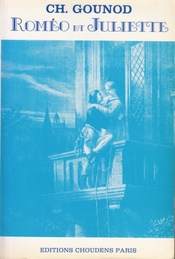
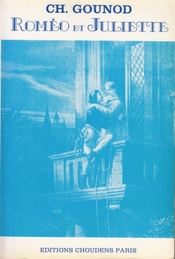
罗密欧与朱丽叶 2007年大都会歌剧团版 [演出] 豆瓣
所属 演出: 罗密欧与朱丽叶
语言: 法语 french 剧团: Metropolitan Opera Orchestra 大都会歌剧团管弦乐团 ; Metropolitan Opera Chorus 大都会歌剧团合唱团 ; Metropolitan Opera Ballet 大都会歌剧团芭蕾舞团 剧院: Metropolitan Opera House 大都会歌剧院 导演: Guy Joosten
其它标题: 2007年大都会歌剧团版 编剧: Jules Barbier / Michel Carré 作曲: Charles Gounod 演员: Roberto Alagna / Anna Netrebko
The libretto follows the story of Shakespeare's play.
Act 1
Overture prologue:
A short chorus sets the scene of the rival families in Verona.
A masked ball in the Capulets’ palace
Tybalt talks to Pâris about Juliette, who appears with her father. Roméo, Mercutio, Benvolio and their friends enter, disguised, and Mercutio sings a ballad about Queen Mab, after which Juliette sings a joyful waltz song. The first meeting between Roméo and Juliette takes place, and they fall in love. But Tybalt re-appears and suspects that the hastily re-masked Roméo is his rival. While Tybalt wants immediate revenge, Capulet orders that the ball continue.
Act 2
The Capulets' garden
After Roméo's page Stephano has helped his master gain access, he reveals the two young lovers exchanging their vows of love.
Act 3
Scene 1: Laurent's cell
Roméo and Juliette, accompanied by Gertrude, go to the cell, and the wedding takes place. Laurent hopes that reconciliation between the houses of the Montagus and the Capulets may thus take place.
Scene 2: a street near Capulet's palace
Stephano sings to attract the occupants into the street. Gregoire and Stephano skirmish as men from each family appear. The duel is first between Tybalt and Mercutio, who falls dead, and then between Roméo, determined to avenge his comrade, and Tybalt. Tybalt is killed by Roméo, who is banished by the Duke.
Act 4
Juliet's room at dawn
Roméo and Juliette are together and, after a long duet, Roméo departs for exile. Juliette's father comes to remind her of Tybalt's dying wish for Juliette to marry Count Pâris. The friar gives Juliette a draught which will cause her to sleep, so as to appear as if dead and, after being laid in the family tomb, it is planned that Roméo will awaken her and take her away. [A ballet scene in the grand hall of the palace was inserted at this point.]
Act 5
Juliet's tomb
Roméo breaks into the tomb after having taken poison because he believes that Juliette is dead. When she awakes from the friar’s potion, the lovers' last duet is heard before the poison takes effect on Roméo. As her bridegroom weakens Juliette stabs herself, to be united with her lover in death.
罗密欧与朱丽叶 2017年大都会歌剧团版 [演出] 豆瓣
所属 演出: 罗密欧与朱丽叶
语言: french 法语 剧团: Metropolitan Opera Orchestra 大都会歌剧团管弦乐团 ; Metropolitan Opera Chorus 大都会歌剧团合唱团 ; Metropolitan Opera Ballet 大都会歌剧团芭蕾舞团 剧院: Metropolitan Opera House 大都会歌剧院 导演: Bartlett Sher
其它标题: 2017年大都会歌剧团版 编剧: Jules Barbier / Michel Carré 作曲: Charles Gounod 演员: Vittorio Grigolo / Diana Damrau
The libretto follows the story of Shakespeare's play.
Act 1
Overture prologue:
A short chorus sets the scene of the rival families in Verona.
A masked ball in the Capulets’ palace
Tybalt talks to Pâris about Juliette, who appears with her father. Roméo, Mercutio, Benvolio and their friends enter, disguised, and Mercutio sings a ballad about Queen Mab, after which Juliette sings a joyful waltz song. The first meeting between Roméo and Juliette takes place, and they fall in love. But Tybalt re-appears and suspects that the hastily re-masked Roméo is his rival. While Tybalt wants immediate revenge, Capulet orders that the ball continue.
Act 2
The Capulets' garden
After Roméo's page Stephano has helped his master gain access, he reveals the two young lovers exchanging their vows of love.
Act 3
Scene 1: Laurent's cell
Roméo and Juliette, accompanied by Gertrude, go to the cell, and the wedding takes place. Laurent hopes that reconciliation between the houses of the Montagus and the Capulets may thus take place.
Scene 2: a street near Capulet's palace
Stephano sings to attract the occupants into the street. Gregoire and Stephano skirmish as men from each family appear. The duel is first between Tybalt and Mercutio, who falls dead, and then between Roméo, determined to avenge his comrade, and Tybalt. Tybalt is killed by Roméo, who is banished by the Duke.
Act 4
Juliet's room at dawn
Roméo and Juliette are together and, after a long duet, Roméo departs for exile. Juliette's father comes to remind her of Tybalt's dying wish for Juliette to marry Count Pâris. The friar gives Juliette a draught which will cause her to sleep, so as to appear as if dead and, after being laid in the family tomb, it is planned that Roméo will awaken her and take her away. [A ballet scene in the grand hall of the palace was inserted at this point.]
Act 5
Juliet's tomb
Roméo breaks into the tomb after having taken poison because he believes that Juliette is dead. When she awakes from the friar’s potion, the lovers' last duet is heard before the poison takes effect on Roméo. As her bridegroom weakens Juliette stabs herself, to be united with her lover in death.
西部女郎 2011年大都会歌剧团版 [演出] 豆瓣
所属 演出: 西部女郎
语言: italian 意大利语 剧团: Metropolitan Opera Orchestra 大都会歌剧团管弦乐团 ; Metropolitan Opera Chorus 大都会歌剧团合唱团 剧院: Metropolitan Opera House 大都会歌剧院 导演: Giancarlo del Monaco
其它标题: 2011年大都会歌剧团版 编剧: Guelfo Civinini / Carlo Zangarini 作曲: Giacomo Puccini 演员: Deborah Voigt / Marcello Giordani
Time:1849 to 1850
Place: A mining camp at the foot of the Cloudy Mountains, California
Act 1
Inside the Polka Saloon
A group of Gold Rush miners enter the "Polka" saloon after a day working at the mine ("Hello! Hello! Alla 'Polka'"). After a song by traveling minstrel Jake Wallace ("Che faranno i vecchi miei"), one of the miners, Jim Larkens, is homesick and the miners collect enough money for his fare home ("Jim, perchè piangi?").
A group of miners playing cards discover that Sid is cheating and want to attack him. Sheriff Jack Rance quiets the fight and pins two cards to Sid's jacket, as a sign of a cheat.
A Wells Fargo agent, Ashby, enters and announces that he is chasing the bandit Ramerrez and his gang of Mexicans. Rance toasts Minnie, the woman who owns the saloon, as his future wife, which makes Sonora jealous. The two men begin to fight. Rance draws his revolver but at that moment, a shot rings out and Minnie stands next to the bar with a rifle in her hands ("Hello, Minnie!"). She gives the miners a reading lesson from the Bible ("Dove eravamo?").
The Pony Express rider arrives ("La posta!") and delivers a telegram from Nina Micheltorena, offering to reveal Ramerrez's hideout. The sheriff tells Minnie that he loves her, but Minnie puts him off as she is waiting for the right man ("Ti voglio bene, Minnie").
A stranger enters the saloon and asks for a whisky and water. He introduces himself as Dick Johnson from Sacramento, whom Minnie had met earlier. Johnson invites Minnie to dance with him and she accepts. Angrily, Rance watches them.
Ashby returns with the captured Ramerrez gang member, Castro. Upon seeing his leader, Johnson, in the saloon, Castro agrees to lead Rance, Ashby and the miners in a search for Ramerrez, and the group then follows him on a false trail and in what turns out to be a wild goose chase. But before Castro leaves, he whispers to Johnson that somebody will whistle and Johnson must reply to confirm that the place is clear. A whistle is heard, but Johnson fails to reply.
Minnie shows Johnson the keg of gold that she and the miners take turns to guard at night and Johnson reassures her that the gold will be safe there. Before he leaves the saloon, he promises to visit her at her cabin. They confess their love for each other. Minnie begins to cry, and Johnson comforts her before he leaves.
Act 2
Minnie's dwelling, later that evening
Wowkle, a Native American woman who is Minnie's servant, her lover Billy Jackrabbit and their baby are present as Minnie enters, wanting to get ready for Johnson's visit. Johnson enters Minnie's cabin and she tells him all about her life. It begins to snow. They kiss and Minnie asks him to stay till morning. He denies knowing Nina Micheltorena. As Johnson hides, a posse enters looking for Ramerrez and reveal to Minnie that Johnson is the bandit Ramerrez himself. Angry, she orders Johnson to leave. After he leaves, Minnie hears a gunshot and she knows Johnson has been shot. Johnson staggers in and collapses, Minnie helps him by hiding him up in the loft. Rance enters Minnie's cabin looking for the bandit and is about to give up searching for Johnson when drops of blood fall on his hand. Rance forces Johnson to climb down. Minnie desperately makes Rance an offer: if she beats him at poker, he must let Johnson go free; if Rance wins, she will marry him. Hiding some cards in her stockings, Minnie cheats and wins. Rance honors the deal and Minnie throws herself on the unconscious Johnson on the floor.
Act 3
In the Great Californian Forest at dawn, sometime later
Johnson is again on the run from Ashby and the miners. Nick and Rance are discussing Johnson and wonder what Minnie sees in him when Ashby arrives in triumph: Johnson has been captured. Rance and the miners all want Johnson to be hanged. Johnson accepts the sentence and only asks the miners not to tell Minnie about his capture and his fate ("Ch'ella mi creda"). Minnie arrives, armed with a pistol, just before the execution and throws herself in front of Johnson to protect him. While Rance tries to proceed, she convinces the miners that they owe her too much to kill the man she loves, and asks them to forgive him ("Ah! Ah! E Minnie!"). One by one, the miners yield to her plea ("E anche tu lo vorrai, Joe"). Rance is not happy but finally he too gives in. Sonora unties Johnson and sets him free. The miners bid Minnie farewell ("Le tue parole sono di Dio"). Minnie and Johnson leave California to start a new life together.