Willi Forst — Actor (9)
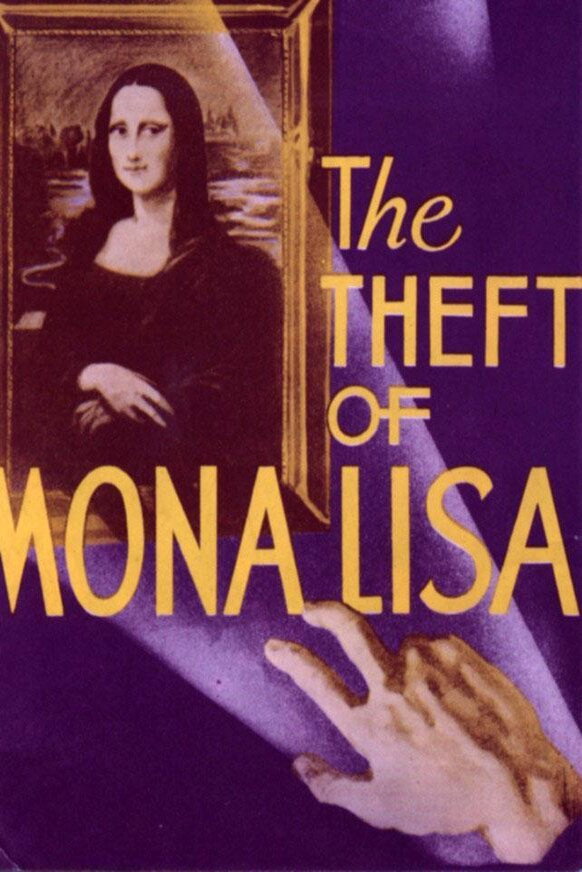
The Theft of the Mona Lisa (1931) [Movie] TMDB IMDb WikiData
Der Raub der Mona Lisa
other title: Der Raub der Mona Lisa
A painter working at the Louvre is struck by the Mona Lisa. When he meets a girl whom he believes bears a resemblance to the painting, and who wants him to become famous, he comes up with the idea of stealing the painting. Based on the real-life theft of 1911.
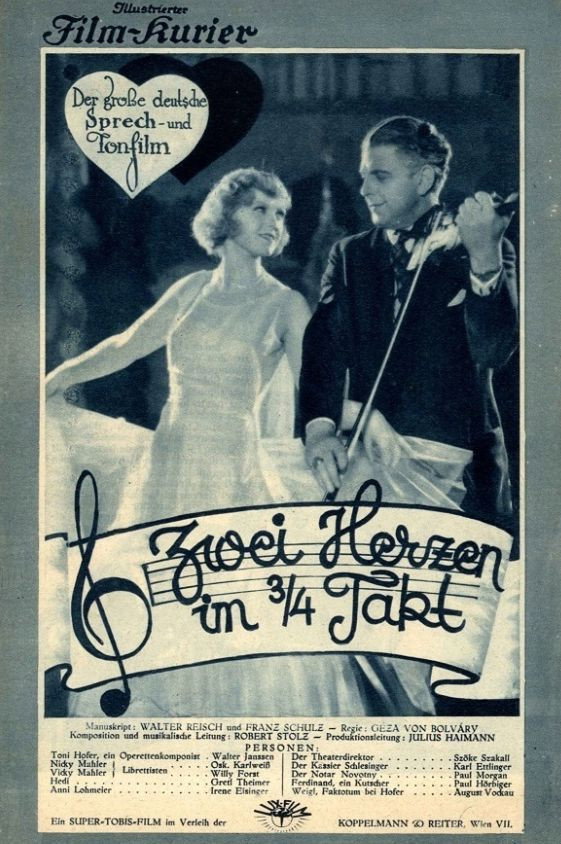
Two Hearts in Waltz Time (1930) [Movie] TMDB IMDb WikiData
Zwei Herzen im Dreiviertel-Takt
other title: Zwei Herzen im Dreiviertel-Takt / Al compás de 3 por 4
Nicky and Vicky, two librettists who also happen to be brothers, are presently in collaboration with composer Toni. All too aware of Toni's amorous escapades, Nicky and Vicky try to keep the existence of their pretty sister Hedi a secret. Suffering from an acute case of writers' block (he has yet to find an inspiration for his next production), Toni throws a huge party, which is boycotted by his friends and associates so that he'll keep his mind on his work.
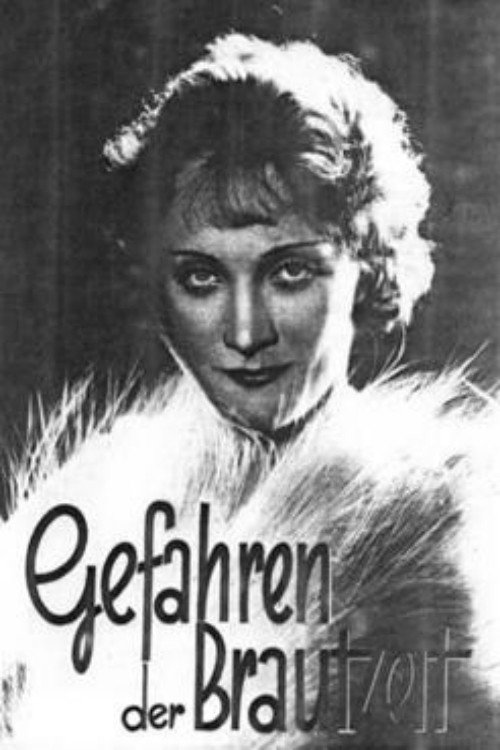
Dangers of the Engagement Period (1930) [Movie] TMDB IMDb WikiData
Gefahren der Brautzeit
director: Fred Sauer actor: Marlene Dietrich / Willi Forst
other title: Gefahren der Brautzeit
During a railway journey, Baron van Geldern meets Evelyne, an attractive young woman travelling in the same carriage. After the train is derailed, they spend a night together at a hotel, and the womanizer falls in love with her. Complications ensue when he discovers that she is engaged to his American friend.
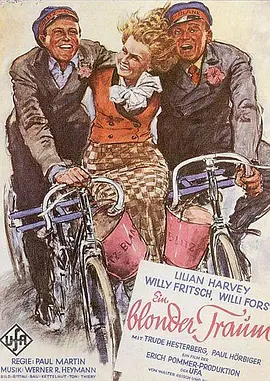
A Blonde Dream (1932) [Movie] Douban TMDB IMDb WikiData
Ein blonder Traum
director: Paul Martin actor: Lilian Harvey / Willy Fritsch
other title: 金发梦 / Ein blonder Traum
This film is one of the core musicals of early German sound film, offering a "realistic" version of the genre shot on the streets and roofs of Berlin. Despite its important role in the genre spectre it lacks catchy tunes and I didn't find it that striking, but that's unlikely to stop some Harvey fans here. And if you're interested in the genre you have to see the film once.
The story tells us of the two Willies (Forst and Fritsch) who work as window cleaners and meet a little dancer (Harvey) who dreams of a career as movie star in Hollywood. They offer her to live with her in their cosy hut outside of Berlin, but naturally soon conflicts arise in this romantic triangle.
This film is something of a forgotten gem. Biographies of Billy Wilder don't usually dwell too long on his time in the German film industry, yet the Wilder touches are apparent in the witty script of this terrific comedy. Example: Jou Jou tells the two window cleaners she was part of a novelty act called 'Ding and Dong'. 'Which were you?' they ask: 'I was the "and"' she replies - cut to a shot of the petite actress being flung about the stage like some human beanbag by two burly circus athletes. The two big musical numbers, 'We don't pay rent anymore' and 'Somewhere in the world there's a little bit of happiness' stand up well after all these years (they were written by Werner Richard Heymann, who went on to have a career composing film scores in Hollywood after the Nazi takeover in Germany). The lead actors are all on terrific form here - Lilian Harvey is charming, natural and never looked or sounded better, Willy Fritsch is at his boyishly likable best and Willi Forst, who went on to direct sophisticated comedies with much wit and flair himself, makes an able sidekick. The English language version retained Harvey, who was herself London-born.
咖啡电器 (1927) [Movie] Douban
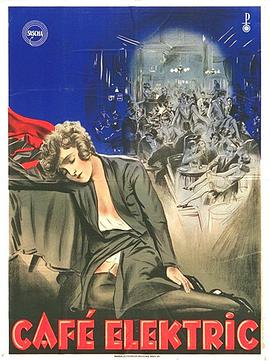
Café Elektric
director: Gustav Ucicky actor: Marlene Dietrich / Willi Forst
other title: Café Elektric
The Café Elektric has a "mixed" clientele. This is where criminal gigolo Ferdl spends his evenings, but it´s also where men like construction tycoon Göttlinger celebrate a successful business deal with the girls. One of the girls is Hansi who dreams of a better life but remarks that "the likes of us never get out of the Elektric". Meanwhile Göttlinger´s daughter Erni falls for Ferdl. When he demands money from her she can only steal from her father. Construction engineer Max is concerned over Erni´s possible downfall but covers her. Things change when he meets Hansi. When Ferdl uses a ring stolen by Erni to impress his former girlfriend Hansi, matters get complicated and fates entwine.
The Burning Secret (1933) [Movie] Douban TMDB IMDb WikiData
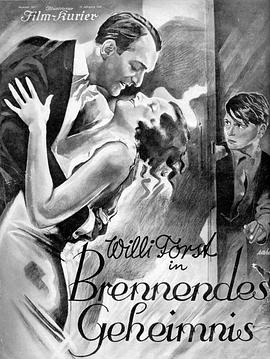
Brennendes Geheimnis
director: 罗伯特·西奥德梅克 actor: Alfred Abel / Hilde Wagener
other title: 灼人的秘密 / Brennendes Geheimnis
Brennendes Geheimnis is the last film that Robert Siodmak made in Germany before the Nazis came to power, forcing him to leave the country and pursue his filmmaking career elsewhere (first France, then America). Siodmak is best known for his atmospheric film noir thrillers and dramas, whereas this is quite a different kind of film – a poignant coming-of-age drama, with a striking realism and intimacy, lightened by a few musical interludes and some deliciously tongue-in-cheek comedy.
Adapted from a story by Stefan Zweig, the film recounts a teenage boy’s painful first steps towards adulthood. The certainties of childhood, the boy’s absolute confidence in grown-ups, his firm belief in the goodness of the world, are brutally shaken when he realises he is complicit in his mother’s adultery. Siodmak captures brilliantly not just the humour of the situation (as seen by an adults), but also the tragic dimension (as experienced by the boy). There’s also a stunning, and actually rather sinister, dream sequence mid-way through the film in which the director pays homage to German expressionism of the 1920s.
Brennendes Geheimnis is one of the Siodmak’s most poetic and engaging films, exploring the frailties of human nature with genuine compassion, insight and more than a touch of irony. The psychology is very sophisticated for a film of this era, with a daringly subversive subtext that suggests Edgar’s future emotional life could be very traumatic indeed. It’s revealing that Edgar is less hurt by his mother’s betrayal than by the fact that the stranger he has come to idolise should prefer his mother’s company to his. It’s not too hard to see why the Nazis decided to ban the film.
The part of Edgar was played (with great charm and conviction) by 14 year old Hans Joachim Schaufuss, a talented young actor who would doubtless have had a glittering career – had he not been killed in action on the Eastern Front during the Second World War, aged 22.