Jean-Pierre Ponnelle — 导演 (13)
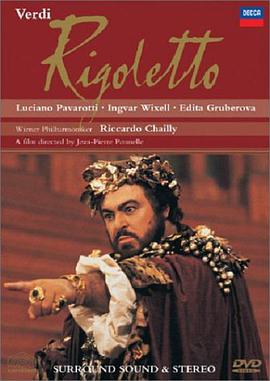
弄臣 (1982) [电影] TMDB 豆瓣 IMDb 维基数据
Rigoletto
9.8 (18 个评分) 导演: Jean-Pierre Ponnelle 演员: Edita Gruberova / Ingvar Wixell
其它标题: Rigoletto / 威尔第 歌剧电影《弄臣》
里戈莱托(卢奇亚诺·帕瓦罗蒂 Luciano Pavarotti 饰)天生矮小丑陋,是宫廷里博人一笑的弄臣。曼图亚公爵(Ingvar Wixell 饰)仗着自己生得英俊潇洒,四处侮辱玩弄女性,里戈莱托为了上位,整天在他身边为他出谋划策助纣为虐。久而久之,大家对于曼图亚公爵的恶行忍无可忍,决定设计报复。
这一次公爵看上的,是里戈莱托年轻纯洁的小女儿吉尔达(爱狄塔·格鲁贝罗娃 Edita Gruberova 饰),对此并不知情的里戈莱托亲手将自己的女儿送到了荒淫无度的公爵手中。当里戈莱托发现了真相后悲痛欲绝,决心杀死公爵为自己的女儿报仇,哪知道当他打开装有公爵尸体的麻袋后,发现里面的人竟然是吉尔达。
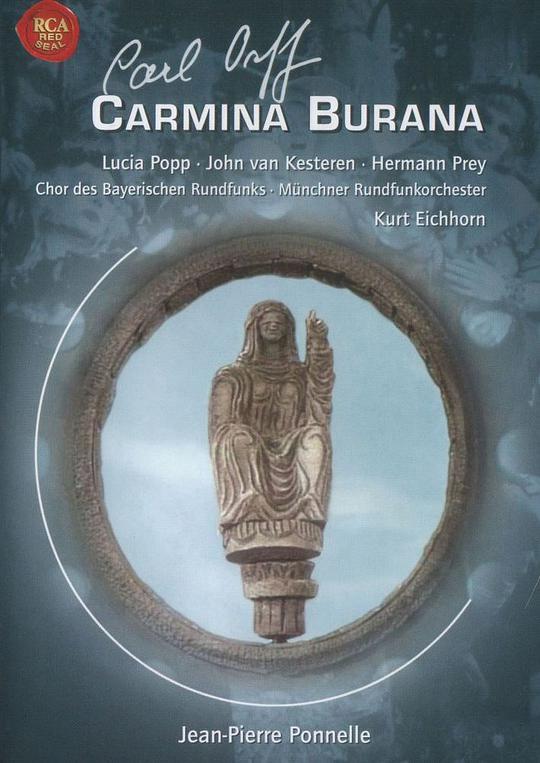
布兰诗歌 (1975) [电影] 豆瓣
Carmina burana
9.2 (5 个评分) 导演: Jean-Pierre Ponnelle 演员: Lucia Popp / John van Kesteren
其它标题: Carmina burana
布兰诗歌(Carmina Burana)也称为 《博伊伦之歌》,三场清唱剧,康塔塔歌剧之一,原为舞台作品 《凯旋三部曲》中的第一部,作于1935—1936年, 1937年初演于法兰克福,后作为康塔塔单独演出,是德国作曲家奥尔夫(Carl Orff)最著名的代表作。 其歌词选自在巴伐利亚州贝内迪先特博伊伦修道院中发现的一本13世纪的诗集。共分25个乐章,用女高音、男高音、男低音、童声合唱、合唱及乐队(内有14个乐章为管弦乐曲)。
剧情简介:
大合唱用一首前奏歌颂着命运之神。她掌握着人类的命运,如同月亮的盈亏那样有规律地分配着恩惠和烦恼。把同情给那些受伤的人,警告踞于最高权位者迟早要衰落的真理。
第一场:春天的快乐面容。
用合唱来庆祝这个季节的到来和她的赐予,男中音独唱演员敦促小伙子要忠于姑娘的爱情,并告诉姑娘要像春天那样快乐。结尾是舞蹈和合唱,歌曲主题说的是男、女孩子们玩的爱情游戏。
第二场:在一个小旅馆。
男中音痛苦地回忆在人间的生活犹如一片树叶那么脆弱。男人们接受了爱并去爱,但随着时间的推移一失足却又使自己沉沦于罪恶中。
第三场:爱情飞往每一个角落。
女高音独唱演员谈到当一个年轻姑娘孤独时,会因为得不到自己爱的人的一吻而悲哀哭泣。但如果他俩被单独地留在一个房间里,那又完全是另外一番样子。姑娘开头时害羞犹豫,但最终仍会投入情人的怀抱。大合唱最后以一首赞颂维纳斯女神的歌曲告终,以此与命运之神的前奏曲相呼应。
摘自《外国歌剧荟萃》
费加罗的婚礼 (1975) [电影] 豆瓣
Le Nozze di Figaro
9.6 (5 个评分) 导演: Jean-Pierre Ponnelle 演员: Hermann Prey / Mirella Freni
其它标题: Le Nozze di Figaro / 莫扎特 歌剧电影《费加罗的婚礼》
费加罗(赫尔曼·佩雷 Hermann Prey 饰)是在阿玛维瓦伯爵手下任职的男仆,与同为女仆的苏珊娜(米雷拉·弗蕾妮 Mirella Freni 饰)两情相悦,两人约定携手步入婚礼的殿堂。然而,阿玛维瓦伯爵贪恋苏珊娜的美貌已久,想方设法阻碍她和费加罗的结合,愤怒的费加罗决定利用自己的智慧,联手伯爵的妻子罗西娜给这个贪婪好色的老头子一点颜色瞧瞧。
苏珊娜给伯爵写了一封热情洋溢的信,约他在花园里见面。当夜,伯爵趁着月色准时赴约,隐约看到一女子站在树下,于是不分青红皂白就抱住她亲热了起来,哪知道这名女子不是苏珊娜,而是他的妻子罗西娜。
托斯卡 [演出] 豆瓣
Tosca
类型: 歌剧 编剧: Giuseppe Giacosa / Luigi Illica
其它标题: Tosca 导演: Nino Vignuzzi / Jean-Pierre Ponnelle 演员: Hariclea Darclée / Emilio de Marchi / Eugenio Giraldoni / Ruggero Galli / Ettore Borelli
Historical context
A crowded scene with many soldiers and horses, and much smoke. Some soldiers lie dead or wounded. In the distance, beyond a short line of trees, is a tall church tower.
According to the libretto, the action of Tosca occurs in Rome in June 1800. Sardou, in his play, dates it more precisely; La Tosca takes place in the afternoon, evening, and early morning of 17 and 18 June 1800.
Italy had long been divided into a number of small states, with the Pope in Rome ruling the Papal States in Central Italy. Following the French Revolution, a French army under Napoleon invaded Italy in 1796, entering Rome almost unopposed on 11 February 1798 and establishing a republic there. Pope Pius VI was taken prisoner, and was sent into exile on February 20, 1798. (Pius VI would die in exile in 1799, and his successor, Pius VII, who was elected in Venice on 14 March 1800, would not enter Rome until July 3. There is thus neither a Pope nor papal government in Rome during the days depicted in the opera.) The new republic was ruled by seven consuls; in the opera this is the office formerly held by Angelotti, whose character may be based on the real-life consul Liborio Angelucci. In September 1799 the French, who had protected the republic, withdrew from Rome. As they left, troops of the Kingdom of Naples occupied the city.
In May 1800 Napoleon, by then the undisputed leader of France, brought his troops across the Alps to Italy once again. On 14 June his army met the Austrian forces at the Battle of Marengo (near Alessandria). Austrian troops were initially successful; by mid-morning they were in control of the field of battle. Their commander, Michael von Melas, sent this news south towards Rome. However, fresh French troops arrived in late afternoon, and Napoleon attacked the tired Austrians. As Melas retreated in disarray with the remains of his army, he sent a second courier south with the revised message. The Neapolitans abandoned Rome, and the city spent the next fourteen years under French domination.
Act 1
Inside the church of Sant'Andrea della Valle
Scene depicting a church interior with high stained-glass windows and heavy ornamental columns. The central figure is a high dignatory around whom several figures are kneeling, while in the background can be seen the tall pikes of the Swiss Guard.
Cesare Angelotti, former consul of the Roman Republic and now an escaped political prisoner, runs into the church and hides in the Attavanti private chapel – his sister, the Marchesa Attavanti, has left a key to the chapel hidden at the feet of the statue of the Madonna. The elderly Sacristan enters and begins cleaning. The Sacristan kneels in prayer as the Angelus sounds.
The painter Mario Cavaradossi arrives to continue work on his picture of Mary Magdalene. The Sacristan identifies a likeness between the portrait and a blonde-haired woman who has been visiting the church recently (unknown to him, it is Angelotti's sister the Marchesa). Cavaradossi describes the "hidden harmony" ("Recondita armonia") in the contrast between the blonde beauty of his painting and his dark-haired lover, the singer Floria Tosca. The Sacristan mumbles his disapproval before leaving.
Angelotti emerges and tells Cavaradossi, an old friend who has republican sympathies, that he is being pursued by the Chief of Police, Baron Scarpia. Cavaradossi promises to assist him after nightfall. Tosca's voice is heard, calling to Cavaradossi. Cavaradossi gives Angelotti his basket of food and Angelotti hurriedly returns to his hiding place.
Tosca enters and suspiciously asks Cavaradossi what he has been doing – she thinks that he has been talking to another woman. Cavaradossi reassures her and Tosca tries to persuade him to take her to his villa that evening: "Non la sospiri, la nostra casetta" ("Do you not long for our little cottage"). She then expresses jealousy over the woman in the painting, whom she recognises as the Marchesa Attavanti. Cavaradossi explains the likeness; he has merely observed the Marchesa at prayer in the church. He reassures Tosca of his fidelity and asks her what eyes could be more beautiful than her own: "Qual'occhio al mondo" ("What eyes in the world").
After Tosca has left, Angelotti reappears and discusses with the painter his plan to flee disguised as a woman, using clothes left in the chapel by his sister. Cavaradossi gives Angelotti a key to his villa, suggesting that he hide in a disused well in the garden. The sound of a cannon signals that Angelotti's escape has been discovered. He and Cavaradossi hasten out of the church.
The Sacristan re-enters with choristers, celebrating the news that Napoleon has apparently been defeated at Marengo. The celebrations cease abruptly with the entry of Scarpia, his henchman Spoletta and several police agents. They have heard that Angelotti has sought refuge in the church. Scarpia orders a search, and the empty food basket and a fan bearing the Attavanti coat of arms are found in the chapel. Scarpia questions the Sacristan, and his suspicions are aroused further when he learns that Cavaradossi has been in the church; Scarpia mistrusts the painter, and believes him complicit in Angelotti's escape.
When Tosca arrives looking for her lover, Scarpia artfully arouses her jealous instincts by implying a relationship between the painter and the Marchesa Attavanti. He draws Tosca's attention to the fan and suggests that someone must have surprised the lovers in the chapel. Tosca falls for his deceit; enraged, she rushes off to confront Cavaradossi. Scarpia orders Spoletta and his agents to follow her, assuming she will lead them to Cavaradossi and Angelotti. He privately gloats as he reveals his intentions to possess Tosca and execute Cavaradossi. A procession enters the church singing the Te Deum; exclaiming 'Tosca, you make me forget even God!', Scarpia joins the chorus in the prayer.
Act 2
The body of a man lies supine, with a woman, crucifix in hand, kneeling over him. A candle is placed to each side of his head.
Scarpia's apartment in the Palazzo Farnese, that evening
Scarpia, at supper, sends a note to Tosca asking her to come to his apartment, anticipating that two of his goals will soon be fulfilled at once. His agent, Spoletta, arrives to report that Angelotti remains at large, but Cavaradossi has been arrested for questioning. He is brought in, and an interrogation ensues. As the painter steadfastly denies knowing anything about Angelotti's escape, Tosca's voice is heard singing a celebratory cantata elsewhere in the Palace.
She enters the apartment in time to see Cavaradossi being escorted to an antechamber. All he has time to say is that she mustn't tell them anything. Scarpia then claims she can save her lover from indescribable pain if she reveals Angelotti's hiding place. She resists, but the sound of screams coming through the door eventually breaks her down, and she tells Scarpia to search the well in the garden of Cavaradossi's villa.
Scarpia orders his torturers to cease, and the bloodied painter is dragged back in. He's devastated to discover that Tosca has betrayed his friend. Sciarrone, another agent, then enters with news: there was an upset on the battlefield at Marengo, and the French are marching on Rome. Cavaradossi, unable to contain himself, gloats to Scarpia that his rule of terror will soon be at an end. This is enough for the police to consider him guilty, and they haul him away to be shot.
Scarpia, now alone with Tosca, proposes a bargain: if she gives herself to him, Cavaradossi will be freed. She is revolted, and repeatedly rejects his advances, but she hears the drums outside announcing an execution. As Scarpia awaits her decision, she prays, asking why God has abandoned her in her hour of need: "Vissi d'arte" ("I lived for art"). She tries to offer money, but Scarpia isn't interested in that kind of bribe: he wants Tosca herself.
Spoletta returns with the news that Angelotti has killed himself upon discovery, and that everything is in place for Cavaradossi's execution. Scarpia hesitates to give the order, looking to Tosca, and despairingly she agrees to submit to him. He tells Spoletta to arrange a mock execution, both men repeating that it will be "as we did with Count Palmieri," and Spoletta exits.
Tosca insists that Scarpia must provide safe-conduct out of Rome for herself and Cavaradossi. He easily agrees to this and heads to his desk. While he's drafting the document, she quietly takes a knife from the supper table. Scarpia triumphantly strides toward Tosca. When he begins to embrace her, she stabs him, crying "this is Tosca's kiss!" Once she's certain he's dead, she ruefully says "now I forgive him." She removes the safe-conduct from his pocket, lights candles in a gesture of piety, and places a crucifix on the body before leaving.
Act 3
The upper parts of the Castel Sant'Angelo, early the following morning
Roman panorama showing, centre, an arched bridge over a river with a domed building in the distance. To the right of the bridge is a large circular fortress.
A shepherd boy is heard offstage singing (in Romanesco dialect) "Io de' sospiri" ("I give you sighs") as church bells sound for matins. The guards lead Cavaradossi in and inform him that he has one hour to live. He declines to see a priest, but asks permission to write a letter to Tosca. He begins to write, but is soon overwhelmed by memories: "E lucevan le stelle" ("And the stars shone").
Tosca enters and shows him the safe-conduct pass she's obtained, adding that she has killed Scarpia and that the imminent execution is a sham. Cavaradossi must feign death, after which they can flee together before Scarpia's body is discovered. Cavaradossi is awestruck by his gentle lover's courage: "O dolci mani" ("Oh sweet hands"). The pair ecstatically imagines the life they will share, far from Rome. Tosca then anxiously coaches Cavaradossi on how to play dead when the firing squad shoots at him with blanks. He giddily promises he'll fall "like Tosca in the theatre."
Cavaradossi is led away, and Tosca watches with increasing impatience as the execution is prepared. The men fire, Cavaradossi falls, and Tosca exclaims "Ecco un artista!" ("What an actor!"). When the soldiers have all left, she hurries towards Cavaradossi, only to find that Scarpia betrayed her: the bullets were real. Heartbroken, she clasps her lover's lifeless body and weeps.
The voices of Spoletta, Sciarrone, and the soldiers are heard, shouting that Scarpia is dead and Tosca has killed him. As the men rush in, Tosca rises, evades their clutches, and runs to the parapet. Crying "O Scarpia, Avanti a Dio!" ("O Scarpia, we meet before God!"), she flings herself over the edge to her death.
托斯卡 1985年旧金山歌剧团版 [演出] 豆瓣
所属 演出: 托斯卡
语言: 意大利语 剧团: San Francisco Opera Orchestra 旧金山歌剧团管弦乐团 ; San Francisco Opera Chorus 旧金山歌剧团合唱团 剧院: War Memorial Opera House 战争纪念馆歌剧院 导演: Jean-Pierre Ponnelle / Matthew Farruggio
其它标题: 1985年旧金山歌剧团版 编剧: Giuseppe Giacosa / Luigi Illica 作曲: Giacomo Puccini 演员: Maria Slatinaru / Giuseppe Giacomini
Historical context
A crowded scene with many soldiers and horses, and much smoke. Some soldiers lie dead or wounded. In the distance, beyond a short line of trees, is a tall church tower.
According to the libretto, the action of Tosca occurs in Rome in June 1800. Sardou, in his play, dates it more precisely; La Tosca takes place in the afternoon, evening, and early morning of 17 and 18 June 1800.
Italy had long been divided into a number of small states, with the Pope in Rome ruling the Papal States in Central Italy. Following the French Revolution, a French army under Napoleon invaded Italy in 1796, entering Rome almost unopposed on 11 February 1798 and establishing a republic there. Pope Pius VI was taken prisoner, and was sent into exile on February 20, 1798. (Pius VI would die in exile in 1799, and his successor, Pius VII, who was elected in Venice on 14 March 1800, would not enter Rome until July 3. There is thus neither a Pope nor papal government in Rome during the days depicted in the opera.) The new republic was ruled by seven consuls; in the opera this is the office formerly held by Angelotti, whose character may be based on the real-life consul Liborio Angelucci. In September 1799 the French, who had protected the republic, withdrew from Rome. As they left, troops of the Kingdom of Naples occupied the city.
In May 1800 Napoleon, by then the undisputed leader of France, brought his troops across the Alps to Italy once again. On 14 June his army met the Austrian forces at the Battle of Marengo (near Alessandria). Austrian troops were initially successful; by mid-morning they were in control of the field of battle. Their commander, Michael von Melas, sent this news south towards Rome. However, fresh French troops arrived in late afternoon, and Napoleon attacked the tired Austrians. As Melas retreated in disarray with the remains of his army, he sent a second courier south with the revised message. The Neapolitans abandoned Rome, and the city spent the next fourteen years under French domination.
Act 1
Inside the church of Sant'Andrea della Valle
Scene depicting a church interior with high stained-glass windows and heavy ornamental columns. The central figure is a high dignatory around whom several figures are kneeling, while in the background can be seen the tall pikes of the Swiss Guard.
Cesare Angelotti, former consul of the Roman Republic and now an escaped political prisoner, runs into the church and hides in the Attavanti private chapel – his sister, the Marchesa Attavanti, has left a key to the chapel hidden at the feet of the statue of the Madonna. The elderly Sacristan enters and begins cleaning. The Sacristan kneels in prayer as the Angelus sounds.
The painter Mario Cavaradossi arrives to continue work on his picture of Mary Magdalene. The Sacristan identifies a likeness between the portrait and a blonde-haired woman who has been visiting the church recently (unknown to him, it is Angelotti's sister the Marchesa). Cavaradossi describes the "hidden harmony" ("Recondita armonia") in the contrast between the blonde beauty of his painting and his dark-haired lover, the singer Floria Tosca. The Sacristan mumbles his disapproval before leaving.
Angelotti emerges and tells Cavaradossi, an old friend who has republican sympathies, that he is being pursued by the Chief of Police, Baron Scarpia. Cavaradossi promises to assist him after nightfall. Tosca's voice is heard, calling to Cavaradossi. Cavaradossi gives Angelotti his basket of food and Angelotti hurriedly returns to his hiding place.
Tosca enters and suspiciously asks Cavaradossi what he has been doing – she thinks that he has been talking to another woman. Cavaradossi reassures her and Tosca tries to persuade him to take her to his villa that evening: "Non la sospiri, la nostra casetta" ("Do you not long for our little cottage"). She then expresses jealousy over the woman in the painting, whom she recognises as the Marchesa Attavanti. Cavaradossi explains the likeness; he has merely observed the Marchesa at prayer in the church. He reassures Tosca of his fidelity and asks her what eyes could be more beautiful than her own: "Qual'occhio al mondo" ("What eyes in the world").
After Tosca has left, Angelotti reappears and discusses with the painter his plan to flee disguised as a woman, using clothes left in the chapel by his sister. Cavaradossi gives Angelotti a key to his villa, suggesting that he hide in a disused well in the garden. The sound of a cannon signals that Angelotti's escape has been discovered. He and Cavaradossi hasten out of the church.
The Sacristan re-enters with choristers, celebrating the news that Napoleon has apparently been defeated at Marengo. The celebrations cease abruptly with the entry of Scarpia, his henchman Spoletta and several police agents. They have heard that Angelotti has sought refuge in the church. Scarpia orders a search, and the empty food basket and a fan bearing the Attavanti coat of arms are found in the chapel. Scarpia questions the Sacristan, and his suspicions are aroused further when he learns that Cavaradossi has been in the church; Scarpia mistrusts the painter, and believes him complicit in Angelotti's escape.
When Tosca arrives looking for her lover, Scarpia artfully arouses her jealous instincts by implying a relationship between the painter and the Marchesa Attavanti. He draws Tosca's attention to the fan and suggests that someone must have surprised the lovers in the chapel. Tosca falls for his deceit; enraged, she rushes off to confront Cavaradossi. Scarpia orders Spoletta and his agents to follow her, assuming she will lead them to Cavaradossi and Angelotti. He privately gloats as he reveals his intentions to possess Tosca and execute Cavaradossi. A procession enters the church singing the Te Deum; exclaiming 'Tosca, you make me forget even God!', Scarpia joins the chorus in the prayer.
Act 2
The body of a man lies supine, with a woman, crucifix in hand, kneeling over him. A candle is placed to each side of his head.
Scarpia's apartment in the Palazzo Farnese, that evening
Scarpia, at supper, sends a note to Tosca asking her to come to his apartment, anticipating that two of his goals will soon be fulfilled at once. His agent, Spoletta, arrives to report that Angelotti remains at large, but Cavaradossi has been arrested for questioning. He is brought in, and an interrogation ensues. As the painter steadfastly denies knowing anything about Angelotti's escape, Tosca's voice is heard singing a celebratory cantata elsewhere in the Palace.
She enters the apartment in time to see Cavaradossi being escorted to an antechamber. All he has time to say is that she mustn't tell them anything. Scarpia then claims she can save her lover from indescribable pain if she reveals Angelotti's hiding place. She resists, but the sound of screams coming through the door eventually breaks her down, and she tells Scarpia to search the well in the garden of Cavaradossi's villa.
Scarpia orders his torturers to cease, and the bloodied painter is dragged back in. He's devastated to discover that Tosca has betrayed his friend. Sciarrone, another agent, then enters with news: there was an upset on the battlefield at Marengo, and the French are marching on Rome. Cavaradossi, unable to contain himself, gloats to Scarpia that his rule of terror will soon be at an end. This is enough for the police to consider him guilty, and they haul him away to be shot.
Scarpia, now alone with Tosca, proposes a bargain: if she gives herself to him, Cavaradossi will be freed. She is revolted, and repeatedly rejects his advances, but she hears the drums outside announcing an execution. As Scarpia awaits her decision, she prays, asking why God has abandoned her in her hour of need: "Vissi d'arte" ("I lived for art"). She tries to offer money, but Scarpia isn't interested in that kind of bribe: he wants Tosca herself.
Spoletta returns with the news that Angelotti has killed himself upon discovery, and that everything is in place for Cavaradossi's execution. Scarpia hesitates to give the order, looking to Tosca, and despairingly she agrees to submit to him. He tells Spoletta to arrange a mock execution, both men repeating that it will be "as we did with Count Palmieri," and Spoletta exits.
Tosca insists that Scarpia must provide safe-conduct out of Rome for herself and Cavaradossi. He easily agrees to this and heads to his desk. While he's drafting the document, she quietly takes a knife from the supper table. Scarpia triumphantly strides toward Tosca. When he begins to embrace her, she stabs him, crying "this is Tosca's kiss!" Once she's certain he's dead, she ruefully says "now I forgive him." She removes the safe-conduct from his pocket, lights candles in a gesture of piety, and places a crucifix on the body before leaving.
Act 3
The upper parts of the Castel Sant'Angelo, early the following morning
Roman panorama showing, centre, an arched bridge over a river with a domed building in the distance. To the right of the bridge is a large circular fortress.
A shepherd boy is heard offstage singing (in Romanesco dialect) "Io de' sospiri" ("I give you sighs") as church bells sound for matins. The guards lead Cavaradossi in and inform him that he has one hour to live. He declines to see a priest, but asks permission to write a letter to Tosca. He begins to write, but is soon overwhelmed by memories: "E lucevan le stelle" ("And the stars shone").
Tosca enters and shows him the safe-conduct pass she's obtained, adding that she has killed Scarpia and that the imminent execution is a sham. Cavaradossi must feign death, after which they can flee together before Scarpia's body is discovered. Cavaradossi is awestruck by his gentle lover's courage: "O dolci mani" ("Oh sweet hands"). The pair ecstatically imagines the life they will share, far from Rome. Tosca then anxiously coaches Cavaradossi on how to play dead when the firing squad shoots at him with blanks. He giddily promises he'll fall "like Tosca in the theatre."
Cavaradossi is led away, and Tosca watches with increasing impatience as the execution is prepared. The men fire, Cavaradossi falls, and Tosca exclaims "Ecco un artista!" ("What an actor!"). When the soldiers have all left, she hurries towards Cavaradossi, only to find that Scarpia betrayed her: the bullets were real. Heartbroken, she clasps her lover's lifeless body and weeps.
The voices of Spoletta, Sciarrone, and the soldiers are heard, shouting that Scarpia is dead and Tosca has killed him. As the men rush in, Tosca rises, evades their clutches, and runs to the parapet. Crying "O Scarpia, Avanti a Dio!" ("O Scarpia, we meet before God!"), she flings herself over the edge to her death.
费加罗的婚礼 [演出] 豆瓣
Le nozze di Figaro
8.9 (8 个评分) 类型: 歌剧 编剧: Lorenzo Da Ponte
其它标题: Le nozze di Figaro / The Marriage of Figaro 导演: 未知 / Jonathan Miller 演员: Francesco Benucci / Nancy Storace / Stefano Mandini / Luisa Laschi / Dorotea Bussani
The Marriage of Figaro continues the plot of The Barber of Seville several years later, and recounts a single "day of madness" (la folle journée) in the palace of Count Almaviva near Seville, Spain. Rosina is now the Countess; Dr. Bartolo is seeking revenge against Figaro for thwarting his plans to marry Rosina himself; and Count Almaviva has degenerated from the romantic youth of Barber into a scheming, bullying, skirt-chasing baritone. Having gratefully given Figaro a job as head of his servant-staff, he is now persistently trying to exercise his droit du seigneur – his right to bed a servant girl on her wedding night – with Figaro's bride-to-be, Susanna, who is the Countess's maid. He keeps finding excuses to delay the civil part of the wedding of his two servants, which is arranged for this very day. Figaro, Susanna, and the Countess conspire to embarrass the Count and expose his scheming. He retaliates by trying to compel Figaro legally to marry a woman old enough to be his mother, but it turns out at the last minute that she really is his mother. Through Figaro's and Susanna's clever manipulations, the Count's love for his Countess is finally restored.
Place: Count Almaviva's estate, Aguas-Frescas, three leagues outside Seville, Spain.
Overture
The overture is in the key of D major; the tempo marking is presto; i.e. very fast. The work is well known and often played independently as a concert piece.
Act 1
A partly furnished room, with a chair in the centre.
Figaro happily measures the space where the bridal bed will fit while Susanna tries on her wedding bonnet in front of a mirror (in the present day, a more traditional French floral wreath or a modern veil are often substituted, often in combination with a bonnet, so as to accommodate what Susanna happily describes as her wedding cappellino). (Duet: "Cinque, dieci, venti" – "Five, ten, twenty"). Figaro is quite pleased with their new room; Susanna far less so (Duettino: "Se a caso madama la notte ti chiama" – "If the Countess should call you during the night"). She is bothered by its proximity to the Count's chambers: it seems he has been making advances toward her and plans on exercising his droit du seigneur, the purported feudal right of a lord to bed a servant girl on her wedding night before her husband can sleep with her. The Count had the right abolished when he married Rosina, but he now wants to reinstate it. The Countess rings for Susanna and she rushes off to answer. Figaro, confident in his own resourcefulness, resolves to outwit the Count (Cavatina: "Se vuol ballare signor contino" – "If you want to dance, sir count").
Figaro departs, and Dr. Bartolo arrives with Marcellina, his old housekeeper. Figaro had previously borrowed a large sum of money from her, and, in lieu of collateral, had promised to marry her if unable to repay at the appointed time; she now intends to enforce that promise by suing him. Bartolo, seeking revenge against Figaro for having facilitated the union of the Count and Rosina (in The Barber of Seville), agrees to represent Marcellina pro bono, and assures her, in comical lawyer-speak, that he can win the case for her (aria: "La vendetta" – "Vengeance").
Bartolo departs, Susanna returns, and Marcellina and Susanna exchange very politely delivered sarcastic insults (duet: "Via resti servita, madama brillante" – "After you, brilliant madam"). Susanna triumphs in the exchange by congratulating her rival on her impressive age. The older woman departs in a fury.
Cherubino then arrives and, after describing his emerging infatuation with all women, particularly with his "beautiful godmother" the Countess (aria: "Non so più cosa son" – "I don't know anymore what I am"), asks for Susanna's aid with the Count. It seems the Count is angry with Cherubino's amorous ways, having discovered him with the gardener's daughter, Barbarina, and plans to punish him. Cherubino wants Susanna to ask the Countess to intercede on his behalf. When the Count appears, Cherubino hides behind a chair, not wanting to be seen alone with Susanna. The Count uses the opportunity of finding Susanna alone to step up his demands for favours from her, including financial inducements to sell herself to him. As Basilio, the music teacher, arrives, the Count, not wanting to be caught alone with Susanna, hides behind the chair. Cherubino leaves that hiding place just in time, and jumps onto the chair while Susanna scrambles to cover him with a dress.
When Basilio starts to gossip about Cherubino's obvious attraction to the Countess, the Count angrily leaps from his hiding place (terzetto: "Cosa sento!" – "What do I hear!"). He disparages the "absent" page's incessant flirting and describes how he caught him with Barbarina under the kitchen table. As he lifts the dress from the chair to illustrate how he lifted the tablecloth to expose Cherubino, he finds ... the self same Cherubino! The count is furious, but is reminded that the page overheard the Count's advances on Susanna, something that the Count wants to keep from the Countess. The young man is ultimately saved from punishment by the entrance of the peasants of the Count's estate, a preemptive attempt by Figaro to commit the Count to a formal gesture symbolizing his promise that Susanna would enter into the marriage unsullied. The Count evades Figaro's plan by postponing the gesture. The Count says that he forgives Cherubino, but he dispatches him to his own regiment in Seville for army duty, effective immediately. Figaro gives Cherubino mocking advice about his new, harsh, military life from which all luxury, and especially women, will be totally excluded (aria: "Non più andrai" – "No more gallivanting").
Act 2
A handsome room with an alcove, a dressing room on the left, a door in the background (leading to the servants' quarters) and a window at the side.
The Countess laments her husband's infidelity (aria: "Porgi, amor, qualche ristoro" – "Grant, love, some comfort"). Susanna comes in to prepare the Countess for the day. She responds to the Countess's questions by telling her that the Count is not trying to seduce her; he is merely offering her a monetary contract in return for her affection. Figaro enters and explains his plan to distract the Count with anonymous letters warning him of adulterers. He has already sent one to the Count (via Basilio) that indicates that the Countess has a rendezvous of her own that evening. They hope that the Count will be too busy looking for imaginary adulterers to interfere with Figaro and Susanna's wedding. Figaro additionally advises the Countess to keep Cherubino around. She should dress him up as a girl and lure the Count into an illicit rendezvous where he can be caught red-handed. Figaro leaves.
Cherubino arrives, sent in by Figaro and eager to co-operate. Susanna urges him to sing the song he wrote for the Countess (aria: "Voi che sapete che cosa è amor" – "You ladies who know what love is, is it what I'm suffering from?"). After the song, the Countess, seeing Cherubino's military commission, notices that the Count was in such a hurry that he forgot to seal it with his signet ring (which would be necessary to make it an official document).
Susanna and the Countess then begin with their plan. Susanna takes off Cherubino's cloak, and she begins to comb his hair and teach him to behave and walk like a woman (aria of Susanna: "Venite, inginocchiatevi" – "Come, kneel down before me"). Then she leaves the room through a door at the back to get the dress for Cherubino, taking his cloak with her.
While the Countess and Cherubino are waiting for Susanna to come back, they suddenly hear the Count arriving. Cherubino hides in the closet. The Count demands to be allowed into the room and the Countess reluctantly unlocks the door. The Count enters and hears a noise from the closet. He tries to open it, but it is locked. The Countess tells him it is only Susanna, trying on her wedding dress. At this moment, Susanna re-enters unobserved, quickly realizes what's going on, and hides behind a couch (Trio: "Susanna, or via, sortite" – "Susanna, come out!"). The Count shouts for her to identify herself by her voice, but the Countess orders her to be silent. Furious and suspicious, the Count leaves, with the Countess, in search of tools to force the closet door open. As they leave, he locks all the bedroom doors to prevent the intruder from escaping. Cherubino and Susanna emerge from their hiding places, and Cherubino escapes by jumping through the window into the garden. Susanna then takes Cherubino's former place in the closet, vowing to make the Count look foolish (duet: "Aprite, presto, aprite" – "Open the door, quickly!").
The Count and Countess return. The Countess, thinking herself trapped, desperately admits that Cherubino is hidden in the closet. The enraged Count draws his sword, promising to kill Cherubino on the spot, but when the door is opened, they both find to their astonishment only Susanna (Finale: "Esci omai, garzon malnato" – "Come out of there, you ill-born boy!"). The Count demands an explanation; the Countess tells him it is a practical joke, to test his trust in her. Shamed by his jealousy, the Count begs for forgiveness. When the Count presses about the anonymous letter, Susanna and the Countess reveal that the letter was written by Figaro, and then delivered by Basilio. Figaro then arrives and tries to start the wedding festivities, but the Count berates him with questions about the anonymous note. Just as the Count is starting to run out of questions, Antonio the gardener arrives, complaining that a man has jumped out of the window and damaged his carnations while running away. Antonio adds that he tentatively identified the running man as Cherubino, but Figaro claims it was he himself who jumped out of the window, and pretends to have injured his foot while landing. Figaro, Susanna, and the Countess attempt to discredit Antonio as a chronic drunkard whose constant inebriation makes him unreliable and prone to fantasy, but Antonio brings forward a paper which, he says, was dropped by the escaping man. The Count orders Figaro to prove he was the jumper by identifying the paper (which is, in fact, Cherubino's appointment to the army). Figaro is at a loss, but Susanna and the Countess manage to signal the correct answers, and Figaro triumphantly identifies the document. His victory is, however, short-lived: Marcellina, Bartolo, and Basilio enter, bringing charges against Figaro and demanding that he honor his contract to marry Marcellina, since he cannot repay her loan. The Count happily postpones the wedding in order to investigate the charge.
Act 3
A rich hall, with two thrones, prepared for the wedding ceremony.
The Count mulls over the confusing situation. At the urging of the Countess, Susanna enters and gives a false promise to meet the Count later that night in the garden (duet: "Crudel! perchè finora" – "Cruel girl, why did you make me wait so long"). As Susanna leaves, the Count overhears her telling Figaro that he has already won the case. Realizing that he is being tricked (recitative and aria: "Hai già vinta la causa! ... Vedrò, mentr'io sospiro" – "You've already won the case!" ... "Shall I, while sighing, see"), he resolves to punish Figaro by forcing him to marry Marcellina.
Figaro's hearing follows, and the Count's judgment is that Figaro must marry Marcellina. Figaro argues that he cannot get married without his parents' permission, and that he does not know who his parents are, because he was stolen from them when he was a baby. The ensuing discussion reveals that Figaro is Rafaello, the long-lost illegitimate son of Bartolo and Marcellina. A touching scene of reconciliation occurs. During the celebrations, Susanna enters with a payment to release Figaro from his debt to Marcellina. Seeing Figaro and Marcellina in celebration together, Susanna mistakenly believes that Figaro now prefers Marcellina to her. She has a tantrum and slaps Figaro's face. Marcellina explains, and Susanna, realizing her mistake, joins the celebration. Bartolo, overcome with emotion, agrees to marry Marcellina that evening in a double wedding (sextet: "Riconosci in questo amplesso" – "Recognize in this embrace").
All leave, before Barbarina, Antonio's daughter, invites Cherubino back to her house so they can disguise him as a girl. The Countess, alone, ponders the loss of her happiness (aria: "Dove sono i bei momenti" – "Where are they, the beautiful moments"). Meanwhile, Antonio informs the Count that Cherubino is not in Seville, but in fact at his house. Susanna enters and updates her mistress regarding the plan to trap the Count. The Countess dictates a love letter for Susanna to send to the Count, which suggests that he meet her (Susanna) that night, "under the pines". The letter instructs the Count to return the pin which fastens the letter (duet: "Sull'aria...che soave zeffiretto" – "On the breeze... What a gentle little zephyr").
A chorus of young peasants, among them Cherubino disguised as a girl, arrives to serenade the Countess. The Count arrives with Antonio and, discovering the page, is enraged. His anger is quickly dispelled by Barbarina, who publicly recalls that he had once offered to give her anything she wants in exchange for certain favors, and asks for Cherubino's hand in marriage. Thoroughly embarrassed, the Count allows Cherubino to stay.
The act closes with the double wedding, during the course of which Susanna delivers her letter to the Count (Finale: "Ecco la marcia" – "Here is the procession"). Figaro watches the Count prick his finger on the pin, and laughs, unaware that the love-note is an invitation for the Count to tryst with Figaro's own bride Susanna. As the curtain drops, the two newlywed couples rejoice.
Act 4
The garden, with two pavilions. Night.
Following the directions in the letter, the Count has sent the pin back to Susanna, giving it to Barbarina. However, Barbarina has lost it (aria: "L'ho perduta, me meschina" – "I have lost it, poor me"). Figaro and Marcellina see Barbarina, and Figaro asks her what she is doing. When he hears the pin is Susanna's, he is overcome with jealousy, especially as he recognises the pin to be the one that fastened the letter to the Count. Thinking that Susanna is meeting the Count behind his back, Figaro complains to his mother, and swears to be avenged on the Count and Susanna, and on all unfaithful wives. Marcellina urges caution, but Figaro will not listen. Figaro rushes off, and Marcellina resolves to inform Susanna of Figaro's intentions. Marcellina sings an aria lamenting that male and female wild beasts get along with each other, but rational humans can't (aria: "Il capro e la capretta" – "The billy-goat and the she-goat"). (This aria and Basilio's ensuing aria are usually omitted from performances due to their relative unimportance, both musically and dramatically; however, some recordings include them.)
Motivated by jealousy, Figaro tells Bartolo and Basilio to come to his aid when he gives the signal. Basilio comments on Figaro's foolishness and claims he was once as frivolous as Figaro was. He tells a tale of how he was given common sense by "Donna Flemma" ("Dame Prudence") and learned the importance of not crossing powerful people. (aria: "In quegli anni" – "In those years"). They exit, leaving Figaro alone. Figaro muses bitterly on the inconstancy of women (recitative and aria: "Tutto è disposto ... Aprite un po' quegli occhi" – "Everything is ready ... Open those eyes a little"). Susanna and the Countess arrive, each dressed in the other's clothes. Marcellina is with them, having informed Susanna of Figaro's suspicions and plans. After they discuss the plan, Marcellina and the Countess leave, and Susanna teases Figaro by singing a love song to her beloved within Figaro's hearing (aria: "Deh vieni, non tardar" – "Oh come, don't delay"). Figaro is hiding behind a bush and, thinking the song is for the Count, becomes increasingly jealous.
The Countess arrives in Susanna's dress. Cherubino shows up and starts teasing "Susanna" (really the Countess), endangering the plan. (Finale: "Pian pianin le andrò più presso" - "Softly, softly I'll approach her") The Count gets rid of him by striking out in the dark. His punch actually ends up hitting Figaro, but the point is made and Cherubino runs off.
The Count now begins making earnest love to "Susanna" (really the Countess), and gives her a jeweled ring. They go offstage together, where the Countess dodges him, hiding in the dark. Onstage, meanwhile, the real Susanna enters, wearing the Countess' clothes. Figaro mistakes her for the real Countess, and starts to tell her of the Count's intentions, but he suddenly recognizes his bride in disguise. He plays along with the joke by pretending to be in love with "my lady", and inviting her to make love right then and there. Susanna, fooled, loses her temper and slaps him many times. Figaro finally lets on that he has recognized Susanna's voice, and they make peace, resolving to conclude the comedy together ("Pace, pace, mio dolce tesoro" - "Peace, peace, my sweet treasure").
The Count, unable to find "Susanna", enters frustrated. Figaro gets his attention by loudly declaring his love for "the Countess" (really Susanna). The enraged Count calls for his people and for weapons: his servant is seducing his wife. (Ultima scena: "Gente, gente, all'armi, all'armi" – "Gentlemen, to arms!") Bartolo, Basilio and Antonio enter with torches as, one by one, the Count drags out Cherubino, Barbarina, Marcellina and the "Countess" from behind the pavilion.
All beg him to forgive Figaro and the "Countess", but he loudly refuses, repeating "no" at the top of his voice, until finally the real Countess re-enters and reveals her true identity. The Count, seeing the ring he had given her, realizes that the supposed Susanna he was trying to seduce was actually his wife. Ashamed and remorseful, he kneels and pleads for forgiveness himself ("Contessa perdono!" – "Countess, forgive me!"). The Countess, more kind than he ("Più docile io sono" – "I am more mild"), forgives her husband and all are contented.
费加罗的婚礼 1985年大都会歌剧团版 [演出] 豆瓣
所属 演出: 费加罗的婚礼
语言: italian 意大利语 剧团: Metropolitan Opera Orchestra 大都会歌剧团管弦乐团 ; Metropolitan Opera Chorus 大都会歌剧团合唱团 剧院: Metropolitan Opera House 大都会歌剧院 导演: Jean-Pierre Ponnelle
其它标题: 1985年大都会歌剧团版 编剧: Lorenzo Da Ponte 作曲: Wolfgang Amadeus Mozart 演员: Ruggero Raimondi / Kathleen Battle
The Marriage of Figaro continues the plot of The Barber of Seville several years later, and recounts a single "day of madness" (la folle journée) in the palace of Count Almaviva near Seville, Spain. Rosina is now the Countess; Dr. Bartolo is seeking revenge against Figaro for thwarting his plans to marry Rosina himself; and Count Almaviva has degenerated from the romantic youth of Barber into a scheming, bullying, skirt-chasing baritone. Having gratefully given Figaro a job as head of his servant-staff, he is now persistently trying to exercise his droit du seigneur – his right to bed a servant girl on her wedding night – with Figaro's bride-to-be, Susanna, who is the Countess's maid. He keeps finding excuses to delay the civil part of the wedding of his two servants, which is arranged for this very day. Figaro, Susanna, and the Countess conspire to embarrass the Count and expose his scheming. He retaliates by trying to compel Figaro legally to marry a woman old enough to be his mother, but it turns out at the last minute that she really is his mother. Through Figaro's and Susanna's clever manipulations, the Count's love for his Countess is finally restored.
Place: Count Almaviva's estate, Aguas-Frescas, three leagues outside Seville, Spain.
Overture
The overture is in the key of D major; the tempo marking is presto; i.e. very fast. The work is well known and often played independently as a concert piece.
Act 1
A partly furnished room, with a chair in the centre.
Figaro happily measures the space where the bridal bed will fit while Susanna tries on her wedding bonnet in front of a mirror (in the present day, a more traditional French floral wreath or a modern veil are often substituted, often in combination with a bonnet, so as to accommodate what Susanna happily describes as her wedding cappellino). (Duet: "Cinque, dieci, venti" – "Five, ten, twenty"). Figaro is quite pleased with their new room; Susanna far less so (Duettino: "Se a caso madama la notte ti chiama" – "If the Countess should call you during the night"). She is bothered by its proximity to the Count's chambers: it seems he has been making advances toward her and plans on exercising his droit du seigneur, the purported feudal right of a lord to bed a servant girl on her wedding night before her husband can sleep with her. The Count had the right abolished when he married Rosina, but he now wants to reinstate it. The Countess rings for Susanna and she rushes off to answer. Figaro, confident in his own resourcefulness, resolves to outwit the Count (Cavatina: "Se vuol ballare signor contino" – "If you want to dance, sir count").
Figaro departs, and Dr. Bartolo arrives with Marcellina, his old housekeeper. Figaro had previously borrowed a large sum of money from her, and, in lieu of collateral, had promised to marry her if unable to repay at the appointed time; she now intends to enforce that promise by suing him. Bartolo, seeking revenge against Figaro for having facilitated the union of the Count and Rosina (in The Barber of Seville), agrees to represent Marcellina pro bono, and assures her, in comical lawyer-speak, that he can win the case for her (aria: "La vendetta" – "Vengeance").
Bartolo departs, Susanna returns, and Marcellina and Susanna exchange very politely delivered sarcastic insults (duet: "Via resti servita, madama brillante" – "After you, brilliant madam"). Susanna triumphs in the exchange by congratulating her rival on her impressive age. The older woman departs in a fury.
Cherubino then arrives and, after describing his emerging infatuation with all women, particularly with his "beautiful godmother" the Countess (aria: "Non so più cosa son" – "I don't know anymore what I am"), asks for Susanna's aid with the Count. It seems the Count is angry with Cherubino's amorous ways, having discovered him with the gardener's daughter, Barbarina, and plans to punish him. Cherubino wants Susanna to ask the Countess to intercede on his behalf. When the Count appears, Cherubino hides behind a chair, not wanting to be seen alone with Susanna. The Count uses the opportunity of finding Susanna alone to step up his demands for favours from her, including financial inducements to sell herself to him. As Basilio, the music teacher, arrives, the Count, not wanting to be caught alone with Susanna, hides behind the chair. Cherubino leaves that hiding place just in time, and jumps onto the chair while Susanna scrambles to cover him with a dress.
When Basilio starts to gossip about Cherubino's obvious attraction to the Countess, the Count angrily leaps from his hiding place (terzetto: "Cosa sento!" – "What do I hear!"). He disparages the "absent" page's incessant flirting and describes how he caught him with Barbarina under the kitchen table. As he lifts the dress from the chair to illustrate how he lifted the tablecloth to expose Cherubino, he finds ... the self same Cherubino! The count is furious, but is reminded that the page overheard the Count's advances on Susanna, something that the Count wants to keep from the Countess. The young man is ultimately saved from punishment by the entrance of the peasants of the Count's estate, a preemptive attempt by Figaro to commit the Count to a formal gesture symbolizing his promise that Susanna would enter into the marriage unsullied. The Count evades Figaro's plan by postponing the gesture. The Count says that he forgives Cherubino, but he dispatches him to his own regiment in Seville for army duty, effective immediately. Figaro gives Cherubino mocking advice about his new, harsh, military life from which all luxury, and especially women, will be totally excluded (aria: "Non più andrai" – "No more gallivanting").
Act 2
A handsome room with an alcove, a dressing room on the left, a door in the background (leading to the servants' quarters) and a window at the side.
The Countess laments her husband's infidelity (aria: "Porgi, amor, qualche ristoro" – "Grant, love, some comfort"). Susanna comes in to prepare the Countess for the day. She responds to the Countess's questions by telling her that the Count is not trying to seduce her; he is merely offering her a monetary contract in return for her affection. Figaro enters and explains his plan to distract the Count with anonymous letters warning him of adulterers. He has already sent one to the Count (via Basilio) that indicates that the Countess has a rendezvous of her own that evening. They hope that the Count will be too busy looking for imaginary adulterers to interfere with Figaro and Susanna's wedding. Figaro additionally advises the Countess to keep Cherubino around. She should dress him up as a girl and lure the Count into an illicit rendezvous where he can be caught red-handed. Figaro leaves.
Cherubino arrives, sent in by Figaro and eager to co-operate. Susanna urges him to sing the song he wrote for the Countess (aria: "Voi che sapete che cosa è amor" – "You ladies who know what love is, is it what I'm suffering from?"). After the song, the Countess, seeing Cherubino's military commission, notices that the Count was in such a hurry that he forgot to seal it with his signet ring (which would be necessary to make it an official document).
Susanna and the Countess then begin with their plan. Susanna takes off Cherubino's cloak, and she begins to comb his hair and teach him to behave and walk like a woman (aria of Susanna: "Venite, inginocchiatevi" – "Come, kneel down before me"). Then she leaves the room through a door at the back to get the dress for Cherubino, taking his cloak with her.
While the Countess and Cherubino are waiting for Susanna to come back, they suddenly hear the Count arriving. Cherubino hides in the closet. The Count demands to be allowed into the room and the Countess reluctantly unlocks the door. The Count enters and hears a noise from the closet. He tries to open it, but it is locked. The Countess tells him it is only Susanna, trying on her wedding dress. At this moment, Susanna re-enters unobserved, quickly realizes what's going on, and hides behind a couch (Trio: "Susanna, or via, sortite" – "Susanna, come out!"). The Count shouts for her to identify herself by her voice, but the Countess orders her to be silent. Furious and suspicious, the Count leaves, with the Countess, in search of tools to force the closet door open. As they leave, he locks all the bedroom doors to prevent the intruder from escaping. Cherubino and Susanna emerge from their hiding places, and Cherubino escapes by jumping through the window into the garden. Susanna then takes Cherubino's former place in the closet, vowing to make the Count look foolish (duet: "Aprite, presto, aprite" – "Open the door, quickly!").
The Count and Countess return. The Countess, thinking herself trapped, desperately admits that Cherubino is hidden in the closet. The enraged Count draws his sword, promising to kill Cherubino on the spot, but when the door is opened, they both find to their astonishment only Susanna (Finale: "Esci omai, garzon malnato" – "Come out of there, you ill-born boy!"). The Count demands an explanation; the Countess tells him it is a practical joke, to test his trust in her. Shamed by his jealousy, the Count begs for forgiveness. When the Count presses about the anonymous letter, Susanna and the Countess reveal that the letter was written by Figaro, and then delivered by Basilio. Figaro then arrives and tries to start the wedding festivities, but the Count berates him with questions about the anonymous note. Just as the Count is starting to run out of questions, Antonio the gardener arrives, complaining that a man has jumped out of the window and damaged his carnations while running away. Antonio adds that he tentatively identified the running man as Cherubino, but Figaro claims it was he himself who jumped out of the window, and pretends to have injured his foot while landing. Figaro, Susanna, and the Countess attempt to discredit Antonio as a chronic drunkard whose constant inebriation makes him unreliable and prone to fantasy, but Antonio brings forward a paper which, he says, was dropped by the escaping man. The Count orders Figaro to prove he was the jumper by identifying the paper (which is, in fact, Cherubino's appointment to the army). Figaro is at a loss, but Susanna and the Countess manage to signal the correct answers, and Figaro triumphantly identifies the document. His victory is, however, short-lived: Marcellina, Bartolo, and Basilio enter, bringing charges against Figaro and demanding that he honor his contract to marry Marcellina, since he cannot repay her loan. The Count happily postpones the wedding in order to investigate the charge.
Act 3
A rich hall, with two thrones, prepared for the wedding ceremony.
The Count mulls over the confusing situation. At the urging of the Countess, Susanna enters and gives a false promise to meet the Count later that night in the garden (duet: "Crudel! perchè finora" – "Cruel girl, why did you make me wait so long"). As Susanna leaves, the Count overhears her telling Figaro that he has already won the case. Realizing that he is being tricked (recitative and aria: "Hai già vinta la causa! ... Vedrò, mentr'io sospiro" – "You've already won the case!" ... "Shall I, while sighing, see"), he resolves to punish Figaro by forcing him to marry Marcellina.
Figaro's hearing follows, and the Count's judgment is that Figaro must marry Marcellina. Figaro argues that he cannot get married without his parents' permission, and that he does not know who his parents are, because he was stolen from them when he was a baby. The ensuing discussion reveals that Figaro is Rafaello, the long-lost illegitimate son of Bartolo and Marcellina. A touching scene of reconciliation occurs. During the celebrations, Susanna enters with a payment to release Figaro from his debt to Marcellina. Seeing Figaro and Marcellina in celebration together, Susanna mistakenly believes that Figaro now prefers Marcellina to her. She has a tantrum and slaps Figaro's face. Marcellina explains, and Susanna, realizing her mistake, joins the celebration. Bartolo, overcome with emotion, agrees to marry Marcellina that evening in a double wedding (sextet: "Riconosci in questo amplesso" – "Recognize in this embrace").
All leave, before Barbarina, Antonio's daughter, invites Cherubino back to her house so they can disguise him as a girl. The Countess, alone, ponders the loss of her happiness (aria: "Dove sono i bei momenti" – "Where are they, the beautiful moments"). Meanwhile, Antonio informs the Count that Cherubino is not in Seville, but in fact at his house. Susanna enters and updates her mistress regarding the plan to trap the Count. The Countess dictates a love letter for Susanna to send to the Count, which suggests that he meet her (Susanna) that night, "under the pines". The letter instructs the Count to return the pin which fastens the letter (duet: "Sull'aria...che soave zeffiretto" – "On the breeze... What a gentle little zephyr").
A chorus of young peasants, among them Cherubino disguised as a girl, arrives to serenade the Countess. The Count arrives with Antonio and, discovering the page, is enraged. His anger is quickly dispelled by Barbarina, who publicly recalls that he had once offered to give her anything she wants in exchange for certain favors, and asks for Cherubino's hand in marriage. Thoroughly embarrassed, the Count allows Cherubino to stay.
The act closes with the double wedding, during the course of which Susanna delivers her letter to the Count (Finale: "Ecco la marcia" – "Here is the procession"). Figaro watches the Count prick his finger on the pin, and laughs, unaware that the love-note is an invitation for the Count to tryst with Figaro's own bride Susanna. As the curtain drops, the two newlywed couples rejoice.
Act 4
The garden, with two pavilions. Night.
Following the directions in the letter, the Count has sent the pin back to Susanna, giving it to Barbarina. However, Barbarina has lost it (aria: "L'ho perduta, me meschina" – "I have lost it, poor me"). Figaro and Marcellina see Barbarina, and Figaro asks her what she is doing. When he hears the pin is Susanna's, he is overcome with jealousy, especially as he recognises the pin to be the one that fastened the letter to the Count. Thinking that Susanna is meeting the Count behind his back, Figaro complains to his mother, and swears to be avenged on the Count and Susanna, and on all unfaithful wives. Marcellina urges caution, but Figaro will not listen. Figaro rushes off, and Marcellina resolves to inform Susanna of Figaro's intentions. Marcellina sings an aria lamenting that male and female wild beasts get along with each other, but rational humans can't (aria: "Il capro e la capretta" – "The billy-goat and the she-goat"). (This aria and Basilio's ensuing aria are usually omitted from performances due to their relative unimportance, both musically and dramatically; however, some recordings include them.)
Motivated by jealousy, Figaro tells Bartolo and Basilio to come to his aid when he gives the signal. Basilio comments on Figaro's foolishness and claims he was once as frivolous as Figaro was. He tells a tale of how he was given common sense by "Donna Flemma" ("Dame Prudence") and learned the importance of not crossing powerful people. (aria: "In quegli anni" – "In those years"). They exit, leaving Figaro alone. Figaro muses bitterly on the inconstancy of women (recitative and aria: "Tutto è disposto ... Aprite un po' quegli occhi" – "Everything is ready ... Open those eyes a little"). Susanna and the Countess arrive, each dressed in the other's clothes. Marcellina is with them, having informed Susanna of Figaro's suspicions and plans. After they discuss the plan, Marcellina and the Countess leave, and Susanna teases Figaro by singing a love song to her beloved within Figaro's hearing (aria: "Deh vieni, non tardar" – "Oh come, don't delay"). Figaro is hiding behind a bush and, thinking the song is for the Count, becomes increasingly jealous.
The Countess arrives in Susanna's dress. Cherubino shows up and starts teasing "Susanna" (really the Countess), endangering the plan. (Finale: "Pian pianin le andrò più presso" - "Softly, softly I'll approach her") The Count gets rid of him by striking out in the dark. His punch actually ends up hitting Figaro, but the point is made and Cherubino runs off.
The Count now begins making earnest love to "Susanna" (really the Countess), and gives her a jeweled ring. They go offstage together, where the Countess dodges him, hiding in the dark. Onstage, meanwhile, the real Susanna enters, wearing the Countess' clothes. Figaro mistakes her for the real Countess, and starts to tell her of the Count's intentions, but he suddenly recognizes his bride in disguise. He plays along with the joke by pretending to be in love with "my lady", and inviting her to make love right then and there. Susanna, fooled, loses her temper and slaps him many times. Figaro finally lets on that he has recognized Susanna's voice, and they make peace, resolving to conclude the comedy together ("Pace, pace, mio dolce tesoro" - "Peace, peace, my sweet treasure").
The Count, unable to find "Susanna", enters frustrated. Figaro gets his attention by loudly declaring his love for "the Countess" (really Susanna). The enraged Count calls for his people and for weapons: his servant is seducing his wife. (Ultima scena: "Gente, gente, all'armi, all'armi" – "Gentlemen, to arms!") Bartolo, Basilio and Antonio enter with torches as, one by one, the Count drags out Cherubino, Barbarina, Marcellina and the "Countess" from behind the pavilion.
All beg him to forgive Figaro and the "Countess", but he loudly refuses, repeating "no" at the top of his voice, until finally the real Countess re-enters and reveals her true identity. The Count, seeing the ring he had given her, realizes that the supposed Susanna he was trying to seduce was actually his wife. Ashamed and remorseful, he kneels and pleads for forgiveness himself ("Contessa perdono!" – "Countess, forgive me!"). The Countess, more kind than he ("Più docile io sono" – "I am more mild"), forgives her husband and all are contented.
意大利女郎在阿尔及尔 [演出] 豆瓣
L'italiana in Algeri
类型: 歌剧 编剧: Angelo Anelli
其它标题: L'italiana in Algeri 导演: Giancarlo del Monaco / Jean-Pierre Ponnelle 演员: Silvia Beltrami / 王宏尧 / 石倚洁 / 杨阳 / Enzo Capuano / 黄荣海 / 刘嵩虎 / 宋元明 / 李欣桐
Place: Algiers
Time: The past
Act 1
The palace of the Bey of Algiers
Elvira accompanied by her slave Zulma regrets the loss of the love of her husband, the Turkish Bey Mustafà. Left alone with Haly (since the Italian 'h' is silent, this corresponds to the name Ali, more familiar in the English-speaking world), Captain of the Corsairs, Mustafà reveals his plan to marry Elvira off to Lindoro, his Italian slave. The Bey is bored with his submissive harem, desiring a new challenge to his virility: he wants an Italian girl, and Haly must find one! Lindoro enters alone and sings about Isabella, his true love (Languir per una bella). Mustafà comes in to explain Lindoro's impending marriage. The enthusiastic Bey describes the attractions of the match, while Lindoro struggles to refuse (Se inclinassi a prender moglie).
The seashore
A ship has been wrecked in a storm. Its passengers include Isabella, in search of Lindoro, and Taddeo, her travelling companion and would-be lover. Isabella enters with a sorrowful cavatina Cruda sorte! Amor tiranno!, however she is not afraid (Già so per pratica) and will master the situation. Haly and his men take them prisoner. She passes off Taddeo as her uncle. Haly is delighted to learn she is an Italian – exactly what the Bey wanted! Left to consider their fate, Isabella is irritated by Taddeo's jealousy of Lindoro (Ai capricci della sorte), but they resolve to join forces.
The palace
Back in the palace, Lindoro and Elvira do not wish to marry, but Mustafà offers Lindoro passage on a ship returning to Italy if he takes Elvira. Lindoro agrees, admitting a vague possibility of marrying her in Italy. Haly enters with news of the arrival of the Italian beauty. Mustafà is elated (Già d'insolito ardore nel petto agitare).
Surrounded by eunuchs (Viva, viva il flagel delle donne), Mustafà receives Isabella in a grand hall. He is enchanted, though she is rather amused by his appearance (Oh! Che muso, che figura!). At that moment, Lindoro, Elvira and Zulma arrive to say goodbye to Mustafà (Pria di dividerci da voi, Signore). Lindoro and Isabella are astonished to come face to face. Recovering herself, Isabella asks about Elvira, learning she is Mustafà's ex-wife, to be remarried to Lindoro! The act ends with an ensemble of confusion (Confusi e stupidi).
Act 2
In the palace
Elvira and Zulma (who have remained in Algiers after all) note Isabella's skill with men. Mustafà reveals his strategy for seducing Isabella: he installs Lindoro as Isabella's servant and his informer, and Taddeo will also be induced to help. Elvira and Zulma must tell Isabella he is coming to take coffee with her.
Isabella and Lindoro are alone. He explains that he had no intention of marrying Elvira. They agree to escape together and Lindoro sings of his happiness (Ah come il cor di giubilo). Mustafà enters with a reluctant Taddeo, acclaimed by the Turks as "Lord Kaimakan" (Viva il grande Kaimakan). He dislikes interceding with Isabella for the Bey, but is frightened to refuse (Ho un gran peso sulla testa).
In her apartment
Isabella is dressing in Turkish style. Zulma and Elvira deliver Mustafà's message: he is coming for coffee. Isabella orders three cups. Elvira should wait in a side room. As Mustafà approaches, Isabella sings a romantic cavatina, Per lui che adoro - she will receive him. Mustafà tells Taddeo to leave when he sneezes (Ti presento di mia man). Isabella greets Mustafà warmly and he sneezes, but Taddeo ignores the signal. Isabella calls for coffee and then – to Mustafà's horror and amazement – invites Elvira to join them.
Elsewhere in the palace
Haly sings in praise of the women of Italy (Le femmine d'Italia). The Italians enter, and Taddeo reveals to a surprised Lindoro that he is not her uncle but her lover (he himself is unaware of the other man's true identity). Lindoro tells Mustafà that Isabella will declare him her adored pappataci (literally a "silent eater": a man unable to resist the opposite sex). This, as Lindoro explains (Pappataci! Che mai sento!), is an Italian custom and a great honour, as the pappataci enjoy an idyllic life dedicated to eating, drinking and sleeping. Zulma and Haly speculate about Isabella's real intentions and the quantity of alcohol ordered for the ceremony.
Isabella's apartment
She addresses the Italian slaves who will be pappataci in the ceremony - she will lead them to freedom (Pensa alla patria). The ceremony begins (Dei pappataci s'avanza il coro); Mustafà is delighted with his new honour and changes into appropriate costume. Isabella explains his obligations. He must swear an oath of eating, drinking, and keeping silent, repeating the words after Taddeo. Following that his oath is tested, under provocation by Isabella and Lindoro.
A European ship lies alongside the palace: time to escape! Taddeo finally realizes who Lindoro is, but decides to go along with them anyway. Elvira, Zulma and Haly find the Bey still acting as a mad pappataci. Suddenly recovering his sanity, Mustafà calls his troops but they are all drunk. The Italians bid farewell and Mustafà begs Elvira's forgiveness. No more Italian girls for him!

意大利女郎在阿尔及尔 1986年大都会歌剧团版 [演出] 豆瓣
所属 演出: 意大利女郎在阿尔及尔
语言: italian 意大利语 剧团: Metropolitan Opera Orchestra 大都会歌剧团管弦乐团 ; Metropolitan Opera Chorus 大都会歌剧团合唱团 剧院: Metropolitan Opera House 大都会歌剧院 导演: Jean-Pierre Ponnelle / Grischa Asagaroff
其它标题: 1986年大都会歌剧团版 编剧: Angelo Anelli 作曲: Gioachino Rossini 演员: Marilyn Horne / Douglas Ahlstedt
Place: Algiers
Time: The past
Act 1
The palace of the Bey of Algiers
Elvira accompanied by her slave Zulma regrets the loss of the love of her husband, the Turkish Bey Mustafà. Left alone with Haly (since the Italian 'h' is silent, this corresponds to the name Ali, more familiar in the English-speaking world), Captain of the Corsairs, Mustafà reveals his plan to marry Elvira off to Lindoro, his Italian slave. The Bey is bored with his submissive harem, desiring a new challenge to his virility: he wants an Italian girl, and Haly must find one! Lindoro enters alone and sings about Isabella, his true love (Languir per una bella). Mustafà comes in to explain Lindoro's impending marriage. The enthusiastic Bey describes the attractions of the match, while Lindoro struggles to refuse (Se inclinassi a prender moglie).
The seashore
A ship has been wrecked in a storm. Its passengers include Isabella, in search of Lindoro, and Taddeo, her travelling companion and would-be lover. Isabella enters with a sorrowful cavatina Cruda sorte! Amor tiranno!, however she is not afraid (Già so per pratica) and will master the situation. Haly and his men take them prisoner. She passes off Taddeo as her uncle. Haly is delighted to learn she is an Italian – exactly what the Bey wanted! Left to consider their fate, Isabella is irritated by Taddeo's jealousy of Lindoro (Ai capricci della sorte), but they resolve to join forces.
The palace
Back in the palace, Lindoro and Elvira do not wish to marry, but Mustafà offers Lindoro passage on a ship returning to Italy if he takes Elvira. Lindoro agrees, admitting a vague possibility of marrying her in Italy. Haly enters with news of the arrival of the Italian beauty. Mustafà is elated (Già d'insolito ardore nel petto agitare).
Surrounded by eunuchs (Viva, viva il flagel delle donne), Mustafà receives Isabella in a grand hall. He is enchanted, though she is rather amused by his appearance (Oh! Che muso, che figura!). At that moment, Lindoro, Elvira and Zulma arrive to say goodbye to Mustafà (Pria di dividerci da voi, Signore). Lindoro and Isabella are astonished to come face to face. Recovering herself, Isabella asks about Elvira, learning she is Mustafà's ex-wife, to be remarried to Lindoro! The act ends with an ensemble of confusion (Confusi e stupidi).
Act 2
In the palace
Elvira and Zulma (who have remained in Algiers after all) note Isabella's skill with men. Mustafà reveals his strategy for seducing Isabella: he installs Lindoro as Isabella's servant and his informer, and Taddeo will also be induced to help. Elvira and Zulma must tell Isabella he is coming to take coffee with her.
Isabella and Lindoro are alone. He explains that he had no intention of marrying Elvira. They agree to escape together and Lindoro sings of his happiness (Ah come il cor di giubilo). Mustafà enters with a reluctant Taddeo, acclaimed by the Turks as "Lord Kaimakan" (Viva il grande Kaimakan). He dislikes interceding with Isabella for the Bey, but is frightened to refuse (Ho un gran peso sulla testa).
In her apartment
Isabella is dressing in Turkish style. Zulma and Elvira deliver Mustafà's message: he is coming for coffee. Isabella orders three cups. Elvira should wait in a side room. As Mustafà approaches, Isabella sings a romantic cavatina, Per lui che adoro - she will receive him. Mustafà tells Taddeo to leave when he sneezes (Ti presento di mia man). Isabella greets Mustafà warmly and he sneezes, but Taddeo ignores the signal. Isabella calls for coffee and then – to Mustafà's horror and amazement – invites Elvira to join them.
Elsewhere in the palace
Haly sings in praise of the women of Italy (Le femmine d'Italia). The Italians enter, and Taddeo reveals to a surprised Lindoro that he is not her uncle but her lover (he himself is unaware of the other man's true identity). Lindoro tells Mustafà that Isabella will declare him her adored pappataci (literally a "silent eater": a man unable to resist the opposite sex). This, as Lindoro explains (Pappataci! Che mai sento!), is an Italian custom and a great honour, as the pappataci enjoy an idyllic life dedicated to eating, drinking and sleeping. Zulma and Haly speculate about Isabella's real intentions and the quantity of alcohol ordered for the ceremony.
Isabella's apartment
She addresses the Italian slaves who will be pappataci in the ceremony - she will lead them to freedom (Pensa alla patria). The ceremony begins (Dei pappataci s'avanza il coro); Mustafà is delighted with his new honour and changes into appropriate costume. Isabella explains his obligations. He must swear an oath of eating, drinking, and keeping silent, repeating the words after Taddeo. Following that his oath is tested, under provocation by Isabella and Lindoro.
A European ship lies alongside the palace: time to escape! Taddeo finally realizes who Lindoro is, but decides to go along with them anyway. Elvira, Zulma and Haly find the Bey still acting as a mad pappataci. Suddenly recovering his sanity, Mustafà calls his troops but they are all drunk. The Italians bid farewell and Mustafà begs Elvira's forgiveness. No more Italian girls for him!
意大利女郎在阿尔及尔 2021年斯卡拉剧院彩排版 [演出] 豆瓣
所属 演出: 意大利女郎在阿尔及尔
语言: italian 意大利语 剧团: Orchestra del Teatro alla Scala 斯卡拉剧院管弦乐团 ; Coro del Teatro alla Scala 斯卡拉剧院合唱团 剧院: Teatro alla Scala 斯卡拉剧院 导演: Jean-Pierre Ponnelle / Grischa Asagaroff
其它标题: 2021年斯卡拉剧院彩排版 编剧: Angelo Anelli 作曲: Gioachino Rossini 演员: Cecilia Molinari / Maxim Mironov
Place: Algiers
Time: The past
Act 1
The palace of the Bey of Algiers
Elvira accompanied by her slave Zulma regrets the loss of the love of her husband, the Turkish Bey Mustafà. Left alone with Haly (since the Italian 'h' is silent, this corresponds to the name Ali, more familiar in the English-speaking world), Captain of the Corsairs, Mustafà reveals his plan to marry Elvira off to Lindoro, his Italian slave. The Bey is bored with his submissive harem, desiring a new challenge to his virility: he wants an Italian girl, and Haly must find one! Lindoro enters alone and sings about Isabella, his true love (Languir per una bella). Mustafà comes in to explain Lindoro's impending marriage. The enthusiastic Bey describes the attractions of the match, while Lindoro struggles to refuse (Se inclinassi a prender moglie).
The seashore
A ship has been wrecked in a storm. Its passengers include Isabella, in search of Lindoro, and Taddeo, her travelling companion and would-be lover. Isabella enters with a sorrowful cavatina Cruda sorte! Amor tiranno!, however she is not afraid (Già so per pratica) and will master the situation. Haly and his men take them prisoner. She passes off Taddeo as her uncle. Haly is delighted to learn she is an Italian – exactly what the Bey wanted! Left to consider their fate, Isabella is irritated by Taddeo's jealousy of Lindoro (Ai capricci della sorte), but they resolve to join forces.
The palace
Back in the palace, Lindoro and Elvira do not wish to marry, but Mustafà offers Lindoro passage on a ship returning to Italy if he takes Elvira. Lindoro agrees, admitting a vague possibility of marrying her in Italy. Haly enters with news of the arrival of the Italian beauty. Mustafà is elated (Già d'insolito ardore nel petto agitare).
Surrounded by eunuchs (Viva, viva il flagel delle donne), Mustafà receives Isabella in a grand hall. He is enchanted, though she is rather amused by his appearance (Oh! Che muso, che figura!). At that moment, Lindoro, Elvira and Zulma arrive to say goodbye to Mustafà (Pria di dividerci da voi, Signore). Lindoro and Isabella are astonished to come face to face. Recovering herself, Isabella asks about Elvira, learning she is Mustafà's ex-wife, to be remarried to Lindoro! The act ends with an ensemble of confusion (Confusi e stupidi).
Act 2
In the palace
Elvira and Zulma (who have remained in Algiers after all) note Isabella's skill with men. Mustafà reveals his strategy for seducing Isabella: he installs Lindoro as Isabella's servant and his informer, and Taddeo will also be induced to help. Elvira and Zulma must tell Isabella he is coming to take coffee with her.
Isabella and Lindoro are alone. He explains that he had no intention of marrying Elvira. They agree to escape together and Lindoro sings of his happiness (Ah come il cor di giubilo). Mustafà enters with a reluctant Taddeo, acclaimed by the Turks as "Lord Kaimakan" (Viva il grande Kaimakan). He dislikes interceding with Isabella for the Bey, but is frightened to refuse (Ho un gran peso sulla testa).
In her apartment
Isabella is dressing in Turkish style. Zulma and Elvira deliver Mustafà's message: he is coming for coffee. Isabella orders three cups. Elvira should wait in a side room. As Mustafà approaches, Isabella sings a romantic cavatina, Per lui che adoro - she will receive him. Mustafà tells Taddeo to leave when he sneezes (Ti presento di mia man). Isabella greets Mustafà warmly and he sneezes, but Taddeo ignores the signal. Isabella calls for coffee and then – to Mustafà's horror and amazement – invites Elvira to join them.
Elsewhere in the palace
Haly sings in praise of the women of Italy (Le femmine d'Italia). The Italians enter, and Taddeo reveals to a surprised Lindoro that he is not her uncle but her lover (he himself is unaware of the other man's true identity). Lindoro tells Mustafà that Isabella will declare him her adored pappataci (literally a "silent eater": a man unable to resist the opposite sex). This, as Lindoro explains (Pappataci! Che mai sento!), is an Italian custom and a great honour, as the pappataci enjoy an idyllic life dedicated to eating, drinking and sleeping. Zulma and Haly speculate about Isabella's real intentions and the quantity of alcohol ordered for the ceremony.
Isabella's apartment
She addresses the Italian slaves who will be pappataci in the ceremony - she will lead them to freedom (Pensa alla patria). The ceremony begins (Dei pappataci s'avanza il coro); Mustafà is delighted with his new honour and changes into appropriate costume. Isabella explains his obligations. He must swear an oath of eating, drinking, and keeping silent, repeating the words after Taddeo. Following that his oath is tested, under provocation by Isabella and Lindoro.
A European ship lies alongside the palace: time to escape! Taddeo finally realizes who Lindoro is, but decides to go along with them anyway. Elvira, Zulma and Haly find the Bey still acting as a mad pappataci. Suddenly recovering his sanity, Mustafà calls his troops but they are all drunk. The Italians bid farewell and Mustafà begs Elvira's forgiveness. No more Italian girls for him!