John Adams — 艺术家 (18)
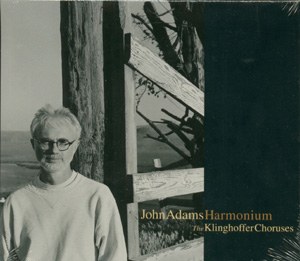
Harmonium, Klinghoffer Choruses [音乐] 豆瓣
John Adams 类型: Classical
发布日期 2000年6月20日 出版发行: NONESUCH
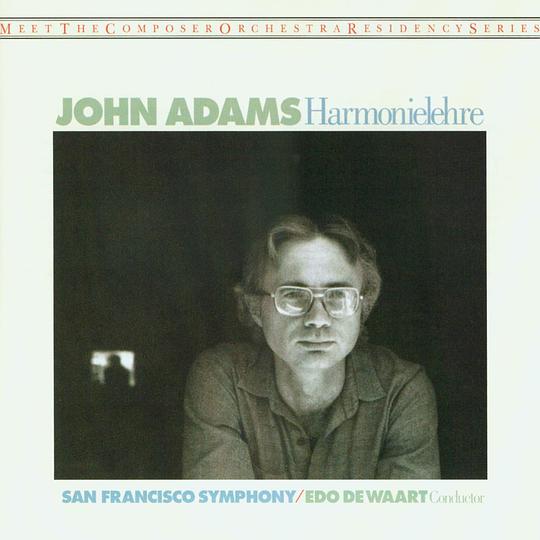
Harmonium (1980) announced to the world that John Adams was not your average minimalist. Pulsing rhythms and melodic repetitions notwithstanding, this was music that built up to fill an enormous symphonic canvas; by the composer's own admission, it owed as much to Beethoven as to Philip Glass. A chorus sings settings of John Donne and Emily Dickinson poems, both introspective and ecstatic, and the orchestra drives them on to shattering climaxes. Originally released in Nonesuch's brilliant ten-CD Adams retrospective, Earbox, this recording with the composer conducting the San Francisco Symphony and Chorus is now available for the first time separately. Although an earlier recording with the same orchestra led by Edo de Waart may create a more awesome initial sense of mystery as sound emerges from the void, Adams's new version is sonically and musically impeccable. Tipping the balance, the premiere recording, just over a half-hour long, has a full-priced CD to itself; here a group of seven choruses from Adams's opera "The Death of Klinghoffer" (1990-91) fills out the program. Taken from Kent Nagano's recording of the complete opera (based on the Achille Lauro hijacking), these excerpts are often as direct and simple as a Bach chorale. As a suite of choral interludes, they don't have the cumulative dramatic impact of "Harmonium," but they provide a fascinating glimpse of how Adams -- a minimalist for people who hate minimalism (and those who love it) -- evolved over the following decade. Scott Paulin, Barnes & Noble
约翰·亚当斯《粗纽扣》《舞曲集》 [音乐] 豆瓣
Kronos Quartet / John Adams
发布日期 1998年4月21日 出版发行: Nonesuch
John Adams on John's Book of Alledged Dances :
The Alleged Dances were the next pieces written after the Violin Concerto, a complex work that took a full year to compose. The Concerto emboldened me to go further with string writing, and some of the techniques and gestures I’d touched on in it appeared again in the new string quartet, only in a less earnest guise. The “Book” is a collection of ten dances, six of which are accompanied by a recorded percussion track made of prepared piano sounds. The prepared piano was, of course, the invention of John Cage, who first put erasers, nuts, bolts, and other damping objects in the the strings of the grand piano, thereby transforming it into a kind of pygmy gamelan. In the original version of Alleged Dances the prepeared piano sounds were organized as loops installed in an onstage sampler, and one of the quartet players triggered them on cue with a foot pedal. This made for a lot of suspense in the live performance—perhaps too much, as the potential for crash-and-burn was so high that Kronos eventually persuded me to creat a CD of the loops, a decision that allowed for significantly less anxiety during concerts.
The dances were “alleged” because the steps for them had yet to be invented (although by now a number of choreographers, including Paul Taylor, have crteated pieces around them). The general tone is dry, droll, sardonic. The music was composed with the personalities of the Kronos players very much in mind. The little pavane, “She’s So Fine,” for example, is expressly made for Joan Jeanrenaud’s sweetly lyrical high cello register, and the hoe-down, “Dogjam”, honors David Harrington’s bluegrass proclivities.
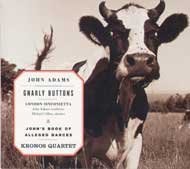
John Adams on Gnarly Buttons:
The clarinet was my first instrument. I learned it from my father, who played it in small swing bands in New England during the Depression era. He was my first and most important teacher, sitting in the front room with me, patiently counting out rhythms and checking my embouchure and fingering. Benny Goodman was a role model, and several of his recordings–in particular the 1938 Carnegie Hall jazz concert and a Mozart album with the Boston Symphony Orchestra–were played so often in the house that they almost became part of the furniture.
Later, as a teenager, I played in a local marching band with my father, and I also began to perform the other clarinet classics by Brahms, von Weber, Bartók, Stravinsky, and Copland. During my high school years I played the instrument alongside him in a small community orchestra that gave concerts before an audience of mental patients at the New Hampshire State Hospital.
But strangely enough, I never composed for the instrument until I was almost fifty. By that time my father had died, and the set of instruments I had played as a boy, a Selmer A and B-flat pair, had traveled back and forth across the country from me to my father (who played them until he fell victim to Alzheimer’s disease) and ultimately back to me. During the latter stages of my father’s illness, the clarinets became an obsession for him, and this gentle, infinitely patient man grew more and more convinced that someone was intent upon breaking into his New Hampshire house and stealing them. Finally, one day, my mother found the disassembled instruments hidden in a hamper of laundry. It was the end of my father’s life with the instrument. The horns were sent to me in California where they grew dusty and stiff, sitting in a closet. But I brought them out again when I began to compose Gnarly Buttons, and the intimate history they embodied, stretching from Benny Goodman through Mozart, the marching band, the State Hospital to my father’s final illness, became deeply embedded in the piece.
The scoring underlines the folk and vernacular roots of the music: a banjo player (who also plays mandolin and guitar); a trombone, two low double reeds (English horn and bassoon); piano; two samplers playing a variety of sounds including sampled accordion, clarinet, and cow; and strings (either solo or multiple). The third movement, "Put Your Loving Arms Around Me", harkens back to the "Chorus of Exiled Palestinians" in its extreme simplicity: a diatonic melody set against a strummed continuum of chords. This idea became the basis for a much larger exploration in the 1998 work for large orchestra, Naïve and Sentimental Music. The "naïve" affect that Schiller identified in his famous essay, "On the Naive and Sentimental in Poetry", is an element so beautifully employed in Mahler…and so decidedly missing in most contemporary music.
"Gnarly" means knotty, twisted or covered with gnarls...your basic village elder's walking stick. In American school kid parlance it takes on additional connotations of something to be admired: "awesome," "neat," "fresh," etc. etc. The "buttons" are probably lingering in my mind from Gertrude Stein's "Tender Buttons," but my evoking them here also acknowledges our lives at the end of the 20th century as being largely given over to pressing buttons of one sort or another. NB; clarinets have rings and keys, not buttons.
The three movements are eached based on a "forgery" or imagined musical model. The idea for this goes back to the imagined "foxtrot" of my 1986 piece, The Chairman Dances, music to which Madame and Chairman Mao dance and make love, believing my foxtrot to be the genuine article. In this spirit we may believe the genuine articles of Gnarly Buttons to be:
I. "The Perilous Shore": a trope on a Protestant shape-note hymn found in a 19th century volume, The Footsteps of Jesus, the first lines of which are:
O Lord steer me from that Perilous Shore
Ease my soul through tempest's roar.
Satan's leering help me firmly turn away
Hurl me singing into that tremulous day!
The melodic line is twisted and embellished from the start, appearing first in monody and eventually providing both micro and macro material for the ensuing musical structures.
II. "Hoedown (Mad Cow)": normally associated with horses, this version of the traditional Western hoedown addresses the fault lines of international commerce from a distinctly American perspective.
III. "Put Your Loving Arms Around Me": a simple song, quiet and tender up front, gnarled and crabbed at the end.
约翰·亚当斯《可畏的匀称》 / 男中音与乐队《伤兵院》 [音乐] 豆瓣
Orchestra of St. Luke's / Christopher Gekker
发布日期 1989年10月20日 出版发行: Nonesuch
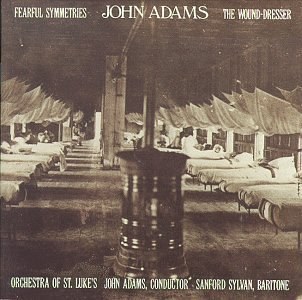
John Adams' The Wound Dresser
It's a powerful setting of words by Walt Whitman, inspired by his work in a field hospital during the American Civil War.
John Adams on Fearful Symmetries:
In the spring of 1988, shortly after the first series of Nixon in China performances in the US and Europe, I began thinking about a new work for orchestra. Working in the almost too beautiful confines of the American Academy in Rome, I found that ideas were slow arrive. When they did make an appearance I was surprised to see that they were in much the same vein as the Nixon music. Apparently I had more to say in that particular style, although this time it would be purely instrumental music, and the sound would be largely dictated by the Nixon orchestra, a kind of mutated big band, heavy on brass, winds, synthesizer and saxophones. To this ensemble I added for Fearful Symmetries a keyboard sampler playing sampled percussion sounds, two horns and a bassoon. Otherwise the ensemble is identical to that called for in the opera.
The music is, as its title suggests, almost maddeningly symmetrical. Four- and eight-bar phrases line up end to end, each articulated by blazingly obvious harmonic changes and an insistent chugging pulse. The familial resemblance to the opening minutes of The Chairman Dances is unmistakable, but in Fearful Symmetries the gestures are more emphatic and the music is more closely allied to pop and Minimalist rock. It’s clearly an example of what I call my "travelling music," music that gives the impression of continuous movement over a shifting landscape. In this piece, however, a cityscape is doubtless the more appropriate analogy as the sound has a distinctly urban feel.
It is for sure a seriously aerobic piece, a Pantagruel boogie with a thrusting, grinding beat that governs at least two-thirds of its length. Perhaps partly for this reason, it’s become my most choreographed work, with over a dozen different versions, including those by the Royal Ballet and the New York City Ballet, in current use. What appeals to me most about the piece is the timbre: It mixes the weight and bravura of a big band with the glittering, synthetic sheen of techno pop (samples and synthesizer) and the facility and finesse of a symphony orchestra.
The part for synthesizer is very prominent. It was originally written for the big double-manual Yamaha Electone, a hybrid between a synth and an organ complete with chromatic pedals. The revised version, however, calls only for a sampler with two keyboards (in addition to the percussion sampler, played by another performer). The saxophone quartet, so critical to the Nixon in China sound, is treated here usually as a single homophonic unit.
约翰·亚当斯:《小提琴协奏曲》、《震教徒之环》 [音乐] 豆瓣
Orchestra of St. Luke's / John Adams 类型: Classical
发布日期 1996年4月9日 出版发行: Nonesuch
Composer Note:
Shaker Loops began as a string quartet with the title Wavemaker. At the time, like many a young composer, I was essentially unaware of the nature of those musical materials I had chosen for my tools. Having experienced a few of the seminal pieces of American Minimalism during the early 1970's, I thought their combination of stripped-down harmonic and rhythmic discourse might be just the ticket for my own unformed yearnings. I gradually developed a scheme for composing that was partly indebted to the repetitive procedures of Minimalism and partly an outgrowth of my interest in waveforms. The "waves" of Wavemaker were to be long sequences of oscillating melodic cells that created a rippling, shimmering complex of patterns like the surface of a slightly agitated pond or lake. But my technique lagged behind my inspiration, and this rippling pond very quickly went dry. Wavemaker crashed and burned at its first performance. The need for a larger, thicker ensemble and for a more flexible, less theory-bound means of composing became very apparent.
Fortunately I had in my students at the San Francisco Conservatory of Music an ensemble willing to tryout new ideas, and with the original Wavemaker scrapped I worked over the next four months to pick up the pieces and start over. I held on to the idea of the oscillating patterns and made an overall structure that could embrace much more variety and emotional range. Most importantly the quartet became a septet, thereby adding a sonic mass and the potential for more acoustical power. The "loops" idea was a technique from the era of tape music where small lengths of prerecorded tape attached end to end could repeat melodic or rhythmic figures ad infinitum. (Steve Reich's It's Gonna Rain is the paradigm of this technique.) The Shakers got into the act partly as a pun on the musical term "to shake", meaning either to make a tremolo with the bow across the string or else to trill rapidly from one note to another. The flip side of the pun was suggested by my own childhood memories of growing up not far from a defunct Shaker colony near Canterbury, New Hampshire. Although, as has since been pointed out to me, the term "Shaker" itself is derogatory, it nevertheless summons up the vision of these otherwise pious and industrious souls caught up in the ecstatic frenzy of a dance that culminated in an epiphany of physical and spiritual transcendence. This dynamic, almost electrically charged element, so out of place in the orderly mechanistic universe of Minimalism, gave the music its raison d'etre and ultimately led to the full realization of the piece. Shaker Loops continues to be one of my most performed pieces. There are partisans who favor the clarity and individualism of the solo septet version, and there are those who prefer the orchestral version for its added density and power. The piece has several times been choreographed and even enjoyed a moment of cult status in the movie Barfly, an autobiographical account of the poet Charles Bukowsky's down and out days on LA's Skid Row. In a famous scene Bukowsky (Mickey Rourke), having been battered and bloodied by his drunken girlfriend (Faye Dunaway) holes up in a flophouse room, writing poems in a fit of inspiration to the accompaniment of the insistent buzz of "Shaking and Trembling".
-- John Adams
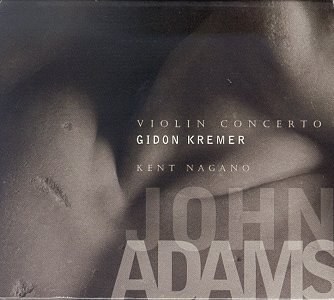
John Adams on the Violin Concerto
The proposal to write a violin concerto came from the violinist Jorja Fleezanis, a close friend and enthusiastic champion of new music. Composers who are not string players are seriously challenged when it comes to writing a concerto, and close collaborations are the rule, as it was in this case. For those who have not played a violin or a cello, the physical relation of the turned-over left wrist and grasping fingers defies logic. Intervals that ought to be simple are awkward, while gestures that seem humanly impossible turn out to be rudimentary.
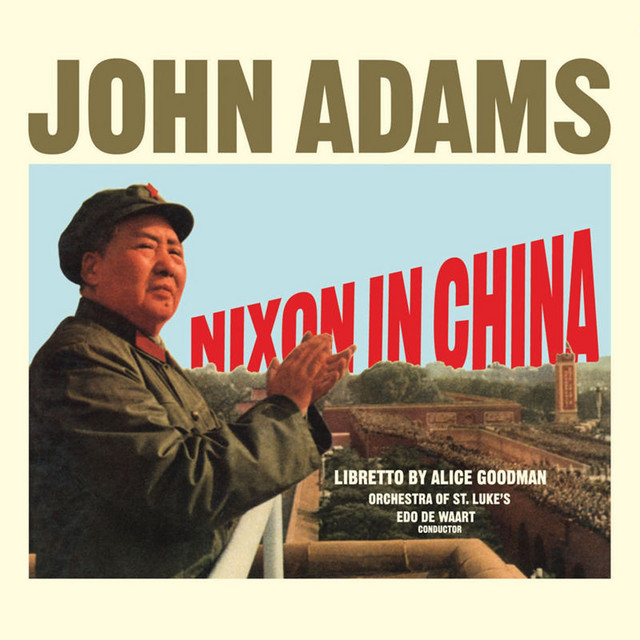
A concerto without a strong melodic statement is hard to imagine. I knew that if I were to compose a violin concerto I would have to solve the issue of melody. I could not possibly have produced such a thing in the 1980’s because my compositional language was principally one of massed sonorities riding on great rippling waves of energy. Harmony and rhythm were the driving forces in my music of that decade; melody was almost non-existent. The “News” aria in Nixon in China, for example, is less melody than it is declamation riding over what feels like the chords of a giant ukelele.
But in the early 1990’s, during the composition of The Death of Klinghoffer, I began to think more about melody. This was perhaps a result of being partially liberated by a new chromatic richness that was creeping into my sound, but it was more likely due to the need to find a melodic means to set Alice Goodman’s psychologically complex libretto.
As if to compensate for years of neglecting the “singing line,” the Violin Concerto (1993) emerged as an almost implacably melodic piece—a example of “hypermelody.” The violin spins one long phrase after another wihout stop for nearly the full thirty-five minutes of the piece. I adopted the classic form of the concerto as a kind of Platonic model, even to the point of placing a brief cadenza for the soloist at the traditional locus near the end of the first movement. The concerto opens with a long extended rhapsody for the violin, a free, fantastical “endless melody” over the regularly pulsing staircase of upwardly rising figures in the orchestra. The second movement takes a received form, the chaconne, and gently stretches, compresses, and transfigures its contours and modalities while the violin floats like a disembodied spirit around and about the orchestral tissue. The chaconne’s title, “Body through which the dream flows,” is a phrase from a poem by Robert Haas, words that suggested to me the duality of flesh and spirit that permeates the movement. It is as if the violin is the “dream” that flows through the slow, regular heartbeat of the the orchestral “body.”
The “Toccare” utilizes the surging, motoric power of Shaker Loops to create a virtuoso vehicle for the solo violin. After Jorja Fleezanis’s memorable premiere, many violinists have taken on the piece, and each has played it with his or her unique flair and understanding. Among them are Gidon Kremer (who made the first recording with the London Symphony), Vadim Repin, Robert McDuffie, Midori and, perhaps most astonishingly of all, Leila Josefowicz, who made the piece a personal calling card for years.
The Violin Concerto is dedicated to the memory of David Huntley, longtime enthusiast and great champion of my and much other contemporary music.
Adams: The Death of Klinghoffer [BOX SET] [音乐] 豆瓣
John Adams / Janice Felty
发布日期 1992年11月9日 出版发行: Nonesuch
Cast of Characters
The Captain, bar
First Officer/"Rambo", b-bar
Swiss Grandmother/Austrian Woman/British Dancing Girl, ms
Molqui, t
Mamoud, bar
Leon Klinghoffer, bar
Omar, ms
Marilyn Klinghoffer, c
Choruses of Exiled Palestinians and Exiled Jews, etc.
-----------
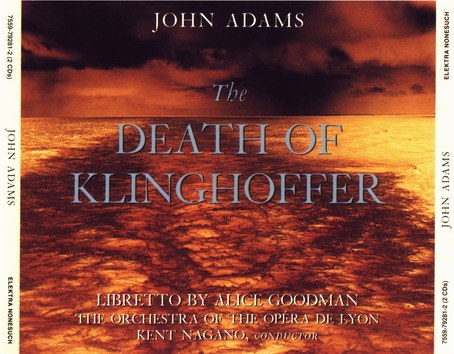
The Death of Klinghoffer, John Adams' second opera, takes as its subject the hijacking of the cruise ship Achille Lauro in 1985. Again the concept for the opera was suggested by director Peter Sellars. The L.A. Opera shared the work's commission but never presented it.
----------
Synopsis
The Death of Klinghoffer is told in a very different style than Adams' previous opera, Nixon in China. While based on historical events, Klinghoffer does not always treat them in a traditionally narrative manner, and the events we see are not always those we expect. Several important events in the historical narrative--including Klinghoffer's death itself--are not seen onstage, but only commented on after the fact. In addition, many of the characters sing their versions of the action as reminiscences, as for example in the Captain's opening aria, "It was just after 1:15," which recounts the original appearance of the hijackers on board. Meanwhile, each scene ends with a number in which the chorus reflects on the events that have occurred. The opera begins with a prelude consisting of two of these choruses, one sung by a Chorus of Exiled Palestinians and the other by a Chorus of Exiled Jews.
Act I begins with the Captain of the Achille Lauro narrating the events of the original hijacking; most of the passengers had disembarked for a tour of the Pyramids when the hijackers first appeared; the remaining ones were rounded up in the ship's restaraunt. Another version of the hijacking story is told by a Swiss Grandmother, one of the passengers, and then by the ship's First Officer, who also tells that a passenger had been shot in the leg, apparently accidentally when a bullet ricocheted off the floor. Molqui, one of the terrorists, sings an aria ("Give these orders") explaining the situation to the passengers and promising them safety. Scene 2 introduces another of the terrorists, Mamoud, a more dangerous and violent man than his companion. The Captain reflects on the fact that every ship is a kind of prison. ("I have often reflected") Another passenger relates how she locked herself in her cabin and stayed there through the entire episode, undiscovered. Mahmoud sings an aria about freedom, contrasting with the Captain's earlier song. ("Those birds flying")
The chorus that opens Act II, "When Hagar was led into the wilderness," recounts the Biblical story of Hagar and Ishmael, representing the beginnings of Arab-Israeli tension. Molqui is frustrated at the lack of a reply to his demands; he is afraid people will die. Mamoud says only, "Now we will kill you all." It is only now we see Leon Klinghoffer for the first time. Explaining that he is normally a person who likes to avoid trouble, he nevertheless goes on to condemn the hijackers, accusing them of simply using their ideologies as a license to fulfill their real desire--to kill. ("I've never been/A violent man") He is replied to in equally harsh terms by another hijacker, called "Rambo." ("You are always complaining") Another passenger tells her story, including her impressions of Klinghoffer. Finally we hear from the last of the terrorists, Omar, a young idealogue who is hoping to die in his cause. At the end of the scene, Omar and Molqi fight, and Molqui takes Klinghoffer away.
The next scene opens with Klinghoffer's wife Marilyn, talking about disability, illness, and death; she assumes that her husband has been taken to the ship's hospital. In fact, during her aria, he is killed, offstage, by the terrorists, who are now threatening to kill another passenger every fifteen minutes; the Captain tells them to kill him instead of a passenger. As the terrorists negotiate with shore, Leon Klinghoffer's body appears and sings a "Gymniopédie". In the final scene, after the crisis has been resolved and the passengers have disembarked, the Captain tells Marilyn Klinghoffer about her husband's death. ("Mrs. Klinghoffer, please sit down"/"You embraced them!")
--------
Performance History
World premiere production:
Théâtre de la Monnaie
World premiere: 19 Mar. 1991
Brussels, Belgium
Opéra de Lyon
French premiere: 13 April 1991
World premiere production
---------
The Captain: James Maddalena
The First Officer; "Rambo": Thomas Hammons
Swiss Grandmother; Austrian Woman; British Dancing Girl: Janice Felty
Molqi: Thomas Young
Mamoud: Eugene Perry
Leon Klinghoffer: Sanford Sylvan
Omar: Stephanie Friedman
Marilyn Klinghoffer: Sheila Nader
Conducted by Kent Nagano
Stage direction by Peter Sellars
Choreography by Mark Morris
Set design by George Tsypin
Costume design by Dunya Ramicova
Lighting design by James F. Ingalls
Sound Design by Jonathan Deans
Projection design by John Boesche
Opéra de Lyon
French premiere: 13 April 1991
World premiere production
Brooklyn Academy of Music
U.S. premiere: 5 Sep. 1991
World premiere production
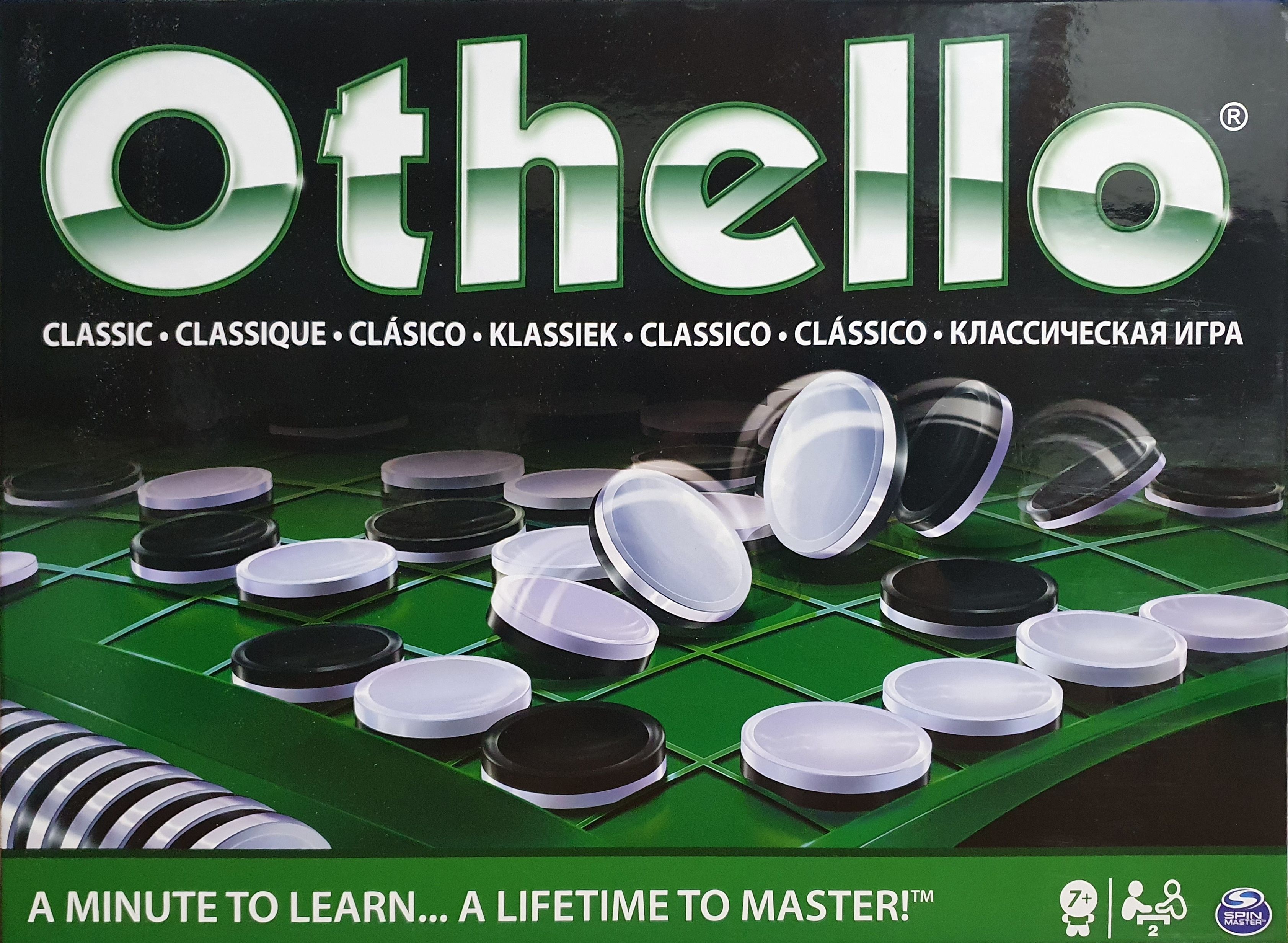
源平碁 [游戏] BGG 维基数据
其它标题: Othello / Annex
类型: Abstract Strategy 平台: Boardgame 出版发行: (Public Domain) / (Unknown)
Trap other pieces between your own to capture them, but be aware that the opponent may do the same. Pieces will change sides (colors) dozens of times. The winner is the one with the most pieces when no more pieces can be played on the board.

In Hong Kong, an advertising campaign by Texwood for its Apple Jeans involved the use of Othello sets, retitled Ping Guo Qi (Apple Chess). The sucess of the campaign raised the popularity of the game, and Ping Guo Qi or Apple Chess has since become an alternative name for Hei Bai Qi (Black and White Chess), the more traditional name for the game.

Goro Hasegawa changed Setup of Reversi a bit and renamed it as Othello inspired from Shakespeare's play.

The John Adams Edition [音乐] 豆瓣
Leila Josefowicz / Georg Nigl 类型: Classical
发布日期 2017年11月10日 出版发行: Berliner Philharmoniker
John Adams is one of the most important musical voices of America. His tonal language is at once unmistakable and of infinite variety. Minimalism mixes with imaginative orchestration and a jazz-inflected spirit to create a cosmos full of energy and colour that constantly reveals new facets. During the season 2016/2017 John Adams has accompanied the Berliner Philharmoniker as composer in residence.
The orchestra performed a wide variety of his works, from the oratorio The Gospel According to the Other Mary and the famous Harmonielehre to more unfamiliar treasures. The concerts were conducted by chief conductor Sir Simon Rattle and outstanding guests: Gustavo Dudamel, Alan Gilbert and Kirill Petrenko. In the course of this partnership, John Adams himself also made his debut as conductor of the Berliner Philharmoniker. The design of the edition is by the world-renowned artist Wolfgang Tillmans.