Alla Osipenko — 演员 (4)
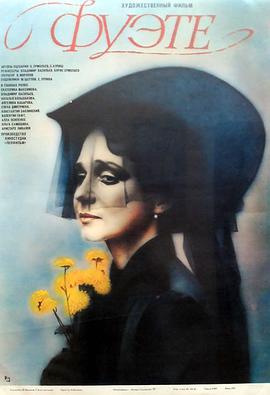
芭蕾舞演员 (1986) [电影] 豆瓣
Фуэте
导演: Vladimir Vasilyev / Boris Yermolayev 演员: Yekaterina Maksimova / Vladimir Vasilyev
其它标题: Фуэте / Fuete
这部电影由莫斯科大剧院前首席演员,乌兰诺娃的高徒Maximova主演,其夫Vasiliev导演,由专业的芭蕾舞演员自己来演绎芭蕾舞演员的生活、工作和演出
本片片名Fuete音译自俄文的芭蕾术语Фуэте指的正是《天鹅湖》中黑天鹅招牌的旋转动作。而这一动作在电影中也反复出现,是本片的一大特点。
当年国内播放这部电影的时候,考虑到观众对于专业术语的不熟悉,所以把片名概括为了《芭蕾舞演员》,也非常符合剧情。
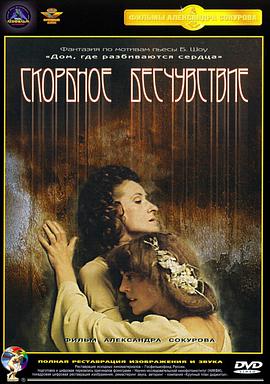
悲戚的冷漠 (1987) [电影] 豆瓣
Скорбное бесчувствие
导演: 亚历山大·索科洛夫 演员: 拉马兹·迟希克瓦泽 / Alla Osipenko
其它标题: Скорбное бесчувствие / Mournful Unconcern
In the title of this film we have the diagnosis of a mental illness. The title of George Bernard Shaw's play Heartbreak House is a formula-symbol introduced by the great British wit in order to describe Europe before the First World War. The Russian filmmaker discerned and brilliantly developed Russian Chekhovian roots of the play in his saturated with associations cinematographic composition. This was a feast of Sokurov's imagination and an anthology of almost all of his devises to be subsequently developed. Here one could find a model of a set, closely imitating the real surrounding, documentary shots juxtaposed to the deformed image, a mask of Shaw himself, and non-professional performers next to the celebrated Georgian actor Ramaz Tchkhickvadze.
The film had scandalized the powers that be as early as during the process of production which had been several times interrupted and banned by various structures of officialdom — until the film was eventually released in the beginning of Perestroika, in 1987. Perhaps nowadays one of the most important for the director themes — the defenselessness of man, hiding in the house as in a cocoon in the attempt to evade the horrors of history and the problems of existence — sounds more articulately than ever. And the defense — science, technic, culture — civilization — may crash any time and crush 'proud' humankind.
The film took part in the competition program of the XXXVII International Cinema Festival in Western Berlin in 1988 and got FIPRESSI award at the XV International Festival in Moscow and Special award in the memory of Andrei Tarkovsky (1987).
帝国 (1987) [电影] 豆瓣
Ампир
其它标题: Ампир / Empire
Short film Empire is based on a radio drama Sorry, Wrong Number by the American writer Lucille Fletcher. Actually, Sokurov draws on a single theme forming the background for the story of the thriller — the woman's illness… The heroine is bed–ridden and her only means of communication with the outside world is her telephone — until a killer interrupts the conversation…
Sokurov removes all the dialogues, leaving us alone with the heroine — “a living skeleton” among the refined, with a touch of Modern–style, furnishings — who is listening to a radio broadcasting of Traviata, with its pleas for mercy and love. An elegant coffin–home is the spatial centre and symbolization of the entire film. And inside the coffin we certainly see the actress — the famous Russian ballerina Alla Osipenko who plays not only the heroine but also her own self.
This metaphoric cinema–image bears an allusion to the great “handicapped” Sarah Bernhardt who was reported to sleep in a coffin, as well as to the entire complex of aesthetised Decadence, converting an apology of Death into a lifestyle. Here is the key to the code of the title. Empire is a style that attempted to reanimate the dead ancient harmony. The heroine of Sokurov's film communicates with her phone as the only partner, and sort of interferes with the beyond, attracting this air — intangible yet saturated with danger. It is from the radio air that she accumulates both pleasure and tranquillity — the aria of dying yet beloved Violetta, while the killer's silhouette materializes from the phone air. A chamber pot, overturned and spilt by the killer in haste, remains the only evidence of human activities in this boudoir of Death. Sokurov's metaphor, clad in naturalistic details, produces the effect of ironic disclosure: “a wet spot” is left after a symbol.
The film was shot as a study work of a VGIK student S.Sidorov. At that time Sokurov did not have a chance to launch a project of his own, therefore he used this possibility to work. Visual conception of this film anticipates a considerable number of Sokurov's future experiments: light that models the space, levelling of colours, correlation of contrasting textures.
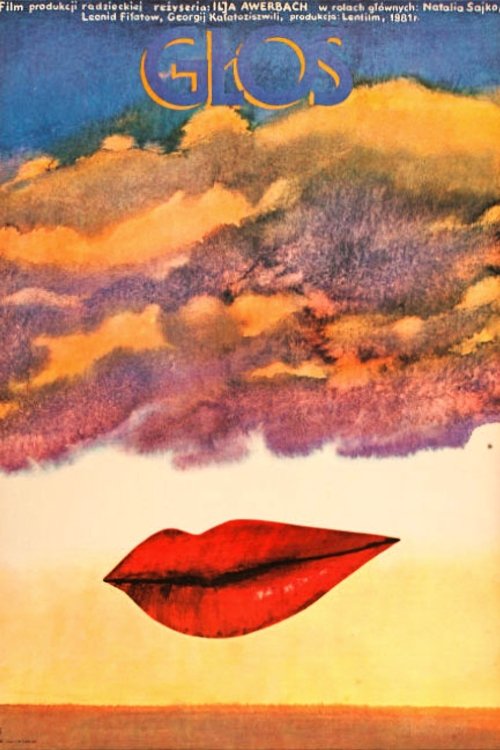
The Voice (1982) [电影] 维基数据 IMDb TMDB
Голос
导演: Ilya Averbakh 演员: Наталья Сайко / Леонид Филатов
其它标题: Голос / 声音
An actress needs to dub her voice after the production of her movie has wrapped. At the same time, she is facing a life crisis that alters her plans: just released from the hospital, she realizes that her illness is more than she can emotionally handle. Overwhelmed, she has to look at the simple task of dubbing from a completely new perspective. This film had an attendance of 2.3 million in the Soviet Union when it was released.