Harun Farocki — 导演 (18)
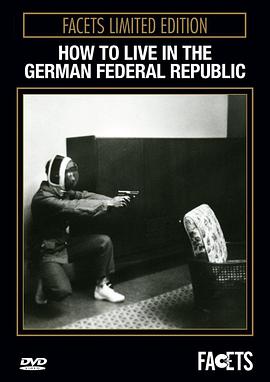
如何生活在联邦德国 (1990) [电影] 豆瓣 IMDb TMDB
Leben - BRD
导演: Harun Farocki
其它标题: Leben - BRD / How to Live in the German Federal Republic
先锋派导演运用镜头与机智的语言风格向我们诠释了西德的生活,全片由32个短场景组成,取材于各种培训指导课程。电影中,女人们接受生孩子的培训,警察学习如何逮捕,银行员工学习如何安抚生气的客户等等。本片被评为1991年德国影片人协会奖最佳纪录片。
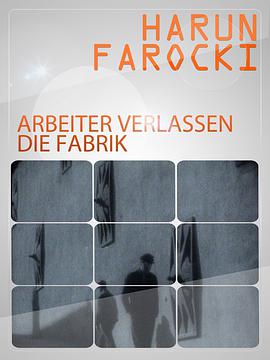
工人离开工厂 (1995) [电影] 豆瓣 TMDB IMDb 维基数据
Arbeiter verlassen die Fabrik
9.6 (5 个评分) 导演: Harun Farocki 演员: Harun Farocki
其它标题: Arbeiter verlassen die Fabrik / workers leaving the factory
Based on one of the Lumière brothers’ historic first films, Harun Farocki has created a montage of scenes from 100 years of film history, all variations on the theme of “workers leaving the factory”. Farocki uses the pictures to reflect on the iconography and economy of a workers’ society, as well as that of cinema itself, which tends to acquire its audience at the gates of the factory and hijack them into the private sphere.
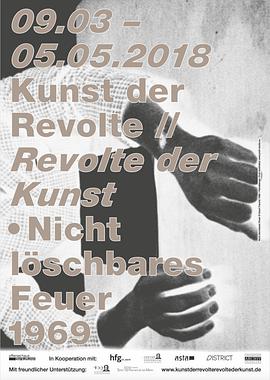
不灭的火 (1969) [电影] 豆瓣 TMDB IMDb 维基数据
Nicht löschbares Feuer
导演: Harun Farocki 演员: Harun Farocki / Gerd Volker Bussäus
其它标题: Nicht löschbares Feuer / The Inextinguishable Fire
Short film which explores the origins of napalm, it's use in the Vietnam war, and it's evil effects on society.
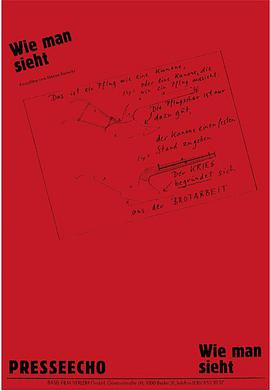
如你所见 (1986) [电影] 豆瓣
Wie man sieht
导演: Harun Farocki
其它标题: Wie man sieht / As You See
In As You See, Farocki searches for those instances and facts in the history of technology that have been overlooked or ignored, also exploring the ambivalent relationship between technologies developed for civil use and those designed for military purposes.
Thus the film for instance describes how in the 1970's workers at the British arms factory Lucas Aerospace attempted to develop socially useful products to replace the company's military output.
Rather than following a linear argument, this essay-film juxtaposes disparate images and weaves them into a mosaic-like structure which makes it possible for the viewers to make their own connections between the different images as well as between the images and the commentary.
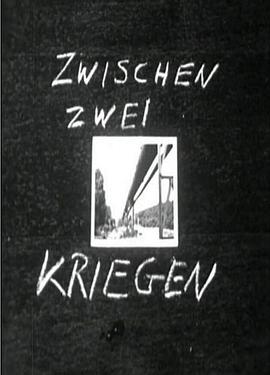
两次战争之间 (1978) [电影] 豆瓣
Zwischen zwei Kriegen
导演: Harun Farocki
其它标题: Zwischen zwei Kriegen / Between Two Wars
In Between two wars, Harun Farocki attempts to interlock the logic of war with the logic of production as determining dynamics of the years 1918-1933, the period between the two "world wars". By way of didactical acting, voice-over reflections and by applying a associating and analytical montage the film develops its thesis, that in the early 1920's the "necessities" of capitalistic production have become more and more ignorant of the actual needs of the people. Rationalization and the forming of trusts finally lead to a point where the capitalist production machine directly transformed into a warfare and destruction machine.
Farocki's film is relevant for the discussion of "The Lost Moment", both in terms of its narrative and in formal and aesthetic terms. Farocki tries to reconstruct the enabling conditions of a historical period, which was to manifest itself as an ultimate catastrophe and which was often not understood or straightforwardly mystified. While the political and economical decision makers are trying to perfect their use of the capitalist machinery, the workers are confronted with the question how come they always and at any rate serve this machine as canon fodder.
The narrator Farocki explains in the film that he had intended to tell the story at the original historic sites, but that these were mostly destroyed and had vanished. The war, which was produced there, had swept them away. Instead the artist Farocki, who in one scene we see at his money job as a picture editor for a print publication, abstracts from the call for "authenticity" and thus clears the table for an argumentative editing of the images. One could say that the film re-interprets the distance to the lost historical moment and turns it into a freedom of thought. Instead of searching the archives, Farocki searches the historical consciousness. This way, the film – even in its primness - also bears testimony of its time and the way in which certain films were made in Germany then.
In Between two wars, Harun Farocki attempts to interlock the logic of war with the logic of production as determining dynamics of the years 1918-1933, the period between the two "world wars". By way of didactical acting, voice-over reflections and by applying a associating and analytical montage the film develops its thesis, that in the early 1920's the "necessities" of capitalistic production have become more and more ignorant of the actual needs of the people. Rationalization and the forming of trusts finally lead to a point where the capitalist production machine directly transformed into a warfare and destruction machine.
Farocki's film is relevant for the discussion of "The Lost Moment", both in terms of its narrative and in formal and aesthetic terms. Farocki tries to reconstruct the enabling conditions of a historical period, which was to manifest itself as an ultimate catastrophe and which was often not understood or straightforwardly mystified. While the political and economical decision makers are trying to perfect their use of the capitalist machinery, the workers are confronted with the question how come they always and at any rate serve this machine as canon fodder.
The narrator Farocki explains in the film that he had intended to tell the story at the original historic sites, but that these were mostly destroyed and had vanished. The war, which was produced there, had swept them away. Instead the artist Farocki, who in one scene we see at his money job as a picture editor for a print publication, abstracts from the call for "authenticity" and thus clears the table for an argumentative editing of the images. One could say that the film re-interprets the distance to the lost historical moment and turns it into a freedom of thought. Instead of searching the archives, Farocki searches the historical consciousness. This way, the film – even in its primness - also bears testimony of its time and the way in which certain films were made in Germany then.
The meeting point for the film screenings is always at 9 pm in the exhibition space on the 2nd floor of GfKFB, Kunstfabrik, Am Flutgraben 3. The film screening will then probably take place in a former sales and presentation building in the immediate vicinity. The incomplete emptiness of this room conveys an impression of the parasite use which a globalized economy makes of space and how the appearance of urban space becomes subject to the strategic decisions of a company.
Florian Wüst, as a film curator, is interested in political filmmaking in Germany and specifically in the ways in which films deal with the peculiar identity of a "Post-War" society. I see interesting parallels to Farocki's work in the 70's (of which Between two wars is a good example) in Florian Wüst's own artistic production – also in "Belated Advocacy", which deals with the ideology of production in post-war "Wirtschaftswunder" Germany. Especially the use of historical documents, the interest for the linguistic forms of quotation and statement, the use of abstraction and re-enactment and also the self-confident positioning in the distance to the historic moment suggest interesting connections between both oeuvres.
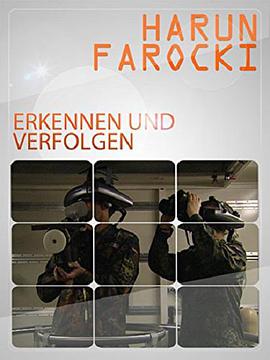
识别和追踪 (2003) [电影] 豆瓣
Erkennen und Verfolgen
导演: Harun Farocki
其它标题: Erkennen und Verfolgen / War at a Distance
In 1991, when images of the Gulf War flooded the international media, it was virtually impossible to distinguish between real pictures and those generated on computer. This loss of bearings was to change forever our way of deciphering what we see. The image is no longer used only as testimony, but also as an indispensable link in a process of production and destruction. This is the central premise of Erkennen und Verfolgen, which continues the deconstruction of claims to visual objectivity
In War at a Distance, Farocki returns to themes explored in works such as Images of the World and the Inscription of War, bringing them technologically up to date. The automation of factory production is paralleled with the automation of destruction in warfare, and a new world of machine images is revealed – images not intended for human eyes, but for the visual tracking systems of the digital age. The video traces the history of missile guidance systems from WWII through the present day using visual artifacts of machine guidance systems, as well as training films, missile footage from the Gulf War, and flight and battle simulations. A coolly terrifying glimpse of the future.
并非没有风险 (2004) [电影] 豆瓣
Nicht ohne Risiko
导演: Harun Farocki
其它标题: Nicht ohne Risiko / Nothing Ventured
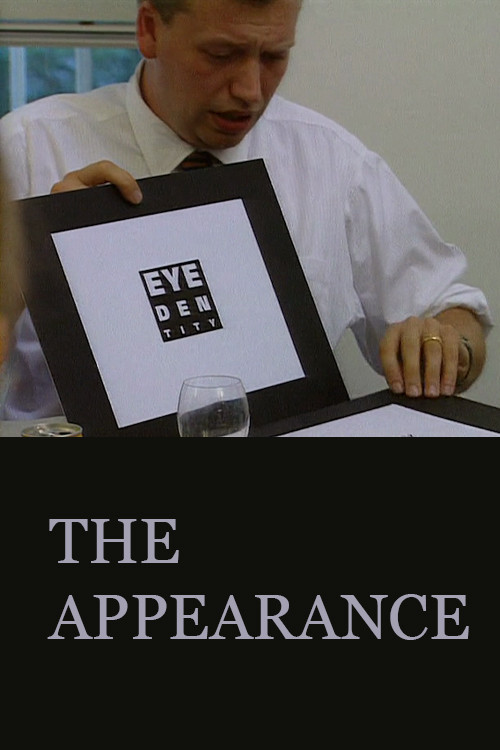
The film follows the negotiations between a mid-sized company and a venture capital firm. The company is looking for capital to start production on its invention. Farocki limits himself to observing events without comment. He has edited together documentary footage of the two meetings that resulted in a contract. It's a microscopic look at one cell of today's economy; an ethnographic portrait of a commonplace business dealing.
教学 (1987) [电影] 豆瓣
Die Schulung
导演: Harun Farocki
其它标题: Die Schulung / Indoctrination
在這部特殊的紀錄片中,導演紀錄下了一場為期五天、目的旨在教導管理階層行政人員如何運用基本的辯證法和花言巧語來更好展現自我的研討會。整場研討會上,一群年輕的從業人士在學習語言技巧,以便於更好的推銷自己;之後他們接受身體語言、手勢和面部表情的培訓。在這部沒有任何標題、麥克風或其它紀錄片慣例的影片中,導演成功地揭露出大企業利用心理學花言巧語來推銷觀念和產品。其結果是透過此窗口讓觀眾窺見企業行為、市場操作以及現代資本主義這個秘密世界。
Film-Tip: Le thé au harem d'Archimède (1985) [电影] 豆瓣
导演: Harun Farocki
其它标题: Filmtip: Tee im Harem des Archimedes von Harun Farocki
This is a short 7-minute movie review by Harun Farocki made in 1985 for the German TV-series »Filmtip«. Over 300 short movie reviews have been produced for the series since 1978. You'll find more about »Filmtip«, the series history and methods here. Farocki's short review is about Mehdi Charef's »Le thé au harem d'Archimède«. The movie was shown in German cinemas in 1985/86.
The images of Farocki's »Filmtip« are from a German-dubbed version of Charef's movie; no additional material has been produced or used. The only addition is the voice-over text, written by Farocki. The text (which is spoken by a professional voice-over-guy) is very simple and concise. It focusses on two longer descriptive/realistic sequences from Charef's movie and their impact on its narration and form. The text emphasizes the way characters are introduced and shown by quasi-documentary means describing their suroundings and according actions.
Counter-Music (2004) [电影] TMDB
Counter-Music
导演: Harun Farocki
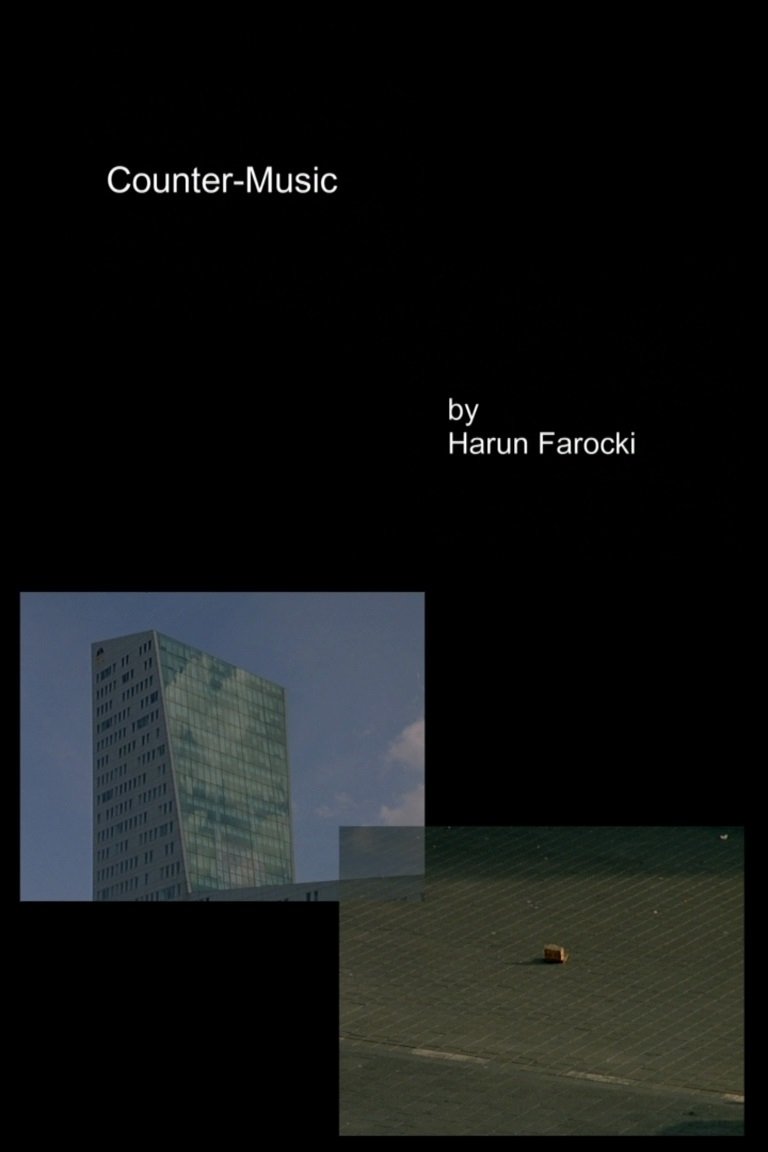
The city today is as rationalised and regulated as a production process. The images which today determine the day of the city are operative images, control images. Representations of traffic regulation, by car, train or metro, representations determining the height at which mobile phone network transmitters are fixed, and where the holes in the networks are. Images from thermo-cameras to discover heat loss from buildings. And digital models of the city, portrayed with fewer shapes of buildings or roofs than were used in the 19th century when planned industrial cities arose, amongst them the Lille agglomeration. Despite their boulevards, promenades, market places, arcades and churches, these cities are already machines for living and working. I too want to "remake" the city films, but with different images. Limited time and means themselves demand concentration on just a few, archetypal chapters. Fragments, or preliminary studies.
Serious Games 1–4 (2011) [电影] TMDB
Ernste Spiele I–IV
导演: Harun Farocki
其它标题: Ernste Spiele I–IV
Harun Farocki: Serious Games I–IV (2009–10) explores the use of virtual reality and gaming technology in U.S. military recruitment, training and after-action therapy, revealing fundamental links between technology and violence in a time of war. Young recruits engage in simulated combat training, which barely differs from video games produced as entertainment. Footage is included from a workshop demonstrating the use of computer re-enactments in the psychological care of veterans suffering from post-traumatic stress disorder. As a large-scale installation, Serious Games critically focuses on the role of audiovisual culture in the spectacle of war.
Bedtime Stories: Cat (1977) [电影] TMDB
Einschlafgeschichten (Katze)
导演: Harun Farocki
其它标题: Einschlafgeschichten (Katze)
"As if pictures could think! Einschlafgeschichten doesn't really speak of bridges or railroads but rather of two girls filling the space between daytime and dreamtime with a poetic game, an endless game, a game with no end. A game which can fade out without becoming fragmentary. "Are you asleep?", one of them asks at the end of a clip – and the final shot is of the two, asleep; the game is over. The girls are played by Lara and Anna, Farocki's daughters." - Hans J. Wulff
Bedtime Stories: Bridges (1977) [电影] TMDB
Einschlafgeschichten (Brücken)
导演: Harun Farocki
其它标题: Einschlafgeschichten (Brücken)
"As if pictures could think! Einschlafgeschichten doesn't really speak of bridges or railroads but rather of two girls filling the space between daytime and dreamtime with a poetic game, an endless game, a game with no end. A game which can fade out without becoming fragmentary. "Are you asleep?", one of them asks at the end of a clip – and the final shot is of the two, asleep; the game is over. The girls are played by Lara and Anna, Farocki's daughters."
Bedtime Stories: Railways (1977) [电影] TMDB
Einschlafgeschichten (Bahnen)
导演: Harun Farocki
其它标题: Einschlafgeschichten (Bahnen)
"As if pictures could think! Einschlafgeschichten doesn't really speak of bridges or railroads but rather of two girls filling the space between daytime and dreamtime with a poetic game, an endless game, a game with no end. A game which can fade out without becoming fragmentary. "Are you asleep?", one of them asks at the end of a clip – and the final shot is of the two, asleep; the game is over. The girls are played by Lara and Anna, Farocki's daughters." - Hans J. Wulff
Deep Play (2007) [电影] TMDB
Deep Play
导演: Harun Farocki
Harun Farocki’s work Deep Play is made up of various perspectives on the final of the 2006 World Cup.